

DJ Lights Stand Gigbar Integrated. Pre-Wired. Ready to Ship.
Integrated stand, crossbar, and fixture mounting in one package, manufactured and pre-wired in our facility. Stock a product your buyers unbox, plug in, and run — no separate stand, no clamps, no adapter hunting.
One SKU, one carton, highest perceived value per unit in your stand catalog.
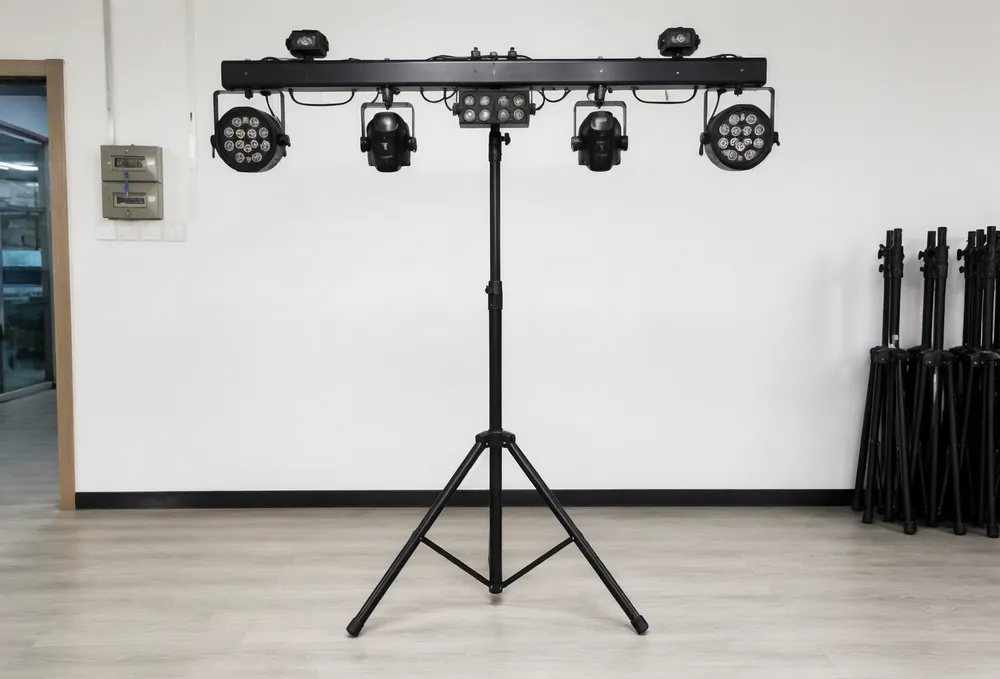
What a Gigbar Is and Why It Commands Premium Retail Pricing
Complete system economics for distributors and retailers
A DJ lights stand gigbar is a complete, integrated lighting system — stand, crossbar, fixture mounting brackets, and internal wiring combined into a single unit that ships in one carton and sets up in under 5 minutes. Unlike a standard tripod or T-bar stand (which requires your buyer to separately source and mount individual fixtures), the gigbar arrives ready to perform. Your end customer connects one power cable and one DMX line; everything else is internal.
We manufacture these as complete systems, not as assembled kits from third-party components. The stand frame, crossbar, mounting brackets, internal cable harness, and even the power distribution PCB all come off our production lines in the same factory. That vertical integration matters for you commercially: it means consistent quality across the system, a single warranty responsibility, and a landed cost that doesn't include three different vendors' margins stacked on top of each other.
The gigbar format sits at the highest retail price point in the DJ lights stand category — typically 2–3× the street price of a bare T-bar stand — because you're selling a solution rather than a component. Your buyers perceive a complete system as more valuable than the sum of its parts, which protects your margin even in competitive retail environments.
Distributor Margin Data
We've tracked our gigbar distributors averaging 35–45% retail markup versus 20–25% on standalone stands. The "plug-and-play" factor genuinely moves the price conversation.
Single Carton Shipping
One SKU, one carton — no partial shipments, no kit assembly at your warehouse.
One-Cable Setup
End user connects one power cable and one DMX line. Internal harness handles distribution.
Vertically Integrated
Frame, crossbar, brackets, cable harness, and PCB from the same production line. Single warranty responsibility.
2–3× Street Price of Bare T-Bar
Highest perceived value per unit in the stand category. Solution selling protects your margin.
Technical Specifications
Industry-standard parameters for the DJ lights stand gigbar product line
Specifications shown are industry-standard values for this product type. Actual dimensions and ratings may vary by model configuration. Contact us for the specific variant data sheet.
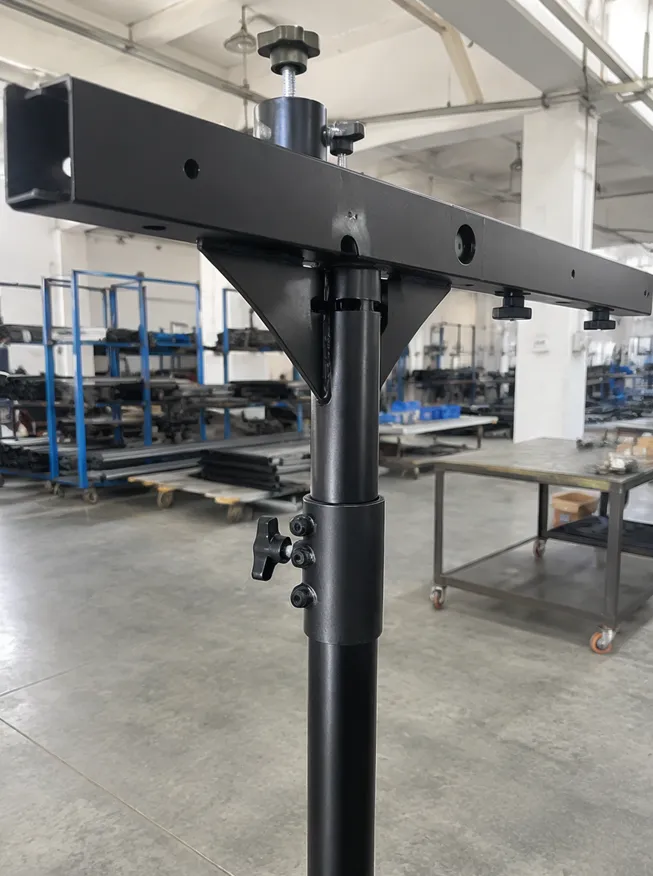
Engineering Note: Why 1.2mm Wall
The 1.2mm wall thickness on the main vertical tube is our standard for this product — it's heavier than the 1.0mm some competitors use, but it eliminates the flex that causes the crossbar to sway when fixtures are running pan/tilt effects.
We tested 1.0mm vertical tubes with moving heads mounted on the crossbar and measured visible oscillation at the fixture level. At 1.2mm, that oscillation drops below perceptible range. Your end customers won't call to complain about "wobbly lights," and you won't process RMA requests for a structural design problem.
Integrated Wiring — The Feature That Separates Gigbars from Bare Stands
This is the core differentiator and the reason gigbar systems retail above their component cost.
Every gigbar frame includes an internal cable harness that runs power and DMX signal from the base connector panel up through the vertical tube, through the crossbar, and out to each fixture mounting position. No external cables dangling, no separate power strips, no loose DMX runs that get snagged during setup or transport. The end customer plugs in one IEC power cable at the base, connects one DMX input (or uses the built-in sound-active mode), and all mounted fixtures receive both power and signal.
We run the internal harness through protective PVC conduit inside the tube sections. This prevents cable pinch when adjusting stand height — a failure mode we saw on early prototypes where repeated height adjustment eventually cut through cable insulation and created intermittent shorts. The conduit adds maybe $0.40 per unit in material cost but eliminates what would otherwise be a 6-month time-bomb defect.
2019 Pre-Production Lesson
Twenty units into endurance testing — raising and lowering the stand 500 times — two units developed flickering on the top fixtures. Root cause: internal cable damage at the telescoping joint. The PVC conduit sleeve solved it permanently and is now standard across every gigbar SKU we manufacture.
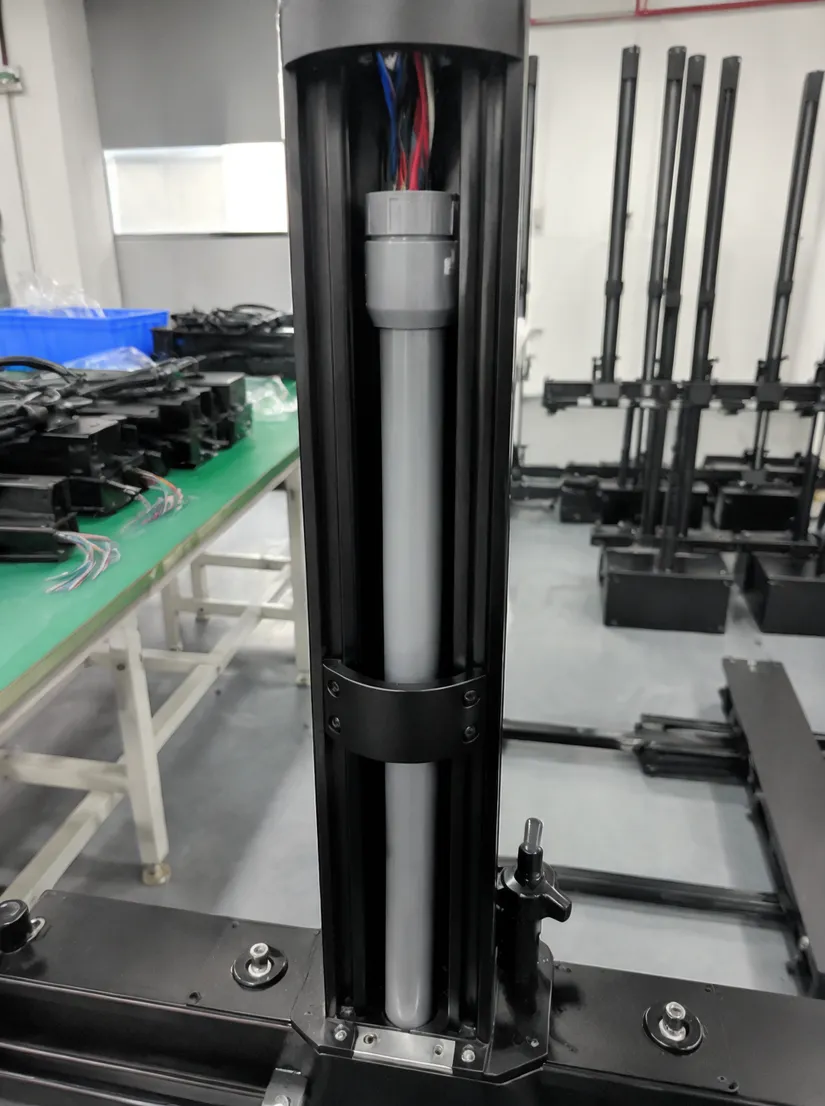
Power Distribution & Fault Isolation
The power distribution PCB at the base handles load splitting across all fixture positions and includes individual ceramic fuses per channel. If one fixture develops a fault, it doesn't take down the entire system. For your warranty liability, this means a single fixture failure stays isolated — your return rate stays low because the system keeps functioning.
Single IEC Input
One power cable at the base feeds all fixture positions through the internal harness
PVC Conduit Protection
$0.40/unit addition that eliminates cable pinch at telescoping joints — validated across 500+ actuation cycles
Per-Channel Ceramic Fuses
Individual fuse per fixture position isolates faults — one fixture failure never takes down the full system
DMX Signal Pass-Through
Power and DMX signal distributed from base connector panel to every mounting point — zero external cabling
Market Segments Where Gigbar Systems Generate Revenue
Entry-Level Mobile DJs
This is your volume market. First-time DJs and part-time operators want a lighting rig that works immediately without needing to learn fixture compatibility, cabling, or DMX chaining. The gigbar is the answer — and it commands a premium because these buyers are paying for simplicity, not just hardware. Online DJ equipment retailers report that "gigbar" and "all-in-one DJ light" listings convert at higher rates than component listings because the purchase decision is simpler: one item, one click.
Inventory Planning Note
Entry-level DJ buyers are highly seasonal (pre-holiday, pre-wedding-season spikes) and buy single units. High volume, predictable peaks, fast stock rotation.
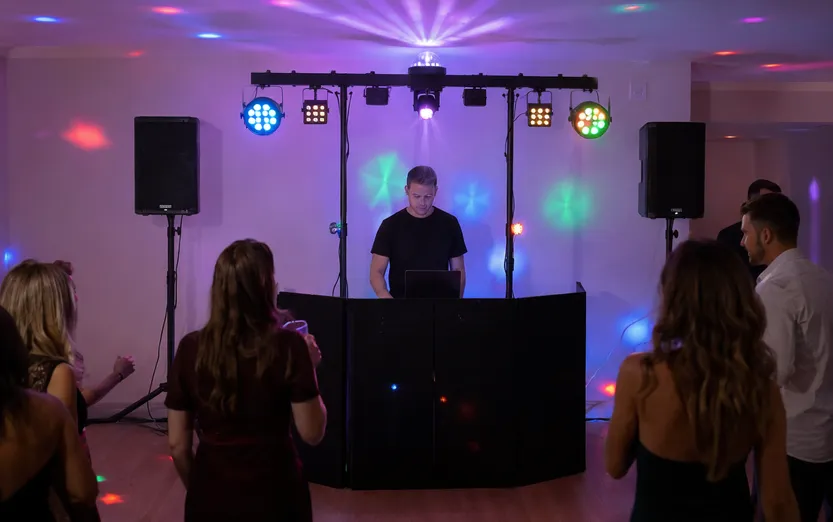
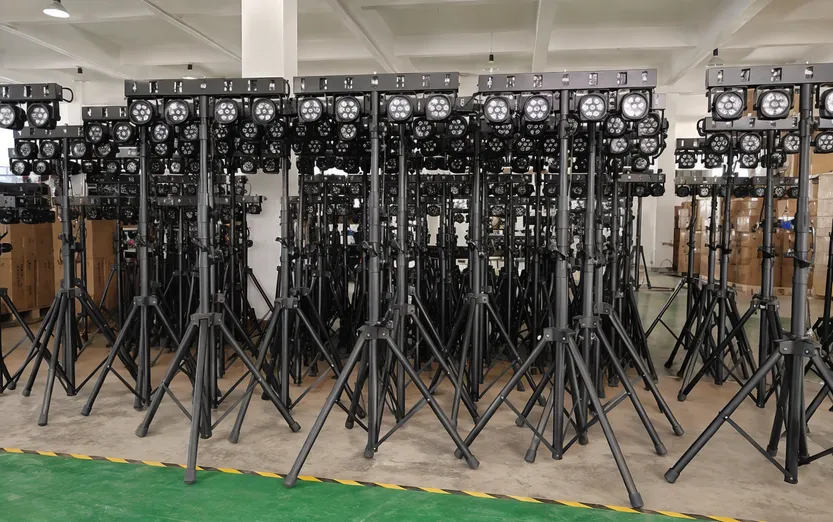
Party & Equipment Rental Operators
Small rental companies serving birthday parties, corporate socials, and school dances need lighting systems that their part-time staff can set up without training. A rental operator hands a gigbar to a delivery crew with one instruction: "Stand it up, plug it in." No fixture mounting, no cabling, no DMX configuration. That operational simplicity means rental companies buy gigbars for their "basic lighting" tier and charge $75–150 per event rental — the gigbar pays for itself in 3–5 rentals, then generates pure margin.
Rental operators buy 5–20 gigbars at a time for fleet inventory and reorder on 12–18 month replacement cycles as units wear from handling.
E-Commerce Bundle Products
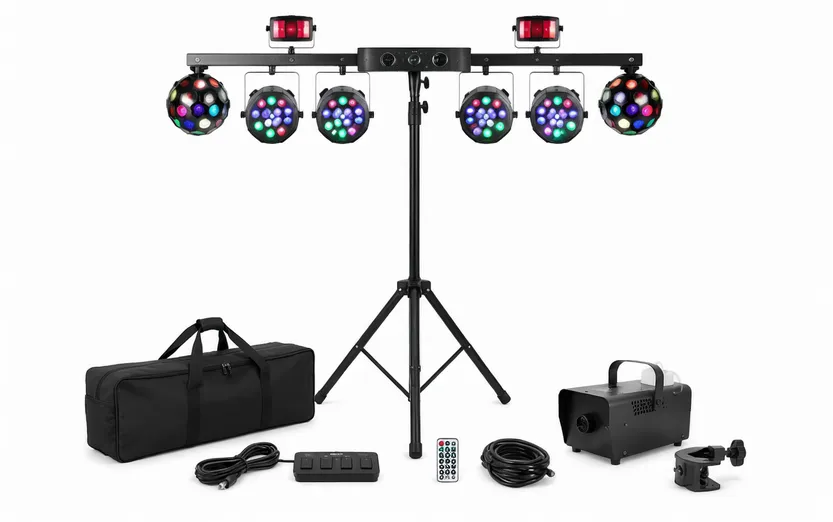
Gigbar systems perform exceptionally well as featured product listings on Amazon, eBay, and specialized DJ equipment platforms. The all-in-one format makes for a cleaner product listing, a more compelling product photo (complete system versus standalone tube), and higher average order value. Distributors selling through e-commerce channels use gigbars as anchor products — they drive traffic, and the customer frequently adds accessories (fog machines, DMX controllers, carry cases) in the same cart.
If you sell through online marketplaces, gigbar SKUs become your catalog highlights because they solve the "what do I need to buy?" decision for first-time DJ equipment shoppers.
Bar & Nightclub Install (Compact Venues)
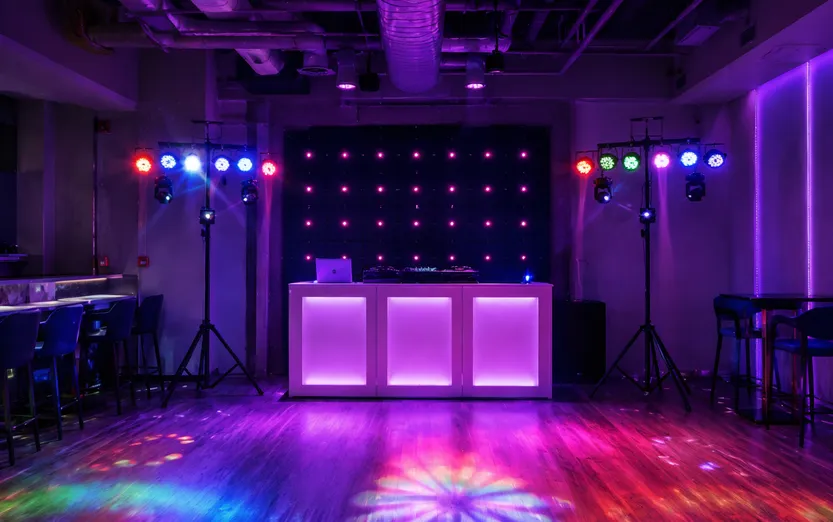
Smaller bars and nightclubs that don't have ceiling-mount capability use floor-standing gigbar systems as their primary lighting rig. The bar buys one or two units, positions them behind the DJ booth or flanking the dance floor, and leaves them in place permanently. This is a project-based segment: you sell through contractors or directly to venue operators, typically 1–4 units per sale.
Lower volume but zero competition from the "buy the cheapest thing on Amazon" crowd — venue buyers pay for reliability because downtime means a dark dance floor on a Friday night.
Discuss volume pricing for your primary segment
MOQ from 30 units. Tiered pricing based on order volume and customization scope.
OEM/ODM: Your Brand on an All-in-One System from 30 Units
The gigbar format is particularly well-suited to private-label branding because you're selling a system, not a commodity component. Buyers associate the complete package with the brand on the box — and that brand can be yours.
OEM Scope
Your brand, our proven design
- Logo silk-screened or laser-etched on the vertical tube and crossbar
- Custom powder coat color (any RAL, MOQ 30 units)
- Your branded carry bag with your artwork and contact info
- Custom packaging — your box design, barcode, insert materials
- Private-label user manual with your brand, your support contact
ODM Scope
Modified design to your requirements
- Crossbar width adjustment (narrower for compact systems, wider for 6-fixture configurations)
- Different fixture mounting bracket patterns (standard GDMonkey bracket or adapter for your existing fixtures)
- Wireless DMX receiver integration (built into base unit — eliminates the external DMX cable entirely)
- Bluetooth audio-trigger module integration
- Modified height range (shorter for bar-top systems, taller for stage applications)
- Custom carry case design (soft case standard; hard case available)
Low-Risk Market Entry
30-unit minimum means you can launch a branded gigbar as a market test without warehouse risk. We have distributors who started with 30, confirmed sell-through over one quarter, and scaled to 500-unit orders within the same year.
The economics of private-label gigbar make sense even at small quantities because the per-unit margin supports the branding investment.
Pro tip from 14+ years of shipping: The distributors who add their own quick-start guide — a one-page setup diagram printed on card stock — see measurably fewer support tickets from their end customers. We can print that card as part of your packaging, or you can supply artwork. Small investment, real customer satisfaction impact.
How We Manufacture Gigbar Systems — Process Details
Gigbar production combines our stand fabrication line with our electronics assembly capability, which is why trading companies can't easily replicate what we build.
Frame Fabrication
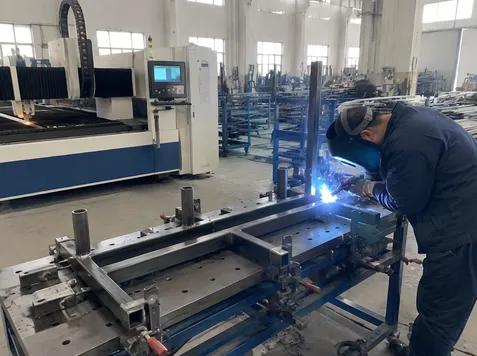
The stand frame follows our standard tube-cutting → bending → welding → surface treatment sequence. Vertical tubes and crossbar members get CNC-cut to ±0.5mm tolerance, then MIG-welded at all structural joints.
We fixture-jig the crossbar alignment to ensure all mounting positions sit parallel to the ground when the stand is deployed — a misaligned bracket means a fixture hangs at an angle, which looks unprofessional and causes your end customer to assume the product is defective.
Internal Wiring Harness
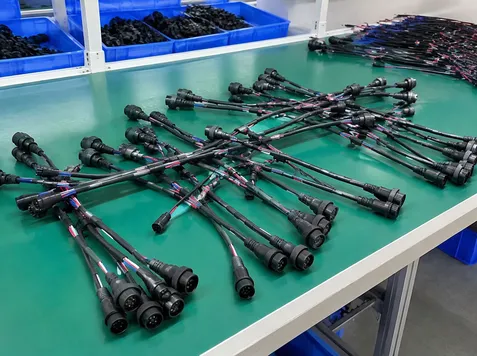
The wiring harness is produced on a separate wire assembly bench, then threaded into the frame during final integration. Harness assembly uses pre-cut, pre-terminated cables with molded connectors — no hand-soldered field splices that fail under vibration.
Each harness gets continuity-tested before installation. After threading into the frame, we run a full-circuit test with simulated fixture loads to confirm every position delivers clean power and DMX signal.
Power Distribution PCB
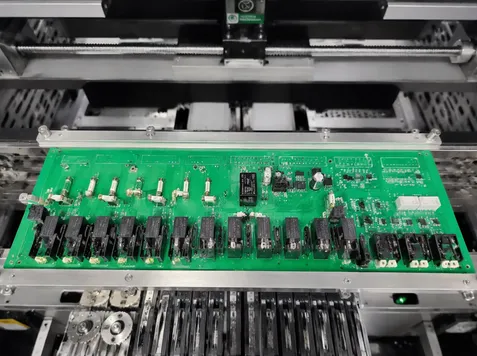
Surface-mount assembly on our SMT line, same process and quality controls as our lighting fixture driver boards. The PCB features:
- Individual channel fuses
- TVS diode surge protection on the DMX bus
- Thermal cutoff on the main power input
The PCB mounts in a sealed enclosure at the base of the stand, accessible for service but protected from accidental damage and moisture.
Final Integration & Testing
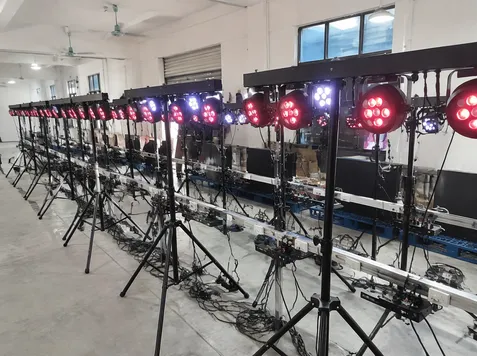
Assembled frames receive a 48-hour powered aging test. We connect test fixtures at all positions and run the system at full load continuously. This catches infant mortality — capacitor failures, cold solder joints on the PCB, connector seating issues — before the unit ships.
After aging, a functional test confirms DMX response at every fixture position, power delivery within spec, and sound-active trigger sensitivity.
Packaging & Freight: Getting Gigbar Systems to Your Warehouse Intact
Gigbar systems ship fully assembled (minus fixtures — those ship separately or as part of a bundle order). The complete gigbar frame, crossbar, carry bag, hardware kit, and user manual pack into a single master carton with custom-molded EPE foam inserts.
The molded foam insert is non-negotiable for this product. Gigbar systems include the internal wiring harness and PCB — transit damage that would only scratch a bare stand can actually short a circuit board or break a connector on a gigbar. Our foam insert design cradles the base unit (where the PCB lives) with 30mm shock-absorbing foam on all sides.
Damage claim rate on gigbar shipments has held below 0.3% over the past two years, including LCL ocean freight. Compared to 1.5–2% damage on stands shipped without custom molded inserts — the foam investment pays for itself many times over in avoided replacement costs.
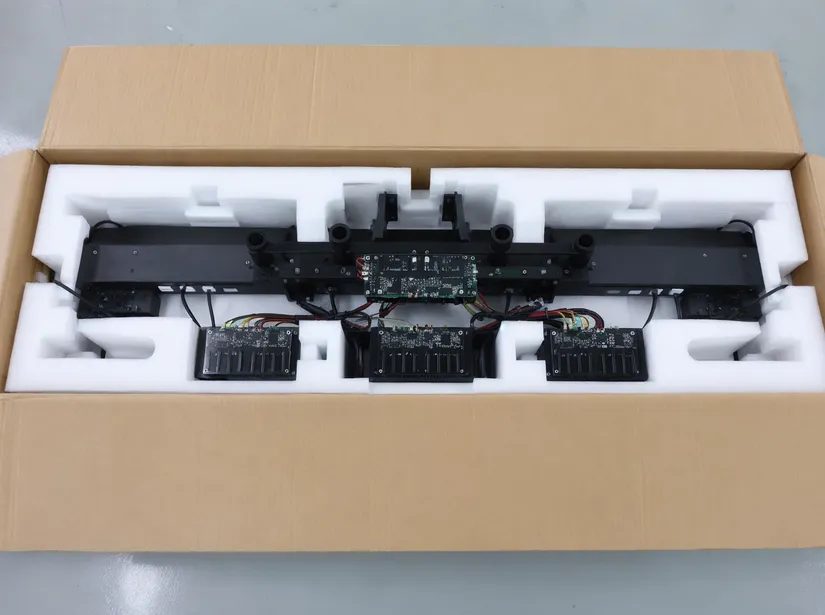
Custom EPE foam cradles protect PCB components during ocean and overland freight.
Packaging Specifications
| Parameter | Specification |
|---|---|
| Master carton dimensions | ~1100 × 300 × 250mm |
| Gross weight per carton | 10–14kg |
| Units per 20' GP container | ~100–120 |
| Units per 40' HQ container | ~220–260 |
| Palletization | 12 cartons per Euro pallet layer |
| Retail-ready packaging option | Full-color printed box with product imagery, +$2.50/unit |
Mixed-Container Compatibility
Mixed-container shipments work well with gigbar cartons. They're rectangular and predictable, stacking cleanly in rows alongside LED par cartons and moving head boxes. Most of our buyers ship gigbars as part of a mixed lighting package order — stands, fixtures, and fog machines in a single container.
Certification & Compliance for Import
Gigbar systems carry both mechanical and electrical compliance requirements because they include powered wiring and PCB components — unlike a bare stand which is purely structural.
Because the gigbar includes an active PCB and power distribution, it falls under electrical product regulations in most markets — not just mechanical safety regulations like a bare stand. This is an advantage for you: your competitors importing simple bar-stands don't need electrical compliance, but they also can't claim it. Your gigbar listing showing CE + FCC electrical compliance signals a higher-quality product to informed buyers and qualifies for institutional purchasers who require certified electrical equipment.
Current Certifications
-
CE Marking — Low Voltage Directive + EMC Directive — required for EU market entry
-
RoHS Compliance — full material declarations for all electrical components
-
FCC Part 15 (Class B) — for North American distribution where the DMX PCB qualifies as a digital device
-
Load Test Certificates — static load at 1.5× rated capacity, third-party verified
Documentation Supplied with Orders
- CE Declaration of Conformity
- RoHS material compliance certificates
- FCC test report (for US-market SKUs)
- Load test report per model
- Wiring schematic (for after-sales service reference)
Need Compliance Documentation for Your Target Market?
Request the full certification package matched to your region's import requirements — EU, North America, UK, or other markets.
How the Gigbar Compares to Other DJ Lights Stand Options
Not every buyer needs an integrated system. Some markets prefer the flexibility of component stands. Here's where the gigbar fits relative to other products in our range:
| Feature | DJ Lights Stand Gigbar | DJ Lights T-Bar Stand | DJ Lights Tripod Stand |
|---|---|---|---|
| Fixture mounting positions | 4–6 (pre-wired) | 2–4 (manual mount) | 1–2 (manual mount) |
| Internal wiring | Yes — power + DMX | No | No |
| Setup time | Under 5 minutes | 5–10 minutes + cabling | 3–5 minutes + cabling |
| Typical retail price tier | Premium ($150–350 street) | Mid ($50–120 street) | Entry ($30–80 street) |
| Your wholesale margin potential | Highest per unit | Moderate | Lowest per unit (volume play) |
| Best buyer profile | Entry DJs, rental fleets, venues | Mobile DJs wanting flexibility | Budget buyers, utility use |
| Complexity for end customer | Lowest — plug and play | Moderate — needs fixtures + cables | Higher — needs everything |
DJ Lights Stand Gigbar
- Positions: 4–6 (pre-wired)
- Internal wiring: Yes — power + DMX
- Setup: Under 5 minutes
- Price tier: Premium ($150–350)
- Margin: Highest per unit
- Buyer: Entry DJs, rental fleets, venues
- Complexity: Lowest — plug and play
DJ Lights T-Bar Stand
- Positions: 2–4 (manual mount)
- Internal wiring: No
- Setup: 5–10 minutes + cabling
- Price tier: Mid ($50–120)
- Margin: Moderate
- Buyer: Mobile DJs wanting flexibility
- Complexity: Moderate — needs fixtures + cables
DJ Lights Tripod Stand
- Positions: 1–2 (manual mount)
- Internal wiring: No
- Setup: 3–5 minutes + cabling
- Price tier: Entry ($30–80)
- Margin: Lowest per unit (volume play)
- Buyer: Budget buyers, utility use
- Complexity: Higher — needs everything
If you're building a catalog to serve multiple market tiers, the gigbar covers your premium slot while T-bar stands cover mid-range and tripod stands cover the volume entry point. Same factory, same quality system, consolidated logistics — your three-tier stand range ships in one container.
View the full DJ lights stand rangeFor buyers who need higher load capacity or modular truss aesthetics, our DJ lighting truss stand serves the professional touring and event rental segment. Different buyer, different price point, different use case — but worth stocking alongside gigbars if you sell into both the consumer and professional channels.
Frequently Asked Questions
Technical and commercial answers for distributors evaluating the gigbar system.
Can I order gigbar frames without fixtures and supply my own lighting separately?
Yes — the gigbar system as manufactured by us ships as the complete frame, wiring, and mounting hardware. Fixtures are modular and mount to the pre-wired brackets using standard clamp adapters. You can order frame-only for buyers who want to choose their own fixtures, or we can supply complete packages with GDMonkey LED pars, derbys, or lasers pre-mounted. The frame-only configuration still includes internal wiring terminated at each position — your buyer just plugs fixtures into the waiting connectors.
What's the actual power draw limit on the integrated distribution PCB?
Standard gigbar PCB handles 1,200W total distributed across all positions (200–300W per channel depending on model). This comfortably drives 4–6 LED fixtures in the 50–150W range per fixture. If you need higher capacity for power-hungry fixtures (large moving heads, high-output PARs), we have a heavy-duty PCB option rated at 2,000W total. Specify at order — no minimum on the heavy-duty variant, it's a component swap during assembly.
How do I handle warranty claims on the internal wiring — is it serviceable?
The harness is designed for field replacement. Each cable section connects via IP-rated push-lock connectors at the telescoping joints and crossbar junction. Your buyer or their service tech can disconnect a faulty section and install a replacement cable (we supply spare harness kits) without disassembling the entire stand. This was a deliberate design decision — we wanted gigbar after-sales to be a cable swap, not a full unit return. Keeps your warranty cost to a parts shipment rather than a freight-and-replace cycle.
What fixture types physically fit the gigbar mounting positions?
Standard mounting brackets accept any fixture with a 35mm or 38mm clamp adapter (the universal standard for PAR lights, derbys, lasers, and compact moving heads up to 8kg). Fixtures with different mounting — larger moving heads, LED bars with bracket feet — can be accommodated with a crossbar adapter plate (included in the hardware kit or available as an accessory). We size the bracket spacing at 250–350mm between positions, so fixtures up to 200mm housing width mount without interference.
DJ lights stand gigbar versus building a system from separate components — what's the cost comparison for my distribution business?
From a landed-cost perspective, a gigbar system costs 15–25% more to manufacture than the equivalent components purchased separately (stand + crossbar + wiring + mounting hardware). But the retail price commands a 40–60% premium over the same components sold individually. Your per-unit margin is higher on the gigbar despite the higher cost-of-goods because buyers pay a significant premium for integration and simplicity.
Additionally, you reduce your SKU count (one SKU vs. 4–5 component SKUs), which simplifies your inventory management and order fulfillment.
What's the minimum order for a branded DJ lights stand gigbar?
30 units for OEM branding on our existing models (logo, color, packaging). For ODM modifications (different crossbar width, added wireless module, custom PCB features), 50–100 units depending on the modification scope. Sample evaluation units ship in 7–10 days so you can assess build quality and wiring integrity before committing to a production order.
Next Step: Get a Gigbar Quote Tailored to Your Channel
Tell us how you plan to sell this product and we'll configure the right variant. Entry-level 4-position system for e-commerce? A 6-position heavy-duty configuration for rental companies? Private-label with wireless DMX built in? Each path has a different spec, a different price point, and a different margin structure — and we've built all of them for existing distributors.
Send Us:
- Your target market (region + channel)
- Approximate order volume
- Any branding or customization requirements
We'll respond within 48 hours with a configured quote, technical drawing, and container loading plan.
Teresa — Export Sales