

Dance Stage Lighting Built for Commercial Rental Durability
Beam moving heads, LED derbys, strobe-wash hybrids, and multi-effect fixtures — engineered to run hot for 6 hours straight without thermal throttling or lumen drop.
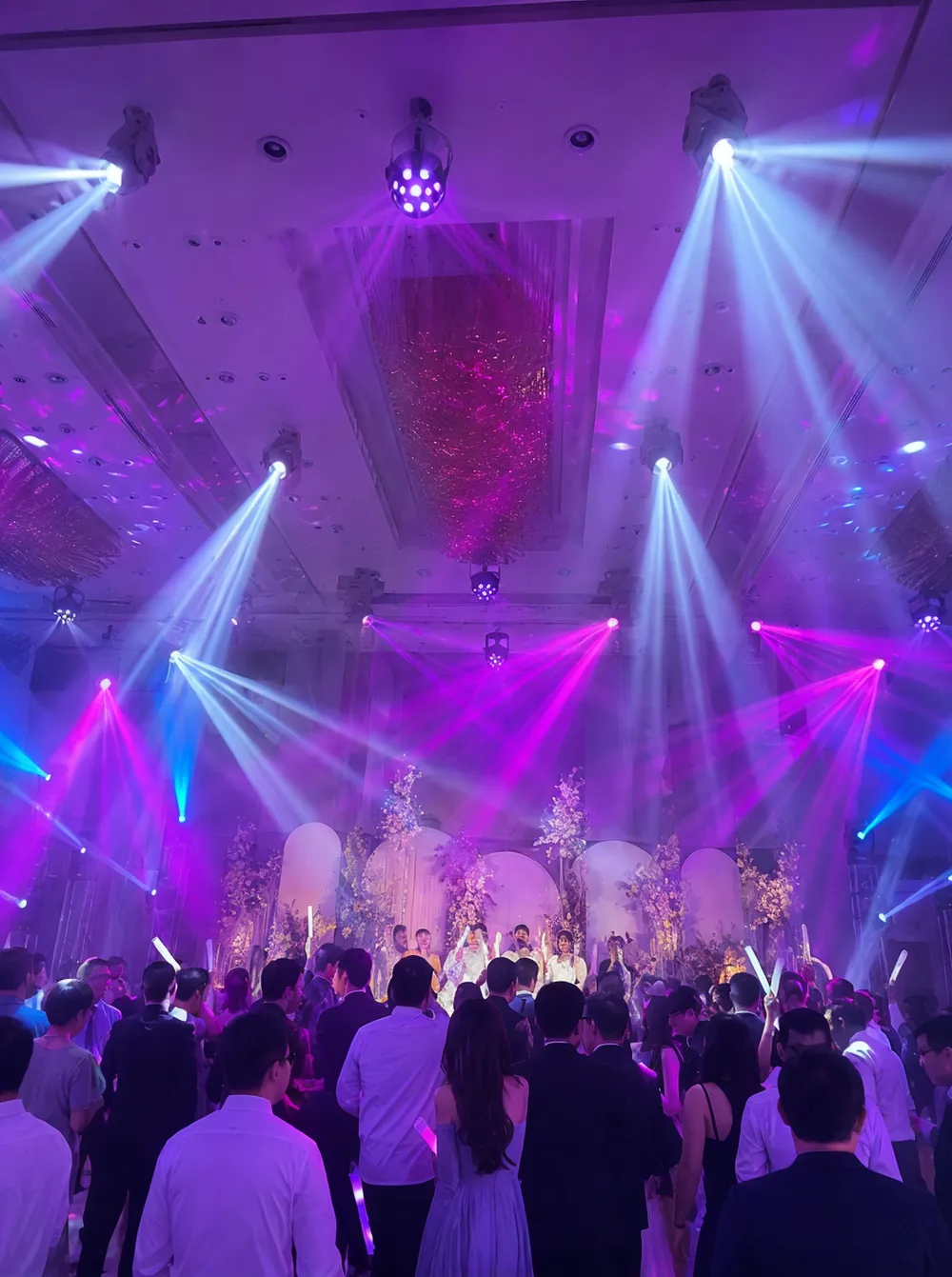
What Dance Stage Lighting Is — And Where It Sits in Your Product Line
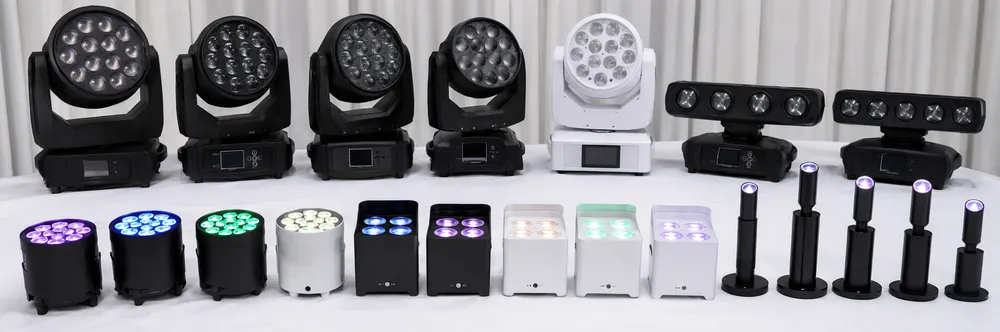
Dance stage lighting is the high-energy segment of the wedding and event lighting category — beam moving heads, LED derby effects, laser-LED hybrid fixtures, strobe arrays, and wash-effect units that transform a reception ballroom or nightclub floor into a kinetic visual environment. If wedding stage lighting fixtures handle the ceremony with warm uplighting and quiet elegance, dance stage lighting handles the after-party with saturated color, speed, and impact.
Your buyers — rental operators, nightclub installers, event companies — judge dance fixtures on three criteria: sustained brightness over a full night of operation, physical durability through weekly deploy-and-return cycles, and visual impact per dollar of fleet investment. These are not decorative fixtures. They work hard, run hot, and travel rough. Everything we build in this segment addresses that reality.
The commercial positioning for your distribution: dance stage lighting sits at a higher average selling price than static LED pars, with strong rental demand from wedding receptions, nightclub installations, school dances, corporate parties, and festival stages. It's a fixture category where quality differentiation is immediately visible to end clients — which means you can maintain margin against commodity LED imports.
Sustained Brightness
Full-night output without thermal throttling. Brightness at midnight matches brightness at setup.
Physical Durability
Built to survive weekly deploy-and-return cycles in rental fleet operation without mechanical failure.
Visual Impact / Dollar
Quality differentiation visible to end clients lets you maintain margin against commodity LED imports.
High-Demand Rental Segments
Sustained Output Engineering — The Core Differentiator
Most dance fixtures hit their rated spec for 20 minutes on a showroom floor, then thermally throttle down to 60–70% output by hour three of continuous operation.
The Problem Your Rental Clients Face
Your rental client doesn't notice the gradual dimming because it happens slowly — but their guest experience drops, the energy on the dance floor fades, and next time they call a different company. Thermal throttling is invisible on a spec sheet, but it's the number-one reason rental operators lose repeat bookings on dance-heavy events.
Our Engineering Approach
We engineer specifically against thermal throttle failure. Our dance stage lighting fixtures maintain rated lumen output at sustained full power for 6+ hours of continuous operation in ambient temperatures up to 40°C. The mechanism is straightforward:
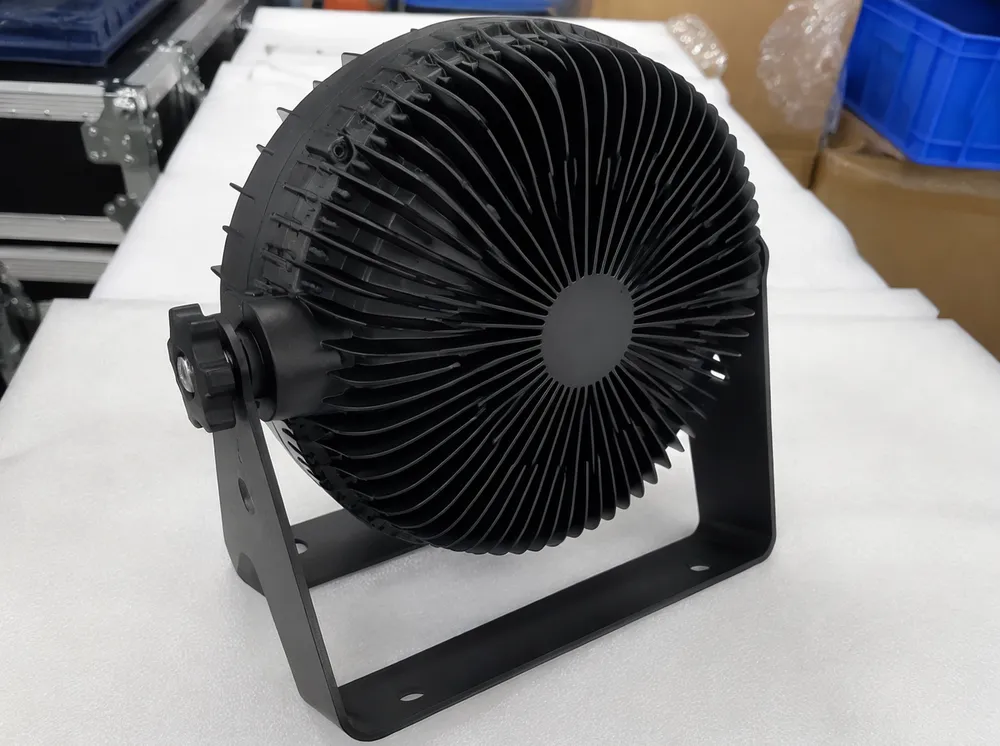
Thermal Chamber Test — Side-by-Side Results
Tested competitive fixtures in our thermal chamber at 35°C ambient. The thermal mass difference is visible just by picking both fixtures up — ours weighs more because the aluminum is actually there, not on a spec sheet.
Holds flat output past 8 hours at 35°C ambient
Hits thermal throttle at 2.5 hours in 35°C ambient
The Commercial Translation
Your rental fleet holds its performance quality across an entire event night. No mid-event output drops, no client complaints about energy levels fading, no premature LED degradation eating into your fleet lifecycle return. Sustained output engineering translates directly into repeat bookings for your rental clients and longer fleet life for your capital investment.
Dance Stage Lighting Fixture Types We Manufacture
Not every dance floor needs the same fixture. We produce across the full dance lighting range, and each type serves a different deployment scenario and price tier in your catalog.
Beam Moving Heads
150W–350W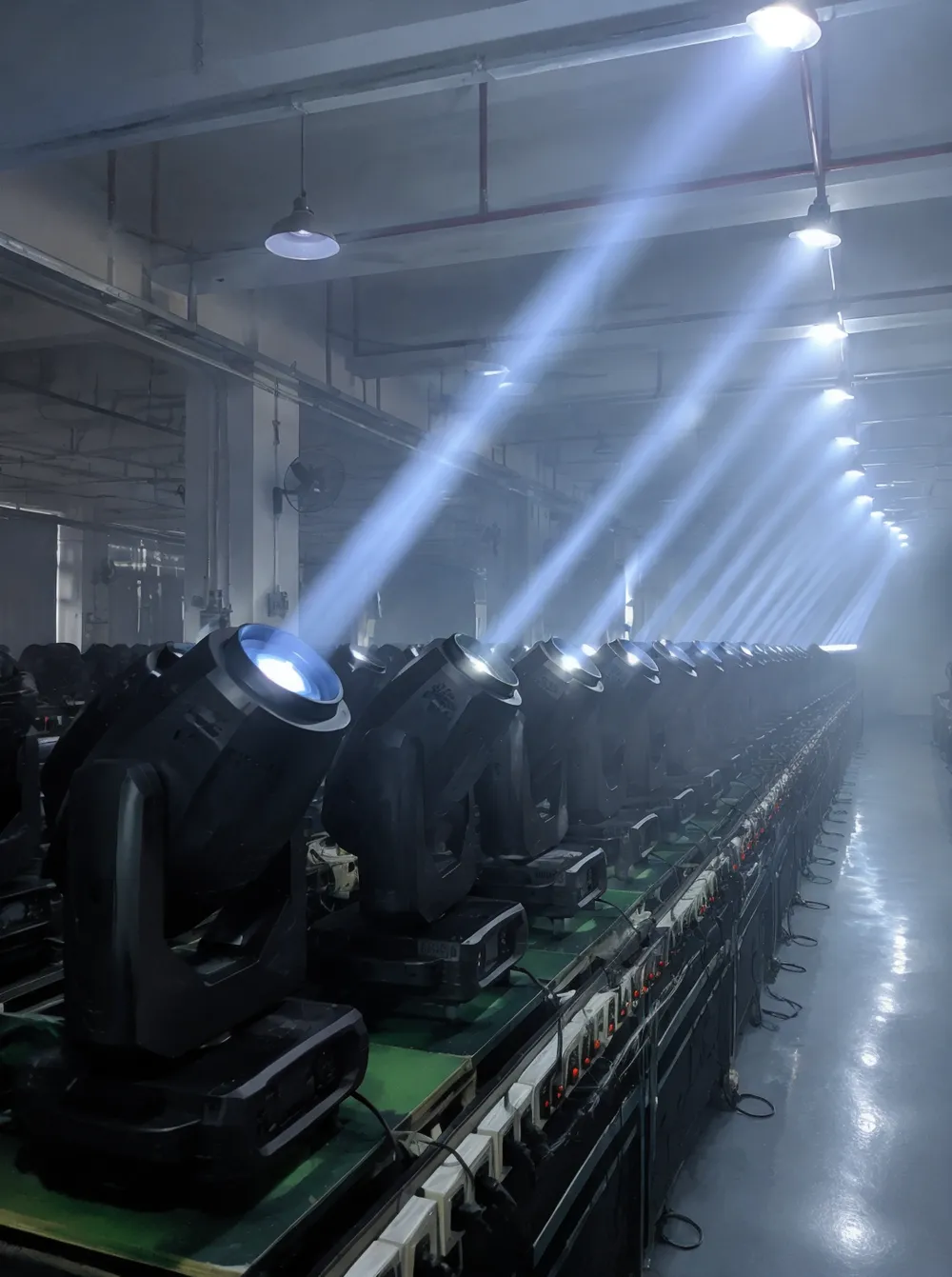
The anchor of any dance lighting rig. Narrow beam angles (2°–8°) create aerial effects, mid-air beam crossing patterns, and sharp gobo projections. Our beam heads run 3-phase stepper motors for pan/tilt — 540° pan, 270° tilt — with positioning accuracy of ±0.3° and movement speeds fast enough for beat-synchronized programming.
Available with single-prism or multi-facet prism wheels, bi-directional gobo rotation, and motorized focus.
Margin Opportunity & Reliability
These fixtures carry your highest rental price per unit. The margin opportunity is significant — but only if they stay on the road. A beam head with a failed motor or loose prism wheel is rental income lost. We test every pan/tilt assembly for 100,000 movement cycles before installation into the housing, and the prism wheel bearings are sealed units rated for 20,000 hours.
LED Derby & Multi-Effect Units
RGBW / RGBAW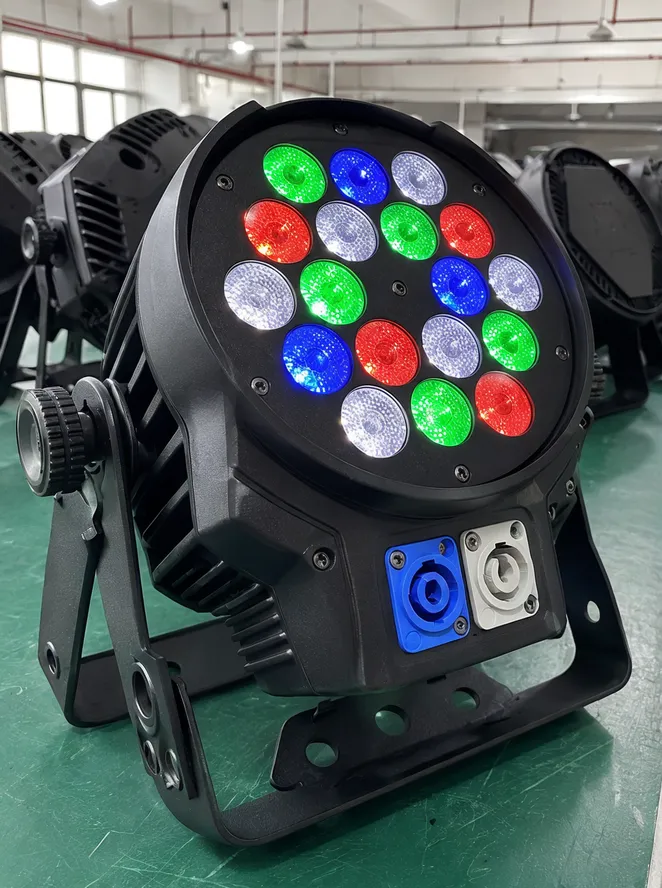
The high-volume, lower-price-point fixtures that fill out a dance package. LED derbys produce wide-coverage multi-color beam patterns from a single compact unit — our models use 4-8 high-power LED modules (RGBW or RGBAW) behind rotating lens arrays to create dynamic room-filling effects with minimal fixture count.
Volume Business for Distributors
Event companies buy these 10-20 at a time because a full reception dance floor requires coverage, not just focal-point fixtures.
Freight-Optimized Design
Our derbys are designed to stack efficiently for transport — flat-bottom housings, flush-mount handles, and CBM per unit optimized for container loading density. You fit more revenue per cubic meter of freight.
Strobe-Wash Hybrids
Dual-Function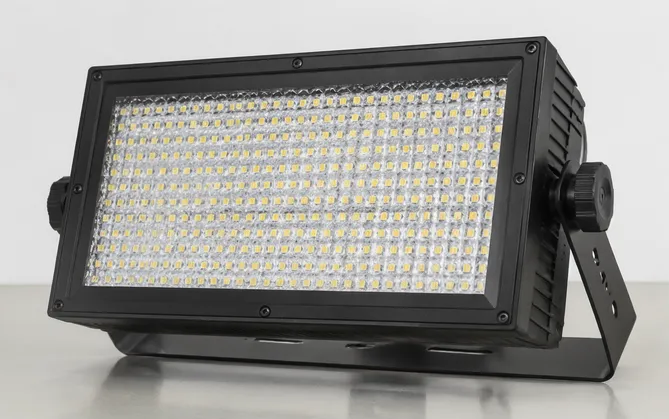
Dual-function fixtures that combine high-intensity strobe sections with RGBW wash output in a single housing. These reduce your customer's fixture count per event while expanding their creative options — one unit covers both ambient wash and accent strobe effects depending on the DMX programming.
Independent LED Zones (2–4 per fixture)
A single unit can produce color-chase effects, section-by-section strobe patterns, or blended full-face wash output. The zone independence adds programming depth without adding fixtures to the rig — a direct cost saving for rental operators working with limited truss capacity.
Laser-LED Hybrid Fixtures
Class 3B Diodes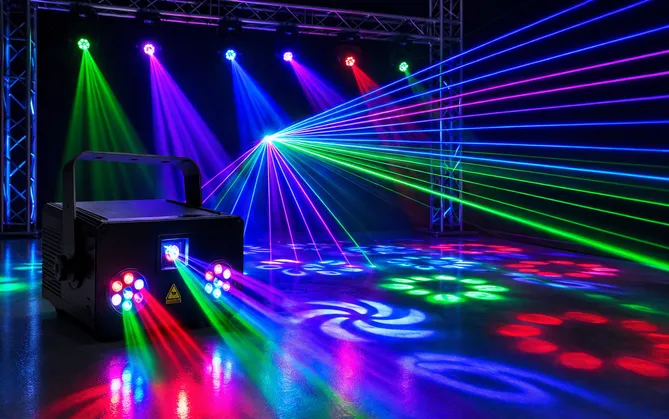
Combined laser effect and LED wash in a single housing with shared DMX addressing. Useful for dance floors where both aerial laser patterns and wash color are needed but mounting positions are limited.
Our laser-LED hybrids use Class 3B diodes (green 532nm, red 650nm, blue 450nm) with full analog modulation behind scanning galvo mirrors, plus a surrounding LED wash array for ambient fill.
Compliance Note
Laser fixtures require variance documentation for some markets. We provide FDA/CDRH variance filing support for US-bound orders and IEC 60825 classification documentation for EU markets. Ask during quoting if your territory requires specific laser compliance paperwork.
Technical Specifications — Dance Stage Lighting Range
| Parameter | Beam Moving Head | LED Derby | Strobe-Wash Hybrid | Laser-LED Hybrid |
|---|---|---|---|---|
| LED Source | OSRAM/Luminus single-chip (150W–350W) | RGBW multi-chip array (4×10W–8×12W) | RGBW COB or SMD array (100W–200W total) | RGB laser diode + RGBW LED (80W–150W) |
| Beam Angle | 2°–8° (fixed or zoom) | 45°–120° (wide coverage) | 25°–60° (wash) + concentrated (strobe) | 40° scan angle (laser) + 60° (LED wash) |
| Color System | CMY + CTO wheel, or RGBW mixing | RGBW / RGBAW direct mixing | RGBW zone mixing | Analog RGB laser + RGBW LED |
| Gobo/Effect | 2 gobo wheels (rotating + fixed), prism | Rotating lens array, auto patterns | Zone chase, strobe flash patterns | Galvo-scanned patterns (100+ built-in) |
| Pan/Tilt | 540°/270°, 3-phase stepper | N/A (fixed mount) | N/A (fixed mount) | N/A or limited tilt (model-dependent) |
| Control | DMX512, Art-Net, sACN, Master/Slave | DMX512, Sound-active, Master/Slave | DMX512, Sound-active | DMX512, ILDA (select models), Sound-active |
| IP Rating | IP20 (indoor) / IP65 (outdoor models) | IP20 | IP20 | IP20 |
| Power | AC 100-240V 50/60Hz | AC 100-240V 50/60Hz | AC 100-240V 50/60Hz | AC 100-240V 50/60Hz |
| Cooling | Temperature-controlled forced-air | Passive or low-speed fan | Forced-air, variable speed | Forced-air (laser thermal management) |
| Housing | Die-cast aluminum, 2.5mm structural joints | Die-cast or injection-molded ABS | Die-cast aluminum | Die-cast aluminum (laser safety enclosure) |
| Weight (typical) | 12–22 kg | 2.5–5 kg | 5–9 kg | 4–8 kg |
Specifications shown represent industry-standard values for this product type across our range. Exact parameters vary by model configuration. Contact us for detailed data sheets on specific models.
Beam Moving Head
- Source: 150W–350W OSRAM/Luminus
- Beam: 2°–8°
- Pan/Tilt: 540°/270°
- Control: DMX512, Art-Net, sACN
- Weight: 12–22 kg
LED Derby
- Source: RGBW 4×10W–8×12W
- Beam: 45°–120°
- Mount: Fixed
- Control: DMX512, Sound-active
- Weight: 2.5–5 kg
Strobe-Wash Hybrid
- Source: RGBW COB/SMD 100W–200W
- Beam: 25°–60° wash
- Mount: Fixed
- Control: DMX512, Sound-active
- Weight: 5–9 kg
Laser-LED Hybrid
- Source: RGB laser + RGBW LED 80W–150W
- Scan: 40° laser + 60° LED
- Patterns: 100+ galvo-scanned
- Control: DMX512, ILDA
- Weight: 4–8 kg
Market Segments You Can Sell Dance Stage Lighting Into
Each segment below represents recurring revenue territory for your distribution business. We manufacture across all of them — your product selection depends on which end-markets you serve.
Wedding Reception & Private Events
Largest Demand Driver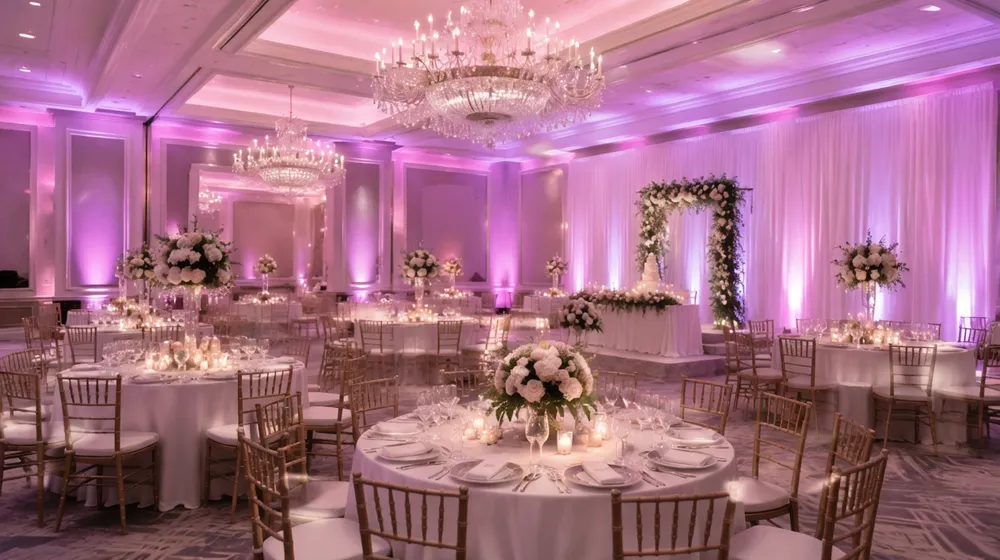
The single largest demand driver for dance stage lighting. Every wedding with a dance floor needs lighting — and rental companies deploy the same fixtures 40-50 weekends per year.
Typical event package: 4-8 beam moving heads, 6-12 derby/effect units, 2-4 strobe-wash fixtures. This is volume-repeat business with predictable seasonal peaks (May-October in Northern Hemisphere markets).
Margin Opportunity
Wedding clients pay premium rates for high-visual-impact lighting. A 12-fixture dance package that costs your customer $800/month in amortization rents for $400-600 per event night. The faster the fleet pays itself off, the sooner everything is profit — which makes fixture durability the defining factor in lifecycle ROI.
Nightclub & Permanent Venue Installation
Highest Duty-Cycle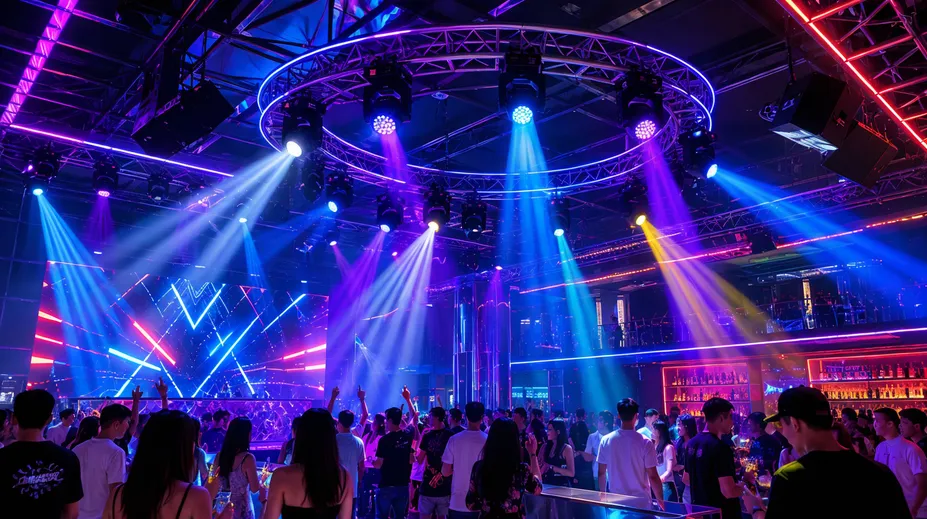
Dance fixtures installed permanently in clubs, bars, and entertainment venues. These run 4-6 hours nightly, 5-7 nights per week — the highest duty-cycle application in the dance lighting category.
Sustained output engineering matters more here than anywhere else because the fixtures run continuously and replacements require rigging crews and downtime.
For installation contractors, our dance fixtures are specified for 50,000-hour LED lifetime at rated output, with panel-mount connectors and safety cable attachment points that meet venue insurance requirements.
Project Scale
Project orders run 30-100 fixtures per venue — and contractors who trust the product specify it again on the next project.
Mobile DJ & Entertainment
Pull-Through Volume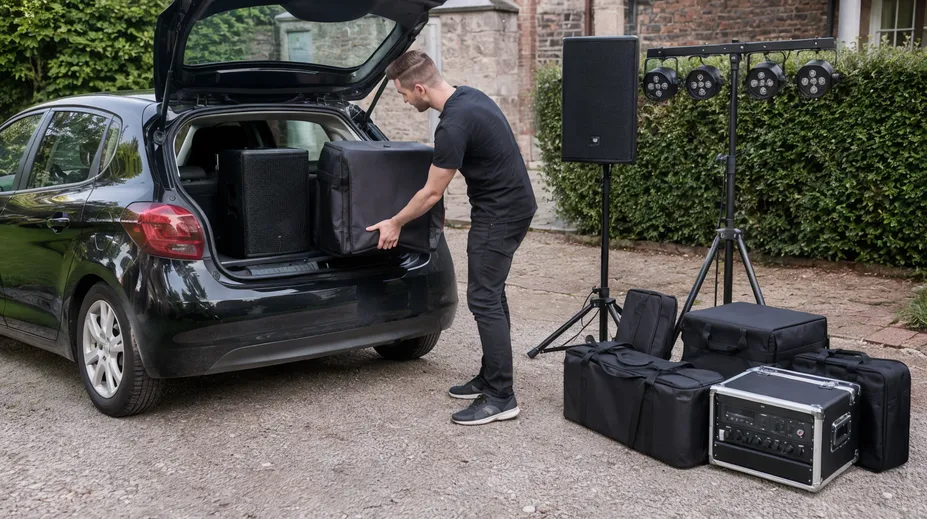
Solo DJs and mobile entertainment companies purchasing through your distribution channel. They buy 4-8 fixtures at a time, need plug-and-play sound-active modes, and prioritize visual impact per dollar. They're price-sensitive but brand-loyal once they find equipment that survives life in the back of a car.
The Volume Play
Mobile DJs buy frequently in small quantities and evangelize equipment they trust to other DJs on social media. A fixture that becomes the "recommended beam light" in a DJ community creates pull-through demand for your distribution without marketing spend.
School & Corporate Events
Annual Budget Cycle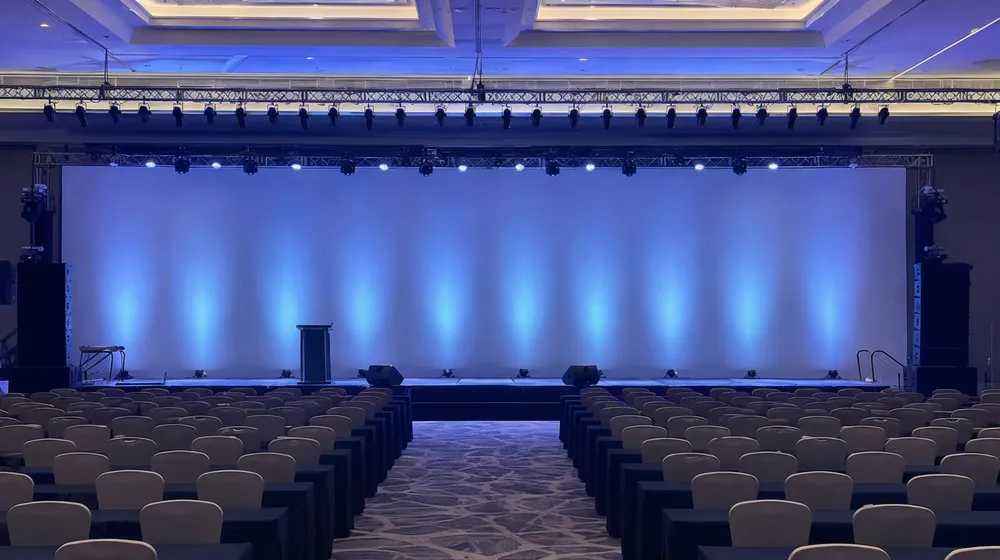
Institutional buyers — schools, universities, corporate event teams, community centers — purchasing dance lighting for multi-purpose halls and event spaces. These buyers order through distributors and are less price-sensitive than DJs but need documentation (compliance certificates, warranty terms, installation guides) that satisfies procurement departments.
Order Patterns
10-30 fixtures per facility, purchased on annual capital equipment budgets. The opportunity for your sales team is identifying these accounts early in their budget cycle, because institutional buyers typically approve vendors once and reorder from the same source for years.
Customization for Dance Stage Lighting What We Can Build to Your Spec
Dance lighting customization falls into two categories: configuration changes within existing models (fast, low-MOQ) and new product development (requires engineering investment but builds exclusive inventory for your brand).
Configuration Customization
30-unit MOQ-
LED color temperature and array configuration
Swap RGBW for RGBAW+UV, change chip wattage tier within the same housing
-
DMX channel personality
Custom channel maps matching popular consoles in your territory (MA, Chamsys, Avolites personalities pre-loaded)
-
Gobo sets
Custom gobo artwork loaded into moving head fixtures (provide AI or DXF files, we laser-cut from steel or etch from glass)
-
Housing color
Standard black or white; custom RAL colors available at 100-unit MOQ per SKU
-
Voltage and plug configuration
Matched to your destination market (IEC, NEMA, Schuko, UK, AU)
-
Branding
Logo on housing (silkscreen or laser engraving), custom packaging, firmware boot screen with your brand
ODM Development
Engineering Investment-
New optical system
Custom beam profiles, new reflector/lens combinations for specific throw distances
-
Custom housing tooling
New fixture silhouette or form factor (minimum 500 units to amortize tooling cost)
-
Wireless control integration
Proprietary wireless protocols beyond standard wireless DMX
-
Hybrid fixture combinations
Merging effect types into a single housing (e.g., beam + laser + wash triple-hybrid)
Development Timeline
4-6 weeks from brief to production samples. We provide CAD renderings and optical simulations during development for your approval before cutting tooling.
Exclusivity Agreements on ODM Tooling
If you want exclusive product designs that competitors can't source from us — we do exclusivity agreements on ODM tooling. The tooling investment stays yours, and we won't produce that specific design for other buyers.
How We Build Dance Fixtures Differently
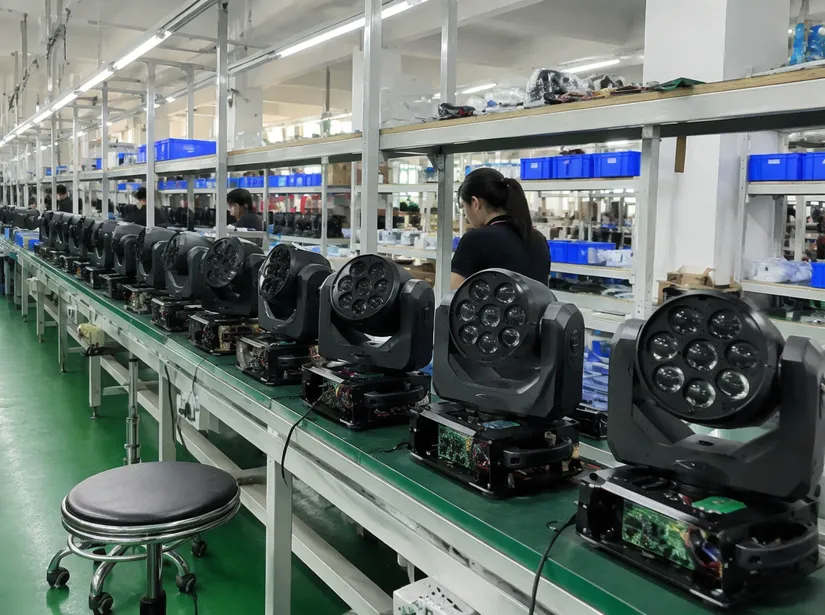
The dance lighting segment exposes manufacturing shortcuts faster than any other fixture category because the operating conditions are extreme: sustained full power, high ambient temperatures, physical impacts during transport, and thousands of insertion cycles on connectors.
Motor Assembly & Calibration
Moving head pan/tilt motors are assembled in a climate-controlled cell, not on the general production line. Belt tension is set with a digital tensiometer to within ±0.5N — too loose and the head drifts during movement; too tight and you get premature bearing wear.
Each motor pair gets a 2-hour run-in at varying speeds before installation, which identifies cogging, noise, and heating anomalies. We reject about 3% of motor assemblies at this stage.
That's a high reject rate for motors, and it costs us. But a moving head with unsmooth pan movement ships to a buyer once and comes back permanently.
LED Array Thermal Bonding
LED boards are thermally bonded to heatsink surfaces using phase-change thermal interface material (TIM), not adhesive thermal tape. Phase-change TIM flows at operating temperature to eliminate air gaps between the PCB substrate and heatsink surface.
Thermal Resistance Comparison
This directly extends LED lifetime by keeping junction temperatures 10–15°C cooler under the same power load.
Connector Panel Reinforcement
DMX and power connector mounting panels are 3mm aluminum plate, through-bolted with lock washers — not the press-fit or hot-glued panel mounts common in budget fixtures.
When a tech pulls a DMX cable at an angle (which happens constantly in real use), the load transfers through the panel structure rather than through the solder joints on the PCB.
Final Optical Alignment
After full assembly, every beam fixture goes through optical alignment verification — beam centering measured at 15 meters against a calibration target.
A fixture with a beam that's even 2° off-center looks wrong in an aerial beam spread, and it means the reflector shifted during transport from the lens department to final assembly.
We catch and correct this in the 5-minute final optical check.
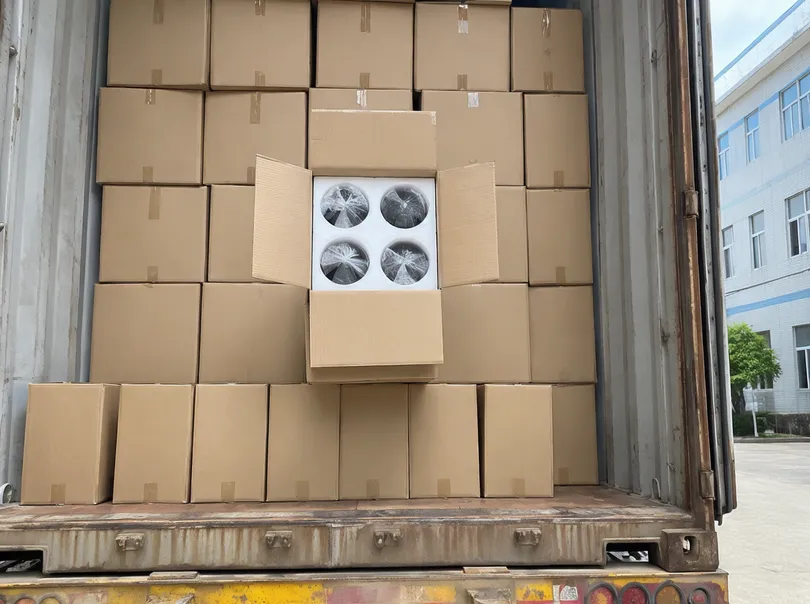
Packaging, Loading & Freight Economics
Dance fixtures range from compact 3kg derbys to 22kg beam moving heads — your container utilization depends heavily on the model mix.
| Fixture Category | Typical Carton (cm) | Units / 20GP | Units / 40HQ |
|---|---|---|---|
| Beam Moving Head (150–230W) | 55 × 40 × 45 | 200–280 | 400–560 |
| Beam Moving Head (280–350W) | 62 × 45 × 52 | 140–200 | 280–400 |
| LED Derby / Multi-Effect | 38 × 32 × 20 | 600–900 | 1,200–1,800 |
| Strobe-Wash Hybrid | 48 × 38 × 25 | 350–500 | 700–1,000 |
| Laser-LED Hybrid | 42 × 35 × 22 | 450–650 | 900–1,300 |
Standard Packaging Protection
Every fixture ships in custom molded-foam inserts. Moving heads get secondary pan/tilt locks and foam head restraints.
For mixed-model orders (which is most orders), we optimize carton arrangement within the container for maximum utilization and weight distribution — we'll send you a loading plan with your order confirmation showing exact container layout and total CBM.
Flight-Case Packaging Option
For distributors reselling directly to rental companies, we offer pre-loaded flight cases (2-pack or 4-pack configurations) with custom foam cuts. Your buyer receives ready-to-deploy stock — unbox and rig.
Margin Opportunity
The alternative for your customer is sourcing and fitting cases separately at higher total cost.
Compliance & Documentation for Dance Stage Lighting
Dance lighting fixtures carry the same compliance framework as our full wedding lighting line — details on our certification program — with additional considerations specific to high-power fixtures and laser-equipped models.
CE + EMC
EN 55015EN 55015 emissions testing covers the higher-frequency PWM signals from LED drivers running at 150W+ loads. Our driver designs use spread-spectrum frequency modulation on the switching stage, which distributes EMI across a wider bandwidth rather than concentrating it at harmonics. Your CE documentation passes without the need for external filtering components that add cost and heat.
FCC Part 15B
200W+ TestedRadiated and conducted emissions testing at full power. Dance fixtures running at 200W+ generate more conducted emissions back into the mains than low-wattage ceremony lights — our input filter design is sized to the fixture's actual load, not carried over from smaller models.
Laser Safety
FDA/CDRH accession number and variance documentation for US market entry. IEC 60825-1 classification labels and user documentation for EU/UK markets. We handle the compliance paperwork as part of the production process — your import file arrives with laser documentation included, not as a follow-up request that delays your product launch.
IP65 Outdoor Models
IEC 60529Tested per IEC 60529 with actual test reports. For outdoor festival stages and wedding garden venues, IP65 dance fixtures maintain seal integrity through the thermal cycling and UV exposure of outdoor deployment. Silicone gaskets rated for -20°C to +80°C.
Frequently Asked Questions — Dance Stage Lighting
Why do dance floor moving heads lose brightness after 3-4 hours of continuous use?
Thermal throttling. When the LED junction temperature exceeds the driver's protection threshold (typically 95-105°C), the driver reduces current to prevent damage. Budget fixtures hit this threshold at 2-3 hours because they use undersized heatsinks relative to their LED wattage — the spec sheet shows rated output at cold-start, not sustained output.
Our design maintains junction temperatures below 85°C at full output in 40°C ambient by running larger heatsink mass and driving LEDs at 70-80% of maximum rated current. The optical system compensates through reflector efficiency, so initial brightness matches — but hour-four brightness also matches hour-one brightness.
What IP rating do I need for outdoor dance stages at festivals and garden weddings?
IP65 minimum for any dance fixture exposed to weather. This covers rain, wind-blown dust, and the fog-machine output that condenses on fixtures in outdoor environments. For fixtures at ground level or in positions where water pools (stage deck cutouts, ground-mount up-lights for dance areas), consider IP67 which handles temporary submersion.
Note that IP-rated fixtures run warmer because sealed enclosures can't use open-air convection — our IP65 dance fixtures use over-specified internal fans and thermal conductance through the housing itself to compensate. Every IP65 model includes the IEC 60529 test report, not just a claimed rating.
How do I prevent DMX signal dropout in nightclub and hotel ballroom environments with heavy RF interference?
Choose fixtures with optical (XLR-based wired) DMX runs wherever possible — wired signal doesn't compete with RF. When wireless DMX is necessary for truss positions without cable access, specify frequency-hopping spread spectrum (FHSS) modules rather than fixed-channel 2.4GHz.
Our wireless DMX option operates across 80+ channels with automatic interference detection and channel switching. In testing, we maintain signal integrity at 100 meters range in convention centers with 50+ competing Wi-Fi access points. For critical permanent installations, we recommend a hybrid approach: wired DMX backbone to distribution nodes, wireless only for the last-mile connection to individual fixtures.
What's the realistic LED lifetime for dance fixtures that run 4-6 hours every night?
At 5 hours/night, 6 nights/week, you accumulate roughly 1,500 operating hours per year. At our derated drive current (70-80% of max), we achieve L70 lifetime of 40,000+ hours — meaning 27 years of nightly use before output drops to 70% of initial. In practical terms, you'll replace the fixture for obsolescence long before the LEDs fail.
The components that actually wear first are mechanical: gobo wheel bearings (rated 20,000 hours), pan/tilt belts (rated 15,000 hours, field-replaceable in 30 minutes), and cooling fans (rated 50,000 hours, modular plug-in replacement). We stock all mechanical wear parts — your maintenance cost stays predictable.
How does dance stage lighting differ from generic DJ lights when sourcing for rental fleets?
Construction quality and thermal management. Generic DJ lights are designed for the consumer market — 1-2 hours of use per session, minimal ambient heat, careful handling. Dance stage lighting for rental fleets needs 6+ hours sustained operation, survival through weekly transport and rigging cycles, and consistent output in high-ambient environments.
The differences are measurable:
These engineering choices cost more per unit but pay back in fleet lifecycle — fewer warranty returns, longer service life, and rental clients who trust your equipment enough to rebook every weekend.
Next Step — Build Your Dance Lighting Inventory
Send us your target fixture mix and quantity estimate. Even a rough list works — "8 beam moving heads around 200W, 12 derbys, 4 strobe-wash units for a starter rental package." Our team will recommend specific models, confirm pricing at your quantity tier, and send back a detailed quotation with spec sheets within 48 hours.
Seamless Fleet Integration
If you're adding dance lighting to an existing wedding fixture line you source elsewhere, we can match your current connector standards, DMX addressing conventions, and packaging format so the dance fixtures integrate seamlessly with your existing fleet — no adapter cables, no retraining your techs.
Free Factory Benchmark
Already sourcing dance stage lighting from another factory and not satisfied with thermal performance or build quality? Send us a sample of what you're currently buying. We'll benchmark it in our test lab and show you exactly where the engineering differences sit — with thermal imaging data, lumen maintenance curves, and side-by-side connector durability results. No charge for the benchmark, and no obligation. The data speaks for itself.
Detailed quotation with spec sheets returned within 48 hours
Home / Wedding Stage Lighting / Dance Stage Lighting