

Beam Moving DJ Lights Concentrated Output, Built for Nightly Abuse
Tight 1°–5° optics and hardened pan/tilt mechanisms — manufactured for venues that run fixtures 6 hours a night, 7 nights a week.
150W to 350W beam output across lamp and LED source options. Every unit 48-hour aged at full load before it ships. OEM/ODM from 30 units.
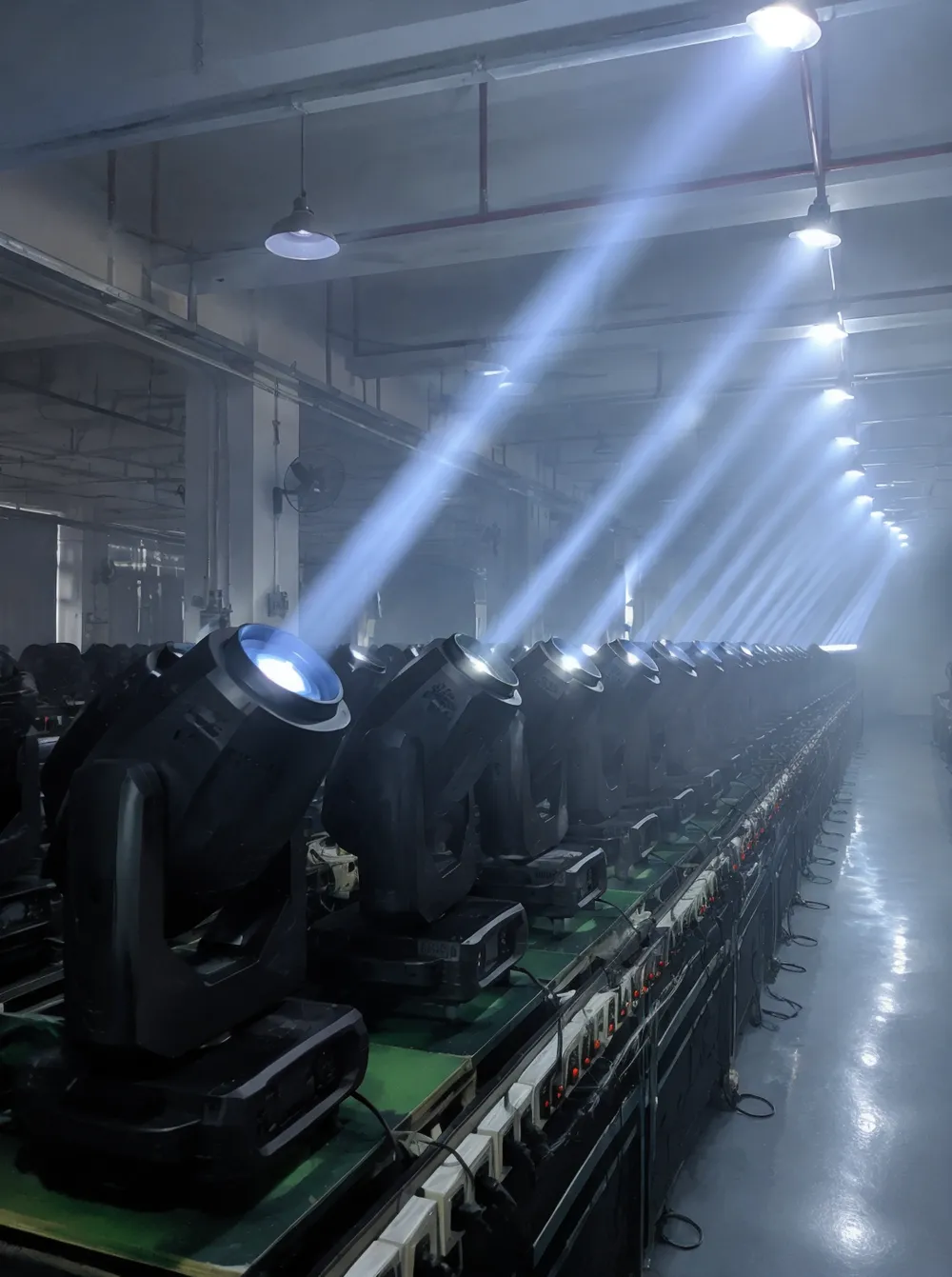
What Beam Moving DJ Lights Are — and Where They Sit in Your Catalog
Beam moving DJ lights produce a tight, concentrated column of light — typically 1°–5° beam angle — that cuts through haze and creates visible mid-air effects. Unlike wash or spot fixtures that spread light across a stage, beams are about the shaft itself. That sharp aerial punch is what audiences notice first, which is why beam fixtures are your highest-margin moving head SKU for nightclub installers and rental inventory.
The commercial positioning is straightforward: beam moving DJ lights occupy the premium tier of your moving head catalog. They're not the volume play (that's mini moving heads) — they're the specification play. Buyers who stock beam fixtures sell into nightclub permanent installations, touring production companies, and high-end event outfits willing to pay more per unit for concentrated output and build quality. Your per-unit margin is higher, and reorder cycles are driven by fleet expansion rather than replacement of worn-out budget fixtures.
We manufacture beam moving DJ lights in configurations from 150W compact units (mobile DJ market) through 350W full-size fixtures (touring and permanent install). Lamp-based and LED source options, both running through the same in-house optical engineering and pan/tilt assembly process. The parent category page covers our full moving DJ lights range including spider, laser, mini, and LED wash variants — this page is specifically about beam output and what makes our beam fixtures commercially viable for your distribution business.
Beam vs. Wash vs. Spot
Beams are about the shaft itself — a visible mid-air column. Wash spreads light over surfaces. Spot illuminates targets with a defined edge. Beam fixtures command premium pricing because the effect is immediately dramatic and audience-visible.
Catalog Positioning
Premium tier. Higher per-unit margin. Reorder cycles driven by fleet expansion — not replacement of worn-out budget fixtures. The specification play, not the volume play.
Technical Specifications — Beam Moving DJ Lights Range
Standard configurations across our beam fixture line. Custom source wattage, color systems, and control protocols available on ODM orders.
| Parameter | 150W Compact | 200W Standard | 250W Beam Spot | 350W High-Output |
|---|---|---|---|---|
| Source type | LED or lamp | LED or lamp | LED + spot hybrid | Lamp (discharge) |
| Beam angle | 2°–4° | 1°–3° | 1°–5° / 8°–15° | 1°–2° |
| Pan / Tilt | 540° / 270° | 540° / 270° | 540° / 270° | 540° / 270° |
| Color system | 14-color wheel + white | 14-color wheel + white | 14-color + CMY mixing | 17-color wheel + white |
| Gobo wheels | 1 fixed (14 gobos) | 1 fixed + 1 rotating | 2 rotating (indexable) | 1 fixed + 1 rotating (indexable) |
| Prism | 8-facet | 8-facet + 16-facet | 8-facet + linear | 8-facet + 16-facet + linear |
| Dimming | 0–100% linear | 0–100% linear | 0–100%, 4 curves | 0–100% linear |
| DMX channels | 16/20 | 16/20 | 18/24 | 16/20 |
| Control | DMX512, sound, auto | DMX512, sound, auto | DMX512, RDM, Art-Net optional | DMX512, sound, auto |
| Weight | ~8 kg | ~12 kg | ~16 kg | ~18 kg |
| IP rating | IP20 (indoor) | IP20 (indoor) | IP20 (indoor) | IP20 (indoor) |
ODM Customization
Specifications shown are standard configurations. Custom source wattage, color systems, and control protocols available on ODM orders. Contact us for detailed datasheets with photometric data.
Outdoor IP65 Variants
For outdoor beam applications (rooftop clubs, open-air festivals), we manufacture IP65-rated variants with sealed optical chambers. Discuss outdoor configurations with our engineering team.
Optical Engineering — Why Your Beam Cuts Cleaner at Distance
The difference between a beam light that looks sharp at 5 meters and one that still punches at 25 meters is entirely in the optics. We run precision glass lens trains on our beam moving DJ lights — multi-element condenser systems with anti-reflective coatings — ground and assembled in-house.
Each beam fixture uses a 3–5 element optical stack, depending on the wattage. The condenser lens collects light from the source, the collimating elements narrow it into a parallel column, and the front lens delivers the final beam angle. We grind our own condenser lenses (diamond-turned for lamp fixtures, molded aspheric for LED) and apply multi-layer AR coatings to minimize internal reflections.
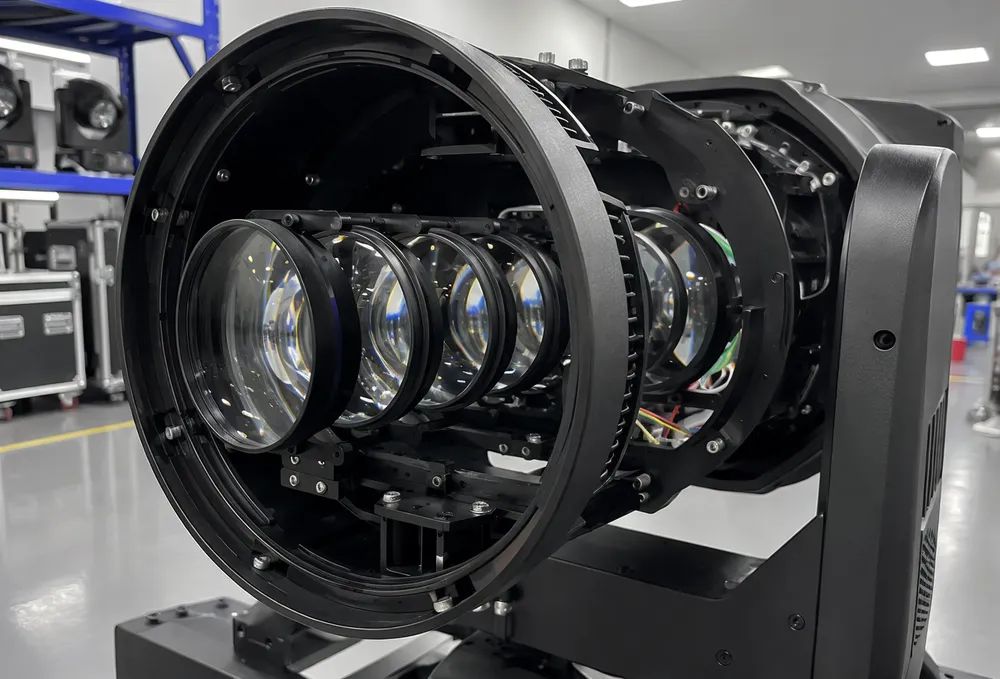
Every percentage point of optical loss that you eliminate at the lens level translates directly into brighter output at the fixture's rated wattage — you're getting more usable beam from the same electrical draw.
The focal-plane gobo system positions gobos at the exact optical conjugate point of the lens train. The result: projected patterns stay crisp at 15–20 meter throw distances, not just at close range.
Gobo Focal Verification
A poorly positioned gobo plane gives you sharp projection at 3 meters and a blurry mess at 12. We optically verify gobo focal position on every unit before final assembly — patterns stay crisp across the full throw distance.
Precision Linear Zoom
For the beam spot moving DJ lights (our 250W hybrid), the motorized zoom system shifts the front lens group to transition between tight beam and wider spot modes. The zoom mechanism runs on precision linear rails — no wobble or hysteresis during movement, smooth under DMX control.
IES Photometric Files
We provide IES photometric files and beam angle measurements verified in our integrating sphere. Your specification-writing customers — integrators doing venue lighting plans — need this data for throw distance calculations. Available on request for any model in the range.
Optical Stack Summary
| Parameter | Detail |
|---|---|
| Lens Elements | 3–5 element stack (wattage dependent) |
| Condenser Grinding | Diamond-turned (lamp) / Molded aspheric (LED) |
| Coatings | Multi-layer AR (anti-reflective) |
| Gobo Projection Clarity | Crisp at 15–20m throw distance |
| Zoom Mechanism (Hybrid) | Precision linear rails, no hysteresis |
| Verification | Integrating sphere + IES file generation |
The Pan/Tilt Mechanism — 50,000-Cycle Durability Standard
The parent category page covers our pan/tilt engineering philosophy in detail. Here's what's specific to beam fixtures: beam moving DJ lights carry heavier optical assemblies than wash or mini fixtures, and the concentrated beam makes any positioning error immediately visible.
A 2° drift on a wash light blends into the field. A 2° drift on a 1° beam means the audience sees the beam jump. Positioning accuracy matters more on beam fixtures than on anything else in our range.
Tilt Mechanism
Our beam fixture tilt mechanism uses a hardened steel worm gear pair with anti-backlash spring preload, rated for 50,000 full cycles before measurable play develops.
Pan Mechanism
The pan mechanism runs on a dual-bearing race — inner and outer races independently supported so the head assembly doesn't develop rotational play under its own weight during stop-and-hold positions.
Calibration Protocol
We calibrate every motor assembly on a dedicated jig: positioning accuracy verified at ±0.3°, pan speed confirmed at rated RPM, and hold torque tested under full fixture weight.
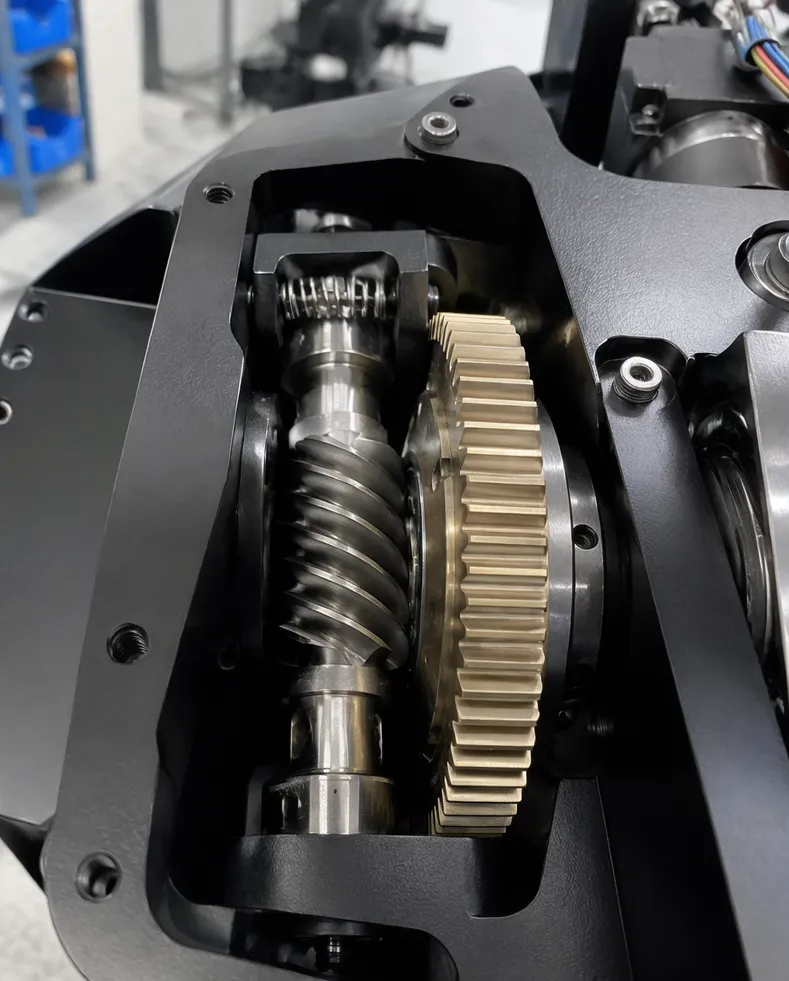
Why We Test Hold Torque Specifically
Beam heads are heavier than other moving head types. A 16–18 kg fixture at full tilt extension exerts serious moment force on the tilt gear. If the hold torque is marginal, the head drifts down slowly during long static positions — a defect you won't catch in a 10-minute functional test but your rental house customer will notice during the second set of a 4-hour gig.
Full Cycles Rated
Positioning Accuracy
Fixture Weight Range
Nightly Use Before Play
The Commercial Benefit for Your Business
Your rental customers get fixtures that still snap to position after 12+ months of nightly use. That means fewer mid-contract equipment swaps, fewer client complaints about "wobbly beam" effects, and longer asset life before your customer needs replacement units.
This extends your reorder cycle per customer but builds the loyalty that keeps them ordering exclusively from your catalog.
Beam vs. Beam Spot — Stocking Strategy for Your Market
We manufacture both pure beam fixtures and beam spot moving DJ lights (hybrid units with dual optical modes). The choice of which to stock depends on your market.
Pure Beam Fixtures
Single-purpose concentrated beam output. These are the workhorse SKUs for nightclub permanent installations where the lighting designer specifies beam effects specifically. Higher optical efficiency in beam mode because the lens train is optimized for one job.
Install pattern: Nightclub installers order 8–20 per venue and keep them in service for 3–5 years.
Your advantage: Model continuity. We maintain these platforms year after year so your installer customers can expand or replace units with identical spec.
Beam Spot Moving DJ Lights
Dual-mode fixtures with motorized zoom — tight beam for aerial effects, wider spot for gobo projection and stage wash. These sell into rental and production companies that need versatility from a smaller fleet.
Value proposition: One fixture covers two lighting roles, reducing your customer's truck weight and inventory count.
Your advantage: Higher per-unit price means better margin for you, and the versatility makes it an easier upsell from pure beam.
Stocking Recommendation by Segment
| Your Buyer Segment | Recommended SKU | Why |
|---|---|---|
| Nightclub installers | 200W or 350W pure beam | They specify beam-only for permanent rigs |
| Rental/production companies | 250W beam spot hybrid | Fleet versatility, fewer fixture types to maintain |
| Mobile DJs | 150W compact beam | Low weight, lower price tier, volume potential |
| Event integrators | 250W beam spot + 200W pure beam | Both modes needed across different projects |
Nightclub Installers
200W or 350W pure beam
They specify beam-only for permanent rigs
Rental/Production Companies
250W beam spot hybrid
Fleet versatility, fewer fixture types to maintain
Mobile DJs
150W compact beam
Low weight, lower price tier, volume potential
Event Integrators
250W beam spot + 200W pure beam
Both modes needed across different projects
Not sure which configuration matches your market? Send us your customer profile and we'll recommend a starter mix.
Manufacturing Process — What Differentiates Our Beam Fixtures
Beam moving DJ lights have tighter manufacturing tolerances than other moving head types. The narrow beam angle amplifies every optical and mechanical imperfection — a 0.5mm lens misalignment that's invisible in a wash fixture shows up as an off-center hotspot in a 2° beam. Our production process accounts for this.
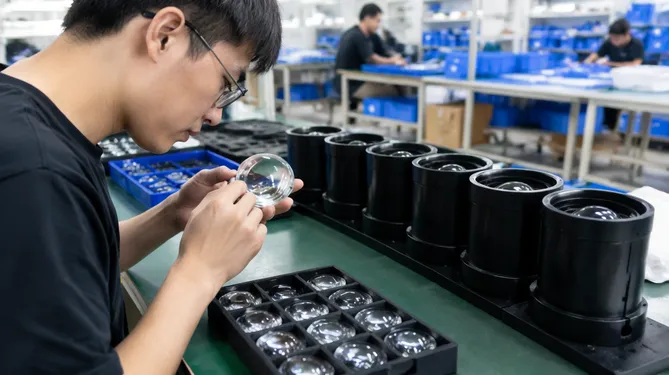
Optical Assembly
Each lens element is individually inspected for surface quality (no scratches, chips, or coating defects) before entering the optical stack. The lens train is assembled in sequence with precision spacers controlling element-to-element distance to ±0.1mm.
After assembly, we verify beam center alignment — the geometric center of the output beam must coincide with the fixture's mechanical axis within 0.5° or the unit goes back for realignment.
Realignment rate: On a batch of 500 beam fixtures, we typically realign 3–5% on first pass. That's normal — it's not a defect, it's a tolerance that only matters for beam fixtures and would go undetected in any other fixture type.
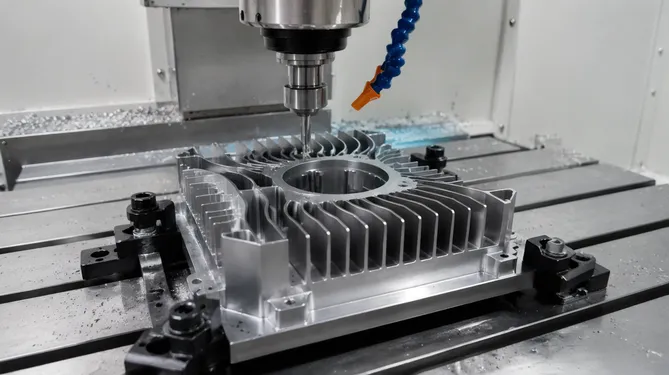
Heatsink Production
Beam fixtures running lamp sources generate concentrated thermal load at the reflector. LED beam fixtures push junction temperatures during sustained full-output duty. We CNC-machine custom heatsink profiles for each beam model — fin geometry, surface area, and airflow channel design are matched to the specific source wattage and enclosure volume.
Thermal design target: LED junction temperature below 85°C at continuous full output in 40°C ambient. This is the difference between LED lumen maintenance of L80 at 20,000 hours and premature brightness drop that your customers notice within the first year.
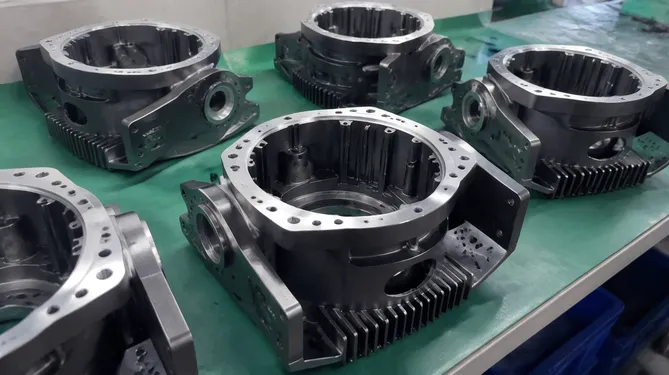
Housing
Die-cast aluminum bodies with secondary CNC machining for mounting surfaces, connector panels, and yoke pivot points.
The yoke-to-body pivot uses machined aluminum interfaces — not plastic bushings — because beam fixtures take more mechanical stress from the heavier optical assembly during rapid repositioning.
±0.1mm
Lens Spacing Tolerance
<85°C
Junction Temp at Full Output
0.5°
Max Beam Axis Deviation
Segments Where Beam Moving DJ Lights Generate the Strongest Reorder Patterns
These are the commercial segments that produce consistent purchasing volume for distributors and contractors stocking beam fixtures.
Nightclub Permanent Installations
Anchor Segment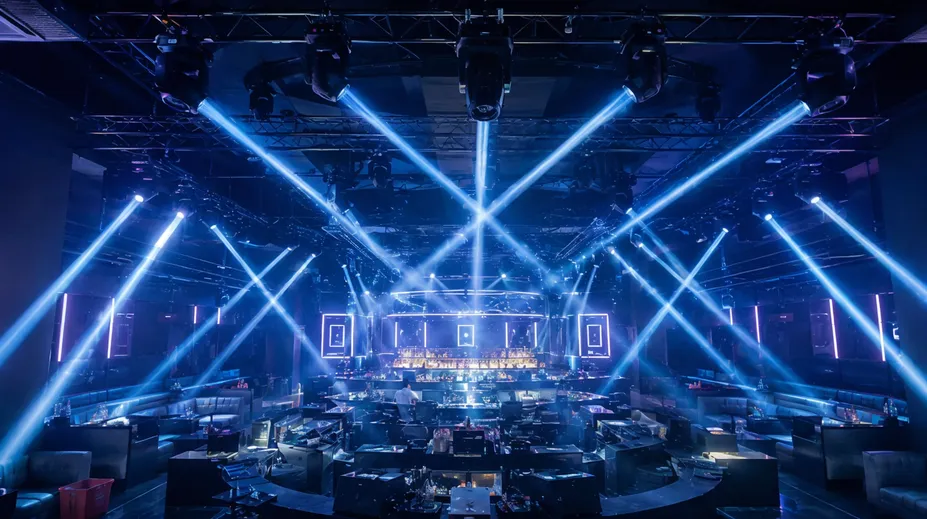
Clubs install 8–40 beam moving DJ lights per venue, run them 4–6 hours nightly, and budget for replacement every 3–5 years.
The specification decision is usually made by a freelance lighting designer and then ordered through a local installer — once your beam fixture gets spec'd into one venue, that designer carries the spec to their next 5 projects.
Model continuity and supply reliability matter more than price in this segment.
Touring & Production Rental
Highest Volume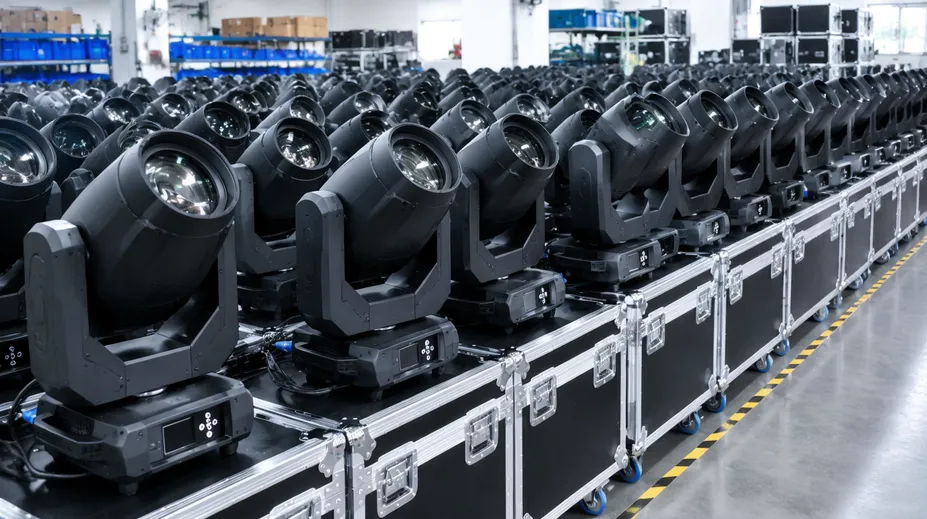
Rental houses purchase beam fixtures in batches of 20–100+ units for touring rigs. They need absolute uniformity — every fixture in a rig must perform identically in color temperature, beam width, and positioning speed.
Our LED binning and individual motor calibration deliver that batch consistency.
Reorder triggers:
- Fleet expansion for new tours
- Replacement of damaged units
- Spec upgrades when a production designer requests newer features
High-End Event Production
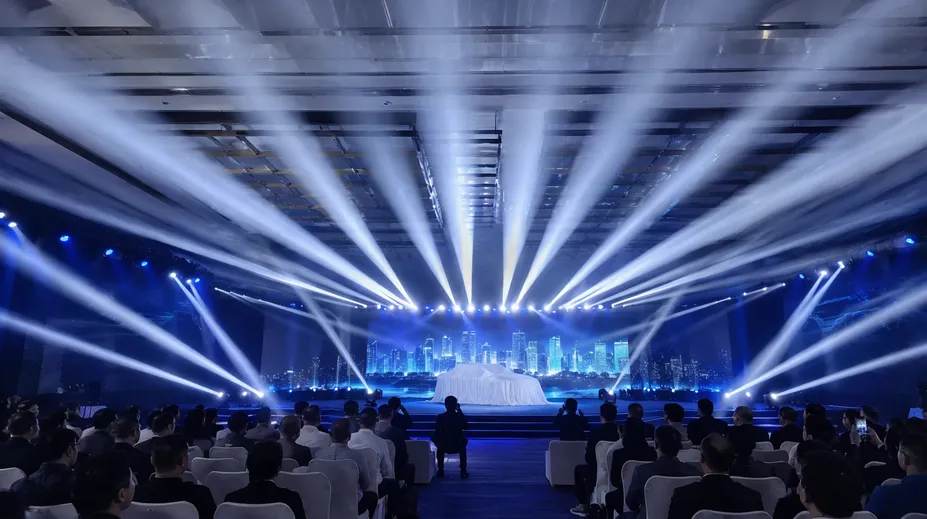
Corporate events, product launches, award shows, broadcast studios. Beam effects are the go-to for dramatic reveals and keynote moments.
Event companies deploy beam fixtures project-by-project and maintain a fleet that covers their seasonal peak demand.
Typical order pattern:
- 10–30 units initial purchase
- 5–10 unit top-ups annually as the event calendar grows
Houses of Worship (Large-Format)
Growing Segment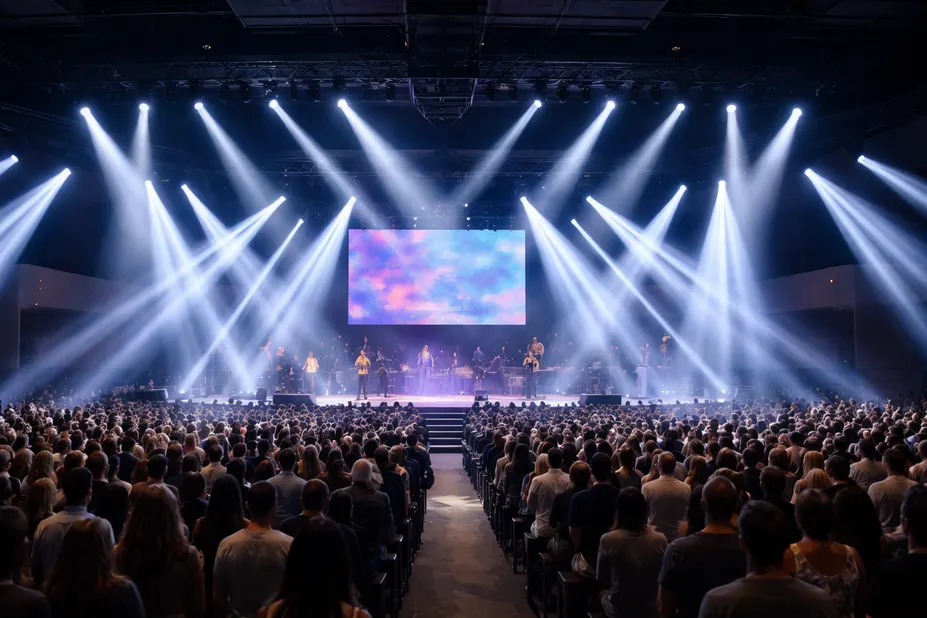
Mega-churches and large congregations with dedicated production teams have adopted concert-level lighting. Beam effects during worship services are increasingly common.
Budget cycles are annual, purchasing decisions go through a technical director, and typical orders are 8–16 beam fixtures plus complementary wash heads.
This segment has grown steadily — religious venue orders now represent a meaningful share of our beam fixture output.
OEM/ODM for Beam Fixtures — Custom Configurations from 30 Units
The parent category page covers our OEM/ODM process comprehensively. For beam fixtures specifically, here are the most common custom requests we handle.
OEM — Your Brand, Our Platform
- Logo engraving or UV printing on housing
- Custom packaging with your branding and product photography
- Firmware splash screen (your brand displayed on the LCD during boot)
- Private-label documentation with your contact information
- Custom DMX channel mode layouts
Minimum 30 units per beam fixture OEM order.
ODM — Custom Engineering
- Non-standard source wattages (e.g., 280W lamp for a specific throw distance requirement)
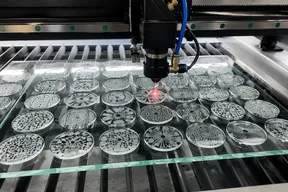
- Custom gobo libraries (your designs laser-cut into borosilicate glass or stainless steel)
- Proprietary color wheels (specific gel colors matched to your customer's requirements)
- Modified beam angle ranges (wider collimation for shorter-throw venues)
- Wireless DMX integration (W-DMX, CRMX, LumenRadio)
- Custom IP rating upgrades for semi-outdoor deployment
- Alternative power input configurations (110V/60Hz, Powercon, or regional connector standards)
ODM projects start with an engineering review — send us your specification or a competitor sample and we'll return a feasibility assessment and preliminary quote within 48 hours.
Custom Gobo Libraries — An Overlooked Brand-Building Tool
Custom gobo libraries are one of the most overlooked brand-building tools for rental houses. Your logo projected as a beam effect at every event you service — we laser-cut custom glass gobos at production scale, included in the fixture or as a separate accessory order.
Minimum 30 units per OEM order · ODM feasibility assessment within 48 hours
Compliance Documentation — Market Access Without Delays
Our beam moving DJ lights carry the certifications your import market requires. All test reports and declarations of conformity ship with your order.
CE (EMC + LVD)
EU electromagnetic compatibility and low voltage safety
Direct import into EU member states without re-testing
FCC Part 15
North American EMI emissions compliance
Clears US/Canadian customs without detention
RoHS
Hazardous substance restrictions (lead, mercury, cadmium, etc.)
Compliant with EU/UK restricted materials directives
ISO 9001:2015
Quality management system
Supplier qualification documentation ready for your audits
Need Additional Market-Specific Certification?
For markets requiring additional certification — UL listing for certain US commercial installations, or country-specific safety marks — our engineering team coordinates with accredited test labs to complete the documentation on your timeline.
Packaging and Container Loading for Beam Fixtures
Beam moving DJ lights are mid-weight fixtures (8–18 kg depending on model) with cantilevered head assemblies that require proper support during transit. We've optimized our packaging specifically for these mechanical demands.
Custom-Molded Foam Cradle System
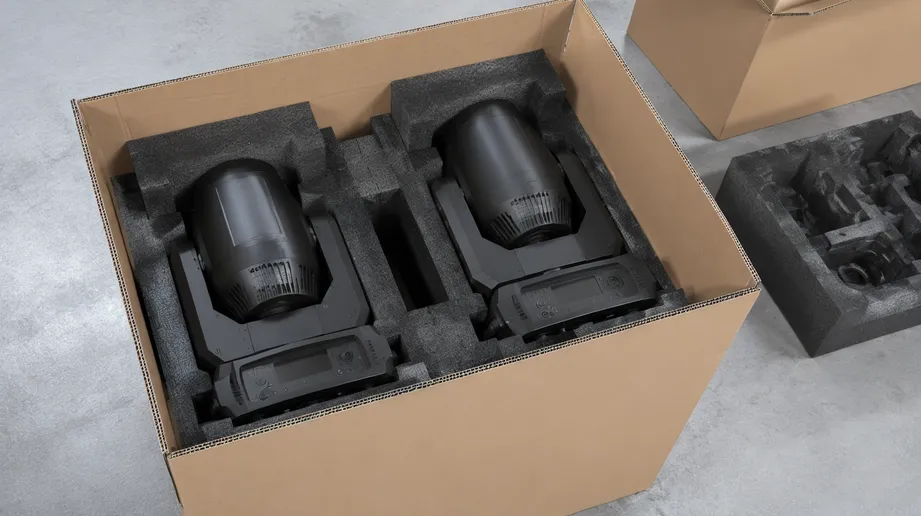
- Foam profile matches each fixture model's specific geometry
- Head assembly supported at three contact points to prevent pan/tilt mechanism stress during container movement
- Individual units sit inside reinforced master cartons
- 2 units per master carton for 200W+ models
- 4 units per master carton for the 150W compact
Container Loading Estimates (20GP)
150W Compact Beam
200W Standard Beam
250W Beam Spot
350W High-Output Beam
Transit Damage Rate
Below 0.3% across five years of container shipments
Full Container Loading
We palletize to your container type (20GP or 40HQ) and can coordinate mixed-model loading if you're ordering beams alongside other fixture types from our range.
LCL for Trial Orders
For trial orders under full-container quantities, we consolidate via LCL through Shenzhen and Guangzhou ports. Your 30-unit evaluation order ships efficiently without paying for unused container space.
Alternative Fixtures
If Beam Isn't the Right Fit — Sibling Moving Head Options
Beam moving DJ lights are the right choice when your market demands concentrated mid-air effects and premium-tier pricing. If your requirements point elsewhere, our range covers every major moving head category from a single source.
Spider Moving DJ Lights
Need multi-beam crowd scanning effects from a single fixture? Spider fixtures deliver 8–12 independently controlled beams on a moving bar — maximum visual impact per rigging point.
View Spider RangeLaser Moving DJ Lights
Need razor-sharp aerial effects in heavy haze environments? Laser fixtures produce beam visibility that LED/lamp optics can't match in high-scatter atmospheres.
View Laser RangeMini Moving DJ Lights
Need a budget entry point for mobile DJ supply? Mini fixtures run under 4 kg with low unit cost — your volume play for price-sensitive channels.
View Mini RangeLED Moving DJ Lights
Need wash, spot, or full-stage coverage fixtures? LED moving heads handle wash and spot duties for touring, worship, and theater applications.
View LED RangeMixed-model orders welcome: Most distributors carry beam fixtures alongside at least one complementary type. We can structure mixed-model orders across any combination in our range — one PO, one production schedule, one shipment.
Common Questions
Frequently Asked Questions — Beam Moving DJ Lights
What wattage beam moving DJ light do I need for a specific throw distance?
For nightclub environments (typical 8–15 meter throw through haze): 150W–200W beam output is sufficient and the standard spec for club installations. For large-format venues, touring stages, or outdoor festival applications (20–40+ meter throw): 250W–350W provides the intensity needed to maintain visible beam definition at distance.
The optics matter as much as the wattage — our multi-element collimating lens train ensures minimal beam divergence, so a 200W fixture with precision optics outperforms a 300W fixture with commodity lenses at equivalent distance.
What's the difference between lamp-based and LED beam moving DJ lights for resale?
Lamp (discharge/halide) beam fixtures produce higher peak intensity per watt and a distinctive "hard edge" beam character that lighting purists prefer. They require lamp replacement every 1,500–2,000 hours — which creates an accessory revenue stream for you but adds after-sale support burden.
LED beam fixtures eliminate the consumable cost, offer instant on/off without strike time, and last 20,000+ hours at L80.
For your business: lamp fixtures carry higher margin and the replacement lamp upsell; LED fixtures have lower margin but zero post-sale consumable management. We manufacture both — the right choice depends on your downstream market's preference.
How do I prevent "head nod" on beam fixtures in permanent installations?
Head nod — the fixture drifting from programmed position during extended hold — results from gear backlash accumulation. On beam fixtures it's especially visible because the narrow beam angle makes even small positional drift obvious.
Our tilt mechanism uses hardened steel worm gears with anti-backlash spring preload, maintaining positioning accuracy past 50,000 full cycles. If you're currently sourcing beam fixtures that develop nod within 6 months, the mechanism materials are the root cause — typically soft metal or plastic gears spec'd for light-duty consumer use rather than continuous commercial operation.
Can I order beam moving DJ lights with custom gobo patterns?
Yes. We laser-cut custom gobos from borosilicate glass (full-color or black-and-white) or stainless steel (pattern-only). Minimum order for custom gobos: 30 sets, which aligns with our fixture MOQ.
Provide your artwork in vector format and we'll produce proofs within 5–7 days. Common use case: rental houses ordering beam fixtures with their company logo gobo installed from factory — every event showcases their brand.
What's the typical lead time for a beam fixture production order?
Standard models from our range: 3–7 days for samples, 20–30 days for production quantities depending on volume.
OEM variants (your branding on existing platform): add 7–10 days for sample approval.
Full ODM custom beam fixtures: 45–60 days engineering development, then standard production lead time.
Rush production available for time-sensitive orders — contact our team for specific scheduling.
How do you maintain color consistency across a large batch of beam fixtures?
Color wheel fixtures use dichroic glass filters — these are physically consistent by manufacturing process, so color accuracy doesn't drift across units or over time the way LED color mixing can.
For our LED beam models, we bin-sort all LED chips at incoming inspection for forward voltage and CCT deviation (maximum ±100K, ±3% lumen output within a batch). Units from the same production run use LEDs from the same bin, guaranteeing visual uniformity when your customer installs 20 beam fixtures in a single rig.
Next Step — Evaluate Our Beam Fixtures Against Your Current Source
You're comparing beam moving DJ light suppliers. Here's how to move forward efficiently:
Want to Test Quality Firsthand?
Order 30 units of any beam configuration — we ship production samples within 3–7 days on standard models. Run them through your QA process, demo them for your installers, put them on a rental gig.
Already Have a Fixture You Want Matched or Improved?
Send us the spec sheet or the physical unit. We'll engineer a match (or improvement), quote production, and ship comparison samples so you can evaluate side-by-side before switching supply.
Building a Complete Moving Head Catalog?
Tell us your target segments and volume expectations. We'll structure a product line — beam, beam spot, spider, wash — from one production source with consistent quality and coordinated delivery.
Email Teresa@gdmonkey.com or WhatsApp +86-135 3966 9939 with your requirements.
Engineering review and preliminary quote back within 48 hours.