

LED Moving DJ Lights Built for Fixed Install & Touring
100W to 400W, wash/spot/hybrid — no lamp replacement ever. The fixture your install customers stop replacing lamps on.
Consistent output past 20,000 hours, batch color uniformity within ±100K CCT, and every unit 48-hour aged before it ships.
What LED Moving DJ Lights Are — and Where They Sit in Your Catalog
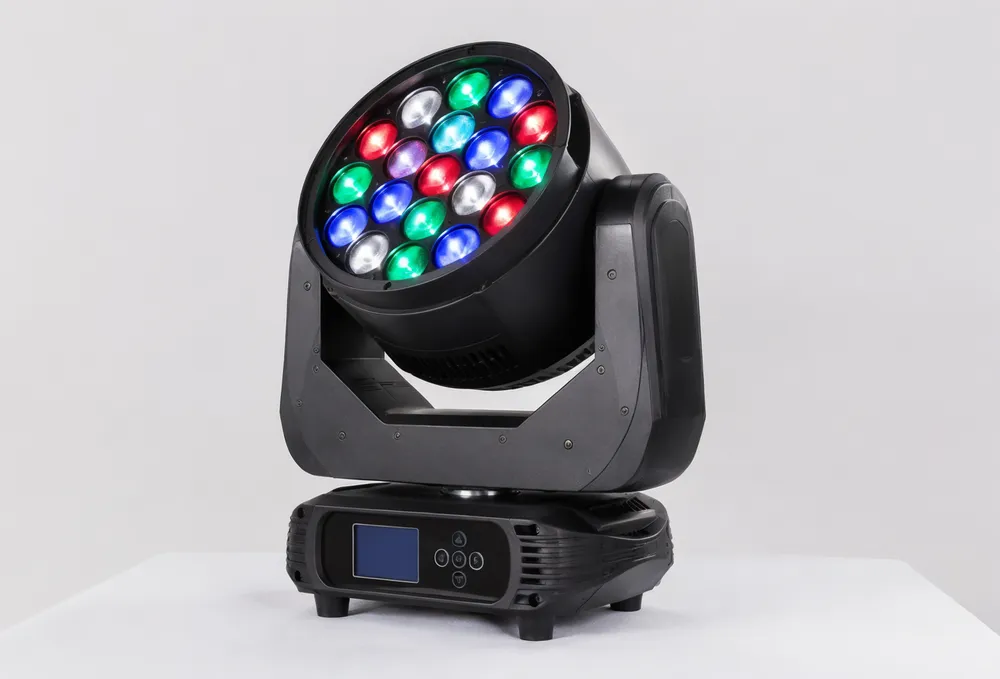
LED moving DJ lights are full-size motorized fixtures using high-power LED arrays instead of discharge or halide lamp sources. They cover wash, spot, and beam-spot-wash (BSW) hybrid duties across stages, venues, and touring rigs. The "LED" distinction matters commercially because it eliminates the lamp replacement cycle entirely — no HRI bulbs, no MSD lamps, no consumable restocking burden for you or your downstream customers.
Within our moving DJ lights range, LED moving heads occupy the position between mini moving DJ lights (budget entry-level) and beam moving DJ lights (pure beam effects with discharge sources). If your buyers deploy fixtures for permanent installation — churches, theaters, broadcast studios, hotel ballrooms — LED moving heads are what they specify because the total cost of ownership over a 5-year install cycle beats lamp fixtures by 40–60% on consumable costs alone.
We build these from LED chip sorting through final DMX calibration in our Pingyuan facility. Same production floor, same 48-hour aging test, same engineering team that handles our full moving head range. Your LED moving heads come from the same pan/tilt motor line as our beam and spider fixtures — identical mechanical quality, different optical front-end.
Product Range Position
-
Mini Moving DJ Lights
Budget entry-level
-
LED Moving DJ Lights
Full-size LED — this page
-
Beam Moving DJ Lights
Pure beam / discharge source
-
Spider Moving DJ Lights
Multi-head effects
-
Laser Moving DJ Lights
Laser-based moving effects
Total cost of ownership over a 5-year install cycle beats lamp fixtures by 40–60% on consumable costs alone.
Technical Specifications — LED Moving DJ Lights
The specifications below represent our standard LED moving head range. We produce across the full power spectrum; most buyers land somewhere in the 150W–350W sweet spot depending on their target venue size and price tier.
| Parameter | Typical Range | Notes |
|---|---|---|
| LED Source Power | 100W – 400W | Single high-power COB or multi-chip RGBW/RGBWAL arrays |
| Color System | RGBW, RGBWAL (6-color), CMY+CTO | RGBWAL provides fuller color gamut for theater/broadcast |
| Beam Angle | 5°–50° (motorized zoom) | Narrower for spot duties, wider for wash applications |
| Pan Range | 540° (standard) / 630° (extended) | 16-bit fine positioning on all models |
| Tilt Range | 270° | 16-bit fine positioning |
| Pan/Tilt Speed | Max 2.8s full pan, 1.5s full tilt | Adjustable via DMX for theatrical slow fades |
| Dimming | 0–100% linear, 4 dimming curves | Flicker-free at all camera frame rates |
| Color Temperature | 2700K – 8000K (variable) | Electronic CTO/CTB on RGBW+ models |
| CRI (White Mode) | 90+ (RGBWAL) / 80+ (RGBW) | Critical for broadcast and theater segments |
| DMX Channels | 16 / 22 / 36 (mode-dependent) | Standard Art-Net and sACN compatible |
| Control | DMX512, RDM, Art-Net, sACN, sound, master/slave | Wireless DMX optional (W-DMX module) |
| Housing Material | Die-cast aluminum, powder-coat finish | Black or white standard; custom RAL at 100+ units |
| Fixture Weight | 12 kg – 28 kg | Depending on wattage/configuration; includes rigging bracket |
| Operating Temperature | -10°C to +45°C | Thermal management rated for sustained full output |
| IP Rating | IP20 standard / IP65 available | IP65 for outdoor festival and architectural use |
| Expected LED Life | L80 at 20,000+ hours | Junction temperature maintained below 85°C at full output |
Specifications shown are standard ranges for our LED moving head product line. Contact us for detailed datasheets on specific models within this range.
LED Source Architecture — What You're Selling vs. Lamp Fixtures
This is the core commercial argument for LED moving DJ lights in your catalog, and we'll lay it out in manufacturing terms because that's where the numbers come from.
We mount LED arrays using automated SMT with ±0.05mm chip placement accuracy. Every LED batch entering our line is bin-sorted for forward voltage and CCT deviation — maximum ±100K color temperature and ±3% lumen output across chips within a production run. When your customer rigs 20 LED moving heads on a truss, all 20 produce identical color. That's not marketing language — it's a function of component sorting at the factory level.
The LED source sits on a custom-machined aluminum heatsink — not a generic fin extrusion. We design heatsink geometry per fixture model based on the actual thermal load of the LED array at sustained full output. We went through multiple heatsink iterations on our 350W wash head before we got junction temperatures consistently below 85°C at 45°C ambient — the off-the-shelf extrusion options couldn't handle it without forced-fan noise that would make the fixture unusable in theater environments.
Junction temperature below 85°C under all operating conditions is what gives us L80 at 20,000 hours. That's 5+ years of continuous nightly use before your customer sees perceptible brightness reduction.
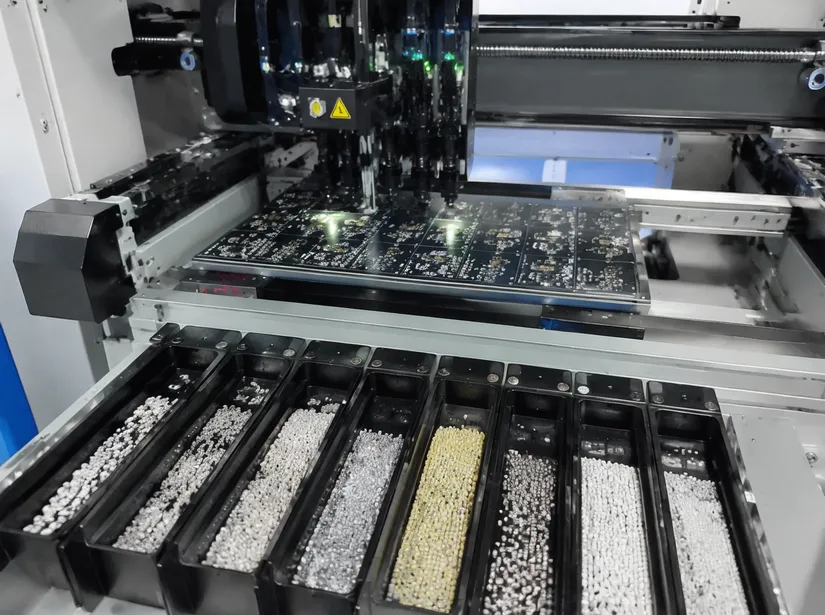
Automated SMT placement with ±0.05mm accuracy — bin-sorted LED chips ensure color consistency across production batches.
The B2B Math for Your Catalog
250W Lamp-Based Moving Head
- Lamp life: 500–1,500 hours depending on source type
- Lamp cost: $50–$150 per replacement
- Nightclub running 5 hrs/night replaces lamps 2–4 times per year
- 5-year lamp cost per fixture: $500–$3,000
LED Moving Head (Same Price Point)
- LED life: L80 at 20,000 hours — 5+ years nightly use
- Replacement lamp cost over 5 years: $0
- Eliminates accessory inventory burden of stocking lamps by model
- Market shifted decisively toward LED for permanent installations
Your install customers understand this calculation — it's why the market has shifted decisively toward LED for permanent installations. And for you as a distributor, LED moving heads eliminate the accessory inventory burden of stocking replacement lamps by model.
±0.05mm
Chip Placement
±100K
Max CCT Deviation
±3%
Lumen Consistency
20,000h
L80 LED Life
Thermal Engineering — The Hidden Differentiator Between LED Fixtures That Last and Those That Don't
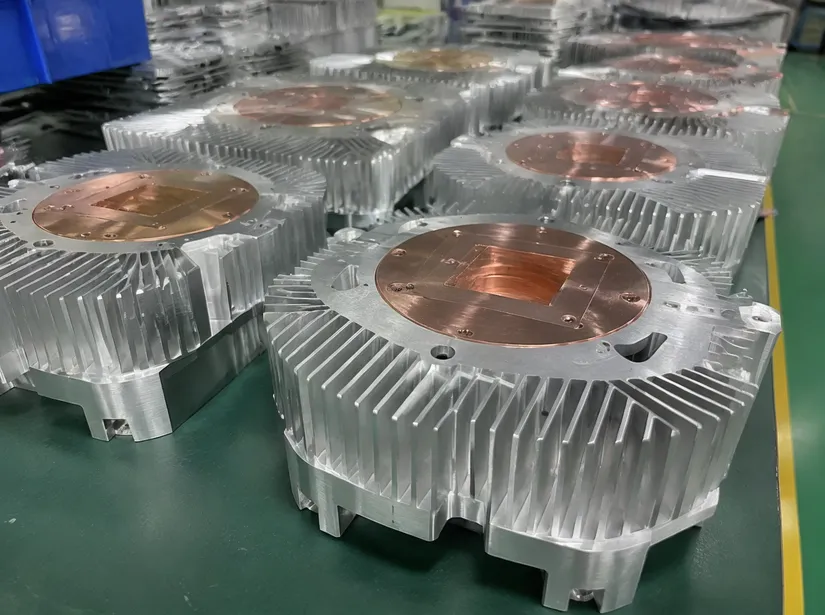
Purpose-designed 6063 aluminum heatsink with direct-bond copper thermal interface — machined in-house per fixture model.
LED brightness is easy to spec on paper. Maintaining that brightness past year one is where most budget LED moving heads fail — and where your warranty exposure lives.
We machine our own heatsink assemblies in-house from 6063 aluminum. Each fixture model gets a purpose-designed thermal stack: the LED array mounts to a direct-bond copper thermal interface pad, connected to a machined heatsink with fin geometry calculated for the fixture's internal airflow path. Fan placement, air channel routing, and exhaust port positioning are all part of the thermal simulation — not afterthoughts bolted on once the housing design is frozen.
We validate thermal performance during the engineering phase by running the fixture at 100% output in a 45°C ambient environment for 72 hours, continuously logging LED junction temperature via embedded thermocouples. If junction temperature exceeds 85°C at any point during that 72-hour cycle, the thermal design goes back to engineering. No exceptions.
Most of our competitors spec LED life at 25°C ambient — which is meaningless because no venue is 25°C in a lighting rig above a stage. We design for real-world thermal conditions.
Thermal Validation Protocol
Thermal Simulation
Fan placement, air channel routing, and exhaust port positioning modeled before prototype build.
72-Hour Burn Test
100% output at 45°C ambient — continuous junction temperature logging via embedded thermocouples.
Pass/Fail Gate
Junction temperature must stay below 85°C at every point during the 72-hour cycle. No exceptions.
Redesign Loop
If any exceedance occurs, heatsink geometry returns to engineering for revision. Fixture does not ship.
Why This Matters for Your Margin
LED fixtures that run hot degrade quickly. L80 at 20,000 hours becomes L80 at 6,000 hours when junction temperature sits at 105°C instead of 85°C. Your customer notices their "new" fixtures dimming within a year, blames your brand, and switches suppliers.
Our thermal over-engineering is your warranty insurance — it costs slightly more per unit at purchase but eliminates the replacement and reputation costs downstream.
L80 reached at ~6,000 hours. Visible brightness loss within first year of nightly operation. Customer warranty claims. Supplier trust eroded.
L80 at 20,000 hours. 5+ years of continuous nightly use before perceptible brightness reduction. Zero lamp replacement costs. Brand confidence maintained.
Stage Moving DJ Lights for Fixed Installation — The Segment Where LED Dominates
Fixed installations are where LED moving heads earn their keep — and where your highest-margin, lowest-churn orders come from. These commercial segments deliver consistent, repeatable revenue through integrator relationships and multi-unit deployments.
Houses of Worship
8–24 units per sanctuary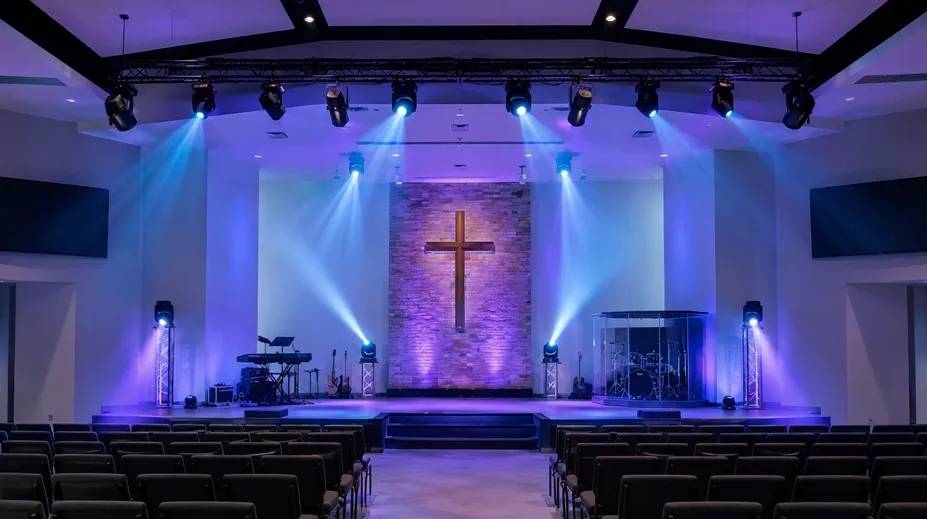
This segment has exploded for stage moving DJ lights over the past five years. Churches buy 8–24 LED moving heads per sanctuary on annual technology budgets, often through AV integrators who specify fixtures by model.
No lamp replacements means volunteer operators don't have to maintain the lighting rig. Once your fixture gets specified into an integrator's standard equipment list, it stays there for 5+ years of repeat projects across different churches.
Consistent annual orders from integrators serving 10–30 church projects per year.
Theater & Performing Arts
12–40 units per venue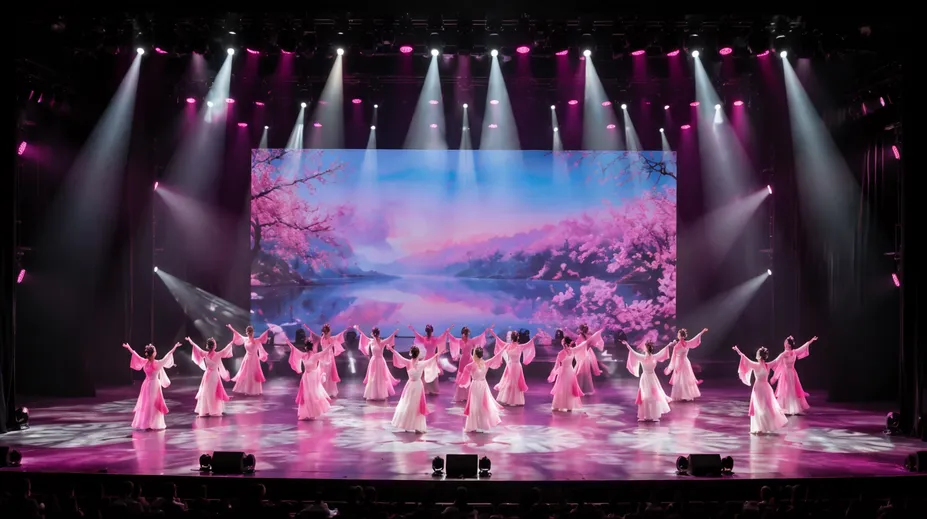
LED moving heads with high CRI (90+ on RGBWAL models) have become viable for theatrical use where color rendering accuracy was previously a barrier. Theater technical directors specify fixtures that hold position precisely, dim smoothly at any camera frame rate, and maintain color consistency across multi-fixture rigs.
Our 16-bit pan/tilt positioning and flicker-free dimming curves address exactly these requirements. Orders range from 12–40 units per venue, with reorders when venues expand or refresh.
CRI 90+ color rendering meets theatrical specification standards.
Hotel & Corporate Event Venues
Nightly use infrastructure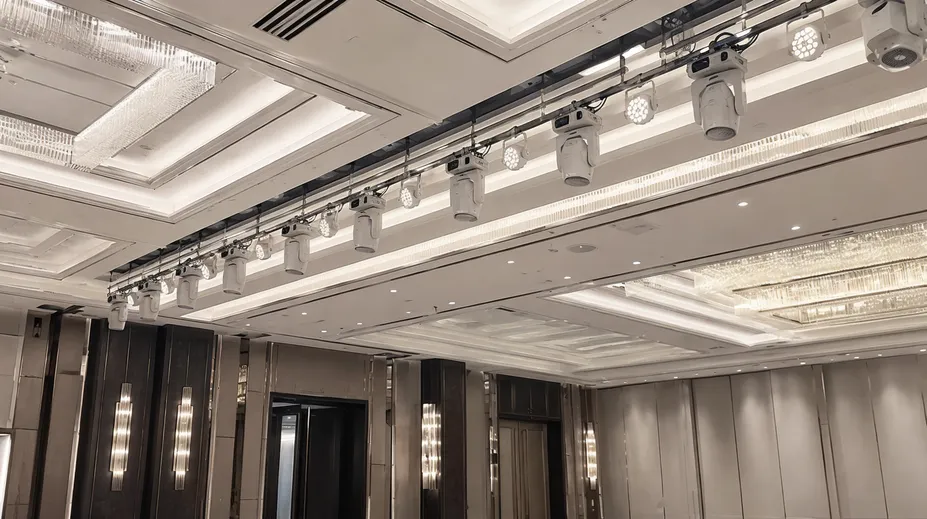
Ballrooms and conference spaces install LED moving heads as permanent infrastructure — used nightly for weddings, galas, corporate events. These venues want quiet operation (our fixtures achieve sub-35dB in low-speed fan mode), reliable performance without on-site technical staff, and zero lamp inventory management.
Hotels typically order through AV installation companies who maintain ongoing relationships — your access to this segment comes through serving those integrator accounts.
Sub-35dB operation eliminates noise complaints in quiet event environments.
Broadcast & Studio
Premium margins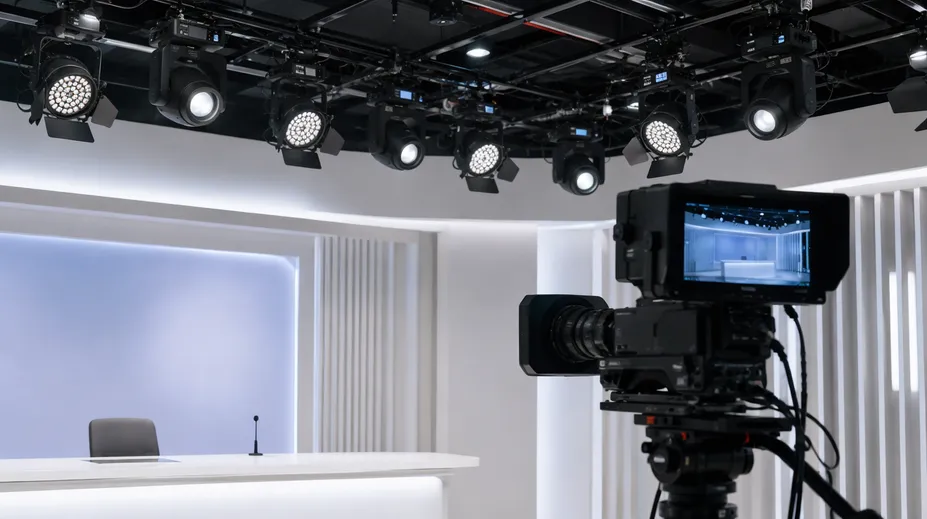
Studio-grade LED moving heads need flicker-free operation across all camera frame rates (24/25/30/50/60fps), CRI 90+, and precise DMX control for repeatable lighting cues.
This is a premium segment with premium margins — buyers accept higher unit pricing for verified photometric performance and manufacturer-backed technical data.
Flicker-free across 24/25/30/50/60fps frame rates.
Customization Scope — What We Can Build to Your Specification
LED moving DJ lights have a wide customization envelope because the modular architecture (LED engine + optics + pan/tilt mechanism + housing + control) allows changes at each subsystem level without redesigning the entire fixture.
What We Commonly Customize
LED Source Configuration
RGBW, RGBWAL (6-color), single-color white (variable CCT), UV-capable arrays. Power range 100W–400W. Sourced from approved LED chip manufacturers (Osram, Luminus, Cree — depending on your spec and price tier).
Optical Front-End
Zoom range, beam angle, Fresnel vs. PC lens, spot vs. wash vs. hybrid (BSW) configuration. Each optical choice changes market positioning and price tier.
Color System
CMY flag system, rotating color wheel (7–14 colors + white), or pure RGBW electronic mixing — different cost points and market positioning for your brand.
Gobo System
Fixed and rotating gobo wheels (spot/BSW models), custom gobo patterns etched to your artwork, indexable positioning for precise projection control.
Housing
Standard die-cast aluminum in black or white. Custom RAL colors at 100+ units. Modified rigging points, alternative bracket geometry, weatherproofing upgrades to IP65.
Control Protocol
Standard DMX512/RDM, Art-Net/sACN integration, wireless DMX add-on module, proprietary protocol integration on ODM projects.
Firmware
Boot screen customization, custom channel mapping, preset scene libraries for specific applications. Your branding from the moment of power-on.
Customization Boundaries — Know Before You Inquire
Custom color housing
Powder line changeover cost below this quantity doesn't work economically for either side.
New optical configuration or gobo system
Optical assembly changes require dedicated production setup runs.
OEM branding on existing platform
Logo, boot screen, custom labeling, and packaging on a proven fixture platform.
Full ODM custom development
New housing tooling — discuss project scope. Tooling investment applies.
Custom LED source power beyond 400W
Technically feasible but thermal management adds significant housing size and cost — we'll advise on the trade-offs before you commit.
Production and QC Process From LED Chip to Tested Fixture
Here's how your LED moving DJ lights get built. This isn't a generic factory tour — it's the sequence that determines whether your fixtures arrive consistent and reliable.
LED Chip Incoming Inspection
Every LED batch is tested for forward voltage, CCT, and lumen output against our purchase specification. We reject bins with deviation exceeding ±100K CCT or ±3% lumen output. This is why your batch of 500 units produces uniform color — we sort at the component level, not hope for the best at final assembly.
SMT and PCB Assembly
Automated pick-and-place mounts LED chips at ±0.05mm accuracy on driver boards and LED engine arrays. Automated optical inspection (AOI) checks every solder joint before boards proceed. We run lead-free solder (RoHS compliance baked into the process, not bolted on afterward).
Heatsink Machining and Housing Preparation
CNC-machined aluminum heatsinks and die-cast housings go through deburring, phosphate pre-treatment, and powder coating. The phosphate pre-treatment step is critical — it prevents powder coat adhesion failure at machined surfaces and weld seams.
(We added this step after seeing adhesion issues on early production runs. Three years of zero powder coat RMA since.)
Motor Assembly and Calibration
Pan/tilt mechanisms are assembled and individually calibrated on dedicated test jigs. Pan speed, tilt speed, positioning accuracy (±0.3°), and hold torque verified per unit. Not sample-based — every mechanism gets individual verification.
Optical Assembly and Alignment
LED engine mounts to heatsink, lens train installs into housing, and optical alignment is verified — beam angle, hotspot centering, zoom range confirmed against specification using our photometric test rig.
Final Integration
Electronics, optics, and mechanics come together. Firmware is flashed, DMX addressing verified, all control modes tested. Then the fixture goes to the aging racks.
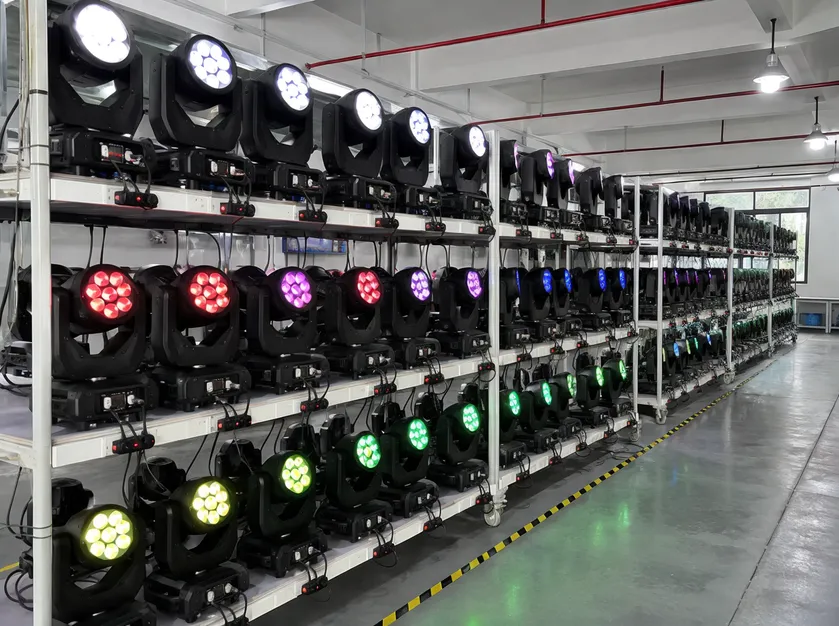
48-Hour Aging Test
Full electrical load, continuous pan/tilt cycling, color mixing sweeps, zoom cycling — running for two continuous days. This catches:
- Capacitor drift
- Thermal throttling
- Motor overheating
- DMX decode errors under sustained thermal stress
Every unit. Not a sample.
100% Outgoing Inspection
Post-aging functional test confirms all DMX channels respond correctly, color accuracy meets specification, dimming curves are linear, mechanical positioning is precise. AQL sampling covers cosmetics, packaging, and labeling.
Packaging and Container Loading Protecting Your Per-Unit Landed Cost
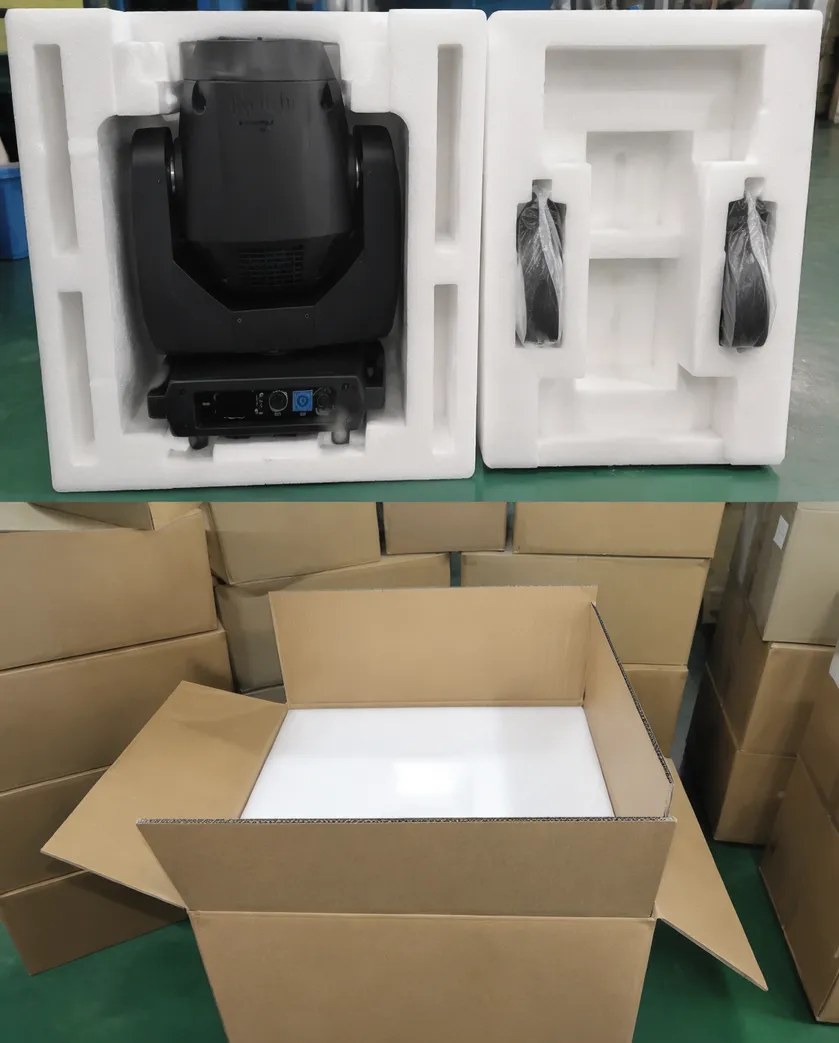
LED moving heads are dense fixtures — 12-28 kg each depending on configuration — and the pan/tilt arm creates a cantilevered load that needs proper packaging design to survive ocean freight.
Unit-Level Protection Design
Each unit ships in a custom-molded foam insert cut to the specific fixture geometry. The tilt arm is locked in a transport position (preventing motor stress during transit), and power/DMX connectors are protected by foam channels. Master carton is reinforced double-wall corrugated rated for stacking at container height.
Container Loading Estimates for LED Moving DJ Lights
| Fixture Class | Unit Weight | Per Carton | 20GP | 40HQ |
|---|---|---|---|---|
| 100W–150W compact LED head | 12–15 kg | 2 | 180–220 | 380–450 |
| 200W–250W standard LED head | 16–20 kg | 1–2 | 120–160 | 260–340 |
| 300W–400W full-size LED head | 22–28 kg | 1 | 80–110 | 170–230 |
Mixed-Model Consolidation
Mixed-model orders consolidate into single containers — we plan loading by weight distribution (heavier units at floor level) to maximize cubic utilization and prevent top-crush damage. Our transit damage rate on LED moving heads is below 0.3% across five years of export shipments.
Trial Orders (30-Unit MOQ)
For trial orders at the 30-unit MOQ level, we coordinate LCL consolidation through Shenzhen/Guangzhou ports so you're not paying for empty container space.
< 0.3%
Transit Damage Rate
5 yr
Export Track Record
LED Moving DJ Lights vs. Sibling Products — Choosing What to Stock
If you're evaluating across our moving head range, here's how LED moving DJ lights position against the siblings:
| Factor | LED Moving DJ Lights | Beam Moving DJ Lights | Spider Moving DJ Lights | Mini Moving DJ Lights |
|---|---|---|---|---|
| Primary application | Stage wash/spot, fixed install | Mid-air beam effects | Multi-beam scanning effects | Budget mobile DJ, small venue |
| Light source | LED array (100–400W) | Discharge lamp or LED | Multi-LED (8–12 heads) | LED (30–100W) |
| Lamp replacement | None | Yes (lamp models) / None (LED models) | None | None |
| Typical buyer | AV integrator, church tech director | Nightclub installer, rental house | Mobile DJ, event company | DJ equipment retailer, e-commerce |
| Unit weight | 12–28 kg | 14–22 kg | 8–16 kg | 2–5 kg |
| Price tier | Mid–high | Mid–high | Mid | Entry |
| Margin profile | Strong — sell on TCO story | Strong — sell on effect intensity | Moderate — volume-driven | Thin — volume-driven |
The Short Version
LED moving heads are your catalog's workhorse for professional installation markets. If you need pure beam effects for nightclub spectacle, beam moving DJ lights complement rather than replace LED heads. If you serve mobile DJs on tight budgets, mini moving DJ lights serve that price tier. Most distributors carry LED heads as the core line and add beam/spider/mini to cover adjacent segments.
Frequently Asked Questions — LED Moving DJ Lights
What wattage LED moving head do I need for a given throw distance?
For 10–15 meter throw (small club, church sanctuary under 200 seats): 100W–150W LED source is sufficient.
For 15–25 meter throw (medium theater, ballroom, large church): 200W–250W provides adequate punch.
For 25+ meter throw (arena, large theater, outdoor stage): 300W–400W.
These are approximate — beam angle and optical efficiency matter as much as raw wattage. Send us your venue dimensions and we'll recommend the exact model.
RGBW vs. RGBWAL — which color system should I stock?
RGBW (4-color) is the volume seller — covers DJ, club, event, and most church applications at a lower unit cost.
RGBWAL (6-color, adding amber and lime) delivers CRI 90+ in white mode and smoother pastel mixing — required for broadcast, theater, and any application where camera color rendition matters.
If you sell into both markets, carry RGBW as your standard line and RGBWAL as a premium tier. The margin uplift on 6-color models justifies the added SKU.
How do LED moving heads compare on power consumption vs. lamp fixtures?
A 250W LED moving head typically produces equivalent or greater stage-visible output to a 575W discharge fixture, while drawing less than half the electrical power.
For your installation customers, this means more fixtures per circuit breaker, lower venue electrical costs, and less heat load on HVAC systems. For touring and rental companies, it means lighter power distribution requirements on-site.
The efficiency difference is substantial enough that large venues factor electrical savings into their fixture upgrade ROI calculations.
Can I get LED moving DJ lights with wireless DMX built in?
Yes. We offer integrated W-DMX receiver modules as a factory-installed option on any LED moving head in our range. The module mounts internally — no external dongles or adapters.
This is increasingly specified for fixed installations where running DMX cable is impractical or expensive (historic buildings, houses of worship with aesthetic constraints, temporary event venues).
Specify wireless at order time and the module ships pre-installed and tested.
What causes color shift in LED moving heads after extended use?
Two root causes: thermal degradation of the phosphor layer in white LEDs (accelerated by poor thermal management), and differential aging across RGBW channels (blue LEDs degrade faster than red, shifting color balance over time).
We address both: thermal engineering maintains junction temperature below 85°C (preserving phosphor integrity), and our firmware includes a calibration offset feature that AV integrators can use to compensate for differential aging on installed fixtures.
Color stability beyond year one is a direct function of thermal design — ask about our junction temperature validation data if this is a concern for your market.
What's the minimum order quantity and lead time for LED moving DJ lights?
MOQ is 30 units for standard configurations and OEM branding.
Lead time: 3–7 days for stock samples, 20–30 days for production orders depending on quantity and customization scope.
Custom configurations (non-standard color system, modified optics, or new housing color) may require slightly longer depending on component availability — we'll confirm specific timing when you send your requirements.
Your Next Step — Sample, Specify, or Source
Comparing LED Moving Head Suppliers
Send us the spec sheet you're currently sourcing against — or even a competitor fixture you want us to match. We'll provide a side-by-side comparison quote with engineering notes on where we match and where we exceed.
Adding LED Moving Heads to Your Catalog
Tell us your target market, price tier, and annual volume expectations. We'll recommend configurations and provide tiered pricing across the volume range.
Need Specific Photometric or Technical Data
IES files, beam angle plots, dimming curve data, thermal test reports — we provide whatever your specification-writing customers need for venue design.
Engineering review and preliminary quote within 48 hours.