

Professional DJ Lights Engineered & Manufactured In-House
Two dedicated product lines built on the same optical and thermal engineering we apply across 350,000 stage lighting units per year — from our own 16,700 m² facility.
What This Category Covers and Why We Built It
Professional DJ lights sit at the intersection of effect versatility and duty-cycle endurance. Unlike party-grade fixtures that run two hours on a weekend, professional DJ lights operate 6–8 hours nightly in clubs, run back-to-back festival sets, and get loaded in and out of trucks 200+ times a year. The engineering requirements are different — thermal management has to sustain full output without throttling, mechanical assemblies need to survive road vibration, and optical systems need to produce consistent effects across hundreds of units running simultaneously on one DMX universe.
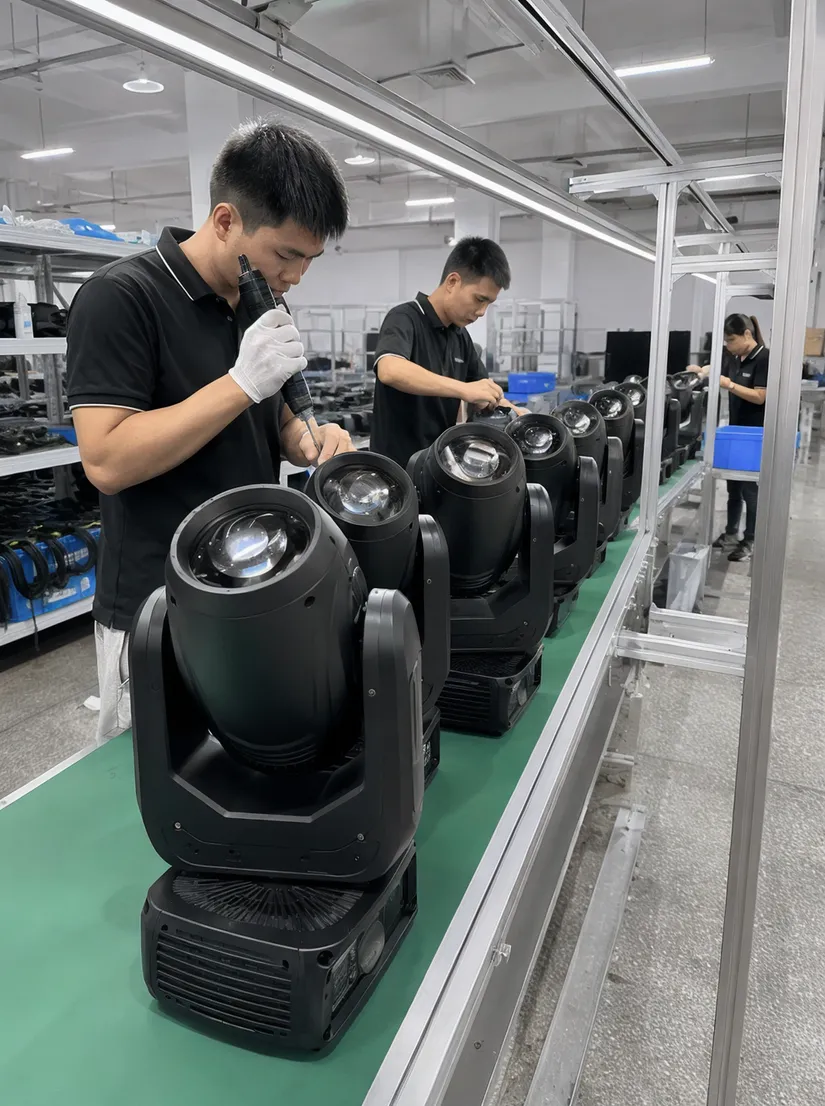
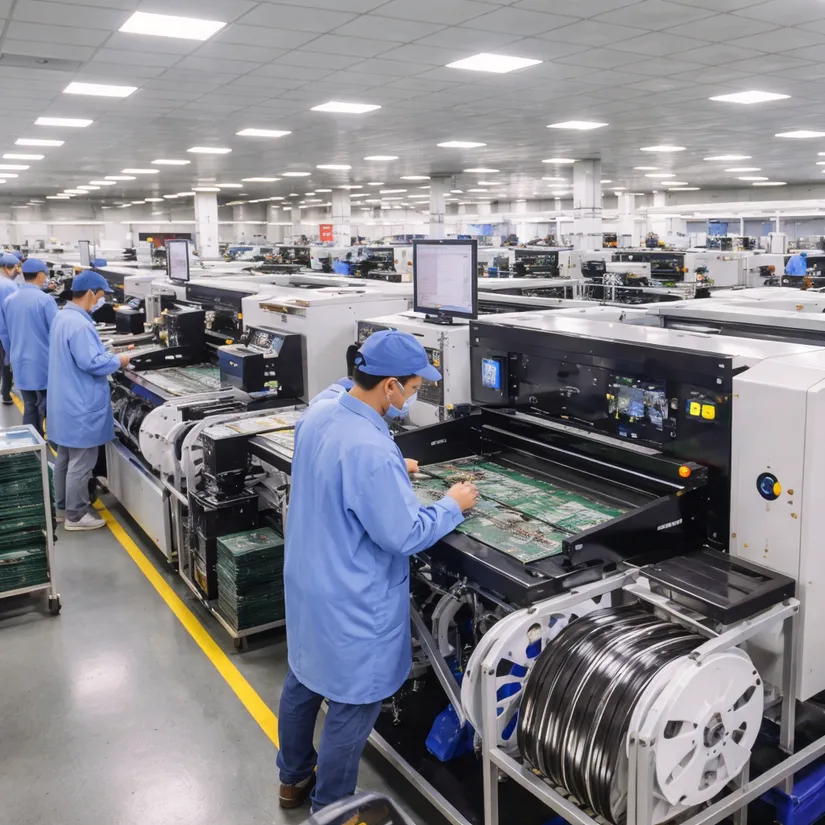
We manufacture professional DJ lights at our Pingyuan County facility in Guangdong, running them through the same SMT lines, optical calibration rigs, and 48-hour aging tests that handle our entire stage lighting range. Your fixtures arrive having already survived their first endurance test — not fresh off assembly with zero run time.
For your sourcing, this means one supplier covering the DJ segment with factory pricing and production-ready OEM capability down to 30 units. You test a SKU in your market without committing to a container, then scale on the same line without requoting.
Engineering Demands — Pro vs. Party Grade
- Thermal management sustains full output without throttling over 6–8 hour sessions
- Mechanical assemblies survive 200+ load-in/load-out road cycles per year
- Optical consistency across hundreds of units on one DMX universe
- 48-hour aging test before shipment — every unit pre-stressed
- OEM from 30 units — test a SKU before committing to a container
Product Line Overview
This category houses two product families, each addressing a distinct segment of the professional DJ market.
Professional DJ Lights Systems
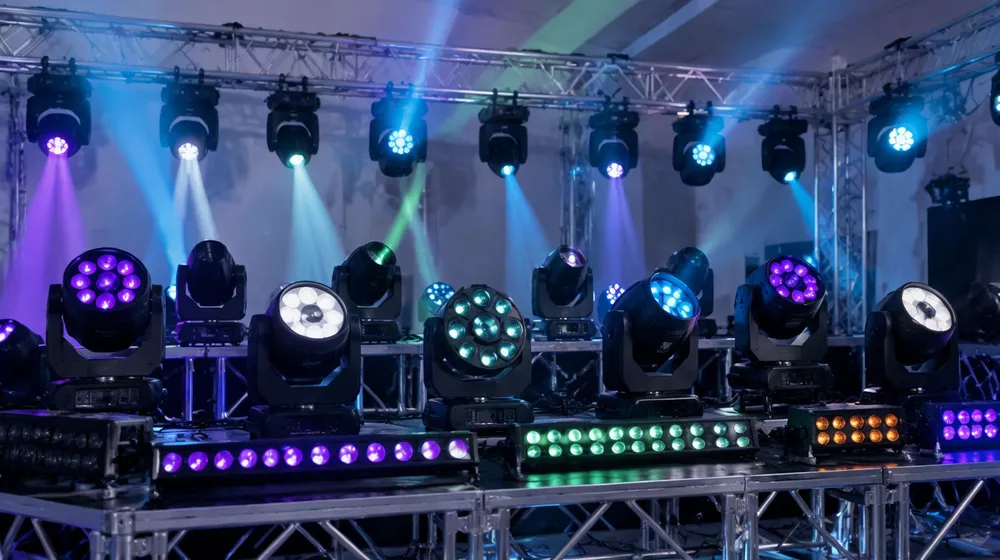
Complete fixture packages built for installation and touring — moving heads, multi-effect units, and integrated controller-ready systems that cover a full DJ booth or stage wash in a single SKU grouping. These are your high-ticket items with strong margin potential because buyers pay for system integration, not just individual lamps.
DJ Lights Effect
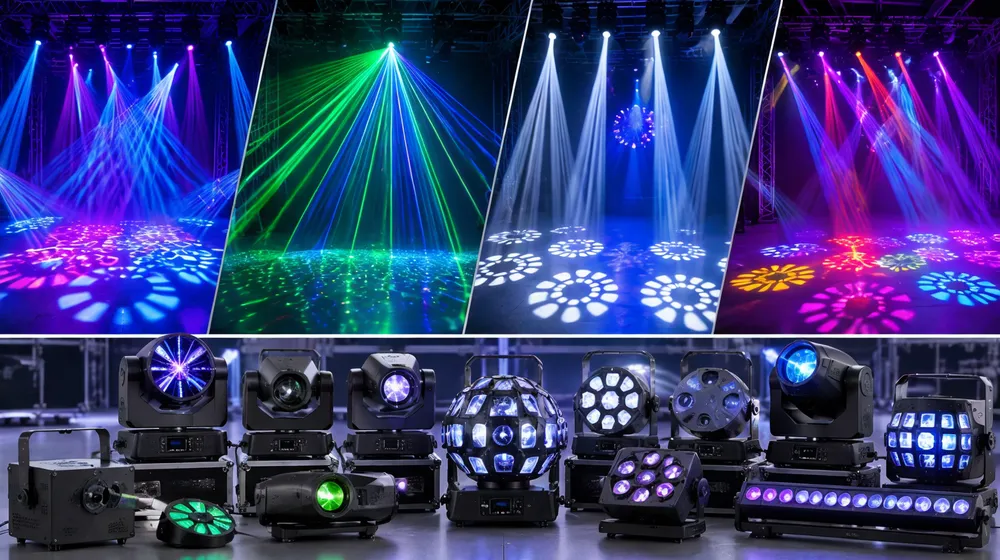
Dedicated effect fixtures — animated beams, laser-LED hybrids, gobo projectors, and pattern generators designed to produce specific visual textures. Effect units are the add-on sale: your customers already own their wash and spot fixtures, and they're buying effects to differentiate their shows. Lower per-unit price, higher volume, repeat purchase pattern.
Single-Source Catalog Coverage
Between these two families, you can build a complete DJ lighting catalog — system anchors plus effects add-ons — from one factory, on one purchase order, with consistent build quality and aligned DMX protocol compatibility.
Optical and Electrical Specifications Category-Wide Ranges
Your buyers spec fixtures by output, beam geometry, and control capability. Here's what our professional DJ lights range covers:
| Parameter | Range Across Category |
|---|---|
| LED Source | 10W–300W RGBW/RGBA, single-chip and multi-die arrays |
| Beam Angle | 3°–60° (adjustable on select models) |
| Color Temperature | 2700K–8000K (white modes) |
| DMX Channels | 4–32 channels per fixture |
| Dimming | 0-100% linear, 16-bit fine on high-end units |
| Refresh Rate | 1200Hz–3600Hz |
| Input Voltage | 100-240V AC, 50/60Hz |
| IP Rating | IP20 (indoor) to IP65 (outdoor-rated models) |
| Operating Temp | -20°C to +45°C |
The universal 100-240V input across the range means you stock one SKU per model for global distribution — no separate US/EU/Asia variants eating into your warehouse space.
How Professional DJ Lights Get Built Here Production Engineering That Protects Your Margin
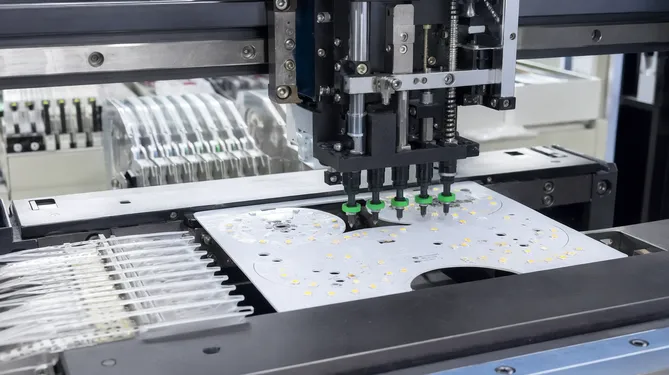
LED Chip Mounting & Optical Consistency
We run automated SMT pick-and-place at ±0.05mm placement accuracy for LED chip mounting. On a professional DJ light with 12 or 24 individually controlled LED emitters, that precision determines whether your buyer sees uniform color mixing or visible hotspots.
We bin incoming LED chips by forward voltage and color coordinates before they hit the line — chips outside a 3-step MacAdam ellipse get pulled.
The result: when you order 500 units of the same model, fixture #1 and fixture #500 produce visually identical output. No color lottery.
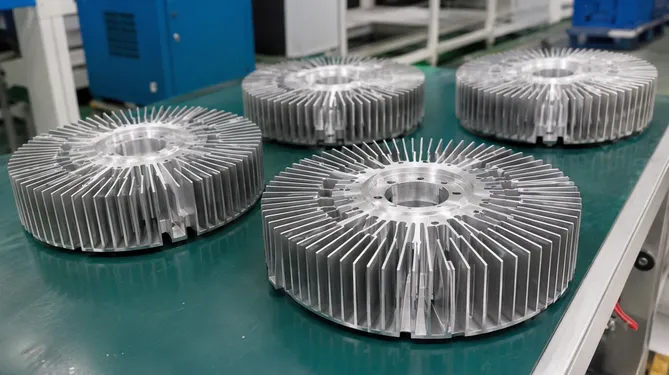
Thermal Architecture
Professional DJ fixtures run at full output for extended periods. A 200W moving head beam generates sustained thermal load that will degrade LED phosphor if junction temperature exceeds 105°C.
We machine our own heatsink fins in-house — tuned geometry per fixture model, not generic extrusion profiles — and validate with thermocouple measurement during 48-hour aging.
Junction temperature target is under 85°C at rated load in 40°C ambient.
We went through multiple heatsink iterations on our high-wattage beam fixtures before the thermal curve flattened where we wanted it. The extra tooling cost saves you from lumen depreciation complaints 6 months into deployment.
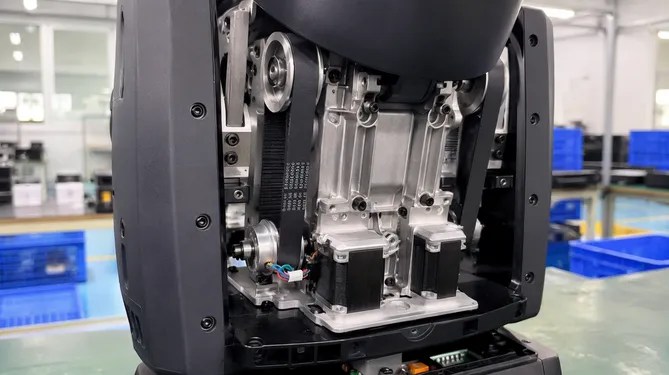
Mechanical Durability for Touring
DJ fixtures get thrown into road cases, stacked in trucks, and hung from truss 300 nights a year. We use die-cast aluminum housings rather than stamped sheet metal — better impact resistance, tighter tolerances on mounting points, and consistent weight across units for rigging calculations.
Pan/tilt mechanisms on moving heads use steel-core timing belts with precision stepper motors.
Our motor heritage (we started in electromechanical assemblies before entering lighting) means smoother motion profiles and longer mechanism life — fewer gear replacements in the field means fewer warranty claims hitting your margin.
Market Segments Where Professional DJ Lights Generate Revenue
These are the commercial contexts where your buyers deploy or resell professional DJ fixtures. Each represents a distinct ordering pattern.
Nightclubs & Lounges
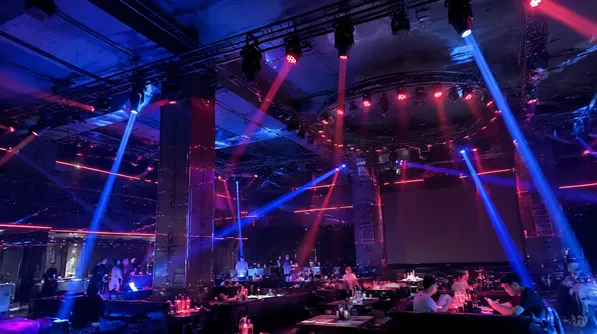
- Permanent install, 6–8 hour nightly duty cycles
- Replacement on 3–5 year refresh schedules
- Buyers order 20–80 fixtures per venue fit-out
Purchase driver: System reliability — downtime means lost venue revenue.
Mobile DJs & Event Companies
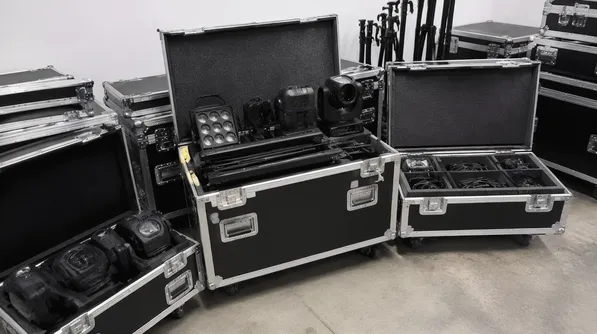
- Touring kit, high physical stress from transport
- 2–4 fixtures per mobile rig as starter packages
- Reorder effects units seasonally as trends shift
Growth signal: Mobile DJs now treat lighting as a competitive differentiator rather than an afterthought.
Rental Houses
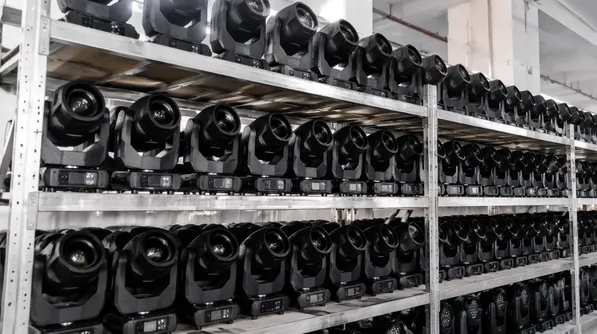
- Fleet inventory, 100–500+ units per model
- Purchased for cross-rental compatibility with other houses
- Standardized DMX addressing and uniform fixture behavior across large quantities
Critical requirement: One fixture behaving differently in a grid of 200 gets noticed immediately.
AV Integrators & Installers
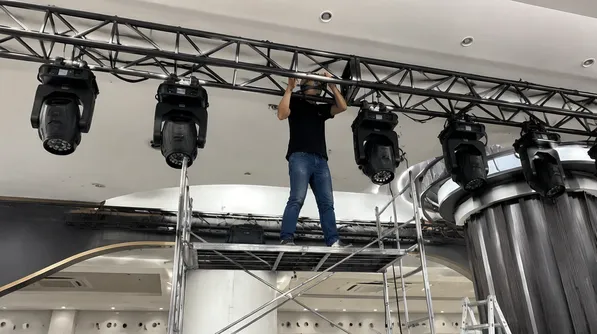
- Project-based ordering tied to venue construction timelines
- Spec compliance documentation matters (CE, FCC, IP rating certificates)
- Fixtures must match architectural lighting control systems
Purchase driver: Compliance documentation and system integration compatibility.
Distributors Building DJ Product Lines
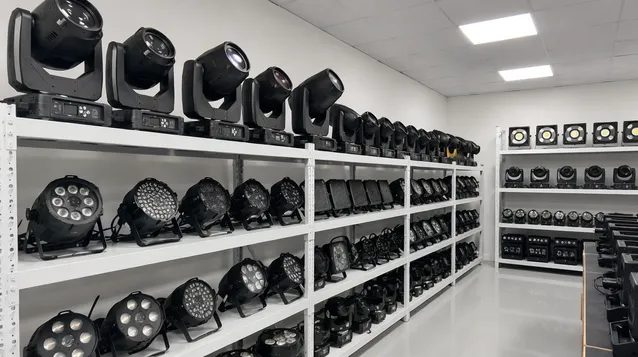
- Catalog breadth, OEM branding, and margin structure drive decisions
- Systems plus effects from one source simplifies supplier management
- Your branding on factory-proven platforms strengthens catalog positioning
Purchase driver: Ability to offer systems plus effects from one source with your branding simplifies supplier management and strengthens catalog positioning.
OEM/ODM Capability — Your Brand on Factory-Engineered Fixtures
We support custom branding and product development starting at 30 units MOQ. This isn't a sticker-on-a-box operation — your OEM project can go as shallow or as deep as your market requires.
Branding-Level OEM
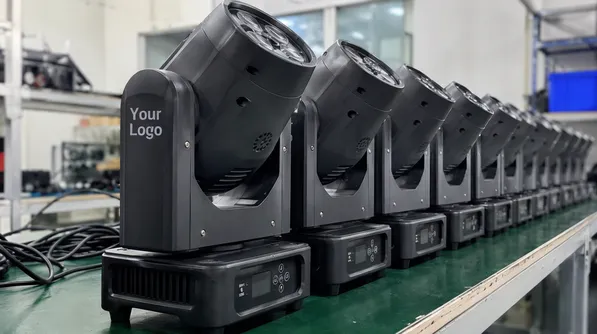
- Your logo on housing
- Your packaging design
- Your firmware boot screen
- Your product label and user manual
- Base fixture from existing range, your identity
Sample turnaround: 7–10 days
Specification-Level ODM
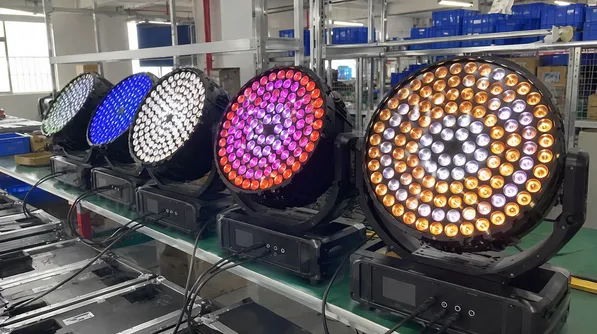
- Modified beam angles
- Different LED array configurations
- Custom color temperature presets
- Adjusted DMX channel mapping for your control ecosystem
Result: A fixture that doesn't exist in anyone else's catalog.
Full Custom Development
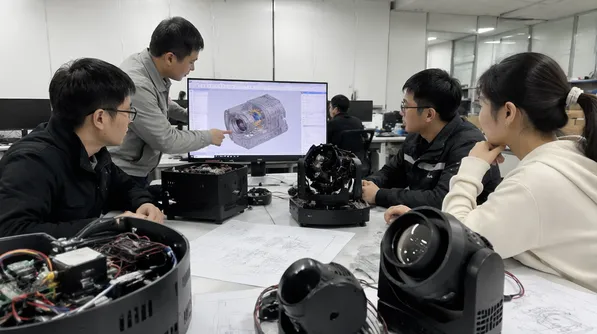
- New optical system design
- New housing tooling
- Proprietary control features
- 15 optical and electrical engineers — concept to production
- IP stays in one building — no outsourced PCB design, no third-party firmware contractors
Typical cycle: 3–4 iterations to production-ready
Scale Your Development Risk With Your Commitment
Start with branding on a proven platform, validate market demand, then invest in deeper customization only after your sales data justifies it. Your development risk scales with your commitment — not the other way around.
What Fails on Cheap DJ Lights — And the Production Decisions That Prevent It
Professional buyers know the failure modes. You've seen them in warranty claims, customer complaints, and competitor returns. Here's what goes wrong with DJ fixtures and how our production addresses each one.
Rapid Lumen Depreciation
#1 Complaint on Budget FixturesThe Problem
Bright out of the box, noticeably dim within 6–12 months. Root cause is always thermal — undersized heatsinks or no thermal management driving LED junction temperatures above 100°C at sustained output.
Our Approach
In-house machined heatsinks validated by thermocouple measurement during 48-hour burn-in. If junction temperature exceeds 85°C at full load and 40°C ambient, the heatsink design goes back to engineering before that model enters production.
Water Ingress on Outdoor-Rated Units
IP65 Claims That Don't Survive Real RainThe Problem
IP65 claims that don't survive real rain. Foam rubber gaskets compress permanently after thermal cycling and lose seal integrity by season two.
Our Approach
We ultrasonic-weld housing seams on outdoor models and pressure-test sealed enclosures before the LED module goes in. Gaskets are silicone, not foam rubber — silicone maintains seal integrity across repeated thermal cycles where foam fails.
Color Inconsistency Across Batches
Reorders Don't MatchThe Problem
You order 100 units in January, 100 more in March, and they don't match. This happens when a manufacturer doesn't bin LEDs before mounting.
Our Approach
We sort incoming chips to a 3-step MacAdam ellipse tolerance and hold binning records per production batch, so your March reorder visually matches your January stock.
Pan/Tilt Mechanism Failure on Moving Heads
Mechanical Wear After 2,000 HoursThe Problem
Stripped gears, motor burnout, belt slippage after 2,000 hours of operation. Generic motors and plastic timing components can't sustain the duty cycles professional deployment demands.
Our Approach
Our motors come from our own electromechanical engineering background — we spec steel-core timing belts and precision steppers rated for 15,000+ hours continuous duty. Our quality team tracks mechanism warranty returns across all customers.
Current field failure rate on pan/tilt: under 0.3% across a 12-month deployment window.
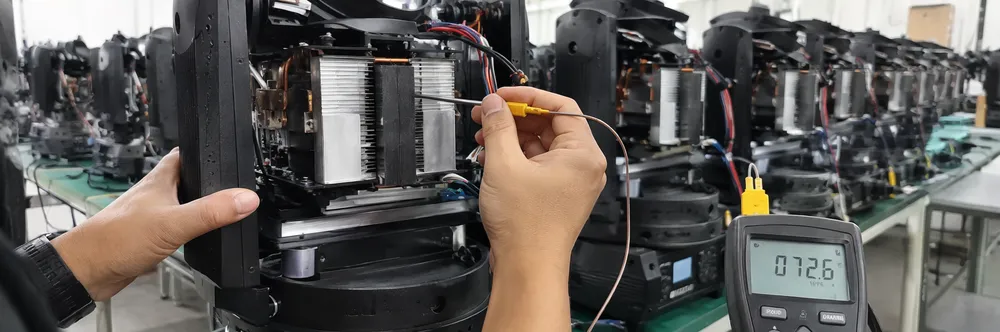
48-hour thermal validation — thermocouple measurement confirms junction temperatures remain within engineering limits at sustained full load.
Export Packaging and Container Loading
Professional DJ lights combine moderate weight with fragile optical components — lenses, mirrors, gobo wheels. Our export packaging addresses both protection and logistics efficiency.
Custom-molded EPE foam inserts sized to each model's geometry
Master cartons rated for 5-high container stacking
Palletized loading optimized for 20' and 40'HQ containers
Anti-static wrap on PCB-exposed connectors
Silica gel packets in sealed inner bags for humidity protection during ocean transit
Container Loading Quantities
Standard LED PAR Fixtures
Compact form factor — typical 40'HQ loading is 800–1,200 units depending on model dimensions.
Larger Moving Heads with Flight Cases
200–400 units per 40'HQ container.
We provide exact CBM and loading quantities per model during quotation so you can calculate landed cost before committing.
Custom Labeling & Compliance
Labeling adapts to your warehouse system — barcodes, SKU numbers, carton markings, and packing lists in your format.
Custom barcodes and SKU numbering
Carton markings in your format
Packing lists formatted to your system
Amazon FBA prep compliance
Retail chain compliance labeling
Note: If you need specific Amazon FBA prep or retail chain compliance labeling, we handle that at our end rather than requiring you to relabel at destination.
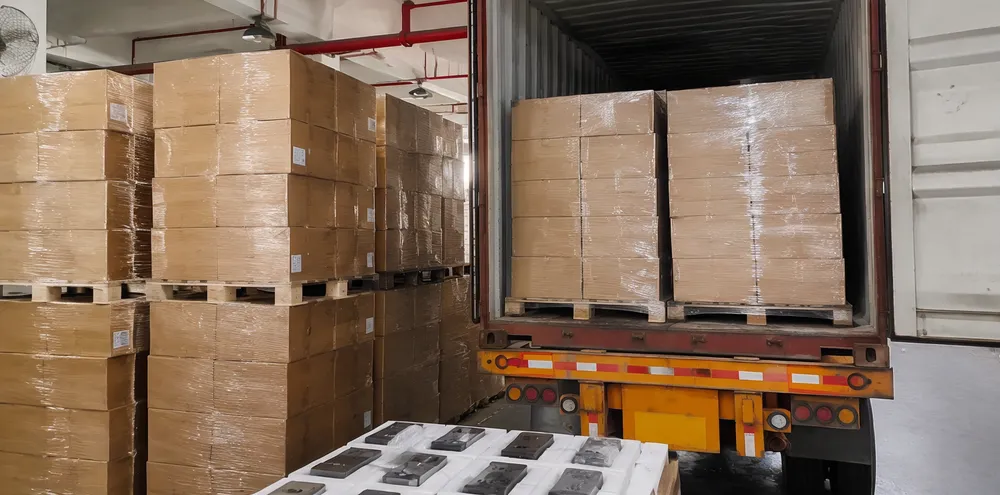
Palletized export packaging — custom-molded EPE inserts, burst-rated master cartons, and container-optimized loading configuration.
Compliance Documentation Ready for Your Market
Every professional DJ light in our range ships with documentation pre-qualified for major import markets. No post-production scramble to get certificates when a buyer asks for documentation.
CE (EMC + LVD)
European Union
Direct import clearance, no third-party retesting
FCC Part 15
United States, Canada
No RF interference complaints from venue AV systems
RoHS
EU, UK & RoHS-Adopting Markets
Compliant bill of materials from component level up
IP65 / IP67
Outdoor-Rated Models
Documented ingress protection for outdoor venue specs
ISO 9001:2015
Factory Quality System
Supply chain audit pre-qualification for enterprise buyers
Test Reports & Declarations of Conformity Per Model
We maintain test reports and declarations of conformity per model — available as PDF packages for your import broker or your customer's compliance department. No post-production scramble to get certificates when a buyer asks for documentation.
Frequently Asked Questions
What IP rating do professional DJ lights need for outdoor festivals?
IP65 minimum for any fixture exposed to rain or dust at outdoor events. IP65 means complete dust ingress protection and resistance to water jets from any direction — enough for rain and stage-level fog machine output.
For fixtures mounted at ground level where standing water is possible, specify IP67.
We offer both ratings across our outdoor professional DJ range, with pressure-tested housings and silicone gaskets rather than foam seals.
Why do some DJ LED fixtures lose brightness after 6 months of use?
Thermal mismanagement. When LED junction temperatures consistently exceed 100°C, phosphor degradation accelerates and lumen output drops measurably within 2,000–4,000 operating hours.
The fix is proper heatsink geometry matched to the fixture's actual thermal load — not a generic aluminum plate that looks like a heatsink but doesn't move enough watts.
Our fixtures are validated to hold junction temperatures below 85°C at sustained full output, which maintains rated lumen output past 20,000 hours.
How do you ensure color consistency when I reorder the same model months later?
LED chip binning. We sort incoming LEDs to a 3-step MacAdam ellipse tolerance and record bin codes per production batch.
When you reorder, we pull from the same binning specification.
The visible result: your March shipment matches your January shipment in color appearance when they run side by side on the same truss.
What is the minimum order for OEM-branded professional DJ lights?
30
Units / Model
Branding-level OEM — your logo, packaging, boot screen, and documentation
100
Units / Model
Engineering-level ODM — modified optics, custom DMX mapping, spec changes
500
Units / Model
Full custom development with new tooling
All OEM projects get pre-production samples for your approval before bulk production begins.
Can professional DJ lights integrate with existing DMX512 control systems?
All our professional DJ fixtures communicate via standard DMX512/RDM protocol. Channel mapping follows USITT DMX512-A conventions, so integration with any standard console (MA, ChamSys, Avolites, or budget controllers) works without proprietary software.
We also offer Art-Net and sACN network input on select models for larger installations running network-based control architectures.
Custom DMX personality files are available for major console brands on request.
What testing does each fixture go through before shipment?
Every unit — 100%, not AQL sampling — runs a 48-hour aging test at full electrical load. This catches infant mortality failures (capacitor faults, LED driver instability, thermal throttling) before the fixture leaves our factory.
After aging — full functional test confirming:
- DMX response across all channels
- Color mixing accuracy
- Dimming linearity
- Mechanical operation (pan/tilt travel and speed on moving heads)
- Optical output verification
Cosmetic and packaging inspection follows AQL II sampling. Your containers arrive right the first time.
Start Sourcing Professional DJ Lights
You've seen the product range, the production engineering, and the compliance coverage. The next step depends on where you are:
Already have a product brief or target spec?
Send it to our engineering team — we'll confirm feasibility, recommend the closest existing platform or quote a custom development path, and return a preliminary proposal within 48 hours.
Exploring the category for your product line?
Tell us your target market, volume expectation, and price positioning. We'll suggest a starter SKU mix based on what's actually moving for our existing distributors in your region.
Need samples first?
Most buyers in this category start with a 2–3 unit sample order to evaluate build quality, optical output, and DMX behavior with their own equipment. Sample lead time: 3–7 days for standard models.
Ready to move forward?
Choose the channel that works for your workflow.
Explore this category