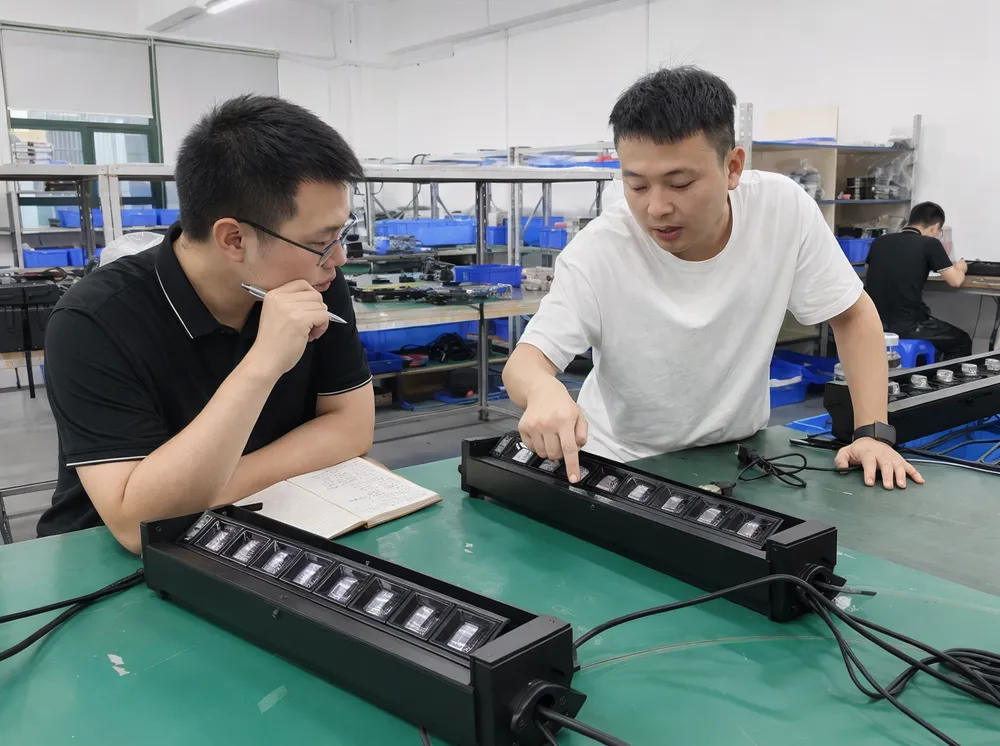

DJ Laser Bar Light 4–8 Independent Heads in One Linear Housing
One fixture replaces three to four individual units on your stage rig. Built for rental fleets and fixed installations where setup speed and even beam distribution across wide stages directly affect your crew cost and client satisfaction rates.
CE + FCC + RoHS documented · 48-hour full-power aging on every unit · OEM/ODM from 30 units
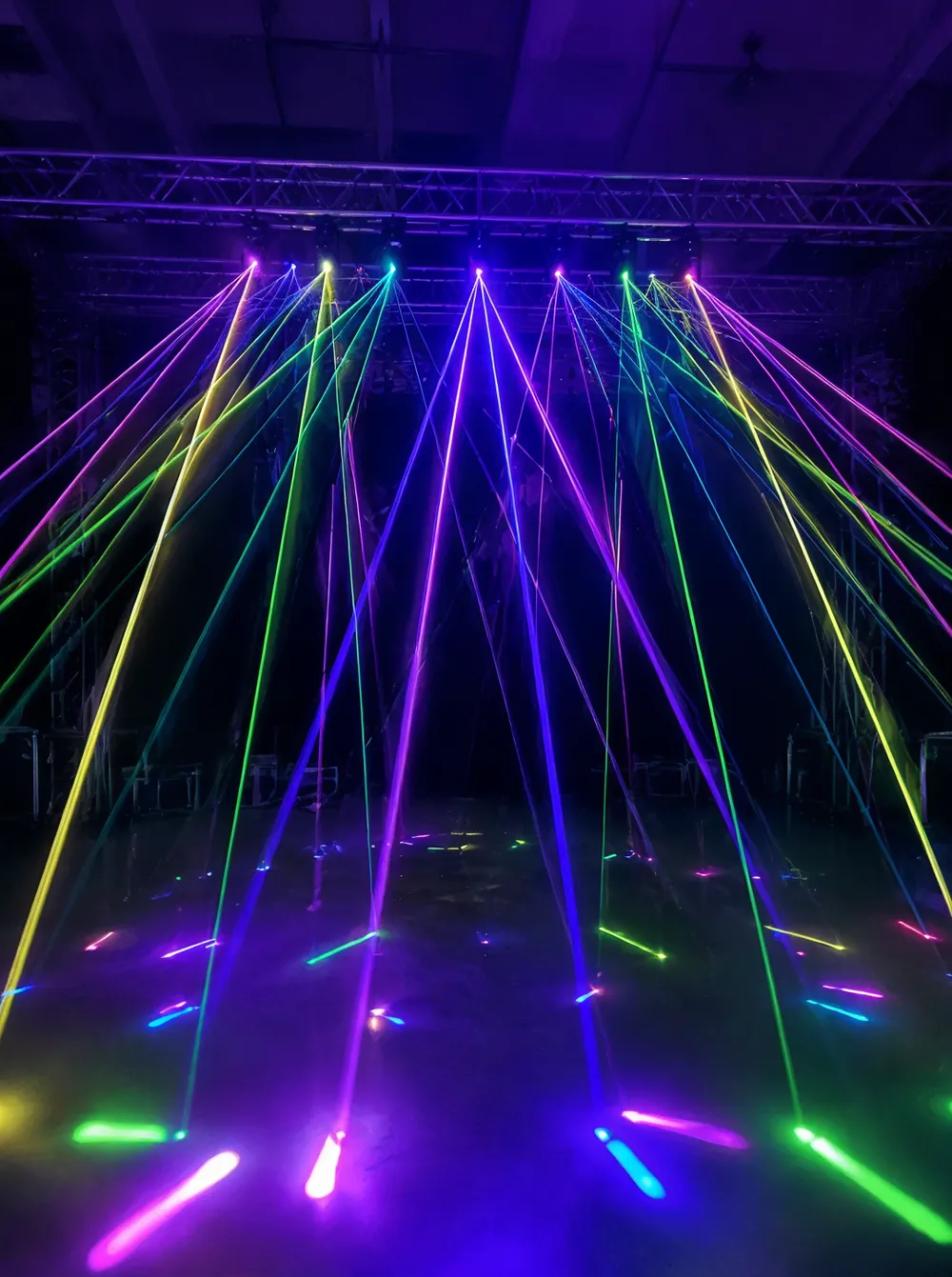
What a DJ Laser Bar Light Is and Why It Exists in Your Catalog
A DJ laser bar light is a multi-head laser fixture built into a single elongated housing. Instead of mounting four separate laser units across a truss, you mount one bar. Each laser head operates independently — separate pattern selection, separate color output, separate DMX addressing — but they share a single power feed, a single DMX run, and a single mounting point.
The commercial logic is straightforward: fewer fixtures to rig means faster load-in, less cabling, and fewer potential failure points during an event. For rental companies, that's reduced crew hours and faster turnaround between gigs. For fixed installations, that's fewer ceiling penetrations and a cleaner cable run back to the dimmer rack.
Faster Load-In
One mounting point, one power feed, one DMX run replaces four individual fixture setups.
Fewer Failure Points
Less cabling and fewer connectors reduce the chance of mid-event signal drops or power issues.
Reduced Crew Hours
Rental companies get faster turnaround between gigs — fewer person-hours on rigging and de-rigging.
Cleaner Installations
Fixed venues benefit from fewer ceiling penetrations and a single cable run back to the dimmer rack.
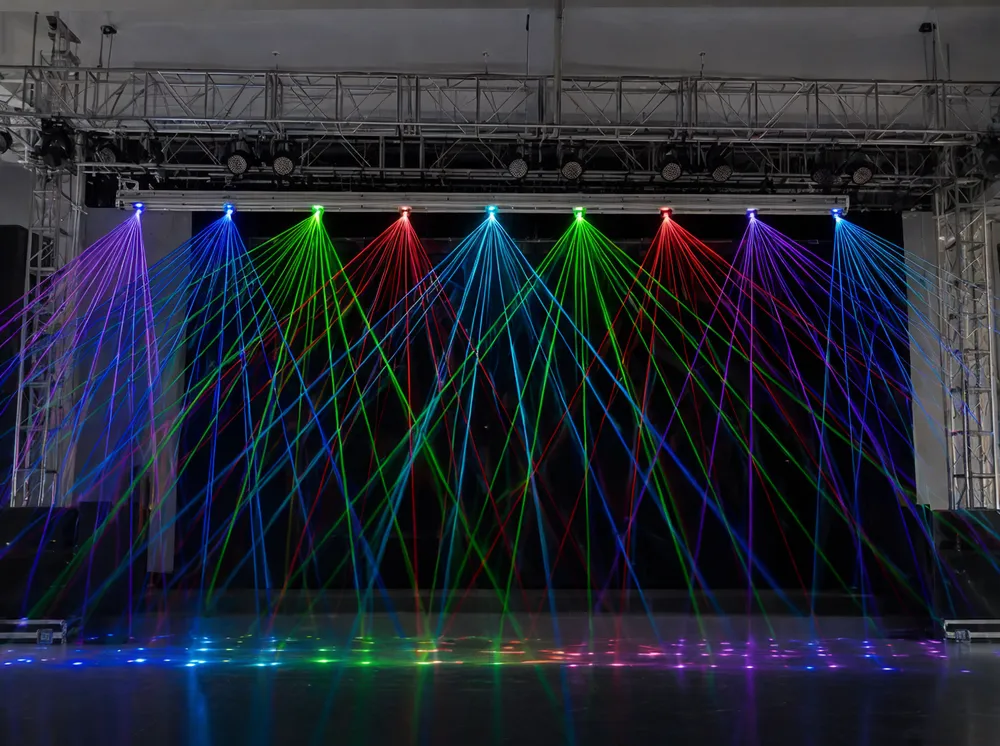
Where This Fits in the Line
The DJ laser bar light sacrifices per-head power for coverage width — it's designed to fill a 6–12 meter stage front with even laser wash from a single fixture position. Different deployment problem, different product.
- Professional DJ Laser — Single-head, high-power unit for focused beam effects
- RGB Laser Projector — Full-color pattern projection from one point source
- DJ Laser Bar Light — Multi-head coverage width from a single fixture
Technical Specifications for the DJ Laser Bar Light
Specifications shown are industry-standard values for this product type. Actual specifications may vary by configuration. Contact us for a detailed product data sheet specific to the head count and wavelength combination you need.
| Parameter | Specification |
|---|---|
| Laser Heads | 4 / 6 / 8 heads (configuration dependent) |
| Output Power Per Head | 50–100 mW |
| Total Output Power | 200–500 mW (combined, configuration dependent) |
| Wavelengths | Red 650nm, Green 532nm, Blue 450nm (RGB per head on full-color models) |
| Scan System | Stepper motor per head (entry) / Galvanometer per head (professional) |
| Scan Speed | 8–15 KPPS (stepper) / 15–20 KPPS (galvo) |
| Control Modes | DMX-512 (individual head addressing), Auto, Sound-Active, Master/Slave |
| DMX Channels | 12–32 channels (dependent on head count and feature set) |
| Beam Divergence | < 2.0 mrad per head |
| Housing Material | Extruded aluminum, black anodized |
| Housing Length | 500 mm (4-head) / 750 mm (6-head) / 1000 mm (8-head) |
| Weight | 3.5–7.5 kg (configuration dependent) |
| Power Input | AC 100-240V, 50/60Hz |
| Power Consumption | 30–80W |
| Operating Temperature | 0°C to 40°C |
| IP Rating | IP20 (indoor use) |
| Certifications | CE, FCC, RoHS |
| Laser Safety Class | Class 3B |
Compact Coverage
Available in both stepper and galvo scan systems. Ideal for smaller stages or paired deployment on medium rigs.
Mid-Stage Fill
Available in stepper and galvo. Balances head count against thermal headroom for sustained output on longer sets.
Full-Width Array
Stepper scan only — fitting eight galvo assemblies into the thermal envelope of a 1-meter housing isn't practical at this price point without overheating center heads.
Engineering Note: 8-Head Galvo Configuration
If your application truly needs 8 galvo heads, we recommend two 4-head galvo bars instead. This gives you the same head count with proper thermal spacing, independent failure isolation, and the flexibility to angle each bar independently for better coverage geometry on asymmetric stages.
Multi-Head Optical Alignment — How Batch Consistency Works on a Bar Fixture
Individual laser units are straightforward to calibrate — one head, one optical path, done. A laser bar is harder to get right because you have 4–8 independent optical systems sharing one rigid housing. If the housing warps during anodizing, or the head mounting holes drift during CNC machining, your beams converge or diverge unevenly. Your end user sees it immediately when all heads should throw parallel beams and one drifts 3° off axis.
We machine the head mounting rail from a single extrusion — not welded segments — so flatness stays within ±0.1mm across the full bar length. Each head pocket is CNC-bored in one setup pass on the same fixture, which holds positional tolerance at ±0.15mm center-to-center. After assembly, we run a multi-point alignment check: all heads powered simultaneously, projected onto a calibration grid at 5-meter throw distance. Angular deviation between adjacent heads must read below ±0.3° before the unit passes QC.
What this means commercially: when your rental client deploys 6 laser bars across a stage, the beam arrays look uniform. No unit-to-unit variation visible during the show. Fewer mid-event complaints, fewer "this one looks different" service calls from your install clients, and a product your sales team can demo with confidence at trade shows.
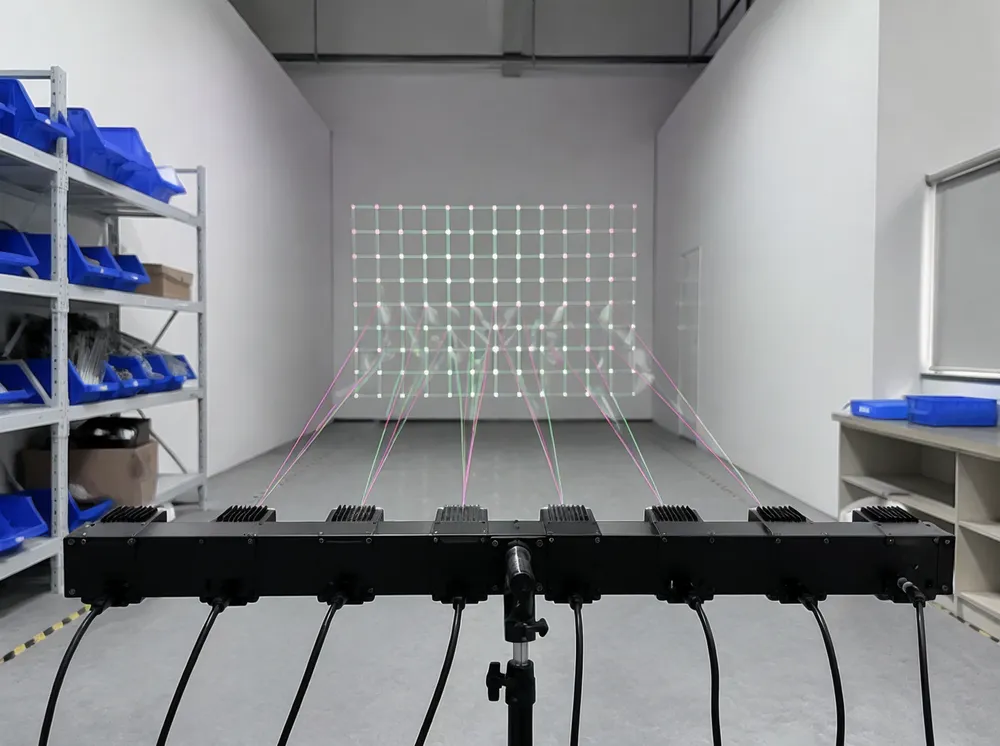
Alignment Tolerances
±0.1mm
Rail Flatness
±0.15mm
Center-to-Center
<±0.3°
Angular Dev.
Single-extrusion rail + single-setup CNC boring — eliminates the positional drift that welded multi-segment housings introduce during thermal cycles.
Segments Where DJ Laser Bar Lights Generate Repeat Orders
Four distinct B2B segments drive the majority of laser bar volume. Each has its own order pattern, decision criteria, and value proposition you can leverage in sales conversations.
Event Rental and Production Companies
Primary Volume Segment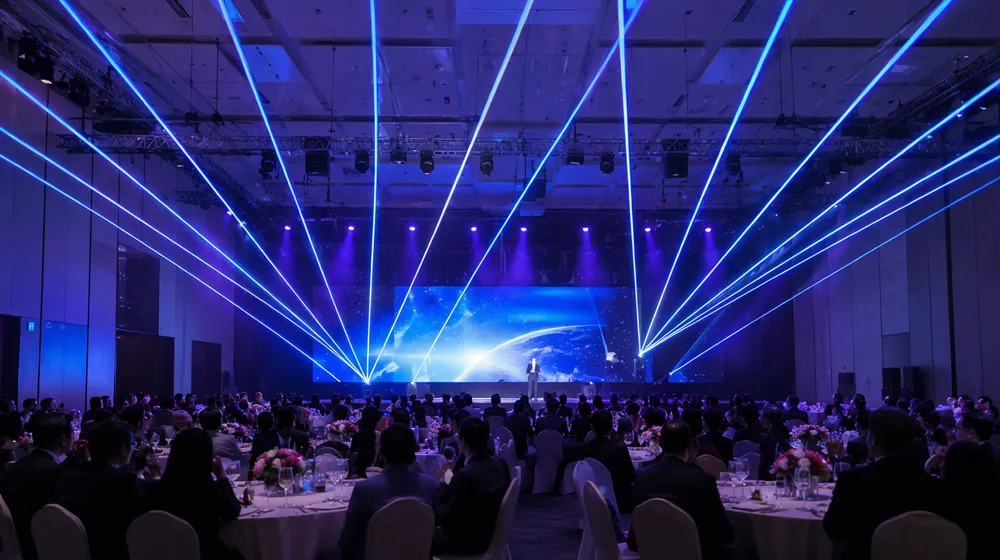
Rental companies stock 10–30 bars per fleet because one bar replaces 3–4 individual units in setup time. A typical wedding or corporate gig deploys 4–8 bars for full stage coverage — that's one client event consuming a significant fraction of inventory, which drives fleet refresh cycles every 18–24 months.
Order Pattern
20–50 units per initial purchase, 10–20 units per annual replenishment.
Margin story for your sales team: "One fixture, one power drop, one DMX run" versus "four fixtures, four cables, four clamps." That value proposition sells itself on the first gig where load-in runs 30 minutes shorter.
Nightclub and KTV Fixed Installations
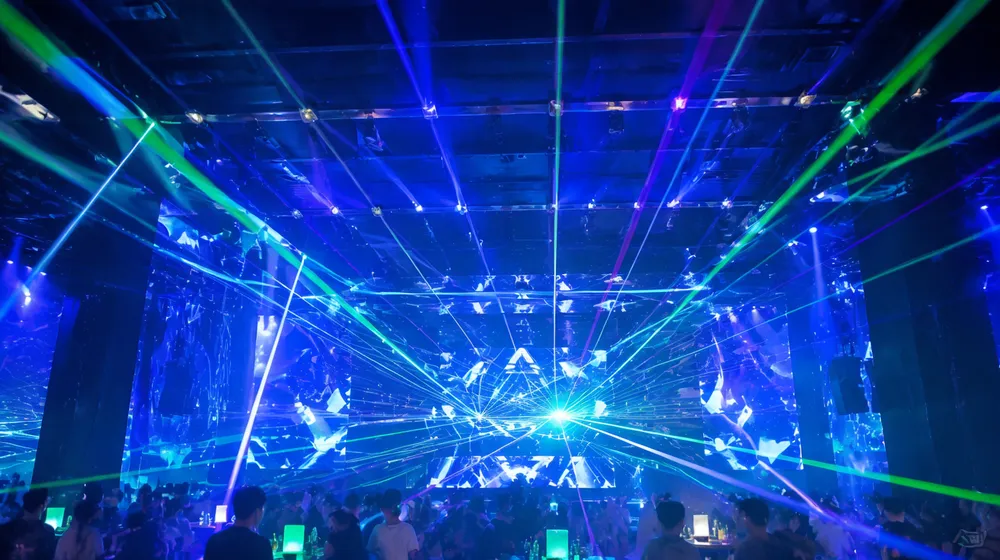
Clubs installing laser effects across a wide DJ booth or dance floor ceiling prefer bars over individual units because the wiring is cleaner and the visual coverage is more even. A typical nightclub buildout uses 6–12 bars depending on room dimensions, ordered in a single project purchase.
Key Selling Feature
Individual DMX addressing per head means the lighting designer can program each head separately through the venue's DMX controller. One fixture, multiple zones of control. Fewer fixtures in the ceiling means fewer maintenance access points when a unit eventually needs service — that matters to venue operators managing ongoing operational costs.
Touring Productions and Concert Lighting
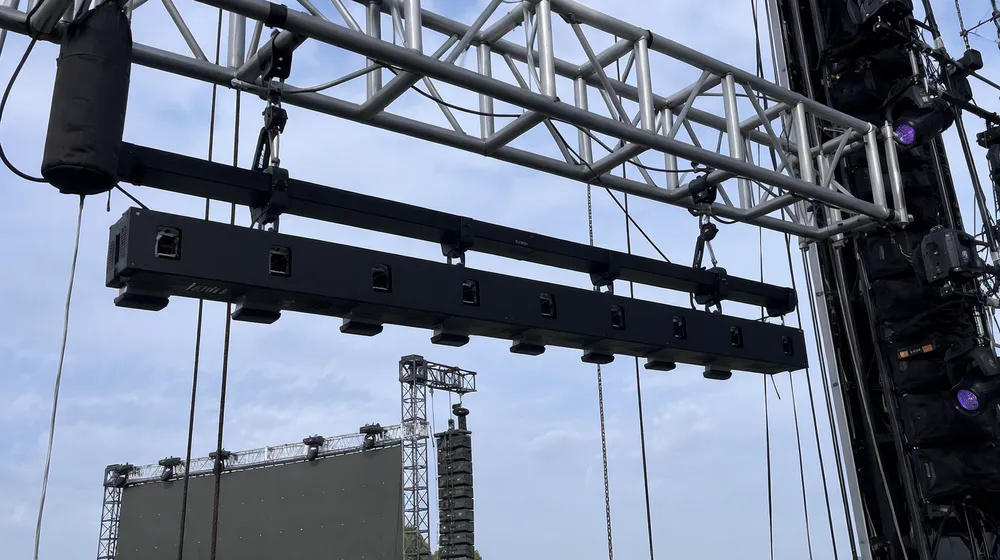
Touring rigs value weight reduction and setup speed above almost everything else. An 8-head laser bar at 7.5 kg replaces 8 individual units that would total 12–15 kg plus cabling weight, clamps, and safety cables. For a touring production deploying 20–40 laser positions, the cumulative weight and rigging time savings are significant.
Order Pattern
Specification by a lighting designer, purchased by the production company, deployed across a tour run. Once a bar model gets specified into a tour design, the production company orders enough for the full rig plus 15–20% spares.
Touring is hard on gear — vibration, thermal cycling in truck trailers, rushed load-ins. The 48-hour aging test and housing rigidity are what keep warranty claims low on touring deployments.
Architectural and Permanent Installation
Higher Margin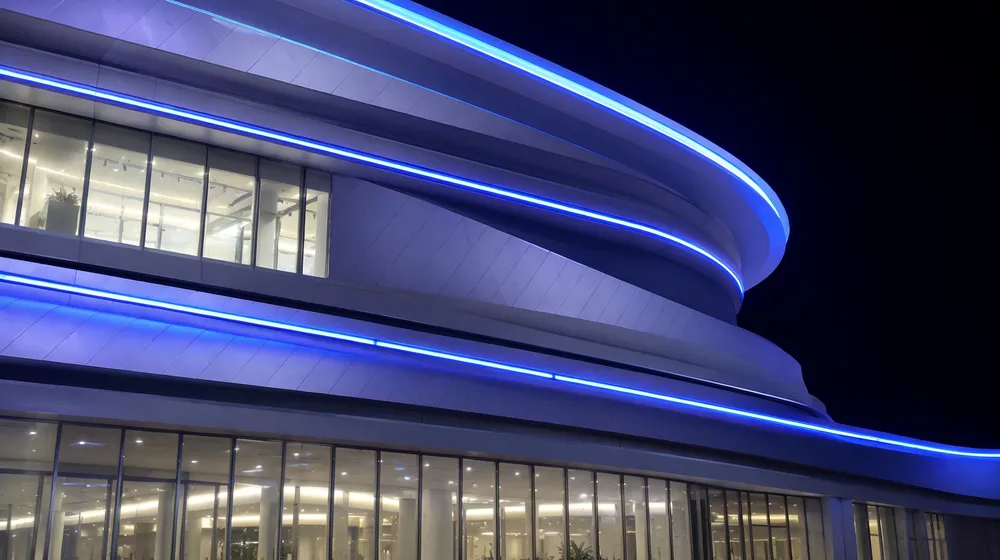
Laser bars mounted in architectural positions — building facades, museum ceilings, themed entertainment installations — need consistent performance over thousands of hours with minimal maintenance access. The linear form factor integrates naturally into architectural sightlines where a cluster of individual units would look cluttered.
Project Profile
Lower-volume but higher-margin segment. Projects order 5–20 units with custom mounting brackets and sometimes custom housing colors. Lead times are longer but per-unit pricing supports custom engineering.
Tell us which segment you serve — we'll recommend the right configuration and quantity breaks.
Get Segment-Specific RecommendationsCustomization Parameters and What's Practical to Modify
Head Count
4, 6, or 8 heads standard. Custom head counts (3, 5, 10) require modified housing extrusion tooling.
MOQ: 200 units for custom head counts
Wavelength Selection Per Head
Standard RGB full-color on all heads. Single-color configurations (all green, all red) available at standard MOQ. Mixed configurations (alternating green/red/blue) available — specify your pattern at order.
Scan System
Stepper motor (lower cost, simpler patterns) or galvanometer (faster scan, complex patterns) on 4-head and 6-head models.
We'll recommend based on your target retail price point.
Housing Color
Black anodized standard. Custom anodizing colors (silver, white, specific RAL colors) available.
MOQ: 100 units per color due to anodizing line changeover costs
Mounting Configuration
Standard Omega bracket for truss mounting included. Custom mounting plates for ceiling flush-mount, wall bracket, or proprietary rigging systems — provide your dimensional drawing and we'll modify the bracket.
No additional tooling cost for orders above 50 units
Branding
Your logo laser-engraved on the housing, custom boot screen on DMX display models, branded packaging.
Standard for any order above 30 units
DMX Protocol Customization
Standard DMX-512 channel mapping. Custom channel assignments or Art-Net integration on request — engineering time applies for firmware modification, typically 5–7 days.
What We Can't Do
- • Change the housing length without new extrusion tooling — significant investment. Discuss with our engineering team if you need non-standard lengths.
- • Adding IP54 rating to a bar design requires sealed head compartments that change the thermal profile substantially — we'd design this as a new product, not a modification.
We'll confirm feasibility and MOQ within 24 hours
Thermal Management on Multi-Head Housings — Why the Bar Format Needs Different Engineering
The Problem: Thermal Gradient in Linear Housings
A single-head laser unit dissipates 5–10W of heat from one point into a housing with adequate surface area. A 6-head bar generates 30–60W of thermal load distributed along a linear housing where the center heads have less exposure to ambient airflow than the end heads.
If you don't solve the thermal gradient problem, center heads run hotter, derate faster, and die earlier than end heads. Your warranty returns concentrate on center-head failures — a pattern your service team will notice quickly.
Our Solution: Variable-Pitch Channeled Heatsink
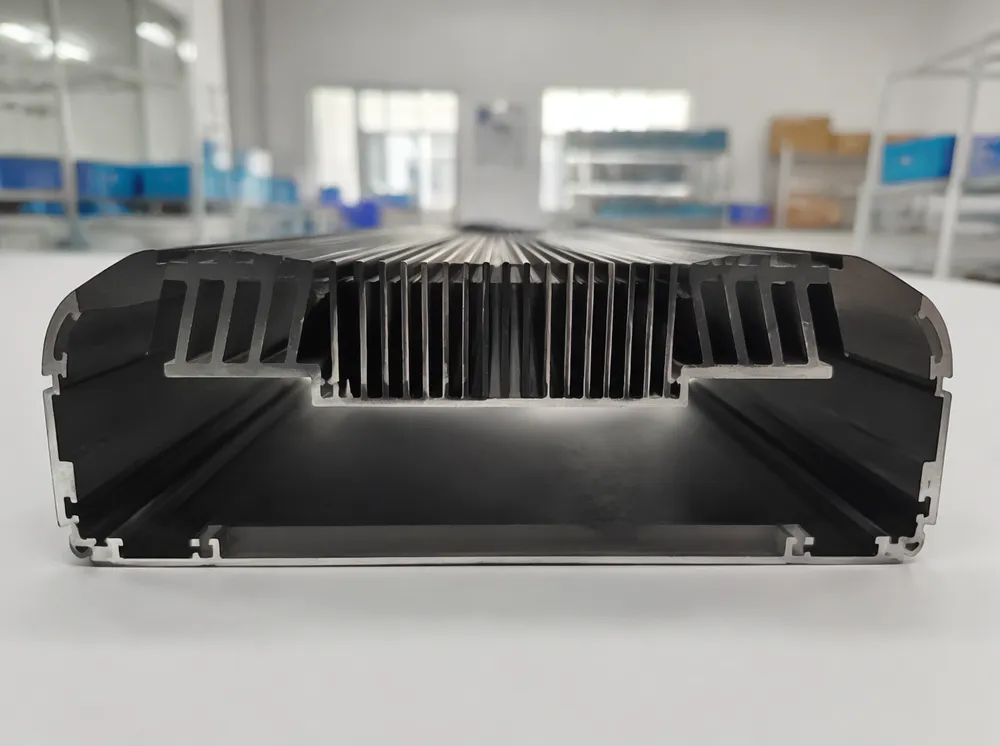
We address this with a channeled heatsink design machined into the housing extrusion. The internal fin geometry is denser at the center section than at the ends, compensating for the reduced natural convection in the center.
Center Section
2.5mm
fin pitch (denser)
End Sections
3.5mm
fin pitch (standard)
Thermal interface between each diode module and the housing uses 0.15mm controlled-thickness thermal compound application — same process we use across all our laser product lines, verified at assembly.
Performance Result
≤ 3°C junction temperature variation between center and end heads under continuous full-power operation
All heads derate at the same rate — no uneven beam output after 1,000+ hours
Development Testing Note
We tested uniform-pitch fins early in development and measured 8–11°C center-to-end differential. That's enough to cut center-head diode life by 30–40%. The variable-pitch design added machining time but solved the problem permanently.
Packaging and Container Loading for DJ Laser Bar Lights
Bar fixtures are longer than standard DJ laser units, so packaging geometry affects your container efficiency differently. Here's how we protect and palletize each configuration.
Individual Unit Packaging
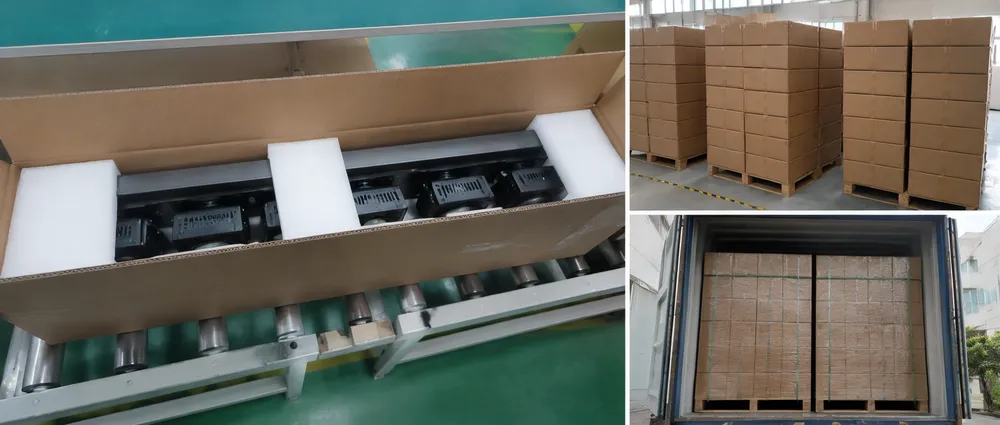
Custom-molded EPE foam cradle inside reinforced corrugated carton. The bar sits horizontally with foam blocks supporting both ends and center — prevents flex during handling that could stress the head mounting rail.
Master Carton
4 units per master carton for 4-head bars, 3 units per master carton for 6-head and 8-head bars. Master cartons stack vertically (max 5 high) for palletization.
Container Loading Estimates
Transit Protection
The key vulnerability on bar fixtures is the head mounting rail taking a bend from a point-load impact during handling.
Our packaging positions the bar with the heavier housing back against the carton floor and the lighter head-lens face upward, with rigid foam rails preventing lateral movement. Passes ISTA 2A drop and vibration simulation.
Labeling and Documentation
- CE / FCC / RoHS declarations
- Safety interlock documentation (required for Class 3B laser products)
- Multi-language user manual
- Custom labeling with your SKU, barcode format, and warehouse receiving template supported
Frequently Asked Questions About DJ Laser Bar Lights
Technical answers for lighting buyers evaluating bar-format laser fixtures for their product line or rental fleet.
How many DMX channels does a DJ laser bar light use?
Channel count depends on head count and control depth. A basic 4-head bar with per-head pattern selection and dimming runs 12–16 channels. A 6-head bar with per-head color mixing, pattern selection, rotation speed, and strobe adds up to 24–28 channels.
We publish the exact DMX chart for each configuration — request the chart for your target model and your lighting programmer can confirm compatibility with the existing show file structure before you commit to an order.
DJ laser bar light vs. multiple individual DJ laser units — which is more cost-effective?
Unit-for-unit, individual lasers are slightly cheaper per head because the housing is simpler. But total deployment cost favors the bar: fewer clamps, fewer cables, fewer DMX runs, faster rigging time, and fewer individual safety cables.
For rental companies billing crew labor by the hour, the setup time savings on a 20-fixture laser deployment typically exceed the per-unit price premium within 3–5 events.
For fixed installations, fewer ceiling penetrations and shorter cable runs reduce install labor — your contractor clients notice immediately.
What scan speed do I need for smooth pattern animation on a laser bar?
For basic geometric patterns (circles, lines, tunnels, gratings), stepper motor scanning at 8–15 KPPS is visually adequate and keeps your landed cost lower.
For complex pattern animation, text projection, or synchronized multi-head effects that demand smooth rendering without visible flicker, galvanometer scanning at 15–20 KPPS is the right spec.
Most rental and event companies choose galvo for the professional models they brand under their own name — the visual quality difference is immediately obvious during a side-by-side demo at trade shows.
Can individual heads on a DJ laser bar be controlled independently via DMX?
Yes — every head has its own DMX start address offset within the fixture's channel footprint. Your lighting console sees each head as a separate control group within one fixture.
Full independent control over pattern, color (on RGB models), dimming, speed, and strobe per head.
This is the key feature that separates a laser bar from a simple multi-beam effect where all beams do the same thing simultaneously.
What maintenance does a DJ laser bar light require in rental fleet use?
Optical cleaning every 50–100 deployment hours: Lens surfaces accumulate haze fluid residue that reduces beam intensity. Use isopropyl alcohol and lint-free cloth on each head lens.
Check mounting bracket tightness quarterly — the longer housing creates more torque on the clamp point than individual units.
Recalibration of head alignment is rarely needed if the unit hasn't taken a significant impact, but we include an alignment reference card and procedure in each unit's documentation.
Typical service life before diode replacement: 8,000–12,000 hours at rated output, depending on thermal environment.
Start with a Sample —Scale When Your Market Confirms
Most laser bar buyers in our order history follow the same path: 2–4 sample units to evaluate beam quality, alignment consistency, and build durability in their own rental or demo environment. Once the product holds up through 10–15 deployments without issues, the volume order follows — typically 30–100 units depending on fleet size and channel coverage.
We ship samples within 5–7 days of order confirmation. If you need a specific head count or wavelength configuration that isn't in our standard sample stock, sample production takes 10–12 days.
Send us your target configuration — head count, scan type, wavelength preference — and we'll quote samples plus projected volume pricing at your expected annual quantity. Our engineering team can also recommend the configuration that fits your target retail price point if you tell us your market segment.