

Stage Lights Stand For Installed & Semi-Permanent Rigs
Engineered for fixed installations — heavier tubing, wider base footprint, and load ratings built for multi-fixture rigs that stay in place.
Where mobile DJ stands prioritize portability, this stand prioritizes structural margin. Your contractor and install-company buyers need mounting hardware that survives years of continuous service under heavy fixtures — and passes inspection.
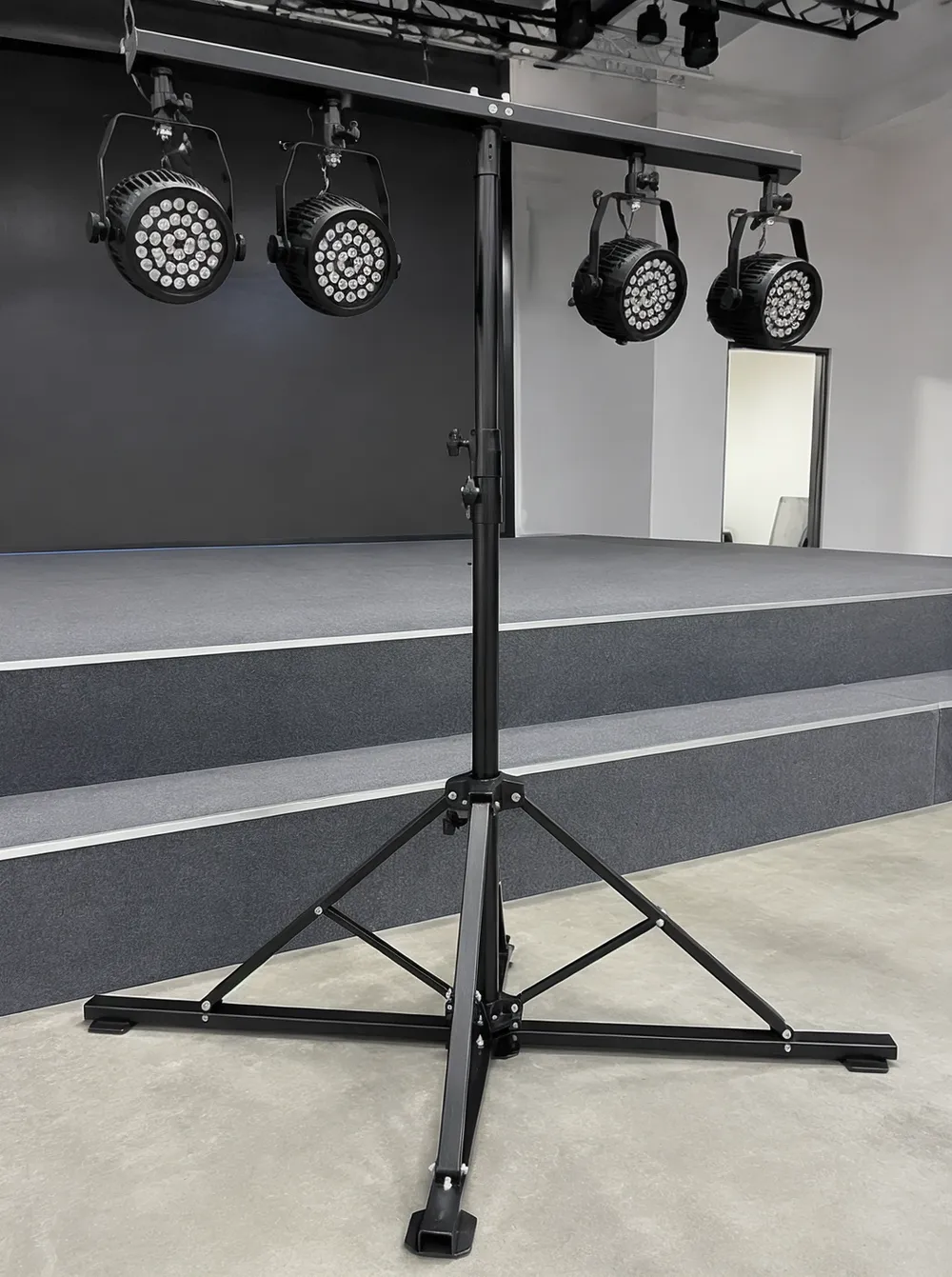
What Separates a Stage Lights Stand from the Rest of the Range
A stage lights stand is not a tripod with a taller spec sheet. It's a fundamentally different product for a fundamentally different buyer.
The mobile DJ products in our range — tripod stands, T bars, gigbars — optimize for weight, pack size, and setup speed. They're designed to go up in 60 seconds, come down in 60 seconds, and fit inside a hatchback. Your buyers in that segment tolerate shorter service life because they're replacing based on transport wear anyway.
A stage lights stand optimizes in the opposite direction: structural rigidity under continuous load, stability on fixed stages where multiple heavy fixtures hang from a single mounting point, and durability measured in years of uninterrupted use rather than number of deployment cycles. The base footprint runs 20–30% wider than our tripod models. Tube wall thickness is 1.5mm standard (vs. 1.0–1.2mm on the mobile range). Locking mechanisms are oversized — because a stage stand gets adjusted once during installation and then stays locked for months or years, the lock has to resist creep under sustained static load, not just hold for the duration of a four-hour gig.
The buyer profile is different too. You're not selling these to DJs through e-commerce listings. You're quoting them to AV integration firms, house-of-worship install contractors, school auditorium outfitters, and small-venue production companies. They purchase 4–12 units per project, spec by load rating and maximum fixture height, and often need documentation for building permit or safety inspection sign-off.
Mobile DJ Range
- Optimized for weight & pack size
- 60-second setup / teardown
- Fits inside a hatchback
- 1.0–1.2mm wall thickness
- Replaced on transport wear cycles
Stage Lights Stand
- Structural rigidity under continuous load
- 20–30% wider base footprint
- 1.5mm wall thickness (standard)
- Oversized locks resist static creep
- Durability in years, not gig cycles
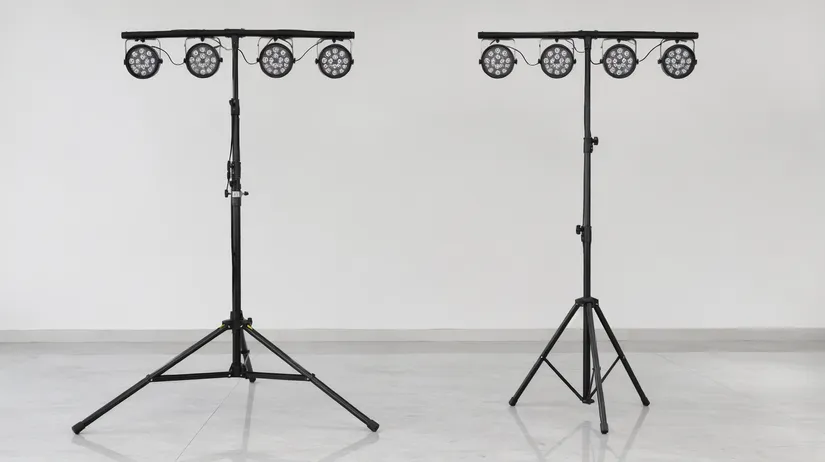
Technical Specifications for Procurement Comparison
Both models carry a unified 35mm top spigot that accepts standard lighting clamps, truss adapters, and T bar crosspieces.
| Parameter | Standard | Heavy-Duty |
|---|---|---|
| Material | Q235 cold-rolled steel | Q235 cold-rolled steel |
| Main tube wall thickness | 1.5 mm | 1.8 mm |
| Main tube outer diameter | 38 mm | 45 mm |
| Maximum extended height | 3.5 m | 4.0 m |
| Minimum collapsed height | 1.8 m | 2.0 m |
| Base footprint (deployed) | 950 mm diameter | 1,100 mm diameter |
| Static load rating | 60 kg | 80 kg |
| Tested load (1.5× rating) | 90 kg / 60 sec hold | 120 kg / 60 sec hold |
| Weight (stand only) | 6.5 kg | 8.2 kg |
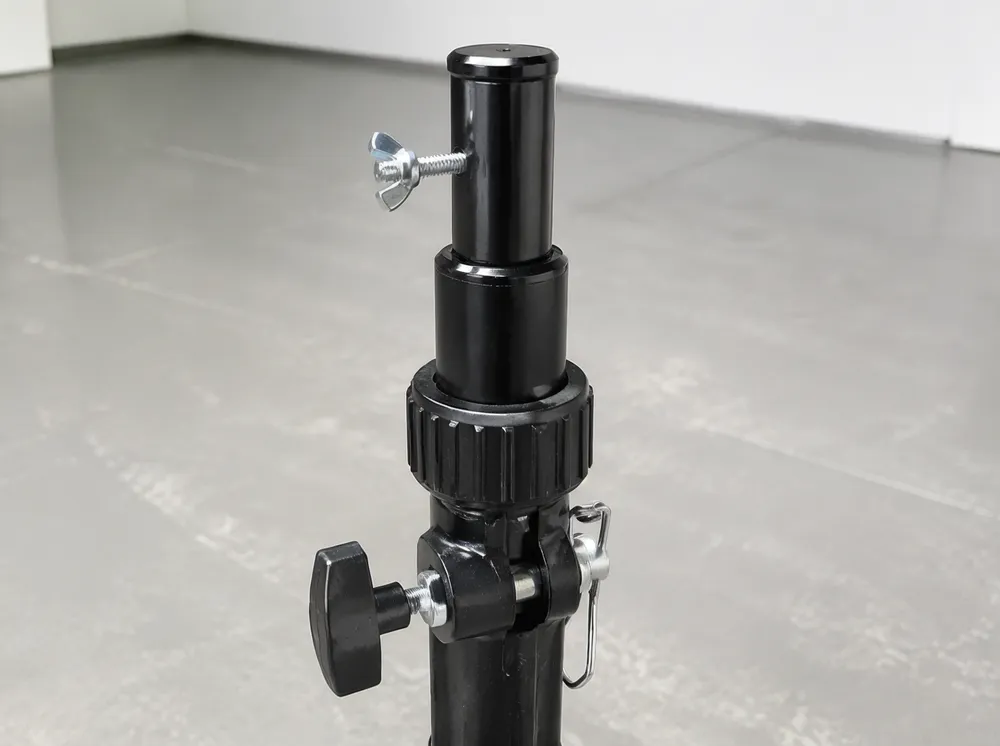
| Height adjustment | Threaded collar lock + safety pin | Threaded collar lock + safety pin |
| Surface finish | Phosphate + powder coat (60–80μm) | Phosphate + powder coat (60–80μm) |
| Top adapter | 35mm spigot (M10 bolt) | 35mm spigot (M10 bolt) |
| Leg construction | Triangulated steel tube, ribbed base plates | Triangulated steel tube, ribbed base plates |
Why 35mm Spigot Instead of 28mm DJ-Standard
We settled on 35mm rather than the 28mm DJ-standard spigot because stage fixtures and their mounting hardware are heavier — the wider spigot distributes insertion stress across more surface area and eliminates the wobble that plagues undersized adapters under 40+ kg loads. The 35mm adapter accepts standard lighting clamps, truss adapters, and T bar crosspieces without issue.
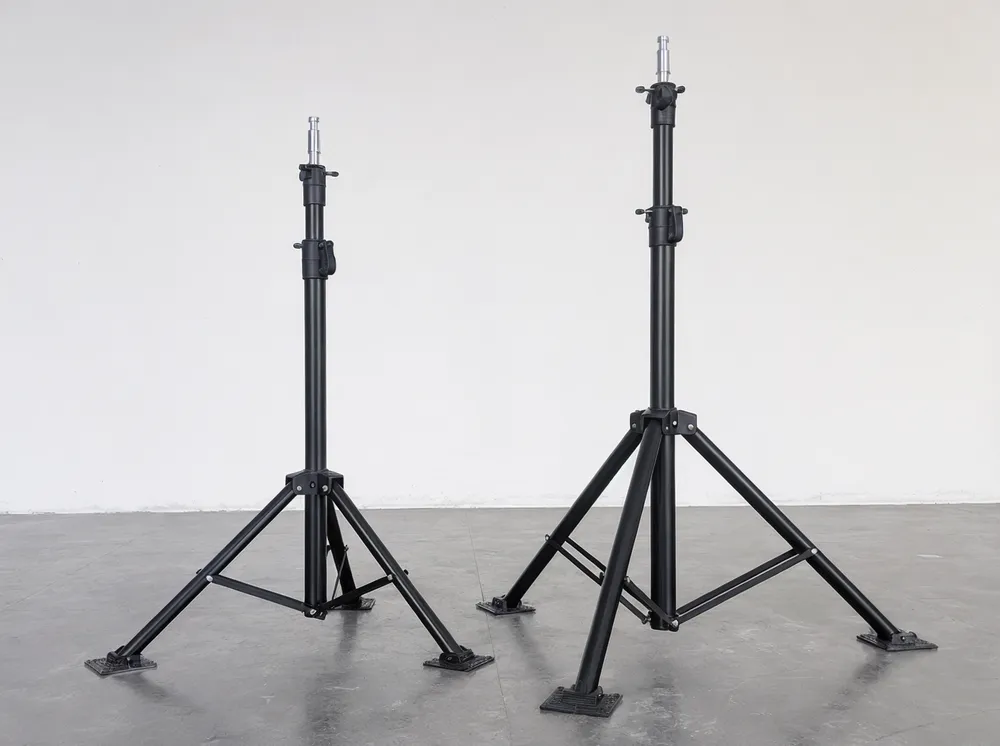
Specifications shown are standard production values. Custom height ranges, tube dimensions, and base configurations available — contact us for product data sheets.
Where Stage Lights Stands Generate Repeatable Project Orders
Each application below represents a buyer segment that purchases stands project-by-project, with predictable reorder patterns as new installations roll out.
House of Worship Installations
3–5 Year Reorder Cycle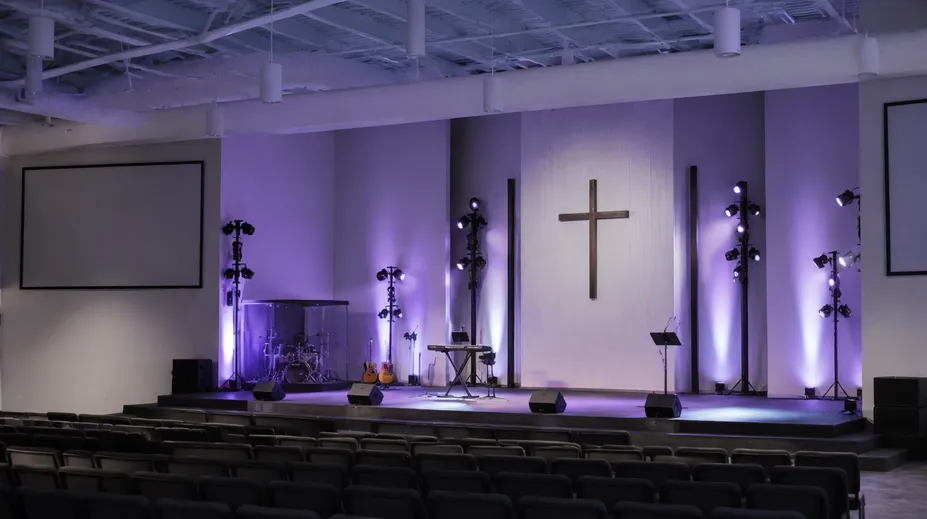
Churches, mosques, and temples invest in stage lighting upgrades on 3–5 year cycles as congregations grow and production expectations rise. A typical worship install uses 4–8 stage lights stands for side-stage and rear-stage fixture positions — LED wash lights, profile spots, and sometimes moving heads for contemporary services.
Contractors who serve this market handle multiple installations per year across different congregations. Your margin per project is consistent because worship budgets are committee-approved with clear line items, not price-negotiated on the spot.
School and University Auditoriums
Annual / Biennial Capital Budget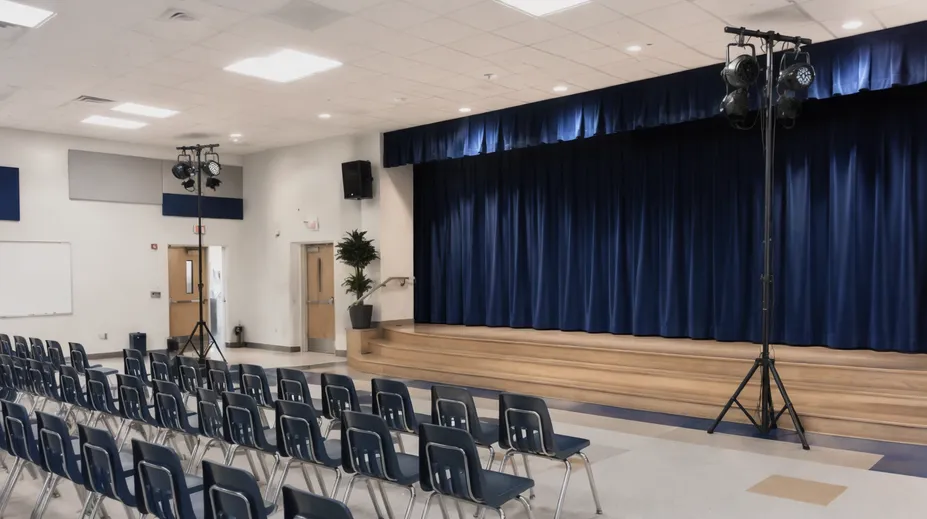
Education facility lighting upgrades follow annual or biennial capital budgets. Drama departments, assembly halls, and multi-purpose rooms all need permanent or semi-permanent stage lighting. Stands go in where ceiling rigging isn't feasible or where portable reconfiguration matters (a multi-use space serving both theater and assembly).
Typical order: 6–10 stands per auditorium. If you're a regional AV integrator with school district contracts, this is a repeatable annual segment.
Small to Mid-Size Venue Fixed Rigs
3–5 Year Continuous Operation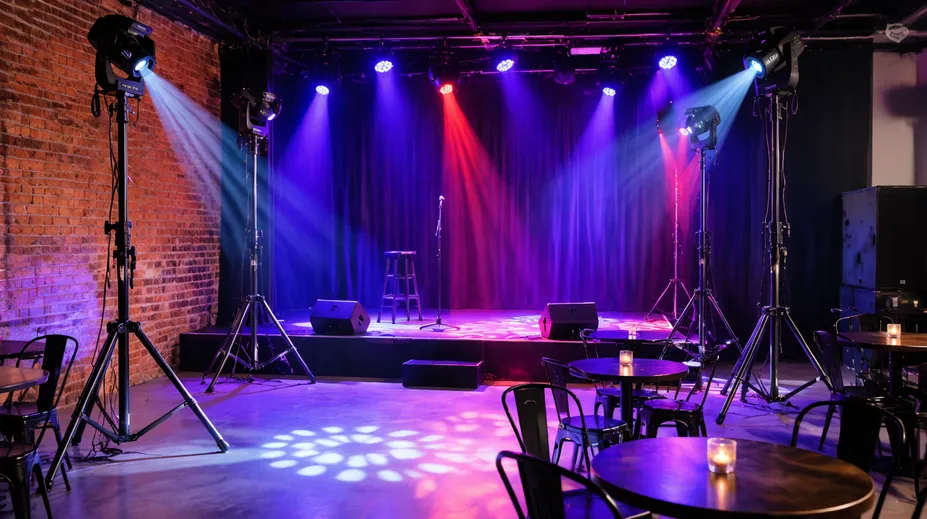
Bars, small theaters, comedy clubs, private event spaces — venues that run lighting every night but don't have the ceiling infrastructure for a full truss grid. Stage lights stands fill the gap: they provide fixture height without structural ceiling modification. Venues typically purchase once and operate the stands continuously for 3–5 years.
Your angle as distributor or contractor: bundling stands with GDMonkey fixtures as a complete install package increases your per-project invoice without adding sourcing complexity.
Touring Production Companies (Semi-Permanent Kits)
Predictable Fleet Refresh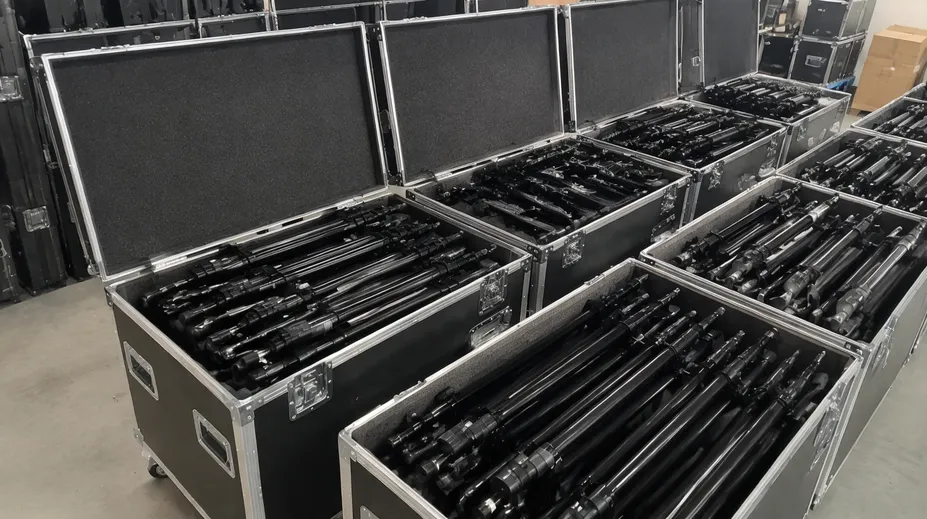
Regional production companies maintain standing inventory of stage hardware that ships out to different venues weekly. They need stands that are heavier-duty than DJ tripods (to handle larger fixtures) but still transportable by road case.
The heavy-duty model at 8.2 kg sits in this sweet spot. Touring companies order 10–20 stands per fleet refresh and replace based on inspection schedules, not wear-out — so reorder cycles are predictable.
Quoting for a specific installation project?
Send us fixture weights and height requirements — we'll spec the right stand model and quantity.
How We Build Stage Stands Differently from Mobile Stands
The parent category page covers our general stand manufacturing process — tube cutting, CNC bending, welding, surface treatment, and QC. For the stage lights stand specifically, three production choices diverge from the mobile range:
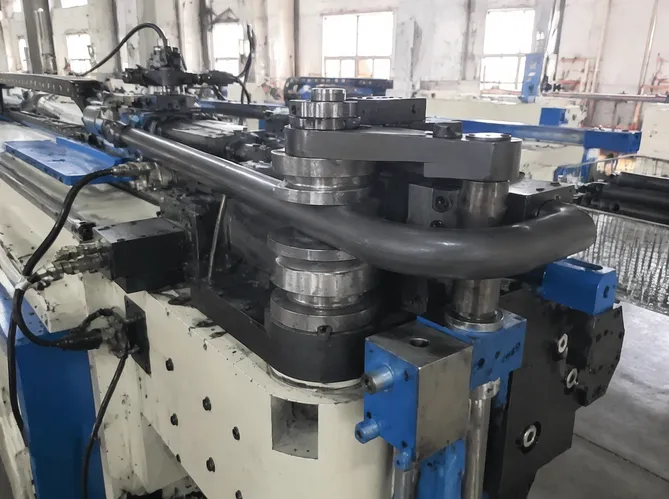
Thicker Tube Stock, Tighter Bend Parameters
The 1.5mm (and 1.8mm heavy-duty) wall thickness requires adjusted mandrel bending parameters — higher back pressure to prevent wall thinning at the bend apex.
We run stage stand legs on a separate bending program from our 1.0mm tripod legs because using the same parameters would produce micro-cracks invisible at inspection but progressive under sustained load.
We discovered this early — a 2018 batch test showed fatigue cracks appearing at 3,000 simulated load cycles on stage stands bent with tripod parameters. Now it's a separate setup, separate program, separate first-article inspection.
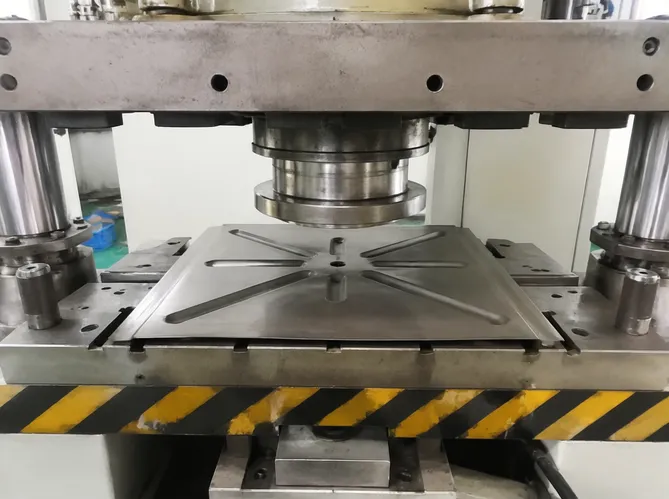
Wider Base Plate with Pressed Reinforcement Ribs
Stage stands sit on surfaces they never leave — carpeted stages, concrete floors, uneven outdoor platforms for semi-permanent festival installs.
The base plate gets a deep-press ribbing pattern on a 200-ton hydraulic press that adds flexural rigidity without increasing plate thickness beyond 3mm.
The result: no base flex under asymmetric load (which happens when a fixture pans to one side and shifts the center of gravity off-center). Mobile stand bases can get away with thinner plate because they're under load for hours, not months.
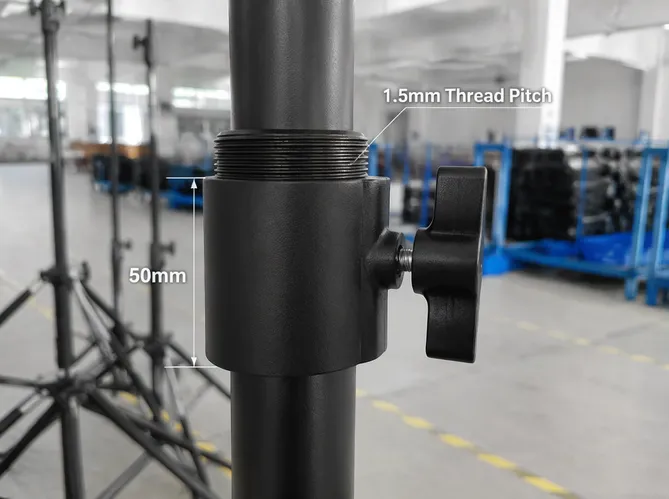
Oversized Locking Collar for Creep Resistance
The height adjustment collar on a stage stand is 50mm wide (vs. 35mm on our tripod stands). More contact area between inner tube and collar means lower PSI pressure per unit area at the same clamping force — which means less deformation of the inner tube wall over months of locked static load.
We thread the collar with a finer pitch (1.5mm thread vs. 2.0mm on tripod) so each turn of the locking handle applies more clamping force with less rotational effort.
Why This Matters at Procurement Level
These are production-level decisions that don't show up on a spec sheet comparison, but they're why our stage stands survive multi-year installed service while cheaper alternatives develop locking slippage within the first season.
Customization Scope and Limitations For Your Projects
Stage lights stands ship in two standard configurations (60 kg and 80 kg rated), but project requirements rarely align perfectly with standard dimensions. Here's what we can adjust and what's fixed.
What You Can Customize
| Dimension | Range / Options | MOQ Impact |
|---|---|---|
| Maximum height | 3.0–4.5 m (in 0.5m increments) | No MOQ change |
| Main tube OD | 35–50 mm | 50+ units for non-standard |
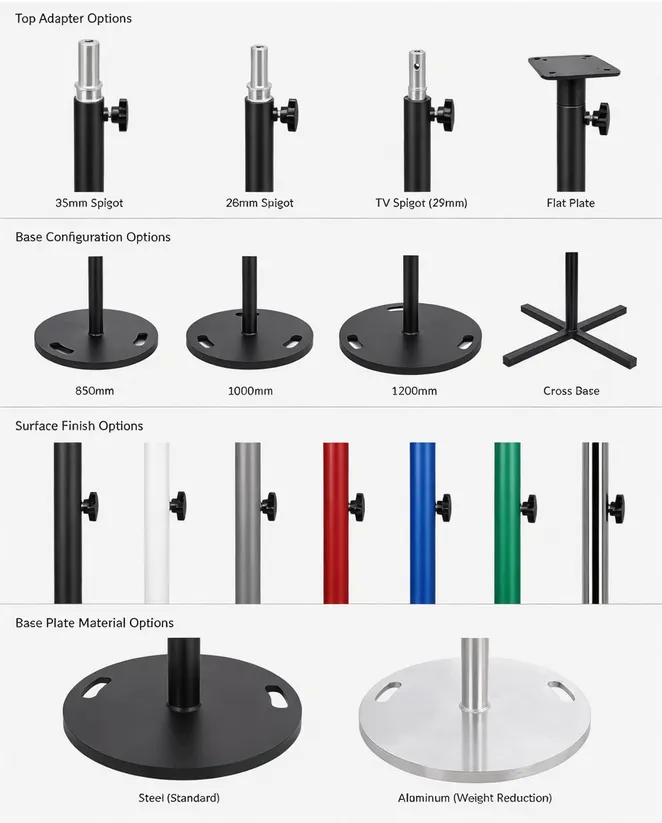
| Base footprint diameter | 850–1,200 mm | No MOQ change |
| Surface color | Any RAL code | 100+ units for custom color |
| Top adapter | 35mm spigot, 28mm spigot, TV spigot (29mm), flat plate | No MOQ change |
| Logo/branding | Laser engraving or pad printing on main tube | 30+ units |
| Cable management | Integrated tube clips or internal cable routing | 100+ units |
| Base plate material | Steel (standard) or aluminum (weight reduction) | 50+ units |
What's Fixed
- Tube shape is round only — we don't manufacture square or rectangular tube stands in this line. Structural analysis doesn't support square tube at these height-to-load ratios without excessive wall thickness.
- Leg count is three — four-leg designs require different base tooling that isn't cost-effective below 500 units.
- Locking mechanism is threaded collar — pneumatic or electric height adjustment is a different product category.
Lead Time for Custom Configurations
Days — Standard models from stock
Days — OEM variants
Color, logo, adapter swap
Days — ODM modifications
Engineering review: height range, tube diameter, base geometry — including sample approval
Tell us your project specs — fixture type, weight, required height, venue conditions — and we'll recommend the configuration.
Send Your Project SpecsCompliance Documentation That Clears Inspection
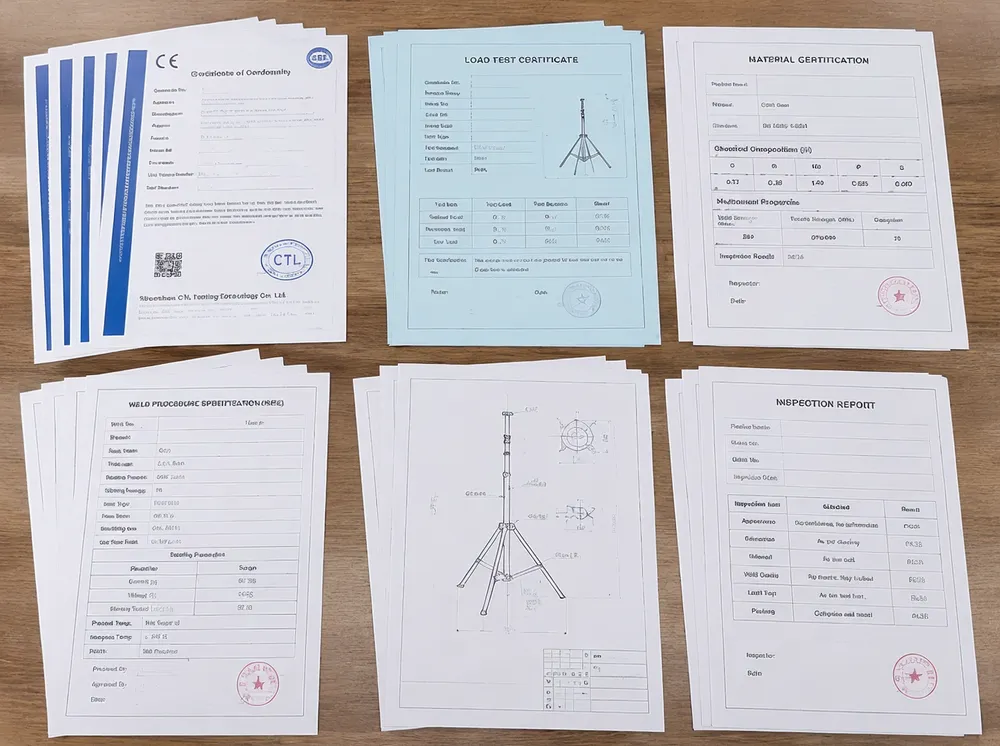
Stage lights stands get scrutinized differently from mobile DJ stands in the field. Building inspectors, venue safety officers, and insurance assessors may require structural verification documentation before signing off on an installation.
We Provide
CE Marking
Mechanical safety directive compliance, applicable for EU market import and venue installations requiring CE documentation.
Load Test Certificates
Third-party tested per model, documenting rated load, test load (1.5×), and hold duration. Available per batch on request for buyers who need to attach test certs to specific project documentation.
Material Certificates
Mill certs for steel tube traceable to source, confirming Q235 grade and mechanical properties.
Weld Procedure Documentation
WPS (Welding Procedure Specification) available for contractors whose clients require structural weld qualification records.
Additional Market-Specific Certifications
For markets requiring additional safety marks — GS certification for German installations, or venue-specific structural engineer sign-off documentation — we coordinate testing and can provide engineering drawings with load calculations for your structural consultant's review.
Most of our contractor buyers in Europe and the Middle East request load test certs as standard with every shipment. We generate these per production batch, so there's no additional lead time or cost — just let us know at order placement.
Need a full compliance documentation package for your next project or tender submission?
Request Compliance Documentation PackagePackaging and Container Loading for Stand Shipments
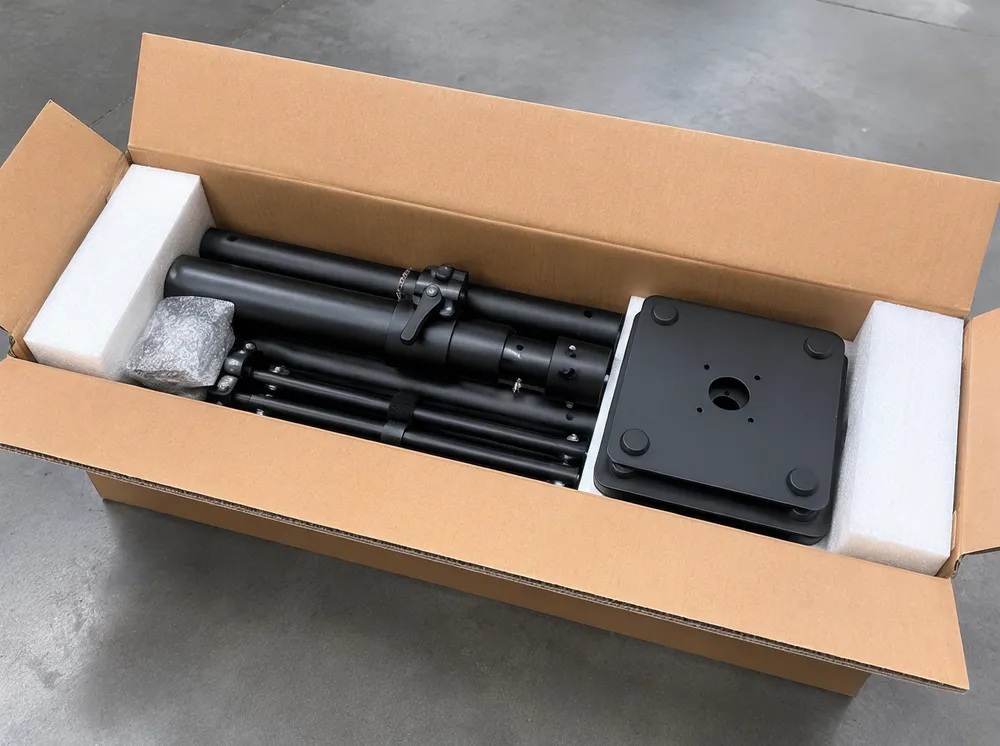
Knocked-Down Packing Method
Stage lights stands ship knocked-down: legs detach from the center column, base plates nest flat, and the entire unit packs into a single carton. The KD approach reduces your per-unit freight cost and eliminates bent-leg damage that plagues assembled-stand shipments.
Packing & Loading Specifications
| Packing Detail | Standard Model | Heavy-Duty Model |
|---|---|---|
| Carton dimensions | 1,200 × 250 × 200 mm | 1,300 × 280 × 220 mm |
| Unit weight (packed) | 7.8 kg | 9.5 kg |
| Loading per 20GP | ~250 units | ~210 units |
| Loading per 40HQ | ~520 units | ~440 units |
| Packaging method | Individual carton, foam end caps, PE bag wrap | Individual carton, foam end caps, PE bag wrap |
Mixed Container Loading
Mixed containers — stage stands packed alongside GDMonkey lighting fixtures — are the norm for our install-focused buyers. The elongated stand cartons fill the irregular spaces that boxy fixture cartons leave along container walls, so your volumetric utilization improves without paying for a second container.
Project-Based Palletization
For project-based buyers shipping direct to site: we can palletize in quantities matching your per-venue order (e.g., 8 stands per pallet for a church install kit) with site-delivery-friendly strapping and labeling. This saves your crew unpacking time on location.
Frequently Asked Questions About Stage Lights Stands
What load rating should I specify for a stage lights stand carrying moving head fixtures?
A typical moving head (beam or spot) weighs 15–25 kg. If you're mounting two fixtures on a T bar adapter atop the stand, total fixture weight reaches 30–50 kg. Specify a stand rated for at least 1.5× the total fixture weight to account for dynamic loading when fixtures pan or tilt — that mechanical movement creates momentary lateral force that exceeds static weight. For single heavy fixtures (40+ kg wash bars or large format moving heads), go with the 80 kg heavy-duty model. The safety factor protects both the installation and your liability exposure.
How does a stage lights stand handle uneven venue floors without wobbling?
The ribbed base plate and triangulated leg geometry distribute load across three contact points. On uneven surfaces, the wide stance (950–1,100 mm footprint) keeps the center of gravity well inside the support triangle even when fixtures are panned to one side. For significantly uneven surfaces (outdoor stages, warehouse conversions), we offer adjustable leg-end leveling feet as a custom option — each foot provides ±15 mm independent adjustment so you can level the stand without shimming.
Can I use stage lights stands outdoors for semi-permanent festival or event installations?
The standard powder coat finish (60–80 μm over phosphate pre-treatment) passes 300+ hours salt spray testing and handles rain exposure for multi-day outdoor events. For permanent outdoor installations exceeding 30 days continuous exposure, we recommend specifying the hot-dip galvanized option (available on 100+ unit orders) which provides indefinite corrosion protection. Either way, the structural ratings are unaffected by outdoor use — load capacity is the same indoors or out.
What's the difference between your stage lights stand and a lighting truss for installed applications?
Truss provides a horizontal span for distributing multiple fixtures across a wide area — it's a different structural concept (beam vs. column). A stage lights stand is a vertical column for positioning fixtures at height in a single point. Use stands when you need individual fixture positions at specific stage locations without overhead rigging. Use truss when you need a continuous horizontal mounting span. Many installations use both — truss across the front, stands at side-stage positions.
See our truss stand range
What is the minimum order quantity for branded stage lights stands?
30 units for OEM variants — your logo, your color, your packaging on our standard models. For ODM modifications requiring engineering changes (custom height, modified base geometry, non-standard tube dimensions), minimum is 50–100 units depending on complexity. We can quote both options side by side if you're weighing the trade-off between stock-model speed and custom-spec fit.
If This Stand Doesn't Match Your Application
The stage lights stand is built for installed and semi-permanent rigs under heavy fixtures. If your buyers need something different, here are the alternatives in our range — each engineered for a distinct use case.
Lighter, More Portable?
The DJ lights tripod stand covers mobile use at half the weight — built for operators who set up and tear down nightly.
DJ Lights Tripod StandHorizontal Multi-Fixture Mounting?
The DJ lighting truss stand provides a truss span for distributing fixtures across width, not just height.
DJ Lighting Truss StandAll-in-One Kit for Entry-Level Buyers?
The DJ lights gigbar integrates stand, crossbar, and fixture mounting in a single SKU.
DJ Lights Stand GigbarSimple T Bar for 2–4 Fixture Positions?
The DJ lights T bar stand adds a horizontal crosspiece at lower cost and weight than truss.
DJ Lights T Bar StandGet a Quote on Stage Lights Stands for Your Next Project
Whether you're quoting a single venue install or stocking inventory for a regional contractor supply business, the process is the same: send us your fixture types, weights, required heights, and quantity. We'll respond with model recommendations, unit pricing at your volume, and a loading plan if you're shipping internationally.
What to Include in Your Request
- Fixture types and individual weights
- Required working heights (min and max)
- Quantity needed per model
- Destination country (for loading plan)
Already sourcing stands from another factory? Send us a sample or spec sheet of what you're currently using — we'll match or improve the specification and quote against it directly.