

DJ Lights Stand Factory-Direct Mounting Systems
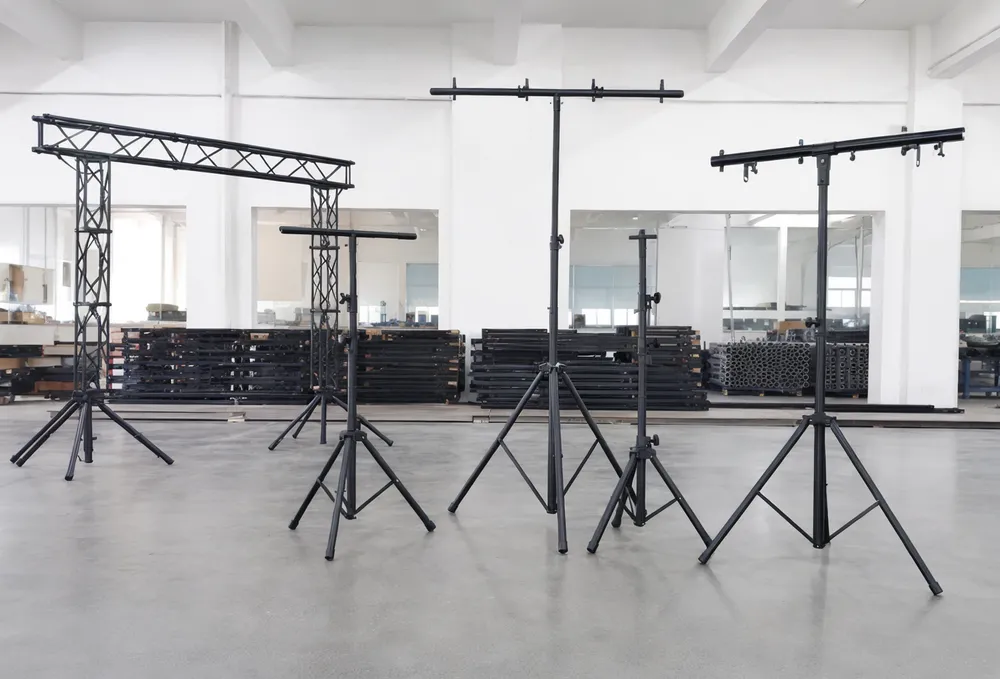
DJ lights stand systems engineered and manufactured in our own facility — truss, tripod, T bar, gigbar, and stage configurations.
Five stand types cover every segment your buyers sell into, from mobile DJs to installed venues. Steel and aluminum construction, load-rated and export-packaged.
12+
Years Manufacturing
5
Stand Configurations
30+
Export Countries
30
Unit MOQ for OEM/ODM
What This Category Covers and Why We Manufacture It In-House
A DJ lights stand is the structural backbone of any lighting rig — the piece that positions fixtures at the correct height, distributes weight safely, and breaks down fast enough for a mobile operator to load out in 30 minutes. We manufacture the full range: truss stands, tripod stands, T bar stands, gigbar systems, and general-purpose stage stands.
We added stand production to our line in 2016 because our lighting buyers kept sourcing stands separately and running into inconsistencies — different thread sizes, adapters that didn't match our fixture brackets, powder coat that didn't survive a year of van loading. Building them in-house means the stand and the fixture are engineered as a system. Your buyer gets one SKU that works together out of the box, and you sell a complete package instead of referring them elsewhere for mounting hardware.
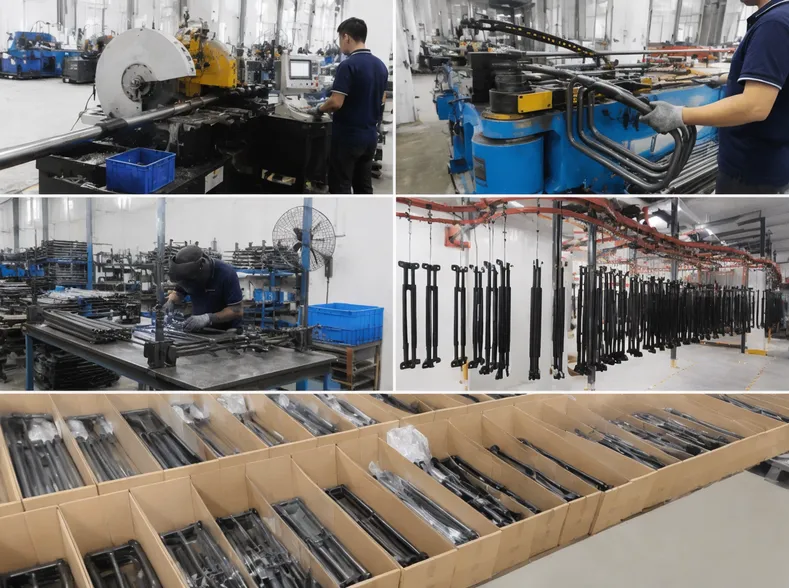
Our stand production runs on a dedicated section of the factory floor — tube cutting, CNC bending, welding, and powder coat in sequence. 16,700 m² of total facility space gives us room to batch-run 2,000–3,000 stands without pulling capacity from our lighting fixture lines. Stand orders actually help our container utilization — stands nest efficiently around lighting cartons, so mixed shipments hit volumetric weight limits before actual weight limits.
In-House Production Facts
- Stand + fixture engineered as a matched system — one SKU, no adapter issues
- 16,700 m² facility — dedicated stand line separate from fixture production
- Batch capacity: 2,000–3,000 stands per run
- Mixed-container efficiency — stands nest around lighting cartons for better volumetric utilization
- Production since 2016 — consistent thread sizes, bracket compatibility, and durable powder coat
Product Line Overview
Five DJ lights stand configurations cover the market segments where your customers actually spend money. Each targets a different use case, load requirement, and price tier — so you can stock a range or focus on the segment that fits your distribution channel.
DJ Lighting Truss Stand
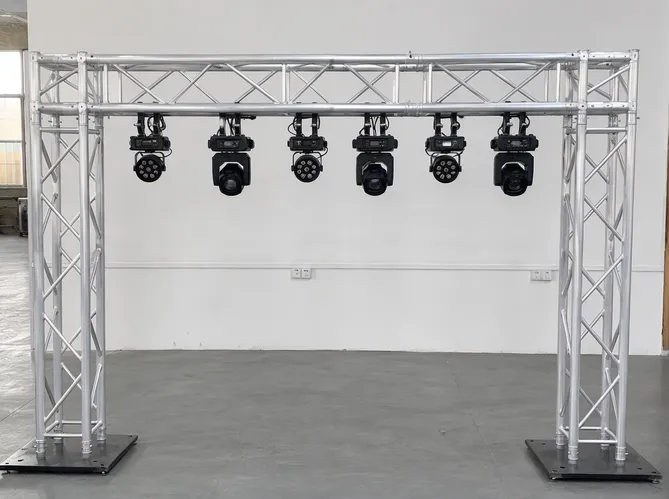
Aluminum truss construction for buyers selling into mid-to-high-end mobile DJ and event production markets. These command higher retail margins because the truss aesthetic signals professional-grade equipment. Load capacity handles multiple moving heads or heavy LED bars.
DJ Lights Tripod Stand
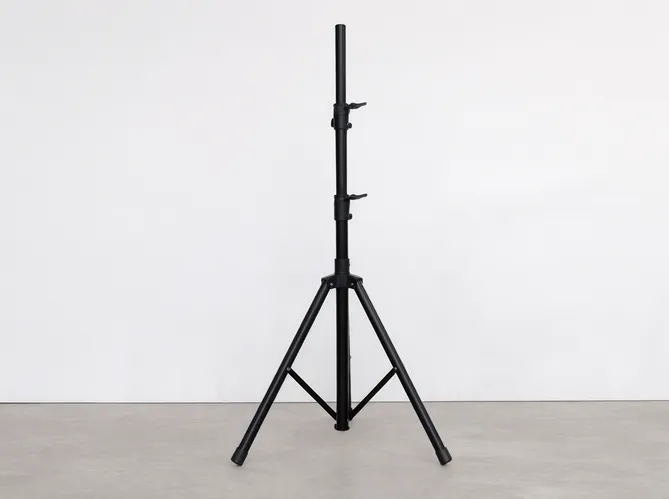
The workhorse SKU. Steel tripod base, adjustable height, quick-release locking collars. This is the volume product — mobile DJs buy them in pairs, rental companies buy them by the dozen. Your highest-velocity stand SKU with consistent reorder patterns.
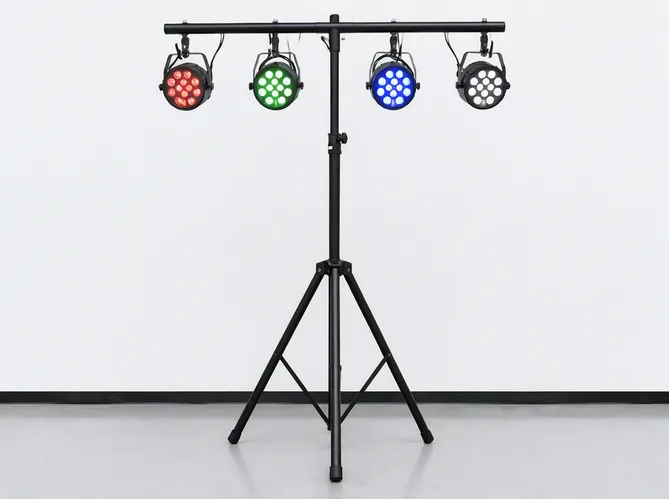
DJ Lights T Bar Stand
Tripod base with a horizontal T bar crosspiece for mounting 2–4 fixtures side by side. Popular with mobile DJs who want a multi-fixture setup without the cost and weight of full truss. Mid-price-point product with strong attach-rate when sold alongside PAR lights.
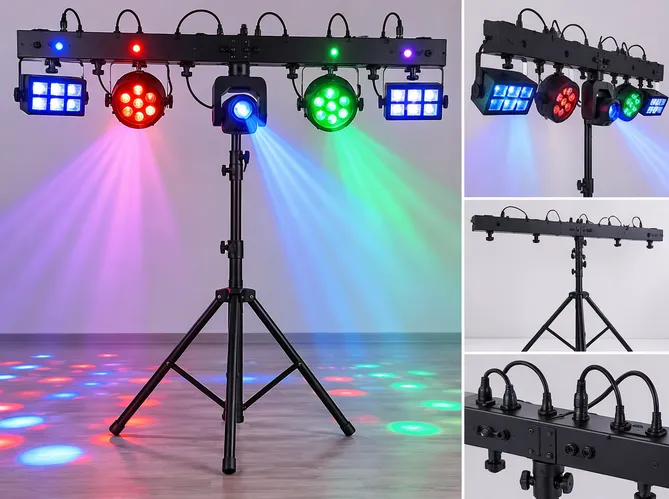
DJ Lights Gigbar
All-in-one system: stand, crossbar, and pre-wired fixture mounting points integrated into a single package. The gigbar format appeals to entry-level DJs and party rental operators who want plug-and-play simplicity. Highest perceived value per SKU — these retail well above the sum of parts because of the integrated design.
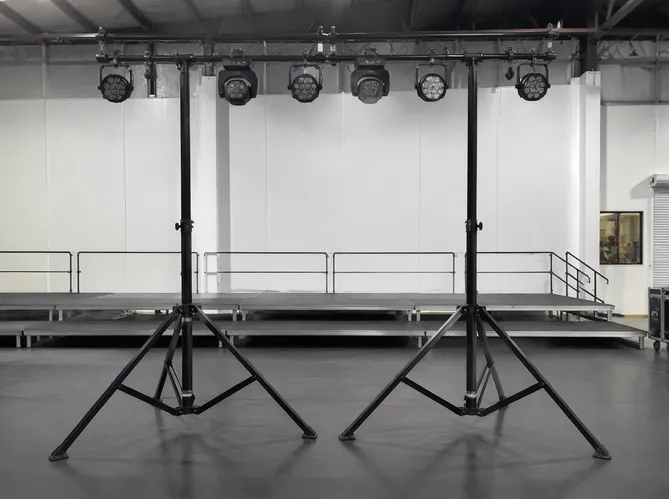
Stage Lights Stand
Heavy-duty construction for installed and semi-permanent applications — house-of-worship stages, small venue rigs, theatrical sidestage positions. Heavier gauge tubing, wider stance footprint, and higher load ratings than the mobile DJ products. Different buyer profile: contractors and install companies purchasing project-by-project.
Materials, Construction, and What They Mean For Your Margin
We run two material tracks for stands, and the choice affects your landed cost, retail positioning, and target buyer.
Steel Stands
Tripod, T Bar, Gigbar Frames
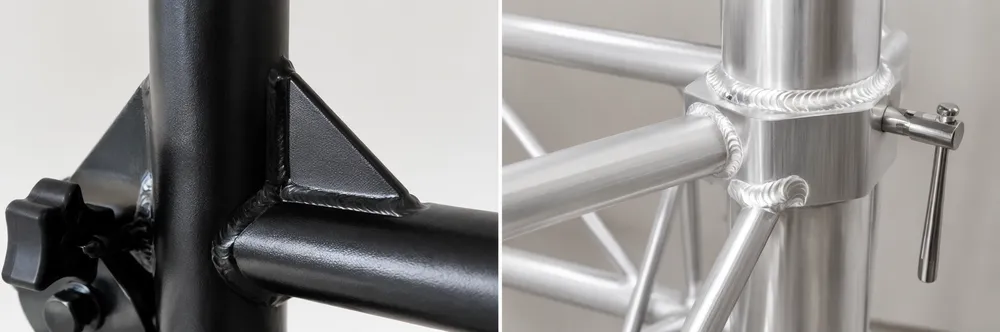
Cold-rolled steel tube, wall thickness 1.0–1.5 mm depending on model and load rating. Phosphate pre-treatment before powder coat — this is the step that determines whether the finish survives two years of van loading or chips within six months.
We apply 60–80 μm powder coat thickness, which passes 300-hour salt spray testing.
Margin positioning: Lower material cost, solid durability, higher per-unit margins at street pricing. Your price-competitive range.
Aluminum Stands
Truss Stand, Premium Stage Stands
6061-T6 aluminum alloy tube and plate. Lighter, corrosion-resistant without coating, and the look buyers associate with professional event production. Higher material cost means higher retail price — but also a natural margin lift.
We weld aluminum on TIG-equipped stations and anodize or powder-coat based on your spec.
Coastal market tip: Anodized aluminum truss eliminates the corrosion complaints that plague painted-steel truss within 18 months in humid coastal markets.
Material Specification Comparison
| Specification | Steel Stands | Aluminum Stands |
|---|---|---|
| Primary alloy / grade | Q235 cold-rolled steel | 6061-T6 aluminum |
| Wall thickness range | 1.0–1.5 mm | 1.5–2.0 mm |
| Surface treatment | Phosphate + powder coat (60–80 μm) | Anodize or powder coat |
| Typical load rating | 30–60 kg | 40–80 kg |
| Weight range (stand only) | 3–8 kg | 2–5 kg |
| Max height (adjustable) | 2.0–3.5 m | 2.5–4.0 m |
| Folded length | 1.0–1.5 m | Varies by truss span |
| Corrosion resistance | Salt spray 300+ hours | Naturally resistant / 500+ hrs anodized |
All-Metal Hardware Across the Range
All hardware — knobs, locking collars, clamp adapters — is die-cast zinc alloy or machined aluminum. We stopped using plastic locking knobs in 2019 after returns data showed they cracked in cold-weather markets. Metal hardware across the entire range now.
How We Build Stands — Process Visibility For Your Sourcing Confidence
Walk through our stand production area and you'll see five stations in sequence. Each addresses a specific failure mode that drives returns and liability in this category.
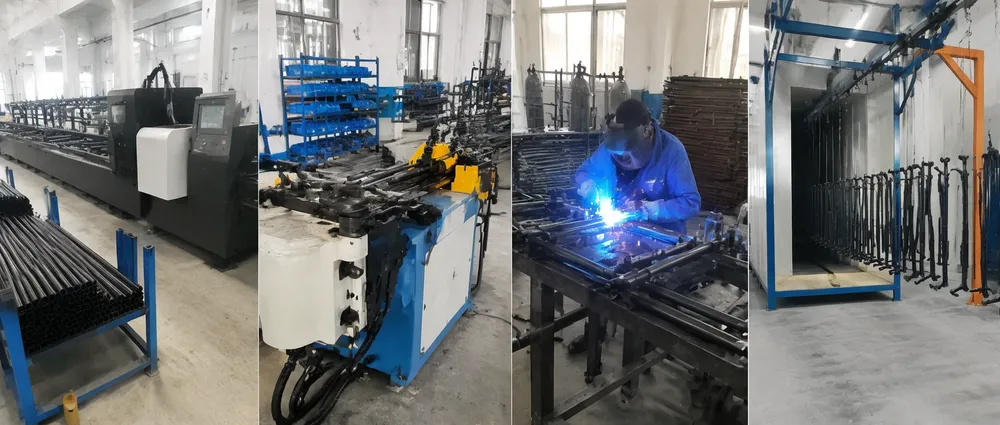
Tube Cutting and Prep
CNC tube cutting ensures consistent leg and crossbar lengths across your batch — no manual measuring drift when you order 1,000 tripod stands. Cut tolerance is ±0.5 mm.
Tube ends get deburred before welding so there's no sharp edge hiding inside the joint that could fatigue-crack later.
CNC Bending
Tripod leg bends and T bar angle bends run through hydraulic CNC benders with mandrel support. The mandrel prevents tube collapse at the bend point — a common defect in cheap stands where the bend pinches, weakens the wall, and eventually cracks under load.
We check bend radius consistency every 50 pieces.
Welding
MIG welding for steel, TIG for aluminum. Every structural weld (leg-to-collar, T bar-to-vertical tube, base plate-to-leg) gets a visual and pull-tested inspection.
Stands are load-bearing equipment — a cold weld or undercut weld fails in the field with a fixture and possibly a person underneath it. We X-ray-spot-check truss node welds on a 5% sampling basis.
Industry risk note: This is where price undercutting from no-name factories actually gets dangerous — they skip post-weld inspection entirely.
Surface Treatment
Phosphate dip, rinse, dry, then automated powder coat line. The phosphate conversion layer is what makes powder coat adhere permanently rather than chip.
Stands that skip this step look identical when new but show bare metal at stress points within months of use.
Assembly and QC
Locking mechanisms installed, height adjustment tested through full travel range, load test at 1.5× rated capacity for 60 seconds.
Every stand gets a load test — not sampling, every unit. A field failure isn't just a warranty cost; for your business, it's a liability exposure.
Market Segments Where Your DJ Lights Stand Inventory Moves
This isn't about lifestyle descriptions — it's about which buyer segments produce repeatable orders for your distribution business.
Mobile DJ Operators
Largest Volume Segment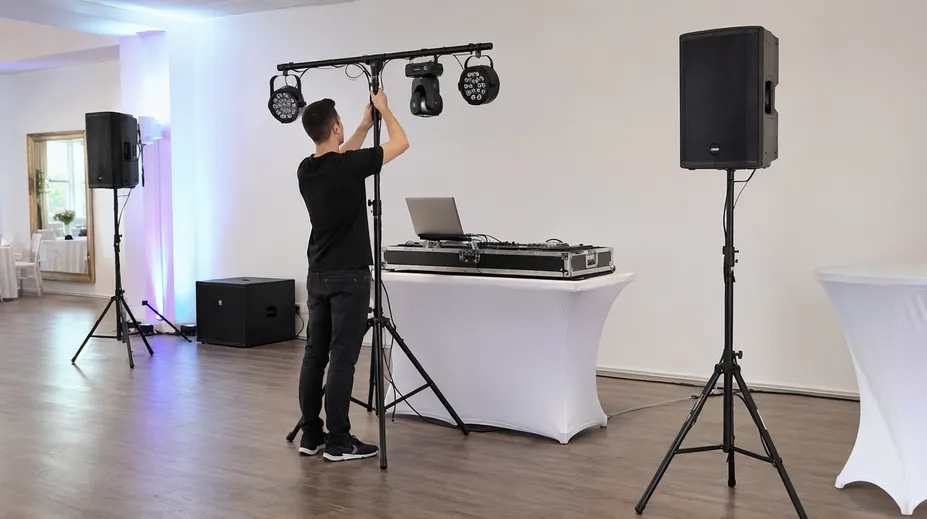
DJs typically purchase 2-4 stands at a time and replace annually due to transport wear. Tripod stands and T bar stands dominate here.
High reorder frequency, price-sensitive, responsive to bundle deals (stand + fixtures).
If you supply a DJ equipment retailer or online store, this segment drives your baseline stand volume.
Event Rental Companies
Fleet Buyers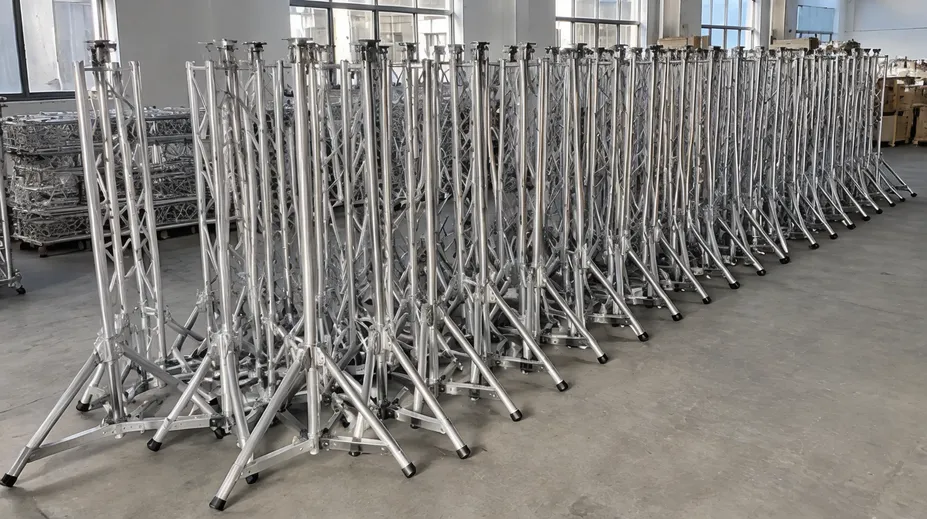
They buy 10-50 stands per order for fleet inventory. They prefer truss stands and heavy-duty tripod stands because rental equipment endures rougher handling than owner-operated gear.
Higher per-unit price tolerance because they amortize across dozens of rental cycles. Standardization matters — they want all stands identical for interchangeable deployment.
AV Integrators & Install Contractors
Spec-Driven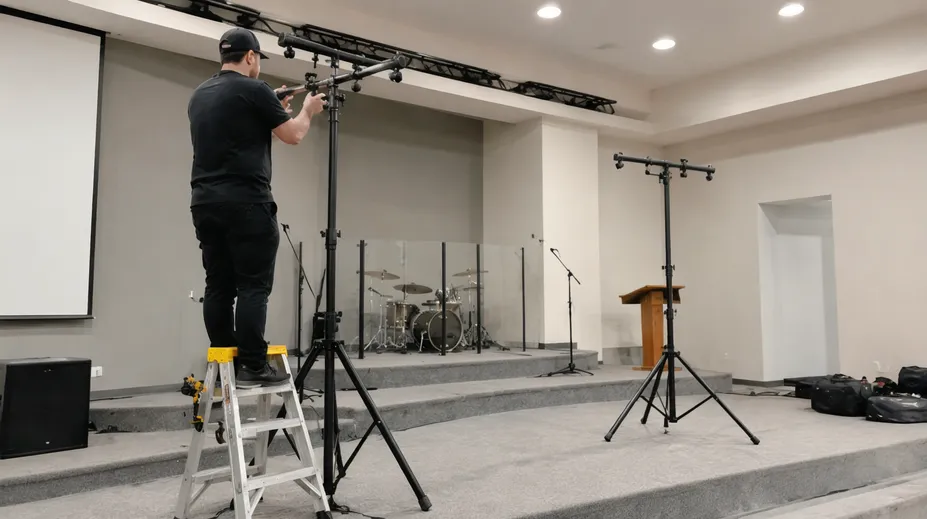
They purchase stage stands for permanent or semi-permanent installations — churches, small theaters, school auditoriums.
Lower volume per order (4-12 stands), but they're repeat buyers across multiple projects. They spec by load rating and height range, not by price.
Truss stands and stage stands fit this channel.
Retail & E-Commerce Resellers
Highest Margin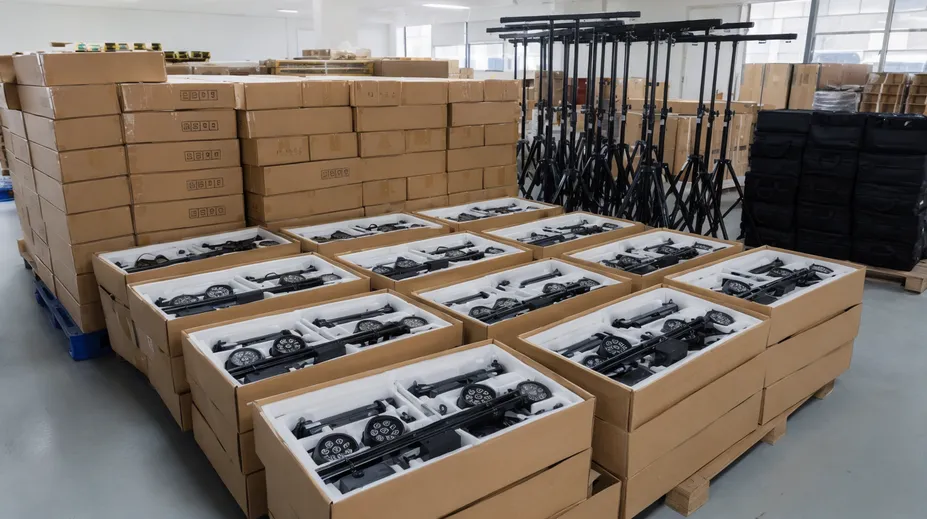
They buy in bulk for inventory (50-500 units) and resell individually or in kits.
Gigbar systems and T bar stand/light bundles perform well in this channel because the all-in-one package simplifies the online listing and commands a higher retail price.
Your margin per transaction is highest here when you bundle a stand with 2-4 GDMonkey fixtures as a kit SKU.
OEM/ODM — Custom Stands Under Your Brand From 30 Units
We support full OEM/ODM on DJ lights stands starting at 30 units. That's low enough to test a branded SKU in your catalog without warehouse risk.
OEM Scope
Your brand on our proven design
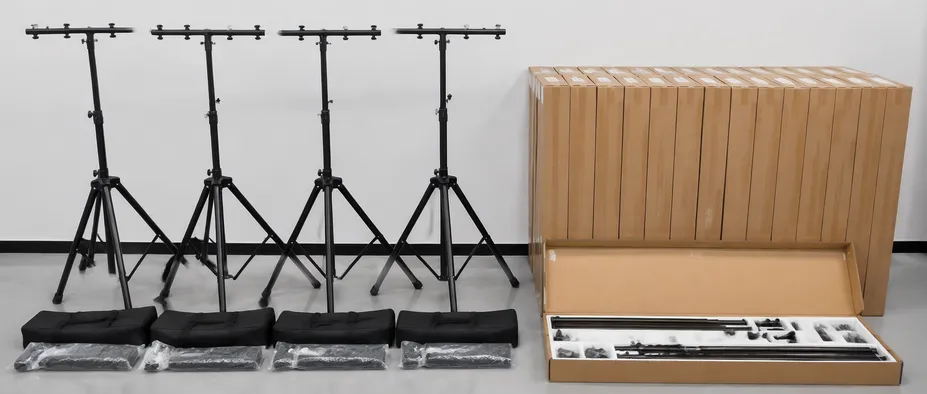
- Logo printing or laser engraving on main tube and T bar
- Custom powder coat color from RAL chart
- Your branded packaging with your artwork, barcode, and insert cards
ODM Scope
Custom design manufactured to your spec
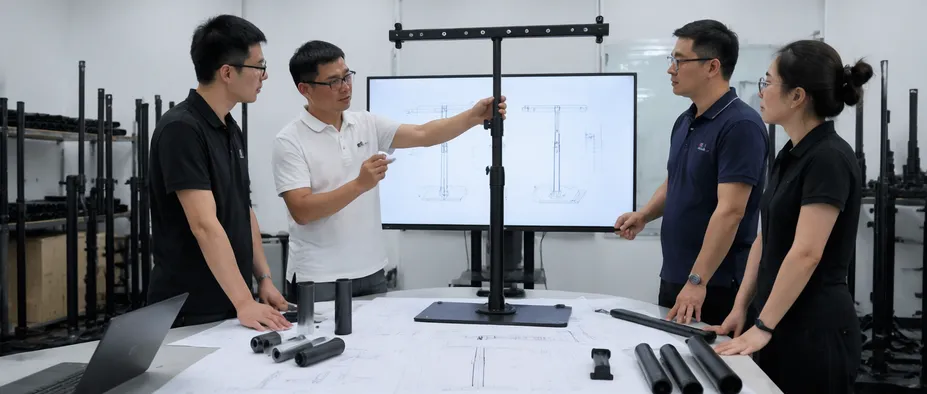
- Modified height range, different tube diameter for lighter or heavier build
- Custom T bar width, unique base plate geometry
- Integrated cable management channels
Real ODM Example
We've done custom T bars up to 1.8m span for a buyer selling into the bar/nightclub install market — wider spread, more fixture positions, premium price point. Our engineering team draws it up, prototypes within 10–15 days, and you approve before production tooling commits.
Flexible MOQ — Test Before You Commit
Flexible MOQ means you can run a limited edition or test a new configuration for a specific market without committing to thousands of units. Scale up once sell-through data confirms demand.
Shipping Stands Without Eating Your Margin on Freight
Stands are awkward freight — long, tubular, and prone to damage if packed wrong. We've optimized packaging specifically for container economics.
Tripod & T Bar Stands
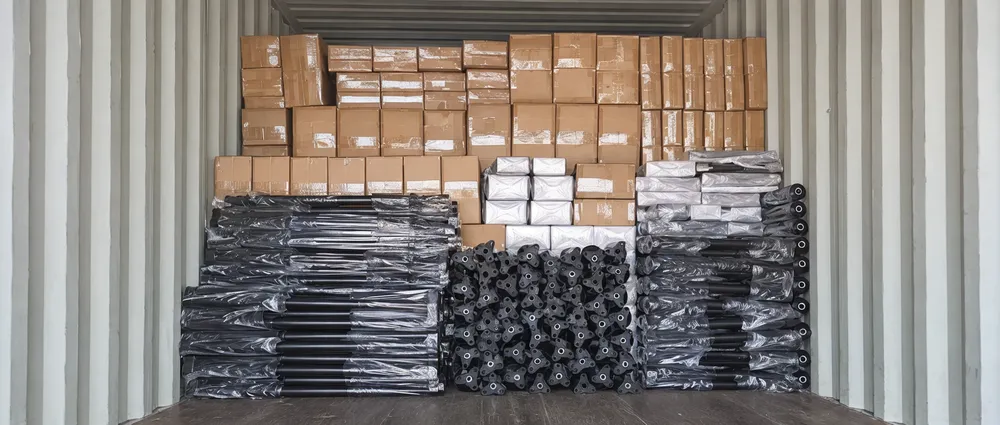
Ship KD (knocked-down): legs detached, nested inside one another, crossbar alongside. A single tripod stand packs into a carton roughly 1050 × 180 × 150 mm.
That nesting gets you approximately 350–400 tripod stands into a 20GP container — versus maybe 200 if shipped assembled.
The KD savings on your per-unit freight cost are significant on ocean shipments.
Truss Stands
Ship partially assembled (truss sections connected, base tripod nested separately). We foam-wrap truss corners because corner dents are the number-one damage claim on truss shipments.
Our damage rate on truss stands has been under 0.5% across the last three years of ocean shipments.
A dented truss isn't a hidden defect — it's visible the moment your customer opens the carton.
Gigbar Systems
Ship in custom molded-foam cartons as complete kits. Higher per-unit carton volume, but protected for the rough handling realities of LCL and last-mile delivery.
These are your highest-ticket items, so the packaging investment protects both the product and your customer's unboxing experience.
Container Loading Reference
| Stand Type | Approx. Carton Size (mm) | Loading per 20GP | Loading per 40HQ |
|---|---|---|---|
| Tripod Stand (KD) | 1050 × 180 × 150 | ~380 units | ~780 units |
| T Bar Stand (KD) | 1100 × 200 × 160 | ~320 units | ~660 units |
| Truss Stand (partial KD) | 1400 × 350 × 300 | ~150 units | ~320 units |
| Gigbar (complete kit) | 1200 × 400 × 350 | ~100 units | ~210 units |
| Stage Stand (KD) | 1200 × 250 × 200 | ~250 units | ~520 units |
Mixed Containers — Maximum Volumetric Utilization
Mixed containers — stands packed around lighting fixture cartons — are how most of our buyers ship. The tubular stand cartons fill the irregular spaces that boxy fixture cartons leave, so you approach maximum volumetric utilization on the same container without paying for a second shipment.
Common Stand Failures and How Our Manufacturing Prevents Them
If you've sourced DJ stands before, you've likely encountered these issues from lower-tier suppliers. We engineer specifically against them.
Locking Collar Slippage Under Load
Field Complaint #1
The Problem
Happens when the collar inner diameter is machined too loose or the friction material is absent. Stand height creeps downward under load.
Our Solution
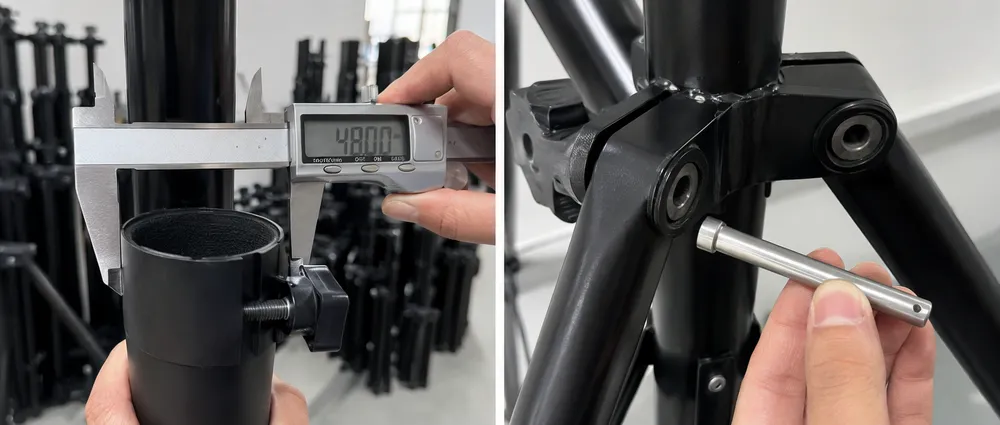
Collars machined to +0.05/−0.00 mm tolerance against the inner tube OD with a rubber friction ring inside the clamp. Load tested at 1.5× rated capacity — a 50 kg-rated stand holds 75 kg at the lock point without creep.
Tripod Leg Joint Fatigue Cracks
Lifecycle Failure
The Problem
Stands get opened and collapsed thousands of times. The hinge pin hole is a stress concentration point. Punched holes develop micro-cracks at the sheared edge.
Our Solution
We drill and ream these holes rather than punching them, eliminating micro-cracks. The hinge pin is hardened steel, not mild wire — it won't oval out after 500 deployment cycles.
Powder Coat Peeling at Bend Points & Weld Seams
Finish Failure
The Problem
Highest-stress areas for adhesion. Some factories skip phosphate pre-treatment on internal surfaces where it's "not visible." Moisture enters at joints and causes adhesion failure from the inside out.
Our Solution
We dip the entire fabricated assembly — all surfaces, internal and external — because moisture enters at joints. Phosphate pre-treatment is mandatory on every surface. Two-year warranty on finish integrity.
Base Plate Instability on Uneven Surfaces
Stability Failure
The Problem
Flat steel base plates flex on carpeted stages, outdoor ground, or uneven venue floors, causing wobble under load.
Our Solution
We stamp a triangulated ribbing pattern into steel base plates rather than using flat plate. The ribs add stiffness without adding material weight, so the stand sits firm on any surface without the base flexing.
Solved in Production, Not Passed to Your After-Sales
These aren't theoretical — they're the specific failure modes that drive warranty claims and customer complaints in the DJ stand market. We've solved each one in production, so they don't become your after-sales headache.
Certifications and Compliance Documentation Ready for Import
Every DJ lights stand ships with documentation that keeps your imports clean and your customs clearance smooth.
CE Marking
Mechanical safety directive compliance for EU markets. Included with every stand shipment as standard documentation.
RoHS Compliance
Material declarations confirming restricted substance limits — relevant for stands with electronic components, such as gigbar systems with integrated wiring.
Load Rating Test Reports
Third-party certified, available per model for your customers or building inspectors who require structural verification.
Material Certificates
Mill certs for steel and aluminum traceable to source. Full supply chain transparency for your procurement records.
Need Market-Specific Safety Marks?
For buyers importing into markets that require specific safety marks — GS for Germany, ETL/UL listing for North American venues with permit requirements — we coordinate third-party testing on your behalf. The test samples and factory audit come from us directly — no intermediary complications.
Frequently Asked Questions About DJ Lights Stands
What load rating should I specify for mobile DJ tripod stands versus installed stage stands?
For mobile DJ use — where the heaviest typical load is 2–4 PAR lights or a single moving head — 30–40 kg rated capacity gives adequate safety margin. For installed stage stands carrying heavier fixtures (beam lights, large moving heads) or multiple units on a truss span, specify 60–80 kg rated.
We recommend always rating for at least 1.5× the actual fixture weight to account for dynamic loading when fixtures pan or tilt. Most of our distributors stock the 50 kg-rated tripod as their universal SKU because it covers both use cases.
Why do aluminum truss stands cost more — is the margin worth it for my retail business?
6061-T6 aluminum costs roughly 3× the raw material price of steel tube. But aluminum truss stands retail at 2–4× the price of steel tripod stands in consumer markets because buyers perceive truss as professional-grade.
Your margin percentage can actually be higher on aluminum truss than on steel tripods, even though cost-of-goods is higher. The sweet spot for distribution: stock steel tripods for volume velocity and aluminum truss for margin depth. We manufacture both, so your sourcing stays consolidated.
Steel Tripods
Volume velocity — high turnover, entry price point
Aluminum Truss
Margin depth — premium perception, higher per-unit profit
How do I prevent DJ stand locking mechanisms from failing in rental fleet use?
Rental stands endure 3–5× more adjustment cycles than owner-operator stands. The failure mode is collar thread wear and friction ring degradation.
Specify stands with replaceable friction rings (all our models use this design) so your rental fleet maintenance is a $0.50 ring replacement, not a full stand replacement.
We also recommend the 1.5mm wall thickness option for rental-grade tripods — the extra rigidity at the collar point reduces oval deformation of the inner tube over thousands of adjustment cycles.
What's the minimum order for a custom-branded DJ lights stand?
30 units for OEM variants (logo, color, packaging on existing models). For ODM custom designs with new tooling (modified dimensions, unique features), minimum is typically 100 units to justify tooling amortization.
We can quote both paths if you're unsure which direction suits your launch plan.
Can I mix stand types in a single container shipment?
Yes — and most buyers do. Stand cartons are tubular and nest efficiently around rectangular lighting fixture cartons. A typical mixed order ships 60–70% fixtures and 30–40% stands by carton count in a single 40HQ, hitting close to maximum volumetric utilization.
We arrange the container loading plan for you based on your order mix.
What causes DJ light stands to wobble on stage, and how is it engineered out?
Wobble comes from three sources: base plate flex, loose leg joints, and locking collar play. We address all three:
Base Plate
Ribbed plates resist flex
Leg Joints
Reamed hinge holes prevent slop
Locking Collars
Tight-tolerance collars eliminate vertical play
If you've had complaints about competitor stands wobbling under moving head fixtures (the pan/tilt motion amplifies any structural looseness), our stands are specifically load-tested with dynamic movement simulation, not just static weight.
Start Stocking or Sourcing DJ Lights Stands
Whether you need 30 tripod stands to test a new catalog listing or 3,000 mixed stands for a distribution warehouse fill, the path is the same: send us your target models, quantities, and any branding requirements. We'll respond with pricing, lead time, and a loading plan within 48 hours.
Already selling stands from another source and looking to compare? Ship us a sample of what you're currently stocking — we'll match or improve the spec and quote against it directly.
Explore Our Stand Range