

DMX Party DJ Lights Professional Control, Compact Form Factor
Engineered for buyers who supply mobile DJs and small production companies — full DMX-512 addressability in a compact party form factor.
These fixtures bridge the gap between consumer auto-run party lights and professional stage systems, giving your customers controller-grade precision without the size, weight, or price tag of touring fixtures.
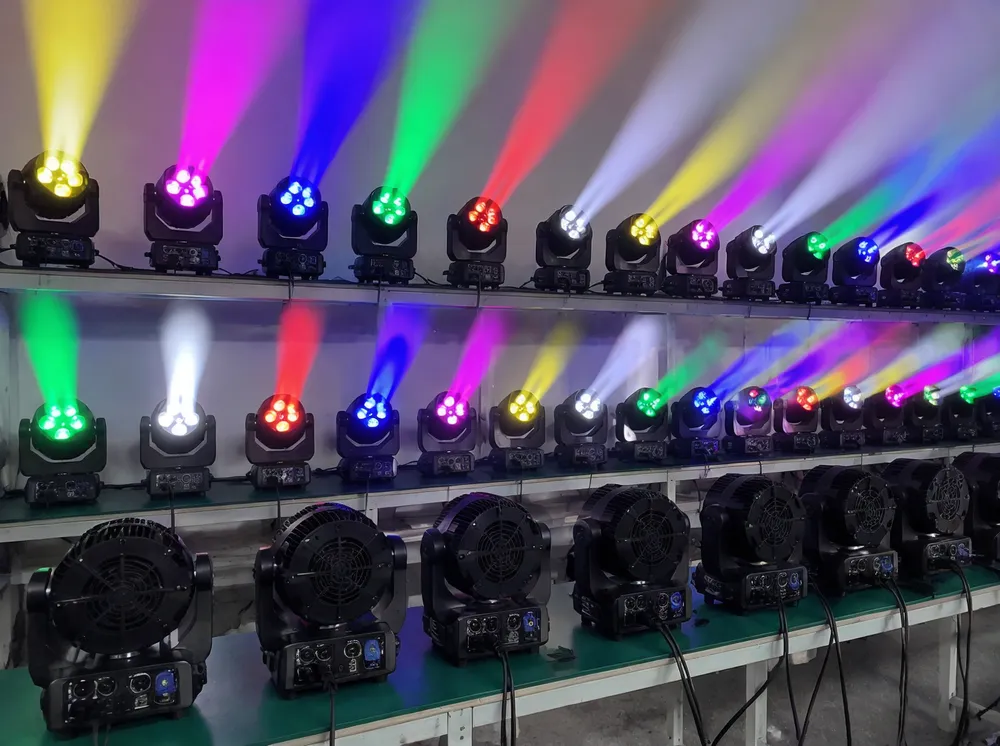
What DMX Party DJ Lights Are and Where They Sit in Your Product Line
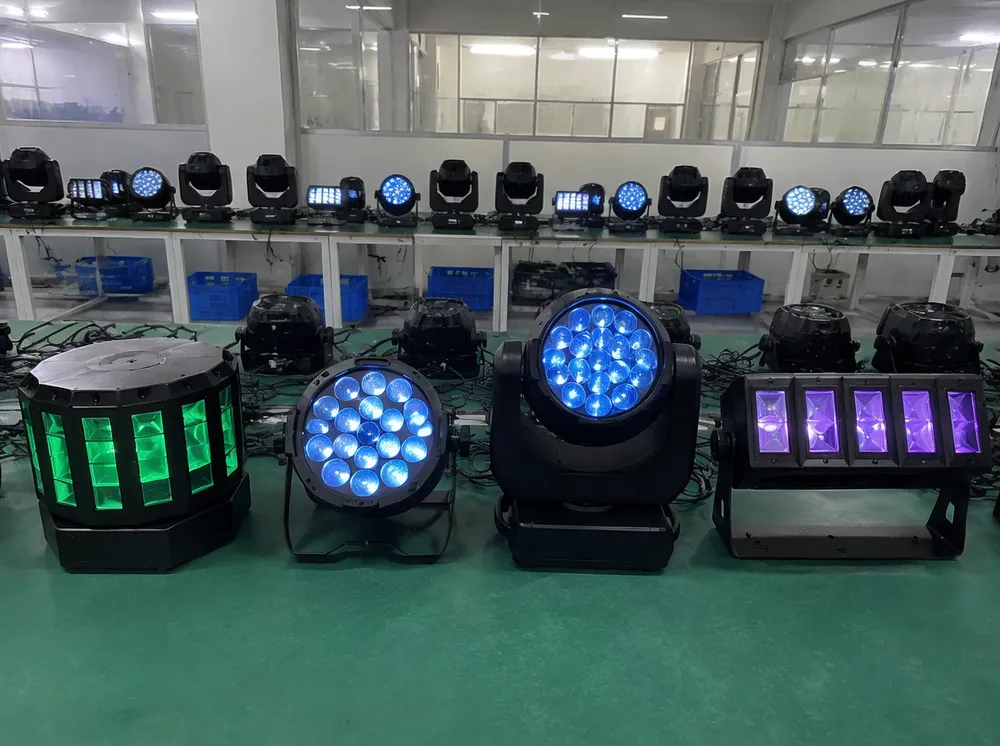
DMX party DJ lights are compact entertainment fixtures — LED derbys, multi-beam effects, moonflowers, strobes, and wash units — that accept DMX-512 control input. They occupy a specific commercial gap: your customers who own a controller want fixtures that respond to channel commands, but they don't need (or want to pay for) the 15 kg moving heads built for concert touring.
The distinction from our other party DJ lights lines is control architecture. Portable DJ lights run on auto-program and sound-active modes — grab-and-go rental units that need no operator. Wireless DJ lights use RF or Bluetooth for cable-free deployment. DMX party DJ lights assume your customer runs a lighting desk or software interface and wants per-fixture addressability: individual color mixing, intensity control, chase synchronization, and integration into multi-fixture rigs.
For your business, this means a higher-ticket SKU with stronger margin than basic auto-run fixtures. The DMX-capable buyer is more technically literate, less price-sensitive, and more likely to build a multi-fixture system over time — which means repeat orders as they expand their rig. You're not selling a single unit; you're establishing a system relationship.
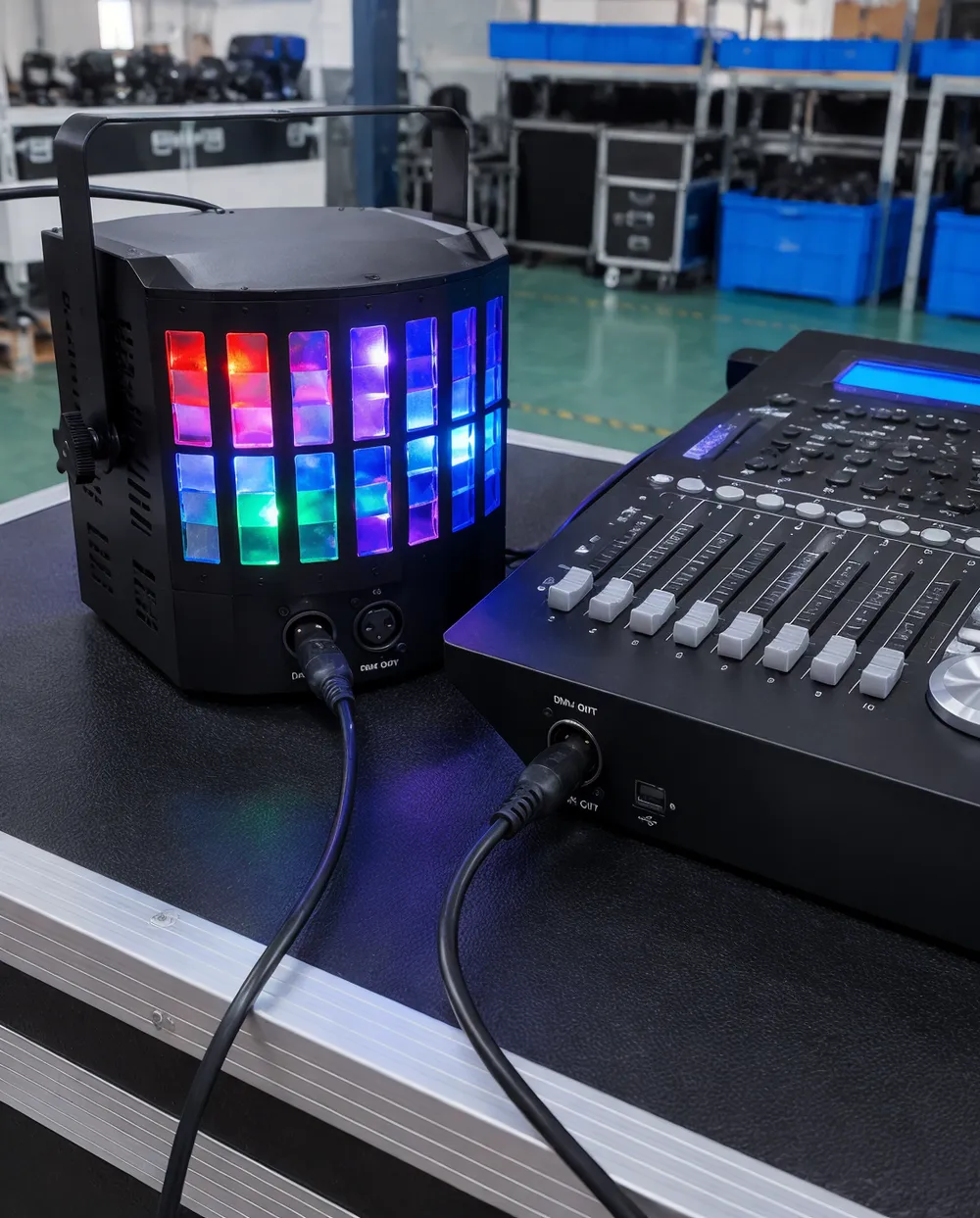
How DMX Fits in the Party DJ Lights Family
Portable DJ Lights
Auto-program & sound-active modes. Grab-and-go rental units needing no operator or controller.
No controller neededWireless DJ Lights
RF or Bluetooth for cable-free deployment. Eliminates XLR runs in venues where cabling is impractical.
Cable-freeDMX Party DJ Lights
Full DMX-512 addressability. Per-fixture control via desk or software — individual color, intensity, chase sync.
Controller-grade precisionWhy This SKU Builds Recurring Revenue
The DMX-capable buyer is more technically literate, less price-sensitive, and more likely to build a multi-fixture system over time. You're not selling a single unit — you're establishing a system relationship with repeat orders as they expand their rig.
Technical Specifications — What Your Comparison Sheet Needs
Specifications shown are industry-standard values for this product type. Actual specifications vary by model. Contact us for detailed product data sheets.
| Parameter | Typical Specification |
|---|---|
| LED Source | 8–24 × 3W RGBW LEDs (model-dependent), total optical output 15–60W |
| DMX Channels | 4–12 channels per fixture (RGBW individual, dimmer, strobe, program select, speed) |
| DMX Protocol | DMX-512/1990 standard, 3-pin and 5-pin XLR input/output |
| Control Modes | DMX-512, master/slave, sound-active, auto-run (all modes on every unit) |
| Beam Coverage | 25°–90° depending on fixture type (beam effects narrow, wash units wide) |
| Dimming | 0-100% smooth electronic dimming, 16-bit optional on higher-channel models |
| Strobe Rate | 1–20 Hz, DMX-adjustable |
| Power Input | AC 100-240V, 50/60Hz universal (auto-sensing power supply) |
| Housing | Die-cast aluminum (higher-output models) or reinforced ABS (compact effects) |
| Weight | 1.8–6.5 kg per unit depending on model |
| Cooling | Convection (sub-30W) or fan-cooled (above 30W) with thermal cutoff protection |
| Operating Temperature | -10°C to 40°C |
| IP Rating | IP20 standard (indoor use) |
| Certifications | CE, FCC, RoHS |
Dual XLR Connector Standard
The 3-pin and 5-pin XLR dual connector is standard on all our DMX party fixtures — we don't ship 3-pin-only to save $0.30 on a connector, because your customers running 5-pin controllers will immediately need an adapter, and that's a support call you don't want.
DMX Channel Architecture — Why It Matters for Your Technical Buyers
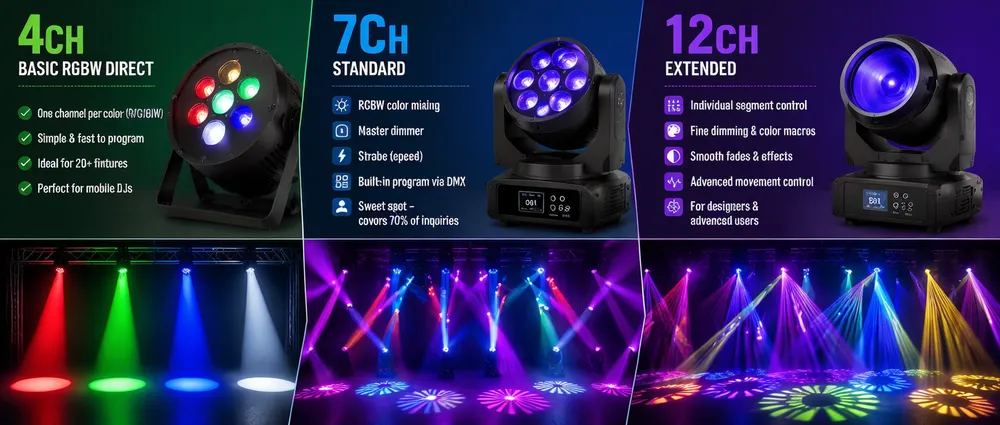
We offer DMX party DJ lights across three channel depth tiers, and the tier determines which buyer segment each fixture serves.
4-Channel Basic
RGBW DirectOne channel per color. Simple, fast to program, ideal for customers who run 20+ fixtures and don't want 200 channels eating up their DMX universe.
Target buyer: Mobile DJs doing weddings and corporate events — they want color, not complexity.
7-Channel Standard
RGBW + Dimmer + Strobe + ProgramAdds master dimmer, strobe rate, and built-in program selection via DMX. Enough control for professional-looking results, simple enough that a DJ running ShowXpress or QLC+ programs the entire rig during soundcheck.
Sweet spot: Covers 70% of inquiries. Most distributors start here then expand up/down.
12-Channel Extended
Segment Control + Fine Dimming + MacrosFor small production companies and fixed-install venues that want pixel-level control over multi-segment fixtures. Higher per-unit price, but these buyers spec systems rather than shopping on price.
Target buyer: Production companies and fixed-install venues seeking individual segment addressability.
Stocking Strategy for Distributors
You can stock all three tiers or focus on the 7-channel range if your primary channel is mobile DJs. Most of our distributors start with 7-channel units because they cover 70% of inquiries, then add 4-channel for budget packages and 12-channel for production company accounts.
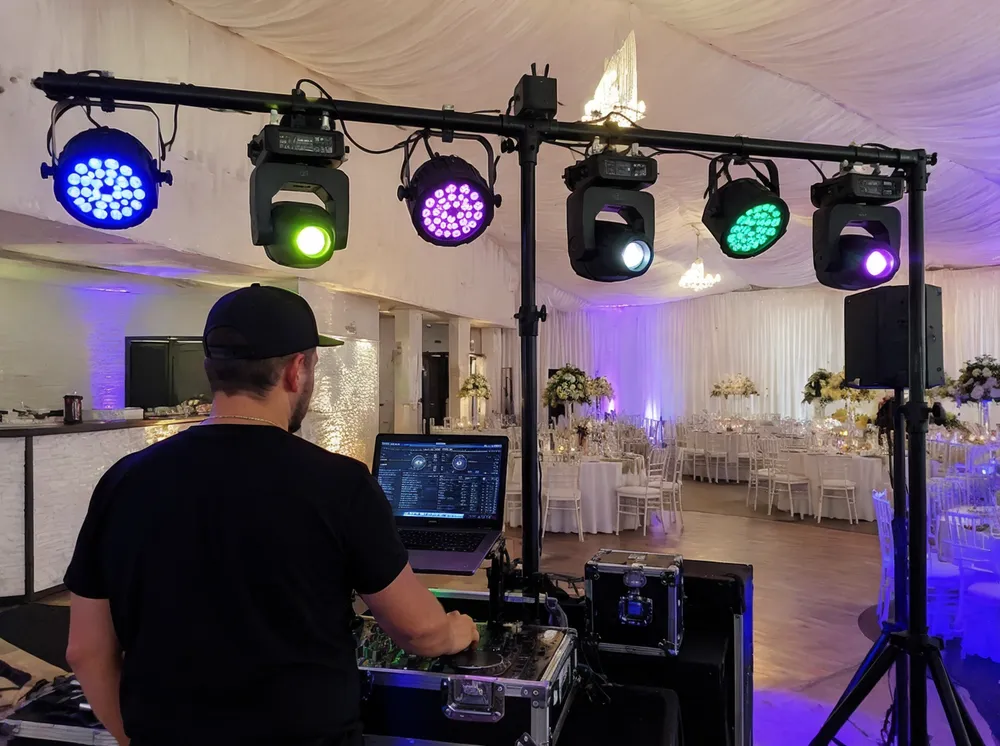
Where DMX Party DJ Lights Sell — Market Segments Worth Stocking For
Mobile DJ Equipment Supply
Mobile DJs upgrading from sound-active party lights represent your largest addressable segment for DMX party DJ fixtures. The upgrade trigger is consistent: they bought cheap auto-run lights, got frustrated with uncontrollable color and timing, and now want DMX control without jumping to $400/fixture professional units.
Your DMX party lights sit at the 30–60% price point of professional fixtures while delivering 80% of the functionality that matters for a wedding reception or corporate event.
Order Pattern
Typically 4–8 units per DJ for a complete rig. Distributors serving this segment report 2–3× annual reorder rates as DJs expand their systems and recommend your product to their network.
Event Rental Companies — DMX Fleet Expansion
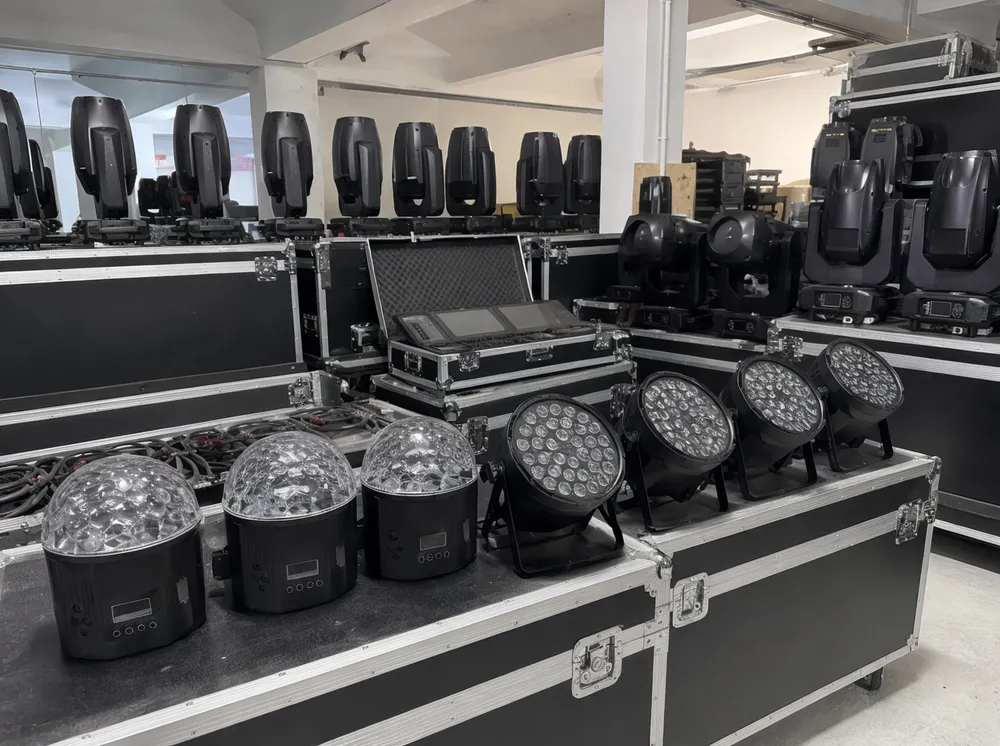
Rental companies already own DMX controllers and infrastructure. When they add disco party DJ lights to their rental packages, DMX-capable units integrate into their existing workflow without requiring a separate control paradigm. Your rental tech programs the fixtures alongside the PAR cans and moving heads — one universe, one show file, one skillset.
This eliminates the operational friction of mixing DMX fixtures with sound-active units that can't be synchronized. For rental companies, operational simplicity directly translates to labor cost savings per event.
Nightlife and Hospitality — Permanent Install
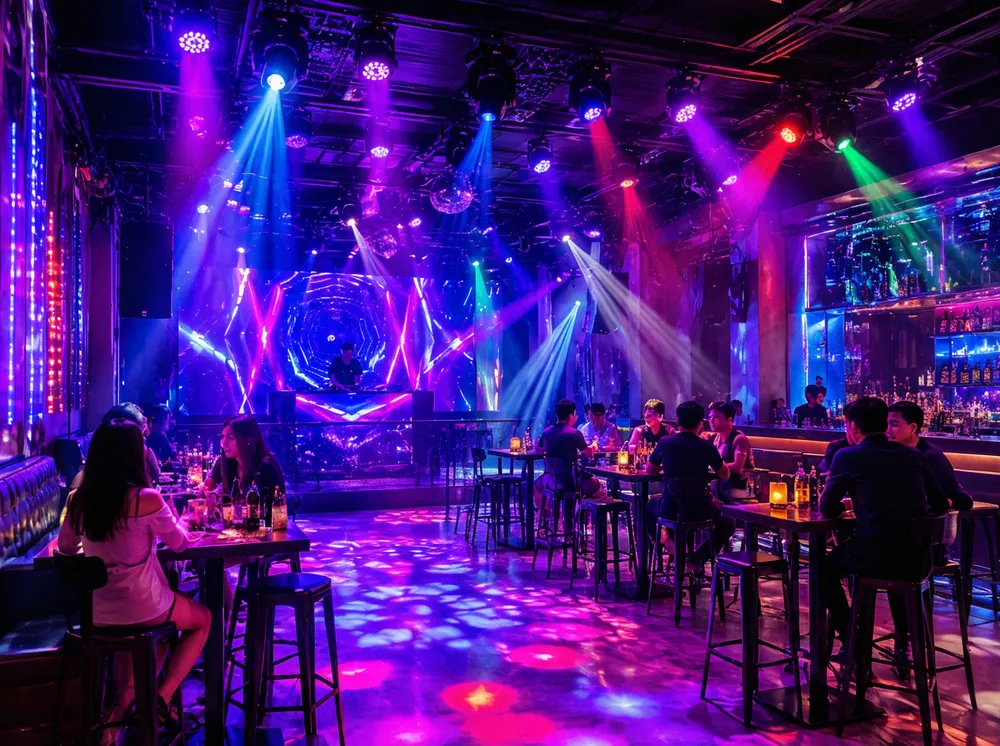
Bars, lounges, karaoke rooms, and small clubs running DMX party DJ lights as permanent install. These buyers want set-and-forget programming — a DMX scene controller triggers preset looks without an operator.
The value here is longevity and reliability: a permanent install runs 6–10 hours daily, 300+ days per year. That's 2,000–3,000 operating hours annually, which is where our thermal management and LED derating directly protect your warranty exposure.
Worship and Community Venues
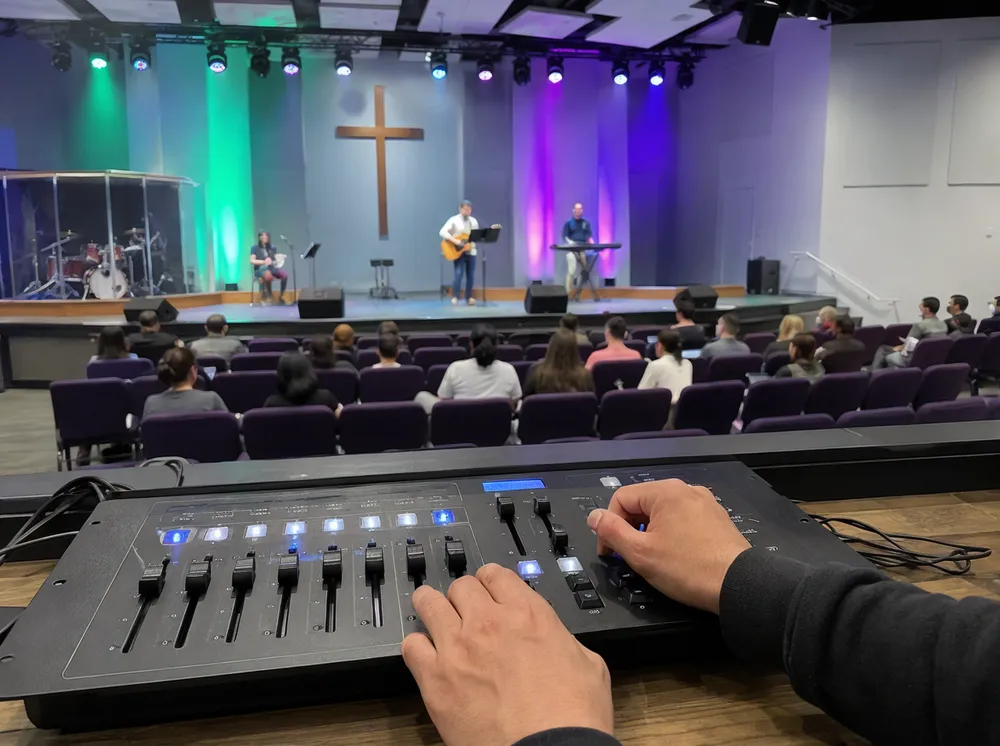
Churches, community centers, and school auditoriums increasingly run volunteer-operated DMX systems. They need fixtures that are forgiving to program (fewer channels, intuitive response curves) and reliable enough to perform without a dedicated technician on staff.
The 4-channel and 7-channel DMX party DJ lights are the right complexity level for these venues.
Targeting specific segments?
Tell us which market segments you're focused on — we'll recommend the specific models and channel configurations that match your buyers.
How We Build DMX Party DJ Lights Differently
The parent category page covers our general production process — SMT lines, housing production, 48-hour aging. Here's what's specific to the DMX product line:
DMX Decoder IC Selection & Firmware
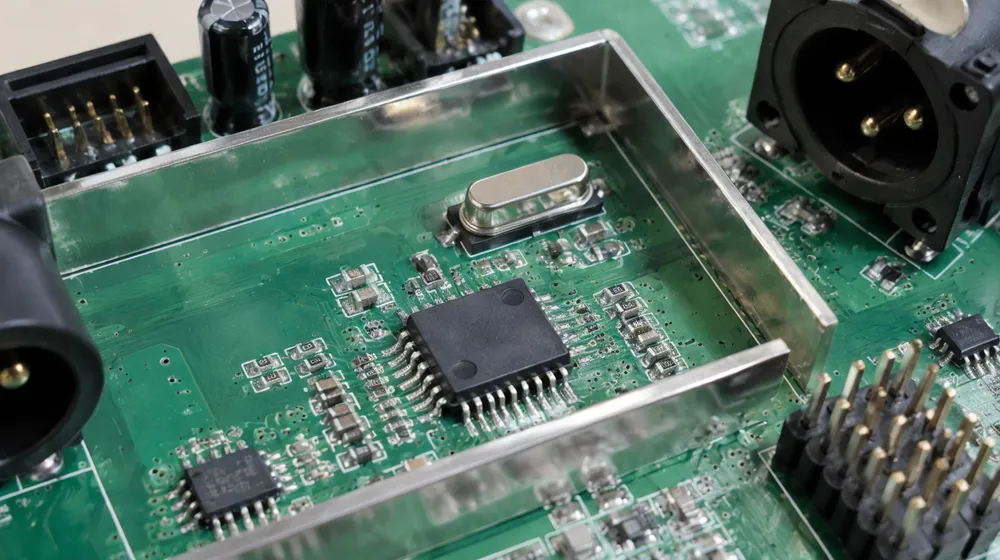
We use dedicated DMX decoder ICs rather than bit-banging the protocol on a general-purpose microcontroller. Dedicated silicon means reliable signal parsing even in electrically noisy environments — and DJ rigs are electrically noisy.
We've seen competitors' fixtures drop DMX signal when a fog machine on the same circuit kicks in. Our decoder maintains lock because it's running a hardware state machine, not a software interrupt routine competing with LED PWM generation.
XLR Connector Durability
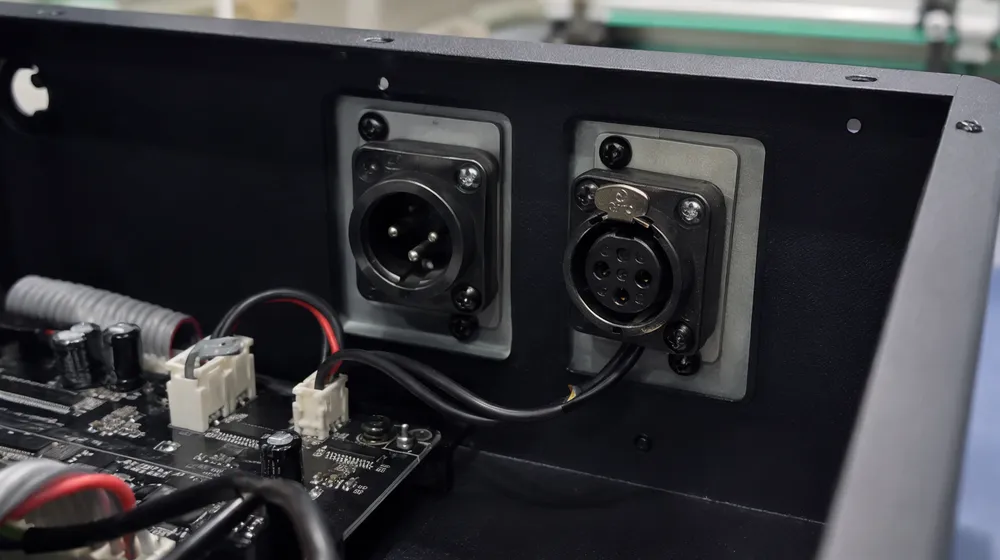
Every DMX connector gets a 500-cycle insertion test during design validation. The XLR socket is chassis-mounted with a reinforced backing plate — not just PCB-mounted pins relying on solder joints to handle cable tension.
We switched to this approach in 2018 after tracking connector failure as the number-one field repair on fixtures returned under warranty from rental companies.
(The cable gets yanked. That's not abuse — it's how a rental tech strikes a rig at 1 AM. The connector needs to survive that.)
Signal Integrity Through the Daisy Chain
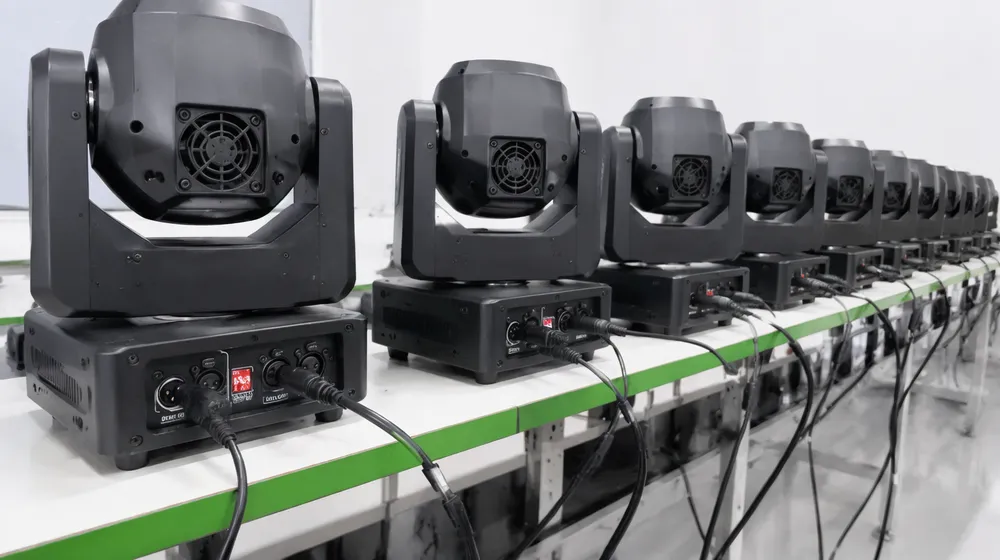
DMX-512 uses RS-485 differential signaling. Signal integrity degrades across long daisy chains if termination and line driving are sloppy.
We include a switchable 120Ω termination resistor on the DMX output of every fixture (not a separate plug you'll lose), and our line driver maintains proper signal levels through 32 fixtures in a chain — the maximum the DMX-512 spec allows.
Thermal Management for Continuous DMX Operation
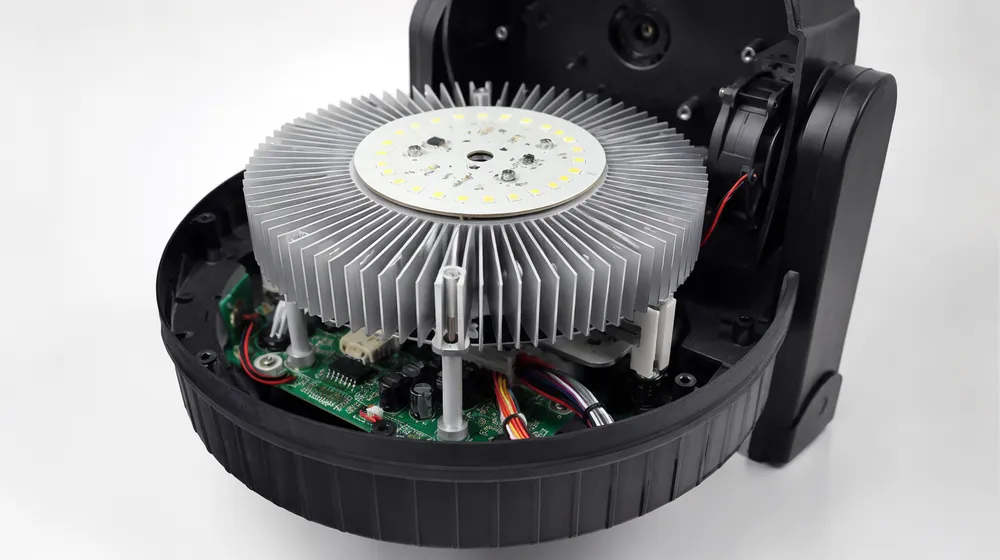
Unlike auto-run fixtures that cycle through patterns (giving LEDs periodic rest), DMX operation can hold a fixture at 100% RGBW output for hours straight.
Our thermal design assumes this worst case: heatsink mass and airflow (or convection path) rated for sustained full output at 40°C ambient. We don't throttle brightness under DMX control — the thermal headroom is built in from the start.
Customization Available on DMX Party DJ Lights
This product line supports OEM/ODM modification across several dimensions. Here's what you can change and what the constraints are:
Branding
30-unit min- Logo on housing — pad printing (up to 4 colors) or laser engraving (single color, permanent)
- Custom DMX boot screen — your logo displayed for 3 seconds on power-up (on fixtures with LCD/OLED displays)
- Branded retail packaging or plain brown box — your design files, our print production
DMX Channel Mapping
50-unit min- Custom channel order to match your market's most common controllers
- Custom default DMX address (factory-set to your preferred starting address)
- Modified preset programs on auto-run mode — tailored to your end-user's typical event type
Optical Modifications
100-unit min- Beam angle changes — narrower lens for beam effects, wider diffusion for wash applications
- Color wheel customization on gobo/effect units — specific patterns and colors for your target application
- LED color configuration — swap RGBW for RGBUV on applicable models for blacklight event demand
Housing Color
100-unit min- Standard: black or white housing
- Custom: any RAL or Pantone reference on runs of 100+
- Custom finish texture (matte, semi-gloss, textured) available on die-cast models
Electrical Variants
Standard — no minimum impactPower cable and plug type pre-configured per destination market (US/EU/UK/AU)
Voltage is already universal (100–240V), so no electrical modification needed for market-specific variants
What Can't Be Customized Below 500 Units
Housing geometry changes — requires new tooling
LED wattage changes — requires thermal revalidation
New DMX channel count configurations — requires firmware rewrite and re-testing
Above 500 units, we'll quote tooling costs and development timelines for any modification.
Send your customization requirements — we return a feasibility assessment and quote within 48 hours.
DMX Party DJ Lights vs. Sibling Products — Helping Your Customers Choose
Your product catalog likely carries multiple lines from our party DJ lights range. Here's how DMX fixtures position alongside their siblings, so you can guide your customers to the right product.
| Decision Factor | DMX Party DJ Lights | Portable DJ Lights | Wireless DJ Lights |
|---|---|---|---|
| Control method | DMX-512 controller or software | Auto-run / sound-active (no controller needed) | RF remote / Bluetooth app |
| Cable requirement | DMX + power cables | Power only (or battery) | Power only (or battery) |
| Target user | DJs/techs who own controllers | Casual DJs, rental fleet operators | Event companies, venues with difficult cable runs |
| Setup complexity | Moderate (requires DMX addressing) | Minimal (plug and play) | Low (pair and go) |
| Price tier | Mid | Entry | Mid-upper |
| Repeat purchase driver | System expansion, fixture upgrades | Fleet replacement, capacity growth | Multi-zone coverage |
Customer Doesn't Own a Controller
Point them toward portable DJ lights or wireless DJ lights. DMX fixtures without a controller still run in sound-active and auto modes, but you're paying for DMX capability that won't get used.
Needs Laser Effects with DMX Control
Our laser projector party DJ lights include DMX-addressable models that complement the LED-based DMX fixtures in a combined rig.
Needs a Complete System in One Package
The party DJ lights tripod systems include DMX-capable fixture options mounted on a deployable stand — ideal for the starter DJ market.
Reliability Engineering — What Protects Your Warranty Margin
DMX party DJ lights get harder use than auto-run units because their operators push them further. A DJ holding full white output for a 4-hour corporate dinner pushes thermal limits. A rental tech daisy-chaining 15 units in a ballroom tests signal integrity. A nightclub running fixtures 6 hours nightly tests component longevity.
We design for these real operating conditions, not bench-test conditions:
LED Derating
85–90% Rated CurrentWe run LEDs at 85–90% of rated current. You lose a few lumens on the spec sheet, but color temperature stays stable past 10,000 hours. For permanent installs running 3,000 hours annually, that's the difference between consistent output for 3+ years versus visible color shift by year two. Consistent output across your installed base means zero callbacks.
Capacitor Grade
105°C RatedElectrolytic capacitors in the LED driver are rated at 105°C, not the 85°C grade that shaves $0.15 per unit. Inside a sealed fixture at full output, ambient around the driver board easily reaches 70–80°C. An 85°C-rated cap at 80°C ambient has half its rated lifespan.
We had this exact failure mode on an early model in 2016 — caps bulging after 8 months in a nightclub install. Never again.
DMX Optocoupler Isolation
Ground Loop ProtectionEvery DMX input runs through an optocoupler that electrically isolates the fixture's internal electronics from the DMX bus. This prevents ground loop noise from propagating through a daisy chain, and it protects the fixture if someone accidentally connects a powered DMX line with voltage on it.
Standard practice in professional fixtures, but frequently skipped in party-tier products to save board space.
48-Hour Aging Under DMX Control
Full Electrical LoadOur standard aging test runs all fixtures at full electrical load. For DMX units specifically, we run the aging test with continuous DMX signal input — verifying that the decoder maintains lock and the fixture responds correctly to channel data after 48 hours of sustained operation.
A fixture that parses DMX cleanly for 10 minutes but develops timing drift after 30 hours of thermal soak would pass a basic power-on test but fail in the field.
Bottom line for distributors: these engineering choices reduce your return rate and warranty claims — protecting your margin on every unit shipped.
Packaging and Container Loading for DMX Party DJ Lights
DMX fixtures in this line are denser and heavier than our portable units, which affects your container economics differently. Die-cast aluminum housing models weigh 3.5–6.5 kg each — fewer units per carton, but higher value per cubic meter of container space.
Standard Packaging
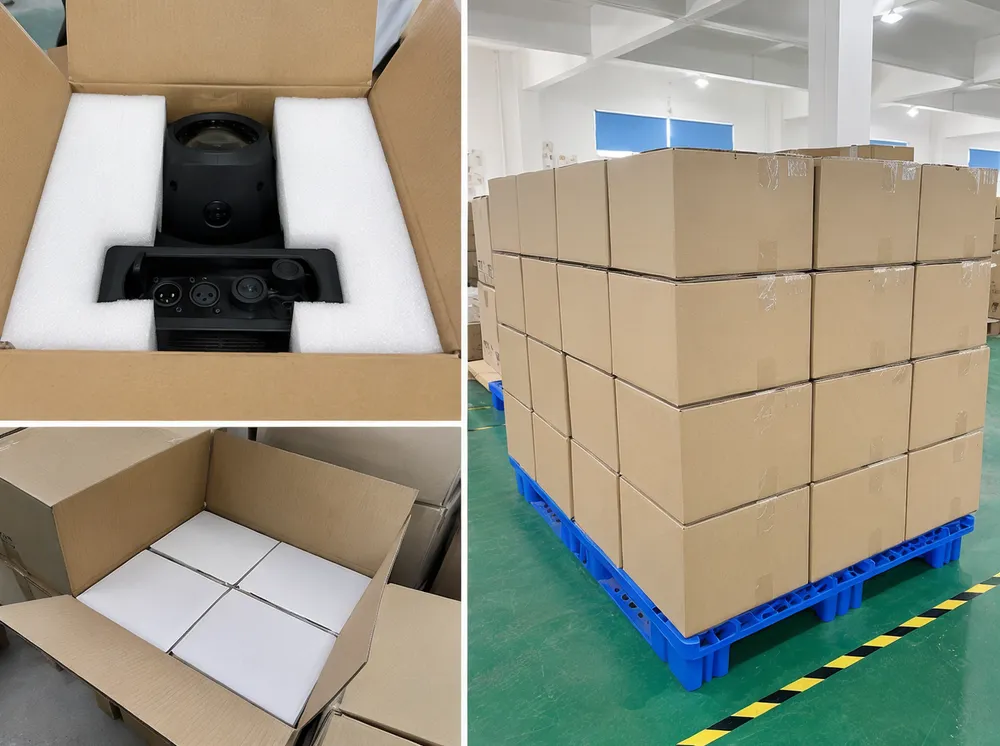
- Individual unit in molded EPE foam insert with XLR dust caps installed
- Inner color box or plain brown box per your specification
- Master carton: K=K double-wall corrugated, 4–6 units per carton depending on fixture size
Typical Loading Data
| Fixture Type | Carton Dimensions (cm) | Units/Carton | Cartons/20GP | Cartons/40HQ |
|---|---|---|---|---|
| Compact DMX derby/moonflower (2–3 kg) | 38 × 32 × 25 | 4 | 1,100 | 2,300 |
| Mid-size DMX multi-beam (3–5 kg) | 45 × 38 × 30 | 2 | 680 | 1,420 |
| DMX wash/strobe panel (5–6.5 kg) | 52 × 42 × 32 | 2 | 480 | 1,000 |
DMX-Specific Packaging Note
We include XLR dust caps on all connectors and a silica gel desiccant packet inside each unit's foam cavity. XLR connectors exposed to humid sea container conditions for 4–6 weeks can develop pin oxidation that causes intermittent DMX signal issues on first use — the dust cap and desiccant prevent this.
Small detail, but it eliminates the "out of box failure" perception that kills your product reviews.
Labeling, FBA-prep, and custom packaging configurations handled at the factory. Provide your packaging specs with your order inquiry.
Certifications — Pre-Qualified for Your Import Market
DMX party DJ lights from our line ship with CE (EN 55015 EMC + EN 60598 safety), FCC Part 15 Class B, and RoHS material declarations. Test reports from accredited labs on file and available for your customs broker.
EN 55015 EMC
EN 60598 Safety
Part 15
Class B
Material
Declarations
Specific Compliance Notes for DMX Fixtures
EMC
Electromagnetic Compatibility
DMX-512 uses RS-485 signaling at relatively low data rates, but the switching frequencies in LED PWM drivers generate harmonic emissions. Our EMC design includes filtered power input, shielded driver boards, and ferrite suppression on internal wiring — all verified against EN 55015 conducted and radiated limits.
Your fixtures won't trigger RF interference complaints from venue operators.
Electrical Safety
IEC 60598-1 Compliant
Double-insulated construction (Class II) on all models — no earth connection required, which simplifies installation in venues with questionable grounding.
RoHS / REACH
Material Compliance
Full material declarations available. Lead-free solder, halogen-free PCB substrate, restricted substance compliance documented per bill of materials.
Additional Local Certifications
If you're selling into markets requiring additional local certifications, we build the testing and application process into the OEM project timeline — not a separate scramble after production is complete.
Frequently Asked Questions
How many DMX party DJ lights can I daisy-chain on one DMX universe?
DMX-512 supports up to 512 channels per universe. With our 7-channel standard fixtures, that's 73 fixtures on a single universe — more than enough for any mobile DJ rig or small venue install. Electrically, the RS-485 spec supports 32 devices per line before requiring a splitter/booster. We test and verify signal integrity with 32 fixtures in a chain. Beyond that, specify a DMX splitter — we sell them as standalone accessories or can bundle with your fixture order.
Can DMX party DJ lights work without a DMX controller?
Yes. Every fixture includes standalone operating modes: sound-active (built-in microphone triggers color changes to bass frequencies), auto-run (built-in programs cycle automatically), and master/slave (one fixture controls others via DMX cable without an external controller). Your customers can start with standalone modes and add a controller later without replacing fixtures — which is why this line converts well as an entry point into DMX systems.
What DMX software is compatible with these fixtures?
Any software or hardware that outputs standard DMX-512 protocol via USB-to-DMX interface. Common options among your end users: QLC+ (free, open source), ShowXpress (free with compatible interfaces), LightJockey, Daslight, SoundSwitch (Denon DJ integration), and hardware controllers like ADJ MyDMX and Chauvet Obey series. We provide DMX channel charts and fixture profiles for QLC+ and Daslight — importable personality files that save your customer the setup time.
What's the difference between DMX party DJ lights and professional DMX stage lights?
Three things: optical output, build weight, and feature depth.
Our DMX party DJ lights output 15-60W optical power in compact housings (1.8-6.5 kg). Professional stage fixtures (moving heads, high-output PARs) run 100-400W in 10-25 kg housings with motorized movement, CMY color mixing, and advanced optics.
The party DJ fixtures deliver the same DMX control precision at a size, weight, and price point that makes sense for mobile rigs, small venues, and high-unit-count deployments where you need 8-16 fixtures, not 4.
What is the lead time for a standard DMX party DJ lights order?
Standard models from our range: 20-25 days for production orders of 100-1,000 units. Sample units ship within 3-7 days. OEM branded variants (your logo, packaging, channel mapping): add 5-7 days for first production run.
We hold safety stock on our top 5 DMX party models, so smaller orders (30-100 units) on standard products can ship within 10-15 days. Confirm current availability with your inquiry.
Do DMX party DJ lights support RDM (Remote Device Management)?
Select models in our DMX line support RDM per the ANSI E1.20 standard — allowing your controller to remotely read fixture status, set DMX addresses, and monitor lamp hours without physically accessing each unit. We're implementing RDM across the full DMX party range progressively. Ask us which current models include RDM if remote management matters for your install or rental workflow.
Start With a Evaluation Order
Most buyers entering the DMX party DJ lights segment follow this path: request 2-4 sample units across different effect types (a derby, a wash, a multi-beam), verify DMX response and build quality against what you're currently sourcing or what your competitors offer, then place a branded production order once you've confirmed the fit.
We can ship DMX fixture samples within 3-7 days on standard models. If you want to evaluate our custom DMX channel mapping or branded boot screen, allow 10 days for sample prep. No minimum on evaluation orders.
Send us your target market (mobile DJ supply, rental fleet, permanent install, distribution) and the effect types you need coverage on. We'll recommend specific models, provide DMX channel charts, and quote based on your projected volume.
Direct Contact
Teresa@gdmonkey.com
+86-135 3966 9939
Explore More Party DJ Lights
Battery and compact fixtures for mobile setups
Wireless DJ LightsCable-free control and battery-powered options
Laser Projector Party DJ LightsBeam and pattern laser fixtures for high-impact effects
Party DJ Lights TripodT-bar stands and mounting hardware for fixture arrays
Event Stage LightingHigher-output fixtures for event and stage applications