

Party DJ Lights Tripod Stand + Fixtures + Control in One Box
High sell-through SKU for distributors serving mobile DJs, event rental companies, and e-commerce channels. One box, one setup, immediate revenue per unit.
Manufactured in our own facility from tripod tube to LED board. Integrated systems that eliminate buyer friction and boost cart value per transaction.
What This Product Is and Why It Moves
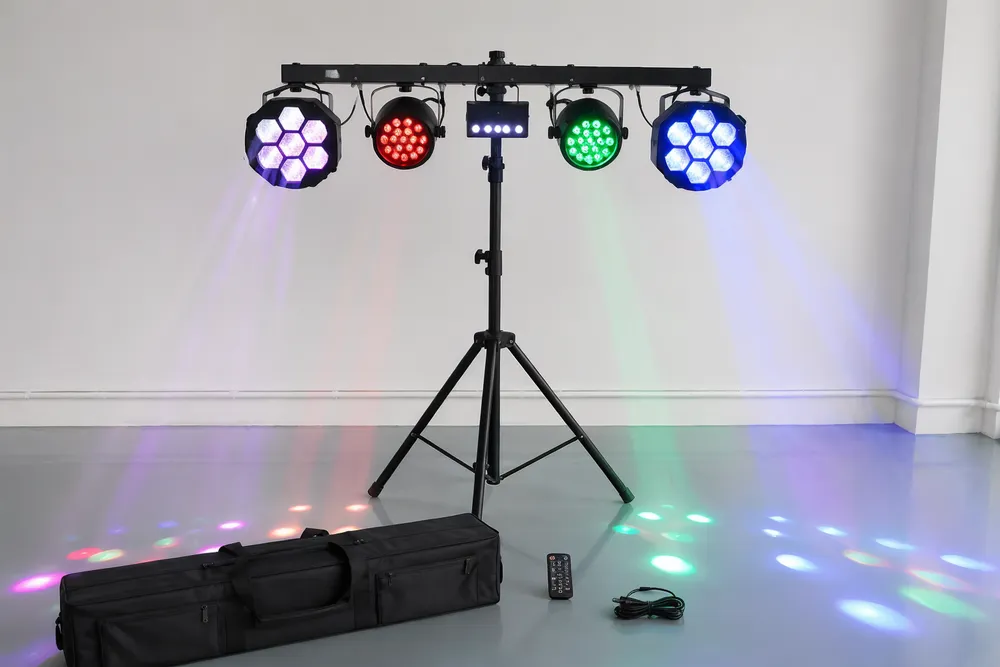
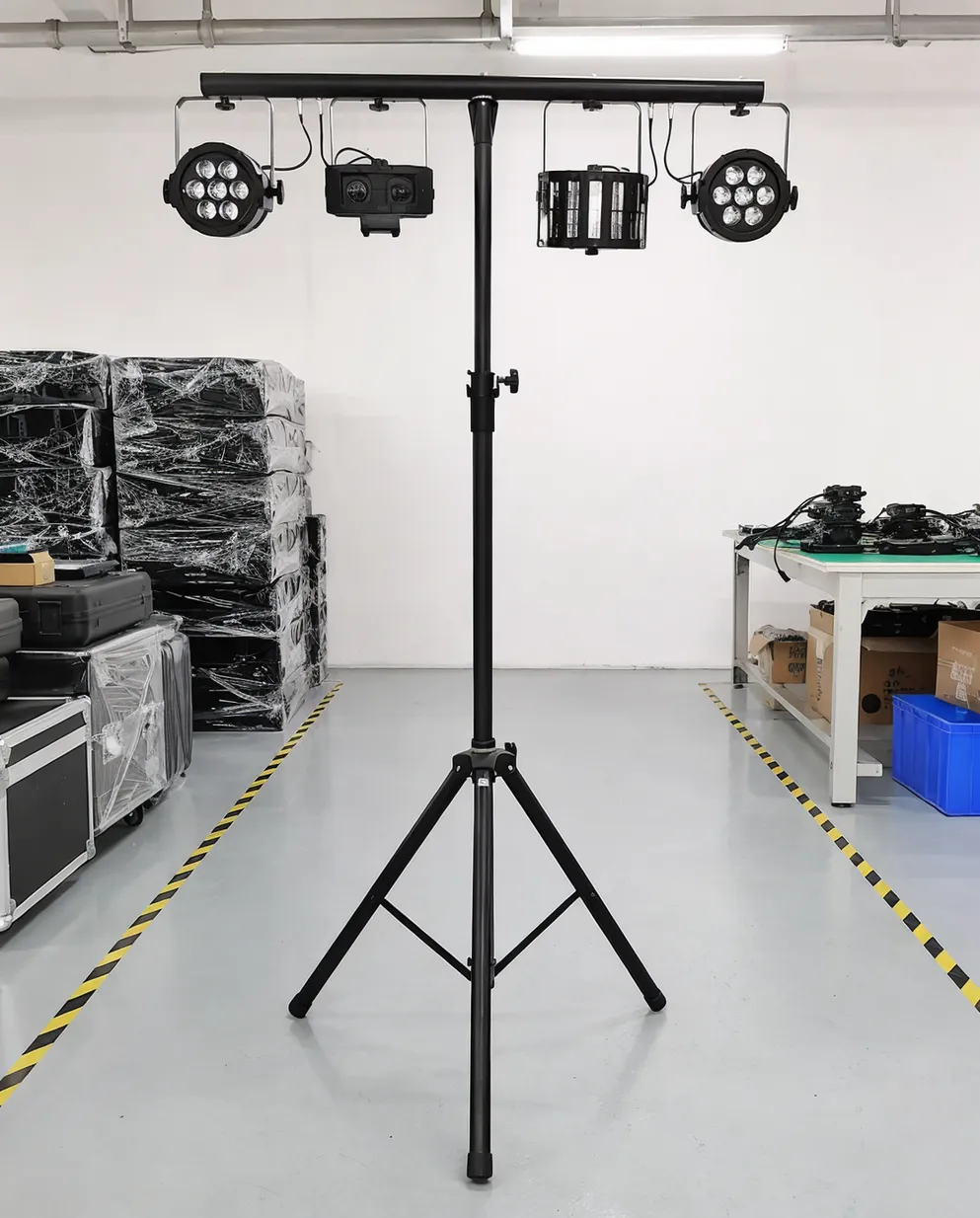
A party DJ lights tripod is a complete lighting system in a single SKU: an adjustable-height tripod stand with pre-mounted multi-head LED fixtures — typically 2 to 4 light heads on a T-bar or crossbar, ready to deploy in under 60 seconds with no additional hardware, no clamps, no separate cable runs. Your customer unboxes it, extends the tripod legs, raises the center tube, plugs in one power cable, and the system runs.
The commercial logic is straightforward. This product eliminates the buyer friction that kills conversions on individual fixture sales — "what stand do I need? will it fit? how do I mount it?" — and replaces it with a guaranteed-compatible package at a single price point. For your distribution or e-commerce business, that translates to higher cart value per transaction, fewer pre-sale support questions, and a product that photographs well for marketplace listings because it looks complete, not like a component.
We've manufactured tripod lighting systems since 2014. The product has evolved through three housing generations and two tripod material changes based on field failure data from our buyers' rental fleets. The current design reflects hard lessons about what actually breaks in mobile deployment versus what looks good on a spec sheet.
Engineering Evolution Note
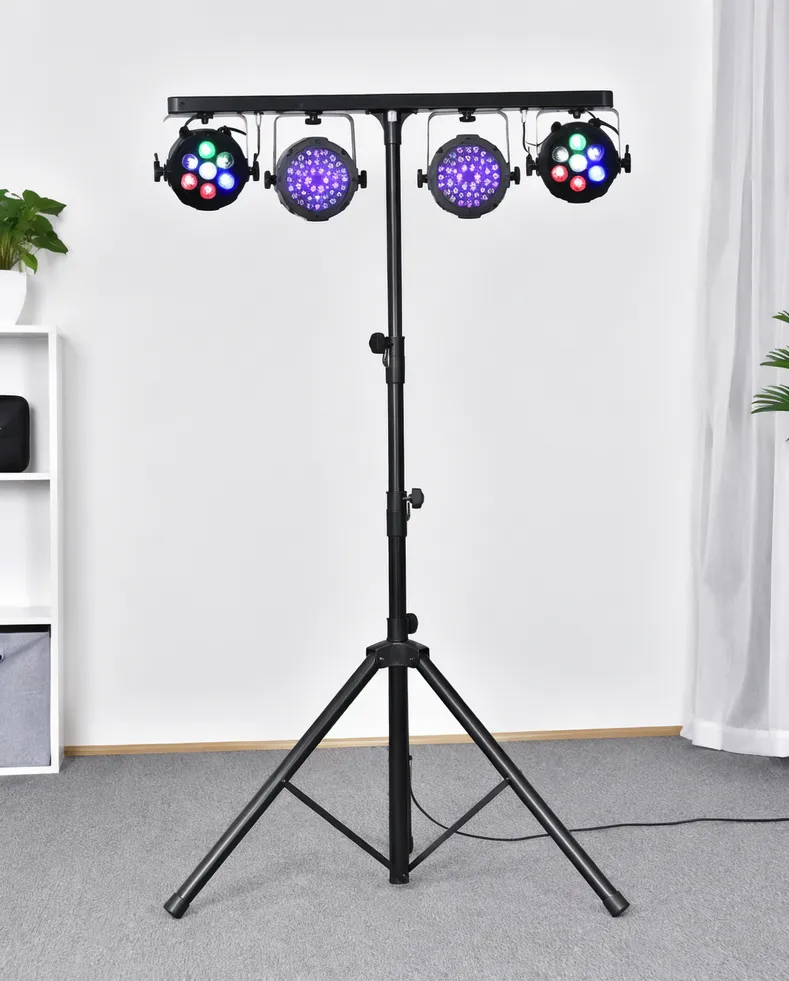
Early versions used cast aluminum T-bars. They were rigid but cracked at the mounting holes after repeated transport vibration. We switched to extruded aluminum with reinforced sleeve joints in 2018 — no cracking failures since. The current design reflects field failure data, not theoretical spec optimization.
Higher Cart Value
Single-SKU complete system commands premium over individual components sold separately.
Fewer Support Questions
Guaranteed compatibility eliminates pre-sale "will it fit" friction that blocks purchase decisions.
Listing-Ready Product
Photographs as a complete system for marketplace listings — looks finished, not like a component.
60-Second Deploy
Unbox, extend legs, raise tube, plug in. No clamps, no separate cables, no mounting hardware needed.
Technical Specifications for the Party DJ Lights Tripod Range
You're building a comparison sheet or checking whether these specs clear your market's requirements. Here are the exact parameters for the standard production configuration.
Specifications shown are standard production values. Custom configurations (head count, LED wattage, stand height, color) available on OEM orders.
Request Full Spec SheetTripod Construction — What Separates Rentable from Disposable
The tripod is the component most buyers underestimate and most manufacturers cut corners on. It's also the component that determines whether your product survives rental deployment or generates warranty claims after three events.
Q195 Cold-Rolled Steel + Multi-Layer Coating
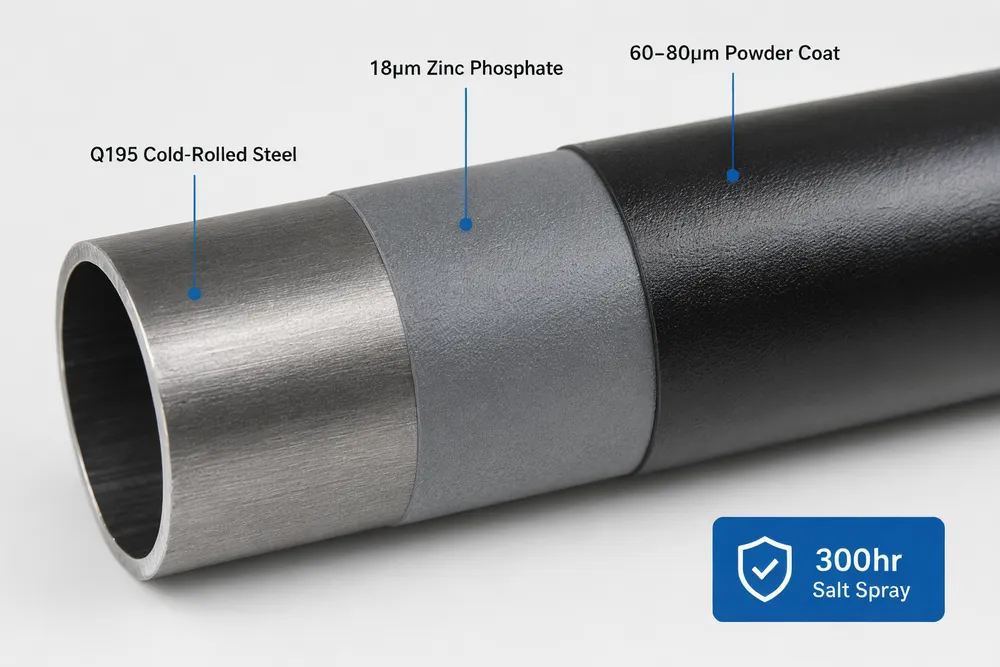
We manufacture our tripod tubes from Q195 cold-rolled steel with an 18-micron zinc phosphate conversion coat before powder coating. The zinc phosphate layer provides corrosion anchor adhesion — powder coat on bare steel starts chipping at screw points and leg joints within 6 months of regular use.
Our coating stack (phosphate + 60–80μm powder) passes 300-hour salt spray testing, which translates to years of real-world use without cosmetic degradation. Your rental customer sees a product that still looks professional on its 200th deployment.
Friction-Lock Collar vs. Spring-Button Pins
Redesigned in 2016 after field failure data
Typical Competitor
Spring-Button Pins
- Cost: $0.12 per joint
- Spring loses tension after 50–80 extension cycles
- Leg creeps down under load — liability risk with elevated crossbars
GDMonkey Design
Friction-Lock Collar
- Cost: $0.35 per joint (+$0.23/unit total)
- Maintains clamping force indefinitely — no spring to fatigue
- Eliminated the failure mode entirely after 2016 redesign
Field lesson: In 2016 a Malaysian rental company returned 60 units after one year because the legs wouldn't hold height. That's when we redesigned the locking mechanism. The $0.23/unit cost increase eliminated the failure mode entirely.
T-Bar Crossbar — 6063-T5 Extruded Aluminum
The T-bar crossbar uses 6063-T5 extruded aluminum with internal sleeve reinforcement at the mounting holes. Each head mounts via an M8 bolt with nylon washer isolation — prevents metal-on-metal vibration wear and allows ±45° tilt adjustment that stays where you set it.
Load-rated at 15 kg total crossbar capacity, which provides 2× safety margin on a standard 4-head configuration.
Crossbar Specs
- Material 6063-T5 Aluminum
- Mounting M8 + Nylon Washer
- Tilt ±45° Adjustable
- Load 15 kg (2× margin)
Market Segments Where Tripod Systems Generate Volume
Each segment below represents a channel where your buyers or their customers actively purchase tripod-mounted DJ lighting. The product characteristics map to specific commercial opportunities.
Mobile DJ Starter Packages
Mobile DJs entering the market buy packages, not components. A party DJ lights tripod is typically their first lighting purchase because it's one decision, one setup, one box to transport. Distributors serving this segment report 30–50 unit monthly throughput on marketplace listings alone, with seasonal spikes around wedding season (March–June in Northern Hemisphere markets) and year-end holiday events.
Margin opportunity: Tripod systems carry perceived value well above their component cost. The end customer pays for convenience and guaranteed compatibility. Distributors consistently mark up tripod packages 40–60% above FOB cost because the bundled format justifies the premium versus selling fixtures and stands separately.
Event Rental Fleet Expansion
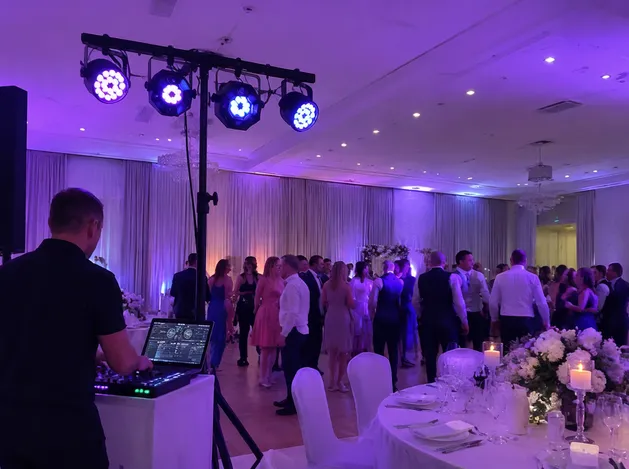
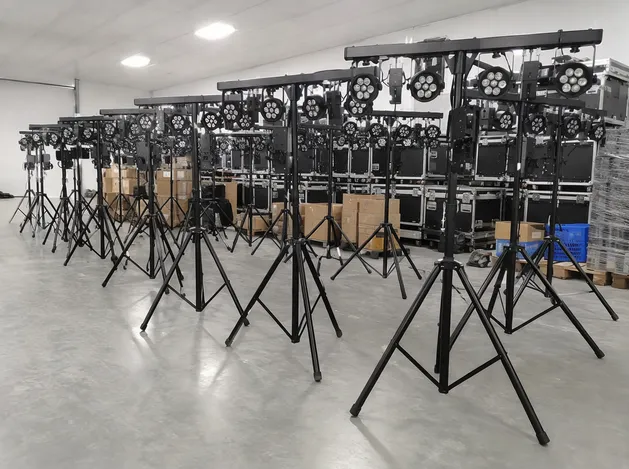
Rental companies add tripod systems as "quick-deploy" inventory for smaller events — birthday parties, corporate mixers, school dances — where sending a full lighting rig isn't justified. Two tripod systems covers a 100-person event. Rental income per unit per event typically runs $40–80 depending on market, with weekly utilization rates of 2–3 events during peak season.
Reorder pattern: Rental companies replace tripod systems annually due to cosmetic wear and transport damage. That's a built-in reorder cycle for your accounts — unlike high-end fixtures that last 5+ years before replacement.
E-Commerce and Marketplace Sales
Tripod systems are among the strongest e-commerce performers in the party DJ lights category. The all-in-one format photographs as a complete product (no "accessories sold separately" confusion), and the price point ($80–200 retail depending on head count and LED specification) sits in the impulse-friendly range for semi-professional buyers shopping on Amazon, eBay, or regional marketplaces.
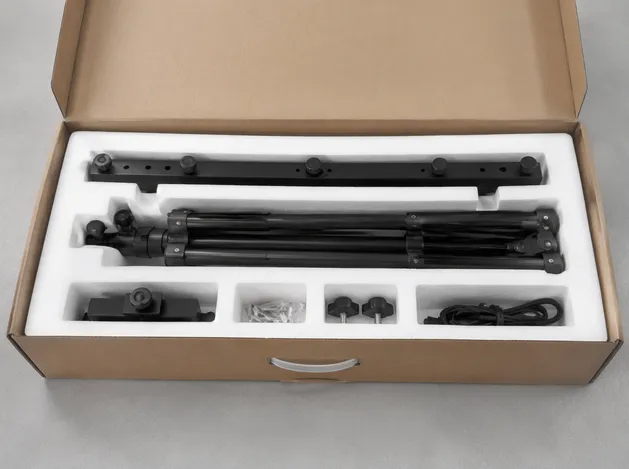
Key e-commerce metric: return rate. Incomplete or confusing products get returned. A tripod system arrives with everything needed — the unboxing experience maps directly to the listing photos. Our FBA-ready packaging configuration includes assembly instruction card, all mounting hardware pre-attached, and protective foam that doubles as a storage solution.
Result: Sellers who switched from generic foam to our fitted molded insert reported 60% fewer damage claims on marketplace orders.
Hospitality Channel — Bars, Restaurants, Small Venues
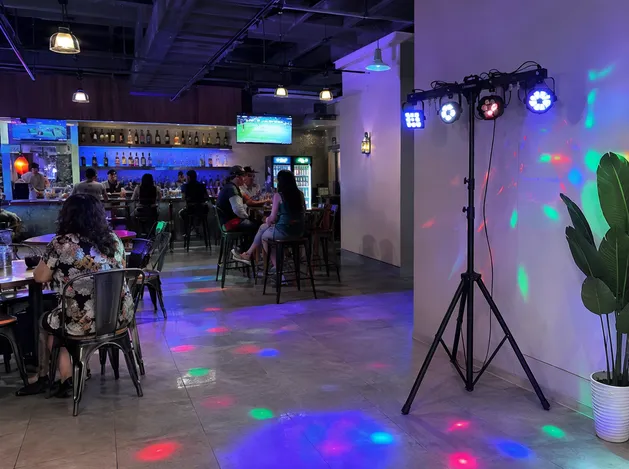
Permanent-install tripod systems for smaller hospitality venues that want ambient lighting effects without ceiling-mount hardware or electrical modifications. The tripod goes in a corner, plugs into a wall outlet, and runs in sound-active mode indefinitely. Venues order 2–6 units depending on floor area.
This segment buys on reliability over portability — the fixture runs 6–8 hours nightly, every night. Our 48-hour aging test at full load simulates two weeks of this duty cycle before shipment, catching driver failures and LED degradation that would manifest as warranty claims at hour 200+ in the field.
Which segment are you targeting?
Tell us your channel — we'll recommend the right configuration and volume.
Get Configuration AdviceCustomization Scope and Practical Limits
You probably don't want to sell a product that looks identical to what five other distributors are listing. Here's what we can modify on the party DJ lights tripod and where the boundaries are.
Branding
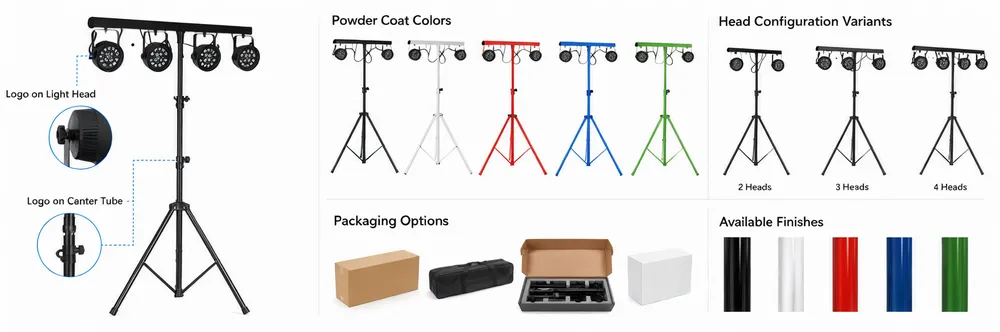
30-unit minimum- Logo on tripod center tube (silk screen or laser engraving)
- Logo on each light head housing (pad printing)
- Custom packaging with your brand design, product photos, your contact details
- Custom boot screen on DMX-equipped models
- Private-label user manual and assembly card
Fixture Configuration
50-unit minimum- Head count: 2, 3, or 4 heads per crossbar
- LED specification: upgrade from 3W to 8W per LED, or switch to RGBUV (adds UV blacklight)
- Beam optics: swap 25° standard lens for 15° spot or 40° flood
- Control mode selection: sound-only (simplest), sound + auto + DMX (full feature)
- Cable length: 1.5m, 3m, or 5m power cable
Stand Modifications
100-unit minimum- Custom powder coat color (any RAL reference)
- Height range adjustment (shorter: 0.9–1.5m for table-top variant; taller: 1.5–2.5m for stage-back placement)
- Crossbar width: standard 60cm or extended 90cm for wider fixture spread
- Upgraded locking mechanism: quick-release clamps for rental companies who prioritize setup speed
What We Can't Change
Fixed by tooling- Tripod leg count and base geometry (3-leg, standard spread angle)
- Center tube diameter (Ø 35mm — constrained by existing die tooling)
- Light head housing form factor (ABS injection mold — new housing shape requires ODM tooling investment)
Full ODM Development
For full ODM (new housing mold, new crossbar tooling), budget 3–4 development cycles and tooling amortization across agreed volume. Most buyers start with branding + fixture configuration on existing tooling, then evaluate whether an exclusive housing design justifies the tooling cost based on first-order sell-through data.
Packaging and Container Loading — Your Landed Cost Per Unit
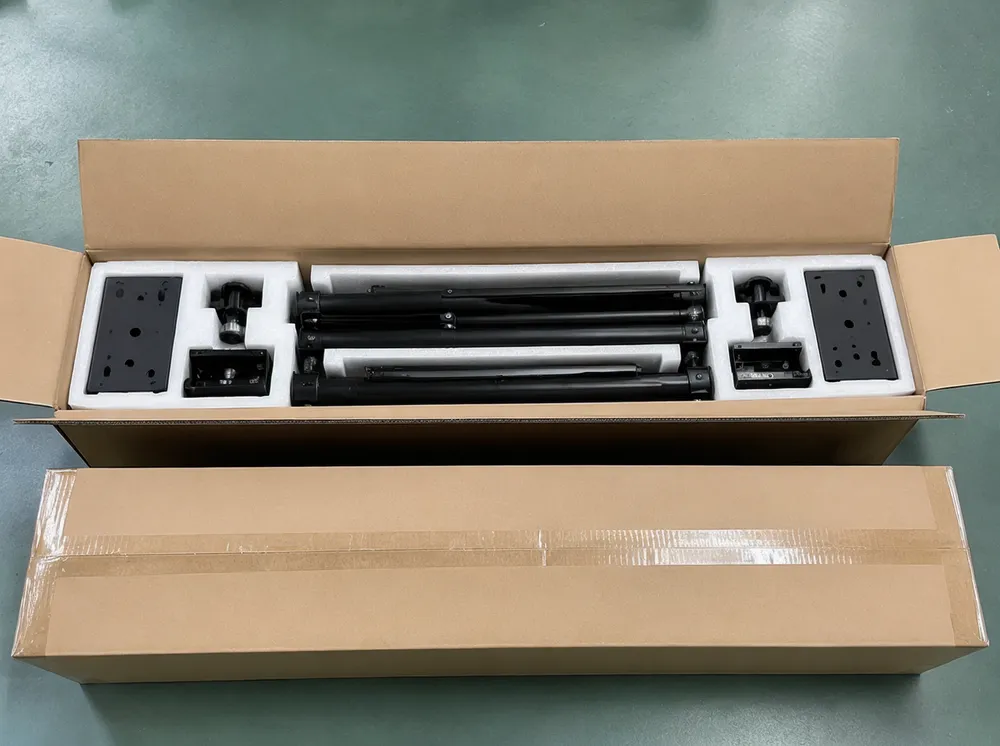
Party DJ lights tripod systems ship in knock-down configuration by default: tripod legs folded, center tube separated from crossbar, light heads detached and nested in foam. This reduces carton volume by 35% versus assembled packing, which directly lowers your per-unit freight cost.
Standard Export Packaging
-
01
Individual unit: molded EPE foam insert in K=K double-wall corrugated carton
-
02
Carton dimensions: 120 × 32 × 32 cm (KD configuration)
-
03
Gross weight per carton: 7.5 kg (2-head) / 9.2 kg (4-head)
-
04
Master carton: 1 unit per carton (product dimensions preclude multi-packing)
Container Loading
| Container | Units Loaded | Loading Method |
|---|---|---|
| 20GP | 180 units | Floor-stacked 3 high, braced with corner boards |
| 40HQ | 380 units | Floor-stacked 3 high, full container utilization |
E-commerce / FBA Packaging Option
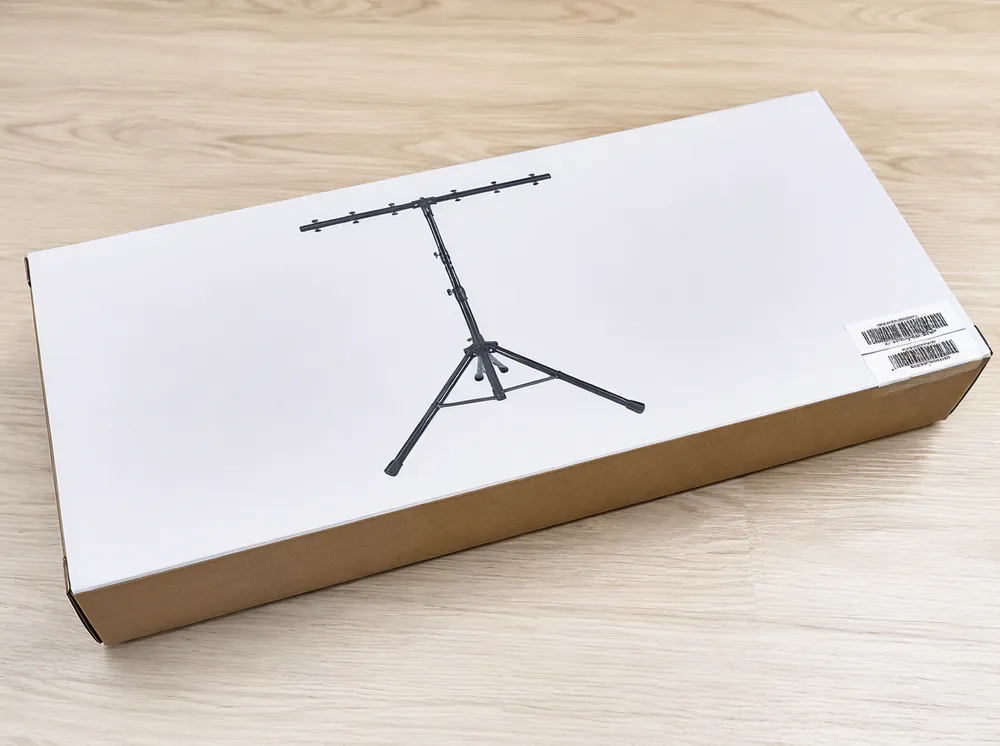
- Frustration-free retail box with product photography
- FBA-compliant labeling pre-applied
- Inner poly bag protection for humidity during sea transit
- Assembly hardware pre-attached to crossbar (reduces unboxing steps, reduces "missing parts" returns)
Note for First-Time Importers
Tripod cartons are long and narrow, which means they don't palletize efficiently on standard 120×100cm pallets. We recommend floor-loading directly into containers without pallets — maximizes unit count and reduces wood packaging treatment requirements for markets that enforce ISPM-15.
Quality Verification — What Happens Before Your Tripod Systems Ship
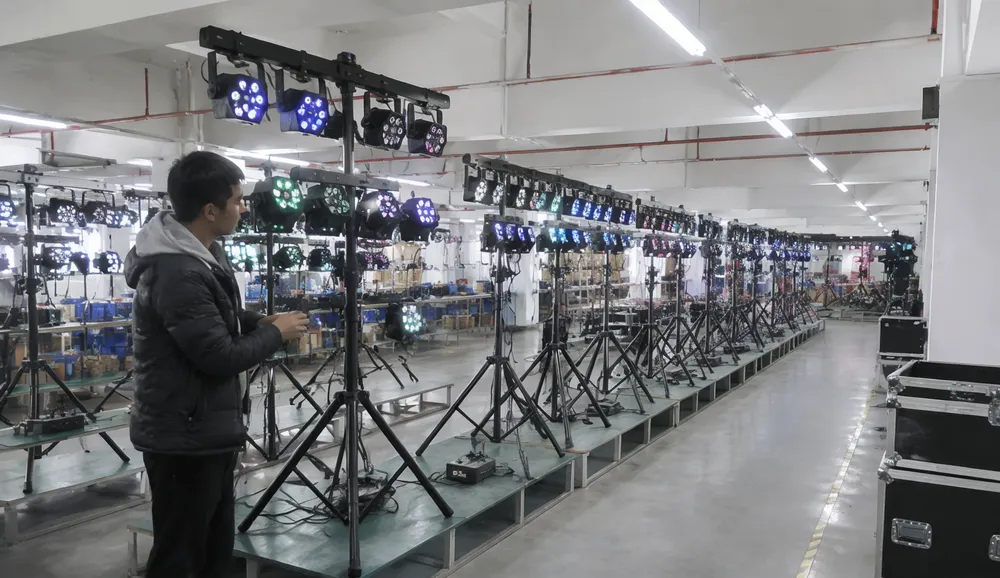
Every party DJ lights tripod unit runs through the same inspection sequence we apply to all fixtures, plus tripod-specific mechanical tests. 100% inspection — not sampling.
LED Fixture Testing
- 48-hour full-load aging on each light head individually
- Color output measured against reference sample using integrating sphere
- DMX response verified on all channels
- Sound-active sensitivity calibrated to fire on 75dB threshold (normal conversation volume — ensures lights respond at actual party noise levels, not just when a speaker sits directly next to the mic)
Tripod Mechanical Testing
- Extension/retraction cycling — 50 cycles per unit, checking locking mechanism engagement force at each height setting
- Static load test at maximum extension: 15 kg, 4-hour hold
- Drop test on packaged unit: 0.8m onto concrete — simulates rough warehouse handling
- Tilt stability test with full light load at maximum height and maximum head angle
Assembled System Verification
- Full system assembled as end user will deploy — tripod extended, heads mounted, powered on in all control modes for 4 hours
- Catches cable routing interference with tilt mechanism
- Identifies heat buildup in multi-head proximity
- Detects RF interference between DMX decoder and sound-active microphone
100% Inspection — Not Sampling
Every unit we ship has been assembled, run, measured, and disassembled for flat-pack boxing. Your warranty claim rate stays near zero because we catch the failures in our factory, not in your customer's venue.
How This Product Differs from Individual Fixtures + Separate Stands
If you're deciding whether to stock tripod systems or sell fixtures and stands separately, here's the commercial comparison:
| Factor | Tripod System (Integrated) | Separate Fixtures + Stand |
|---|---|---|
| SKU Count | 1 SKU | 3–5 SKUs (fixture × stand × clamps × cables) |
| Average Order Value | Higher (bundled pricing) | Lower per-item, but requires cross-sell |
| Customer Support Load | Minimal (guaranteed compatibility) | Higher (compatibility questions, missing parts) |
| Return Rate | Low (complete system, clear expectation) | Higher (wrong clamp, wrong stand height, confusion) |
| Warehouse Complexity | 1 location, 1 pick | Multiple locations, assembly or kitting required |
| E-commerce Conversion | Higher (one "Add to Cart" decision) | Lower (customer must find all components) |
| Margin per Transaction | 40–60% markup typical | 25–35% on commoditized individual components |
| Reorder Cycle | Annual (rental wear) or seasonal (e-commerce demand) | Unpredictable (component-level replacement) |
When Does Each Model Win?
Integrated Tripod System
Wins on unit economics for buyers who sell to mobile DJs, rental companies, and e-commerce end-users. Package-ready market with higher margins and lower support costs.
Separate Components
Makes more sense for professional system integrators who spec custom rigs — a different buyer profile than what this product targets.
Frequently Asked Questions
What tripod height works for typical mobile DJ setups?
Standard 2.1m maximum height places the light heads above standing crowd level at most venues — adequate for rooms with 2.4–3.0m ceilings, which covers 90% of banquet halls, school gyms, and restaurant private rooms. For stage-back applications with higher ceilings, we offer a 2.5m extended variant on OEM orders (100-unit minimum).
The 1.2m minimum collapsed height means the system stores in standard car trunks — important for mobile DJs who transport their own gear.
Can the light heads be used without the tripod?
Yes. Each head has a standard Ø 35mm clamp adapter and 1/4-20 threaded mount point. Your customers can deploy them on the included tripod or remove them for truss-mount, table-clamp, or wall-bracket installation.
This dual-use capability extends the product's application life beyond the tripod — when the stand eventually wears out, the heads remain usable.
What's the failure rate on party DJ lights tripod systems in rental use?
Based on aggregate return data across our distribution partners: less than 1.5% field failure rate within the first 12 months of weekly rental deployment.
The most common failure mode is cosmetic (powder coat scratching on tripod legs, not functional failure). Functional failures concentrate in the locking mechanism and cable strain relief — both areas we've reinforced in the current generation design.
How quickly can I get OEM samples with my branding?
Standard branding (logo + packaging) on existing tripod system models: 7–10 days to sample, shipping from Guangdong. Custom configurations (different head count, LED spec changes, stand color) add 5–7 days for component sourcing and assembly.
Full ODM with new tooling is a separate timeline — typically 30–45 days for first article samples after design approval.
Do the light heads produce enough output for commercial events?
The 4-head system at 60W total produces adequate coverage for rooms up to 150 m². For larger venues or higher brightness requirements, the 8W-per-LED high-output variant doubles lumen output while maintaining the same fixture footprint.
We recommend the high-output variant for buyers serving the event rental segment where brightness complaints directly impact rental reviews and rebooking rates.
Next Step — Sample or Quote
Most buyers evaluating party DJ lights tripod systems follow this path: order 1–2 sample units to evaluate build quality, setup speed, and light output in person. Compare against what you're currently sourcing or what's on your competitor's shelf. If the product fits, move to a branded production order.
We ship samples within 3–7 days on standard configurations. Branded samples (your logo, your packaging) take 7–10 days. No minimum on sample orders.
Tell us your target channel (rental, e-commerce, distribution, hospitality), your preferred configuration (2-head or 4-head, standard or high-output), and any branding requirements. We'll come back with a specification confirmation, FOB pricing, and lead time within 48 hours.
Sample Lead Time
3–7 Days
Standard configs, no minimum
Explore More Party DJ Lights
Portable DJ Lights
Battery-powered, grab-and-go fixtures
Wireless DJ Lights
RF/WiFi controlled, cable-free deployment
Laser Projector Party DJ Lights
High-impact laser effects for events
DMX Party DJ Lights
Professional DMX-512 control integration
Event Stage Lighting
Full-scale stage lighting solutions