

Wireless DJ Lights Cable-Free Fixtures Built for High-Volume Rental and Distribution
Wireless DJ lights engineered for commercial deployment — 2.4GHz frequency-hopping RF control, rechargeable lithium battery packs, and housings that survive rental fleet abuse.
Your event rental customers need fixtures that pair reliably in RF-congested venues, hold charge through a full 10-hour event, and come back undamaged. We build for that reality.
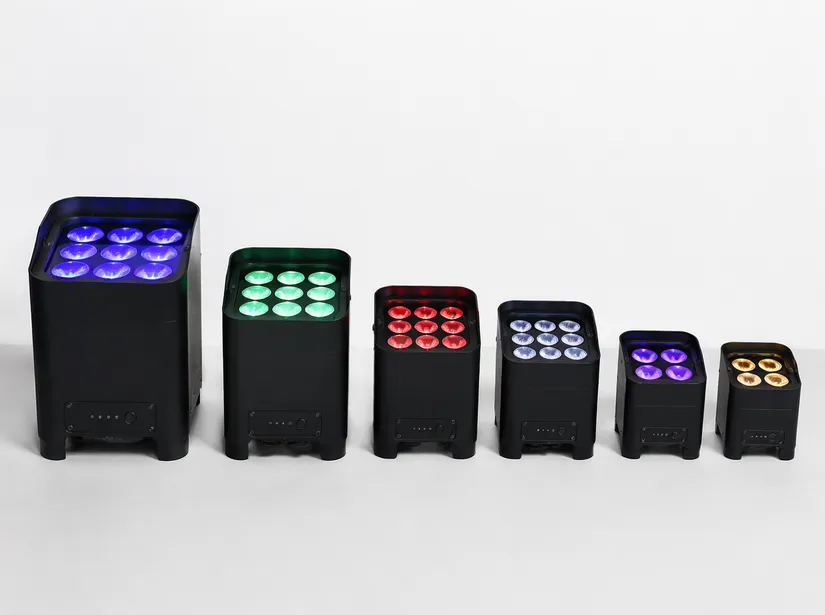
What Wireless DJ Lights Are and Why They Move Volume
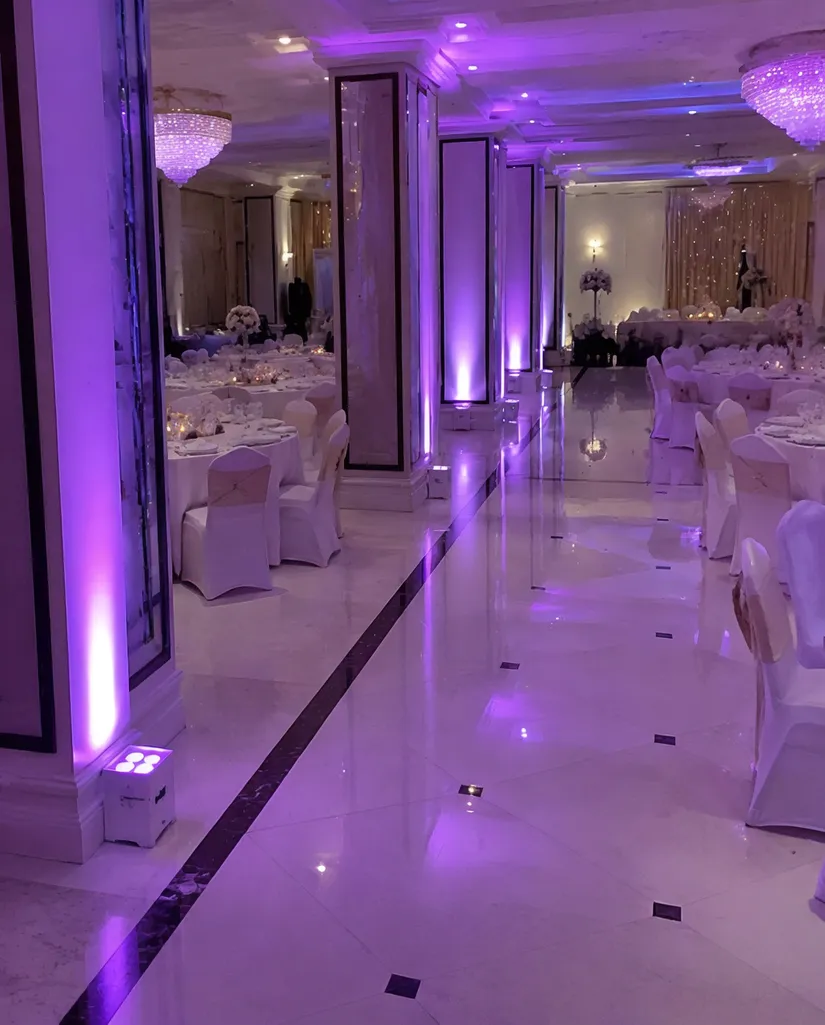
Wireless DJ lights are battery-powered, RF or Bluetooth-controlled LED fixtures that eliminate DMX cable runs between units. You deploy them in venues where hardwired cable management is impractical or impossible — banquet halls with 25 table uplights, outdoor tents with no floor channels, pop-up corporate events in hotel ballrooms where the venue prohibits taping cables to the floor.
The commercial reality: this is the fastest-growing segment in our party DJ lights category. Rental companies reorder wireless units more frequently than any other fixture type because battery degradation creates natural replacement cycles, and end-client demand for cable-free events keeps expanding. If you're a distributor or rental supplier, wireless DJ lights are your repeat-revenue product — assuming the units you source actually hold up.
What separates our wireless DJ lights from the commodity product flooding Alibaba: we build around 2.4GHz frequency-hopping spread spectrum RF (80-channel FHSS protocol), protected 18650 lithium cells with over-discharge cutoff circuits, and reinforced ABS housings with internal shock isolation for the LED board. The parent category page covers our general approach to portable and wireless fixtures — this page goes deeper into the specifics that determine whether your wireless inventory generates margin or warranty claims.
80-Channel FHSS RF
2.4GHz frequency-hopping spread spectrum that doesn't lose connection in RF-congested wedding venues and corporate ballrooms.
Protected 18650 Cells
Over-discharge cutoff circuits protect cell longevity. 500+ full cycles before capacity drops below 80% — extending fleet life and protecting rental economics.
Shock-Isolated Housing
Reinforced ABS with internal rubber shock mounts for the LED board — built for the reality of van loading, stacking, and rental fleet abuse.
Repeat-Revenue Product for Distributors
Battery degradation creates natural replacement cycles. End-client demand for cable-free events keeps expanding. Wireless DJ lights are the category where your rental and distribution customers reorder most frequently — if the units hold up. That's the engineering problem this product line solves.
Technical Specifications for This Product Line
Specifications shown are standard values across our wireless DJ lights range. Individual models vary by LED configuration and battery capacity.
| Parameter | Specification |
|---|---|
| LED Source | 6×18W RGBWA+UV (6-in-1), typical total power 108W |
| Beam Angle | 25° narrow spot / 40° standard wash (lens-dependent) |
| Color Mixing | Full RGBWA+UV, 16.7 million colors, white range 3200K–6500K |
| Wireless Control | 2.4GHz FHSS RF (80-channel frequency hopping), 30–50m range LOS |
| Alternative Control | Bluetooth app, IR remote, DMX-512 (wired input), master/slave, sound-active, auto-run |
| Battery | Rechargeable 18650 lithium pack, 7.4V–22.2V depending on configuration |
| Runtime | 10–20 hours (full RGBWA+UV at 100% ≈ 10h, single-color wash at 50% ≈ 20h) |
| Charge Time | 4–6 hours from empty (intelligent charge management with indicator) |
| Battery Life | 500+ full charge-discharge cycles before capacity drops below 80% |
| Housing | Reinforced ABS with internal rubber shock mounts, available in black or white standard |
| IP Rating | IP44 (splash-resistant — suitable for covered outdoor, tent, and patio deployment) |
| Weight | 2.2–3.8 kg per unit (model-dependent) |
| DMX Channels | 4/6/10 channel modes |
| Certifications | CE, FCC Part 15, RoHS |
| Noise Level | Fanless convection cooling — 0 dB operation |
Need detailed spec sheets on specific models? We'll send you full photometric data, battery discharge curves, and RF pairing documentation.
The RF Control System That Actually Works in Real Venues
This is where wireless DJ lights either earn their price premium or become an expensive headache for your customers. We've seen the failure mode repeatedly from buyers who switch to us after sourcing elsewhere: their previous units worked fine on the bench during evaluation, then dropped commands during live events.
The Single-Channel RF Problem
Put one wireless fixture on a test bench and it responds perfectly. Put 20 in a banquet hall — along with the venue's Wi-Fi routers, the DJ's laptop, wireless microphones, and the client's 200 smartphones — and single-channel units start stepping on each other's transmissions. Missed color changes. Delayed responses. Units falling off the network entirely mid-event.
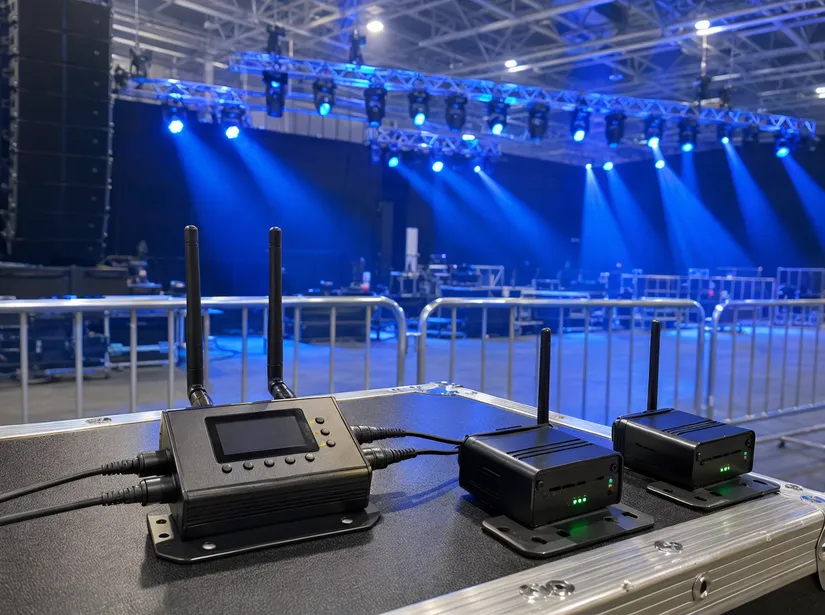
Our wireless DJ lights use 2.4GHz FHSS (frequency-hopping spread spectrum) across 80 channels with automatic collision avoidance. The protocol hops channels every 10ms, so even in a dense RF environment, no two fixtures compete for the same frequency slice at the same moment. We test with 25 simultaneous units operating on the same channel group in our RF chamber — because that's the actual deployment condition for a banquet hall or tent event.
Practical range is 30–50 meters line-of-sight, with solid performance through one interior wall or tent partition. The transmitter pairs up to 512 fixtures (though real-world deployments rarely exceed 50). Pairing is one-button — your rental technician sets up a 20-unit event in under 3 minutes without touching a single DMX cable.
Wired DMX Fallback
We also maintain backward-compatible wired DMX input on every wireless unit. If the RF environment is truly hostile — rare, but we've seen it in venues next to broadcast transmitters — your operators can fall back to cable without needing different inventory.
80
Channels FHSS
10ms
Hop Interval
512
Max Fixtures
30–50m
Range LOS
RF Testing Protocol
- 25 simultaneous units, same channel group
- Dense RF environment simulation (Wi-Fi + wireless mics)
- One-button pairing, 20 units in under 3 minutes
- Through-wall performance verified
Battery Engineering That Protects Your Rental Fleet Economics
Battery-powered fixtures are consumable inventory. The question isn't whether the battery degrades — it's how fast, and what happens when it does. This directly affects your cost of ownership per event.
We build our wireless DJ lights around protected 18650 lithium cells with three dedicated protection circuits per battery pack:
Over-Discharge Protection
Cuts output at 3.0V per cell, preventing deep discharge that permanently reduces capacity. Budget fixtures without this protection let cells drain to 2.5V or lower — at which point the cell loses 30–40% of its lifetime capacity in a single event.
Over-Charge Protection
Limits charge voltage to 4.2V per cell with 50mA taper current cutoff. Prevents the lithium swelling that causes housing deformation and eventual thermal events.
Thermal Cutoff
Disconnects the pack if cell temperature exceeds 65°C during charge or discharge. This is the safety circuit — it prevents the failure mode that makes headlines.
The Result: Lifecycle Performance
500+ full charge-discharge cycles before capacity drops below 80% of rated runtime. At one event per week, that's roughly 10 years of service before your rental technician needs to swap cells. And we design the battery compartment for field replacement — Phillips head screws, removable tray, no soldering required. Your tech swaps a pack in under 5 minutes.
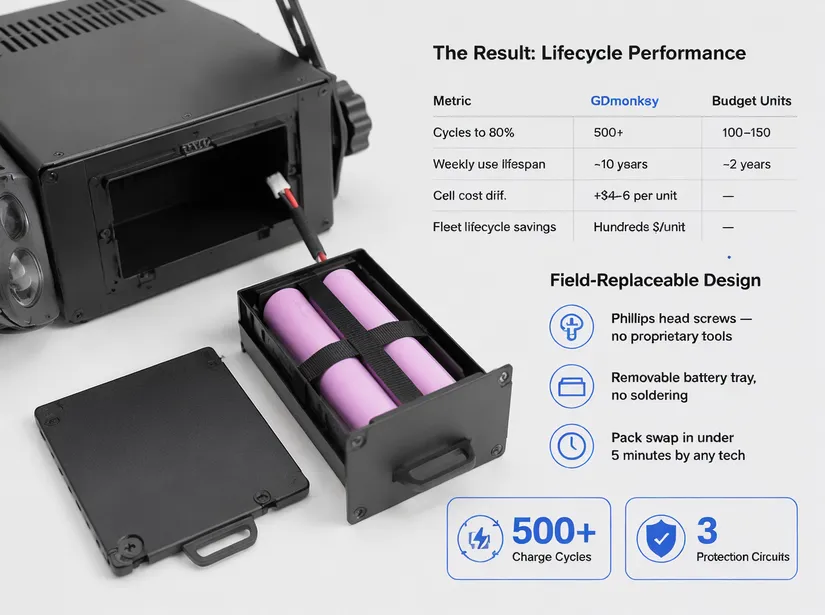
Battery Lifecycle Comparison
Field-Replaceable Design
- Phillips head screws — no proprietary tools
- Removable battery tray, no soldering
- Pack swap in under 5 minutes by any tech
500+
Charge Cycles
3
Protection Circuits
Housing Durability for the Reality of Rental Deployment
Rental units get dropped. They get tossed into road cases without foam inserts. They get stacked, kicked across venue floors during strike, and occasionally left on a table that a guest bumps at 1 AM. This isn't carelessness — it's just what happens when 50 fixtures deploy to 30 events per month across a busy rental operation.
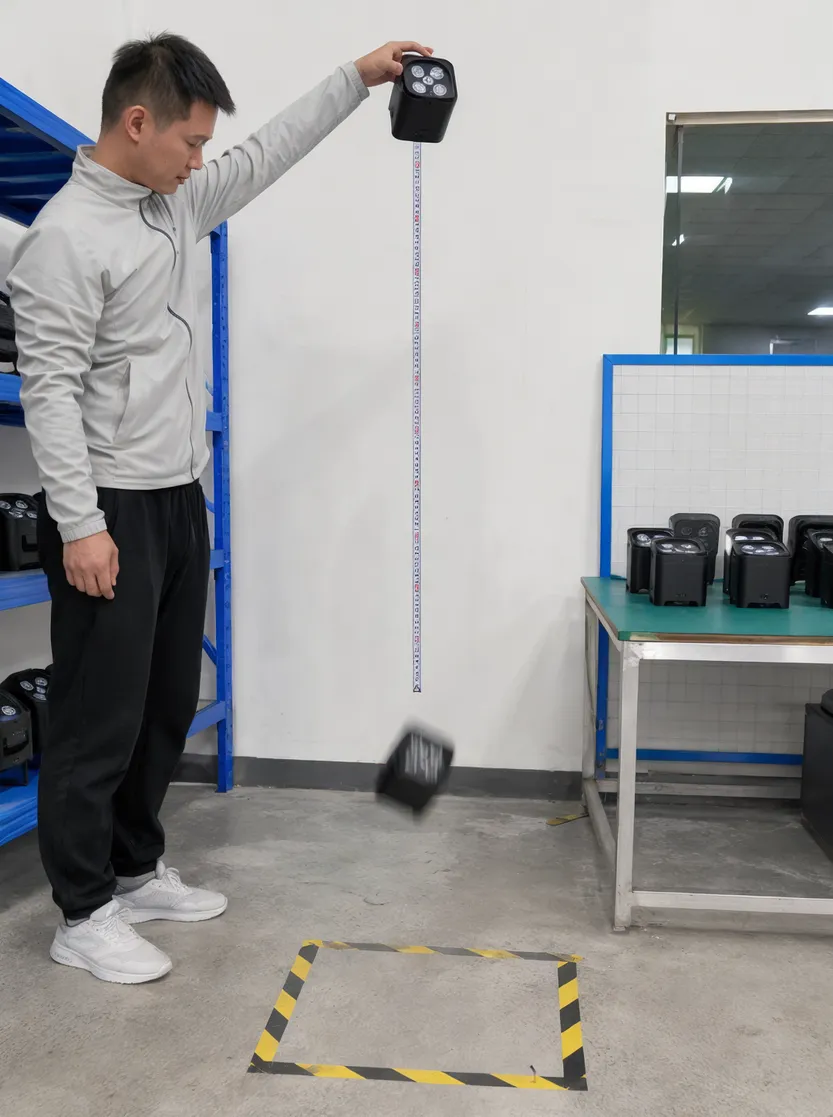
Our wireless DJ lights use reinforced ABS with specific engineering for impact survival:
Internal Rubber Shock Mounts
Isolate the LED board and driver PCB from housing impacts. The housing can flex and absorb a hit without transmitting shock to solder joints and component leads.
Reinforcement Ribs at All Screw Bosses
Screw bosses and mounting points are the stress concentrators where injection-molded ABS typically cracks first. We run drop tests from 1.2m onto concrete during design validation.
Recessed Lens Design
The optical lens sits 3mm below the housing lip, so when the unit lands face-down, the housing takes the impact rather than the optic.
Stackable Base Geometry
Flat bottom with anti-slip pads and cable management channel, so units don't slide off each other during transport.
Housing Color Options
Available in black (standard for stage/event) or white (common for wedding and corporate uplight applications). Custom RAL or Pantone colors are available on runs of 100+ units — we tool our own ABS molds, so color changes don't require third-party coordination.
Market Segments Where Wireless DJ Lights Generate the Strongest Returns
Each segment below represents a commercial channel where wireless DJ lights produce repeatable orders and healthy margins. The fixture type is the same — how you position it, price it, and package it varies by channel.
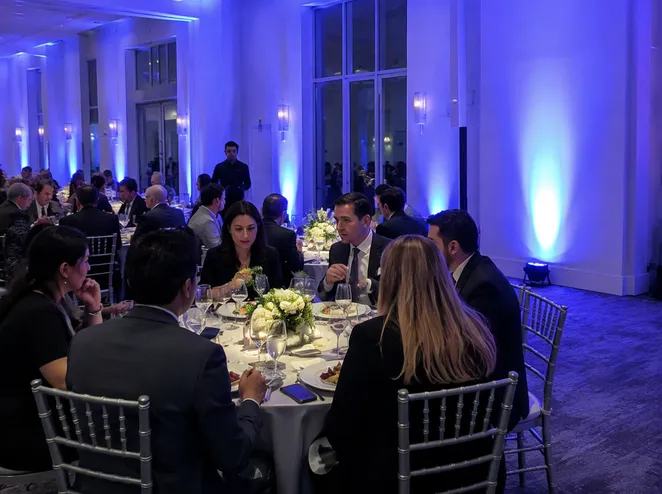
Wedding and Corporate Event Rental
The highest-volume segment for wireless uplights. Event companies deploy 12-30 wireless DJ lights per event as table uplights, wall washes, or ambient color for reception spaces. The cable-free setup is not optional in this channel — couples and corporate clients won't accept visible cables in their event photography.
Typical order pattern: 20-50 units initial purchase, 10-20 unit reorders every 6-12 months as fleet expands or units reach end-of-life.
Margin structure: The end-client sees "wireless uplighting" as a premium service with a $300-800 event surcharge — your per-unit fixture cost amortizes across dozens of events.
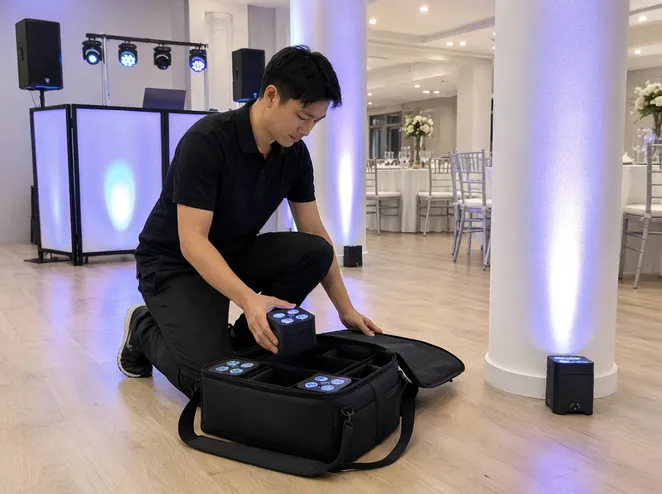
Mobile DJ and Entertainment Operators
DJs buying through your distribution channel typically start with 4-8 wireless units for accent lighting and expand as their booking rate grows. They need units that are grab-and-go — charged, tossed in a bag, deployed in 60 seconds without any configuration beyond pressing the power button.
Sound-active and auto-run modes matter here because most mobile DJs don't carry a lighting controller. The wireless transmitter is an upsell accessory for DJs who eventually want coordinated color scenes across their setup.
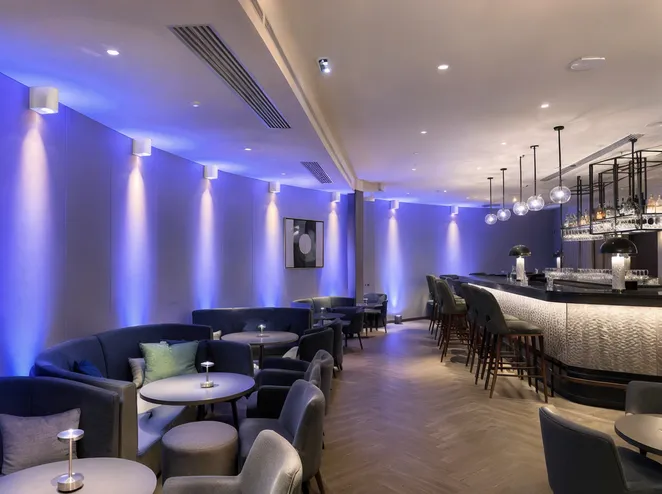
Hospitality and Nightlife Permanent Install
Bars, lounges, restaurants, and small clubs installing wireless DJ lights as permanent ambient fixtures. The wireless capability eliminates retrofit wiring costs in older buildings — your customers avoid the $50-100 per fixture electrician cost for running new cable.
This channel values silent operation (our fanless thermal design), long runtime between charges, and neutral housing colors (white units outsell black 3:1 in hospitality). Reorders come from venue expansions, seasonal refreshes, and multi-location rollouts.
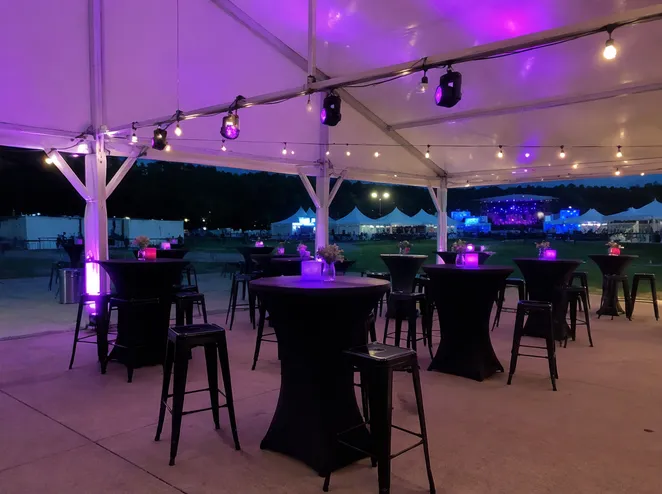
Outdoor Event and Festival Production
Tent events, garden parties, rooftop venues, festival stages without permanent infrastructure. IP44 rating handles splash exposure and condensation. Battery operation eliminates the generator distribution problem for remote setups.
Order volumes per event are large (40-100+ units for a festival zone), and the fixture mortality rate is higher in this channel — outdoor deployment is harder on equipment. That higher attrition rate drives more frequent reorders for buyers serving this market.
Tell us which segment you serve — we'll recommend the exact configuration and packaging for your channel.
Get Channel-Specific RecommendationsOEM and Private Label for Wireless DJ Lights
The wireless DJ lighting market is fragmented with low brand loyalty at the end-user level. Your customers buy based on price, features, and availability — which means your own-brand wireless DJ lights compete immediately without fighting established brand preference.
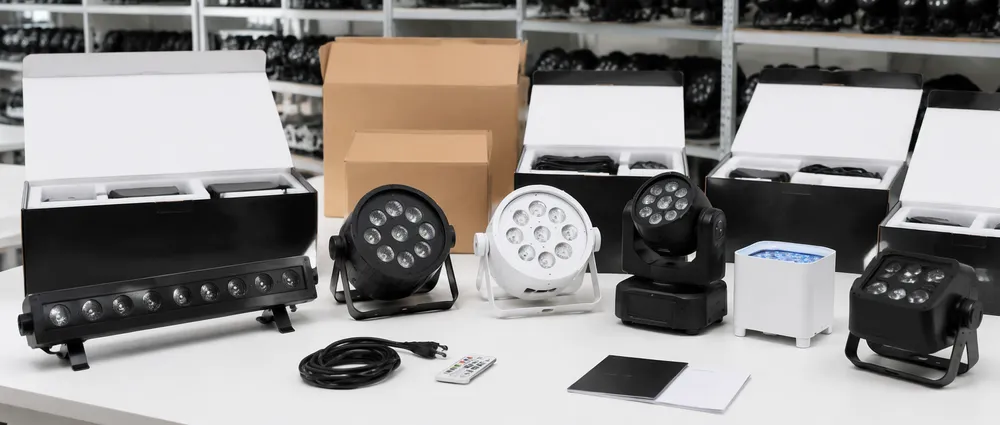
OEM Customization Starting at 30 Units
| Customization Level | MOQ | Typical Lead Time | What's Included |
|---|---|---|---|
| Logo + Packaging | 30 units | 7–10 days | Pad-printed or laser-engraved logo, custom box with your brand design, branded user manual |
| Color Variant | 100 units | 15–20 days | Custom housing color (any RAL reference), matching branded packaging |
| Firmware Customization | 50 units | 10–15 days | Custom boot screen, branded app pairing name, preset programs tailored to your market |
| Full ODM New Product | By project | 3–4 dev cycles | New optical configuration, custom housing tooling, bespoke wireless protocol features |
Your Branding, End-to-End
Your branding, your packaging, your firmware splash screen. Our production line, our QC system, our 48-hour aging test on every unit before it ships with your name on it.
Channel Exclusivity Available
If channel exclusivity matters — say you're developing a wireless uplight specifically for the wedding market and don't want us selling the same configuration to your competitors — ask about our IP protection and non-compete agreements. We've structured these for several buyers already.
Ready to launch your own brand?
Send your branding guidelines or a competitor unit you want matched — engineering reviews feasibility and returns a quote within 48 hours.
How We Build Wireless DJ Lights Differently
The parent category page covers our general production process. Here's what changes specifically for wireless fixtures.
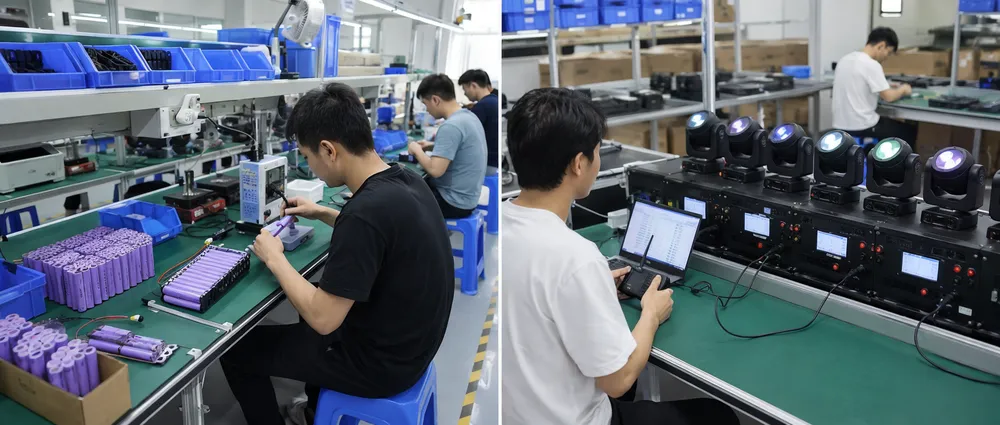
Battery Pack Assembly — Separate Sub-Line
We don't buy pre-assembled battery packs from third-party cell suppliers. Our battery line receives bare 18650 cells, runs incoming inspection (internal resistance matching within ±20mΩ across cells in each pack), spot-welds the nickel strips, installs the protection PCB, and wraps in PVC heat-shrink with integrated temperature fuse.
Why This Matters
Cell matching matters because imbalanced packs develop one weak cell that drags down the entire pack's cycle life.
RF Module Calibration — Per-Unit, Not Per-Batch
Each wireless DJ light gets paired to a test transmitter and verified for command response across all 80 frequency-hop channels. We log the response latency and verify it stays under 15ms.
Fail Protocol
Units that show intermittent response on any channel get flagged for RF module replacement before they reach final assembly.
Thermal Management — Passive-Only Design
We deliberately chose fanless convection cooling for the wireless line. Fans are a reliability liability on battery-powered rental units — they pull dust into the housing, consume battery power, and eventually fail as bearings wear.
Thermal Design
Oversized aluminum core heatsink bonded directly to the LED MCPCB, with convection vents in the housing top. Junction temperature stays below 85°C at full output in 40°C ambient — verified during the 48-hour aging cycle.
Aging Test Protocol — Extra Wireless Checks
Beyond the standard 48-hour burn, our aging test protocol for wireless units adds two extra checks:
-
1
Full charge-discharge cycling — verifies cell balance holds after thermal stress.
-
2
Wireless pairing reliability test — re-pair after aging confirms RF module wasn't affected by sustained thermal load.
Packaging and Logistics — Container Loading Data for Wireless DJ Lights
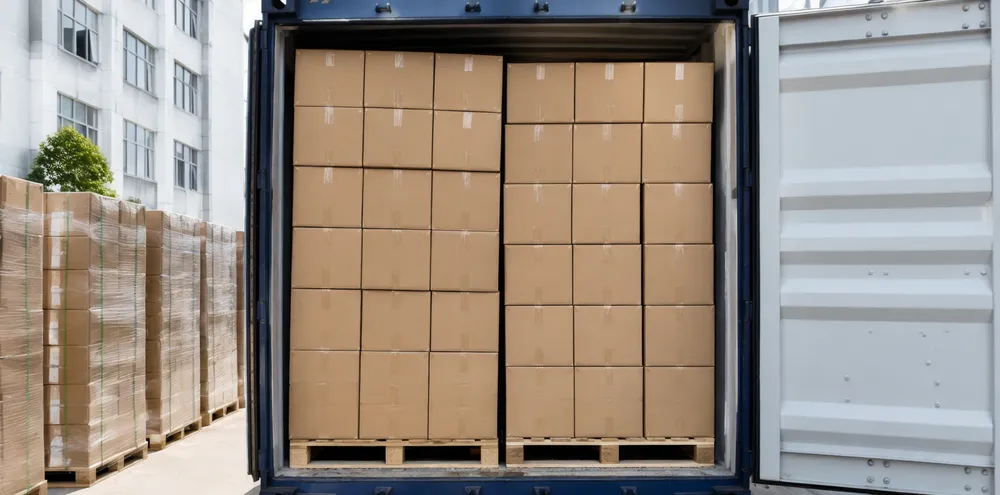
Wireless DJ lights ship in higher unit volumes than most professional fixtures because individual units are compact and relatively lightweight. Your container utilization directly impacts landed cost per unit.
Standard Packaging
Each unit ships in a fitted EPE foam cradle with charger and accessories in a subdivided compartment. Inner box is custom-printed (your branding on OEM orders) or neutral kraft for white-label distribution. Master carton: K=K double-wall corrugated, rated for 5-high pallet stacking.
Container Loading Data
| Configuration | Inner Box (cm) | Units / Master Carton | Cartons / 20GP | Cartons / 40HQ |
|---|---|---|---|---|
| Standard wireless uplight (2.2 kg) | 28 × 22 × 18 | 4 | 1,050 | 2,200 |
| High-output wireless wash (3.8 kg) | 35 × 28 × 22 | 2 | 780 | 1,640 |
| Wireless uplight + transmitter bundle | 40 × 30 × 22 | 4 + 1 transmitter | 880 | 1,850 |
UN38.3 Battery Documentation
Ships with every consignment — lithium battery test reports for air and sea freight are on file. No shipping delays at port due to missing dangerous goods paperwork.
Packing Variations We Handle at the Factory
Amazon FBA-Compliant
Labeling to FNSKU level — one less handling step between our dock and your inventory being live for sale.
Blind Drop-Ship
No factory branding visible. Clean packaging ready for your distribution channel.
Multi-Pack Retail
4-pack, 8-pack with shared transmitter — configured for retail or rental fleet sales.
Custom Foam Inserts
Designed to fit your existing road cases. Drop-in ready for touring and rental inventory.
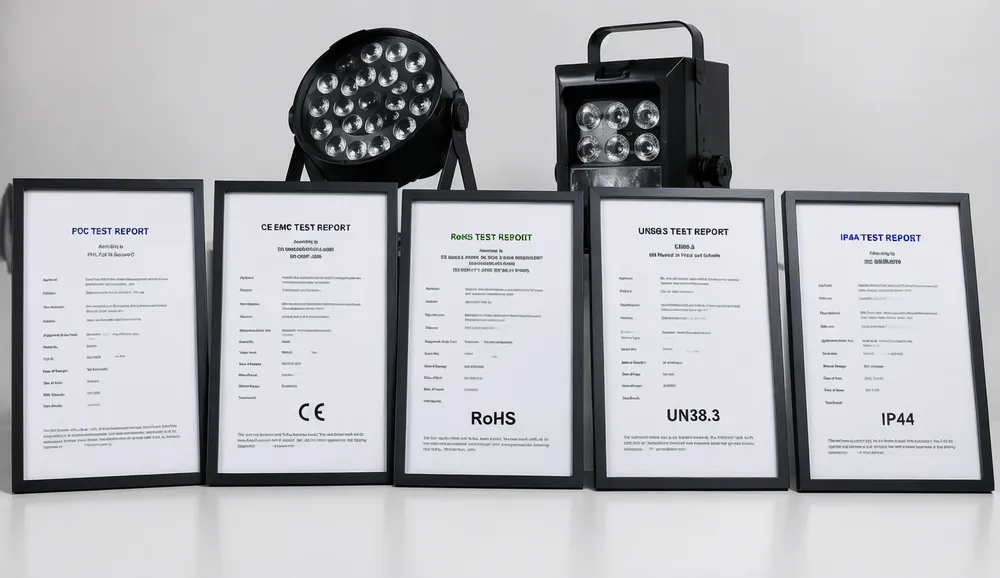
Certifications Pre-Qualified for Your Import Market
Every wireless DJ light ships with documentation ready for customs clearance in major import markets:
FCC Part 15
North AmericaEMC test reports from accredited labs covering both the fixture and the RF transmitter. Intentional radiator approval for the 2.4GHz wireless module.
CE Marking
EuropeFull technical file — EMC per EN 55015, safety per EN 60598, RED (Radio Equipment Directive) compliance for the wireless module.
RoHS
EuropeFull material declarations, lead-free construction throughout.
UN38.3
Global TransportLithium battery transport test certification for air and sea freight.
IP44
Splash ResistanceThird-party tested to IEC 60529, documented for venue and insurance requirements.
Additional Market Certifications
If your market requires additional certifications, we handle the application and testing as part of the OEM project timeline. Built into the development schedule, not a separate scramble after your production run is packed.
Frequently Asked Questions
Technical answers to the questions B2B buyers ask most about wireless DJ lighting fleet deployment, RF reliability, battery service life, and environmental ratings.
How many wireless DJ lights can I control simultaneously from one transmitter?
Our standard transmitter addresses up to 512 individual fixtures across 32 zones (16 fixtures per zone). In practice, most rental deployments run 20–50 units per transmitter. At 50 units, command latency remains under 15ms — no visible lag between fixtures during color transitions. If you need more than 50 for large-scale installations, multiple transmitters can operate on separate channel groups without interference.
Can I mix wireless DJ lights with wired DMX fixtures on the same controller?
Yes. Every wireless unit in our range includes a standard 3-pin DMX input jack. Connect a wireless DMX bridge (we sell these as standalone accessories) between your DMX controller output and the wireless transmitter — it translates DMX-512 commands to our RF protocol. Your operator sees all fixtures, wired and wireless, as standard DMX channels on their console.
What happens when battery reaches end of life — is replacement possible in the field?
The battery compartment uses a screw-access tray design (4× Phillips screws). Your rental technician removes the tray, disconnects the JST power connector, drops in a replacement pack, and reassembles. Under 5 minutes, no soldering, no specialized tools. We supply replacement battery packs as a standalone SKU — most buyers keep 10–20% spare packs in stock relative to their fleet size.
What IP rating do wireless DJ lights need for outdoor tent events?
IP44 covers protection against solid objects over 1mm and water splashing from any direction — sufficient for covered outdoor use where the fixture won't encounter direct rainfall or standing water. Our wireless units carry IP44 as standard. For fully exposed outdoor use (rain, irrigation overspray), you'd need IP54 or higher, which requires a custom housing modification. Talk to our engineering team if your outdoor channel needs higher ingress protection.
Why do cheap wireless DJ lights lose wireless connectivity after a few months?
Two common causes: thermal degradation of the RF module's crystal oscillator (cheap modules use low-grade crystals that drift with repeated heating cycles), and antenna connection fatigue where the internal antenna wire fractures from repeated vibration during transport. We use temperature-compensated crystal oscillators rated for -20°C to +70°C operating range, and our antenna connection is a soldered PCB trace — no wire connector to fatigue. The 48-hour aging test includes thermal cycling that would expose oscillator drift before the unit ships.
What's the real-world difference between 2.4GHz and 900MHz wireless for DJ lighting?
2.4GHz gives you global license-free operation (900MHz allocations vary by country), smaller antenna size (important for compact fixtures), and higher data throughput for fast color changes. The trade-off is shorter penetration through walls compared to 900MHz. For line-of-sight event lighting — which is the primary deployment scenario — 2.4GHz with FHSS is the industry standard. We chose 2.4GHz because your fleet ships globally without regional RF compliance variations on the fixture side.
Start With a Wireless DJ Lights Evaluation Kit
Most buyers new to our wireless range follow this path: request samples, test in a real venue, evaluate build quality, then place a branded production order.
Request Samples
2–4 sample units plus a transmitter. Standard models ship within 3–7 days.
Test In-Venue
Test wireless reliability in a real venue environment under actual operating conditions.
Evaluate Quality
Benchmark build quality against what you're currently sourcing. No minimum on evaluation orders.
Production Order
Place a branded production order. OEM-branded samples allow 7–10 days lead time.
Tell Us About Your Project
Share your target channel (rental, distribution, e-commerce, hospitality install), current wireless fixtures you're benchmarking against, and your annual volume expectation.
We'll come back with a model recommendation, OEM feasibility review, and landed-cost estimate within 48 hours.
Teresa@gdmonkey.com
+86-135 3966 9939