

Stage Lighting Background LED Backdrop Systems Built for Commercial Deployment
Stage lighting background panels engineered and manufactured in-house at GDMonkey's 16,700 m² facility. Full OEM/ODM capability on LED backdrop systems — from pixel pitch selection to custom panel dimensions — with 30-unit minimums so you can pilot a new SKU without container-load commitment.
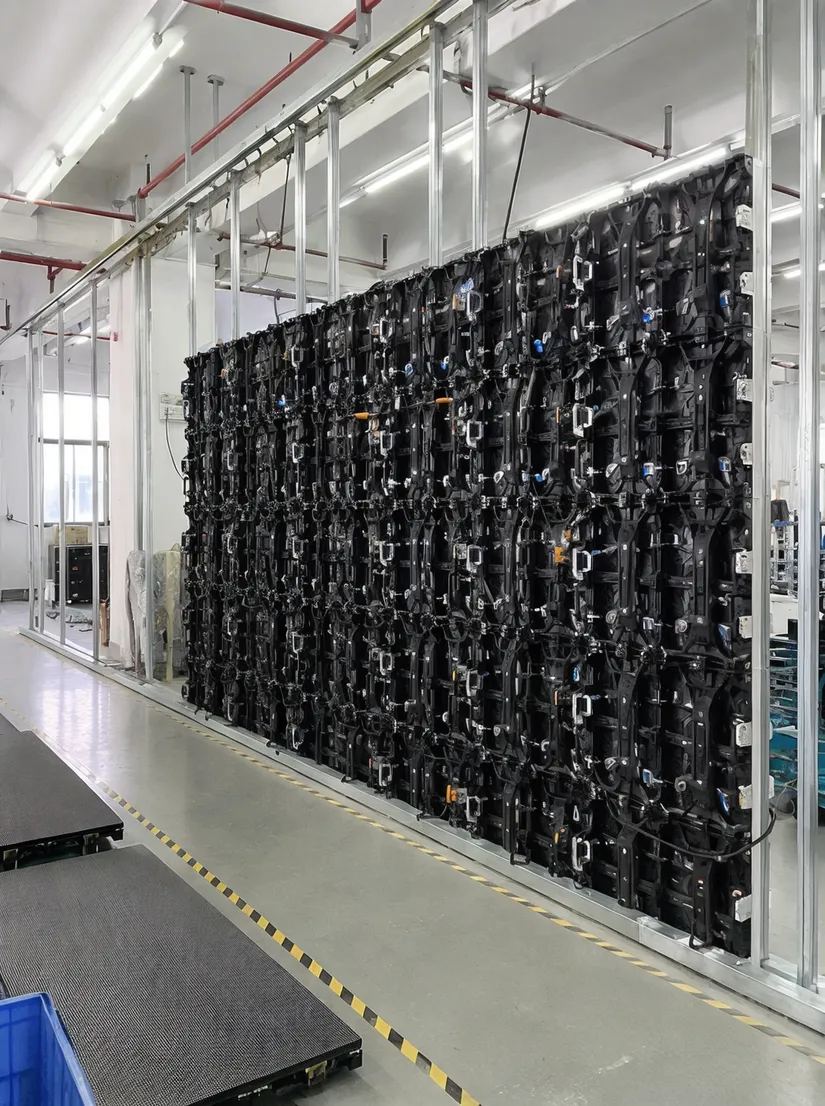
What Stage Lighting Backgrounds Are and Where We Fit
A stage lighting background is the visual surface behind performers — LED pixel panels, curtain-style drapes with integrated lighting nodes, or rigid backdrop modules that produce color washes, patterns, video content, or dynamic effects controlled via DMX or Art-Net. They turn a bare stage wall into a programmable visual environment.
We manufacture these at our Pingyuan County facility in Guangdong Province. Design, PCB layout, LED mounting, aluminum frame fabrication, firmware programming, and final assembly all happen under one roof. When you source stage lighting background panels from GDMonkey, your spec changes go directly to the engineers running the SMT line — no relay through a trading company, no interpretation errors, no extra margin stacked on your landed cost.
Our background in electromechanical assemblies (we started in 2012 with motor-driven entertainment lighting) means we approached backdrop panel design from the thermal and structural side first, not just the LED side. A backdrop panel that looks impressive for 20 minutes but thermal-throttles mid-show is a warranty return. We engineer the heatsink and airflow path before we finalize the pixel layout.
Engineering Sequence That Matters
That sequencing is unusual in this segment — most factories start with the LED board and bolt a heatsink on afterward. We design the thermal management and airflow path first, then finalize pixel layout around proven thermal envelopes. The result is sustained brightness without mid-show throttling.
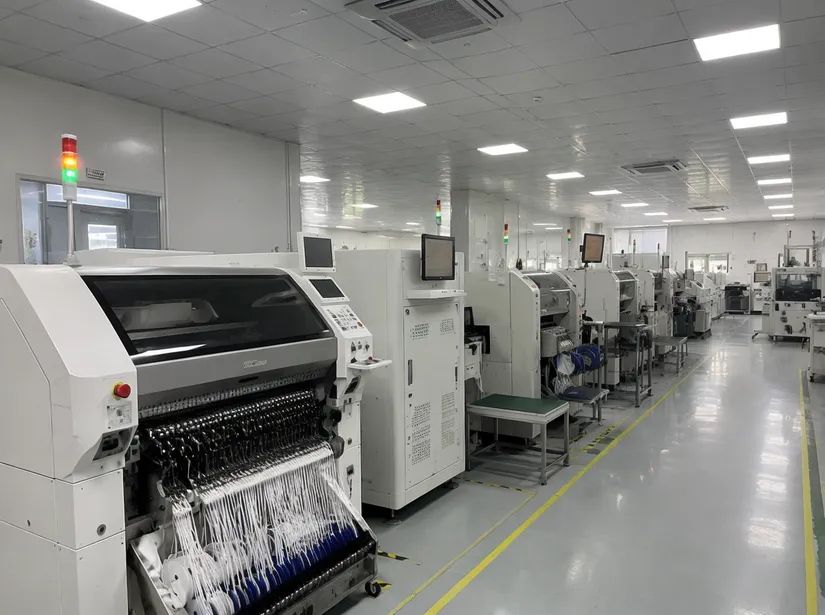
Direct Factory Advantages
- Spec changes reach SMT engineers directly — no trading-company relay
- No extra margin stacked on landed cost
- 16,700 m² integrated facility — PCB to final assembly
- Thermal-first engineering since 2012 electromechanical origins
The Product Line: Stage Lighting Backdrop Panels
Your product mix decisions start here. Our stage lighting background catalog covers modular LED backdrop systems designed for concert touring, permanent install in houses of worship, rental inventory, and corporate AV deployments.
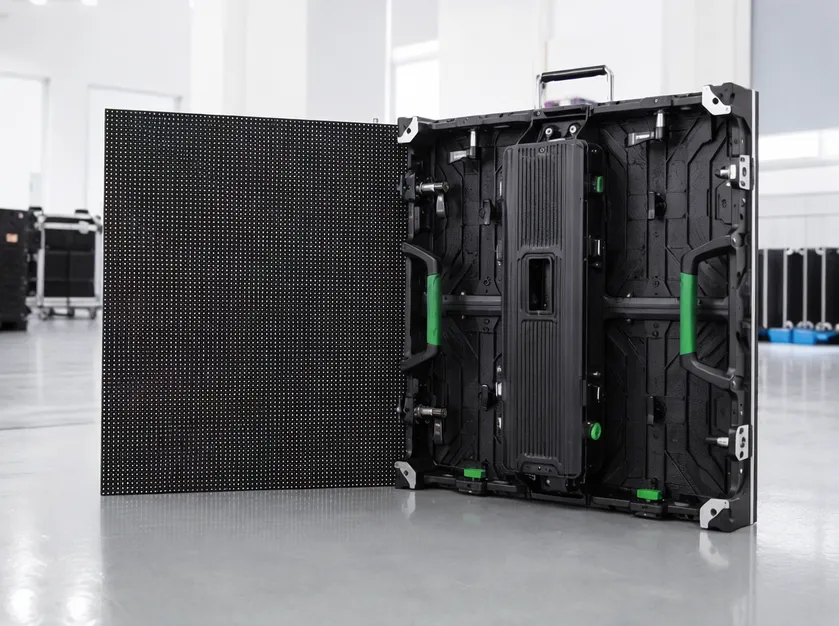
Stage Lighting Backdrop Panels
Modular LED backdrop systems available in multiple pixel pitch configurations, panel dimensions, and IP ratings depending on whether you need indoor theater use or outdoor festival durability. Die-cast aluminum frame construction with front/rear serviceability.
Key Commercial Parameters Across the Range
| Parameter | Range |
|---|---|
| Pixel Pitch | 3.9mm – 50mm (application-dependent) |
| Panel Construction | Die-cast aluminum frame, front/rear serviceable |
| Brightness | 1,200 – 5,500 nits (indoor to outdoor) |
| Refresh Rate | 1,920 Hz – 3,840 Hz |
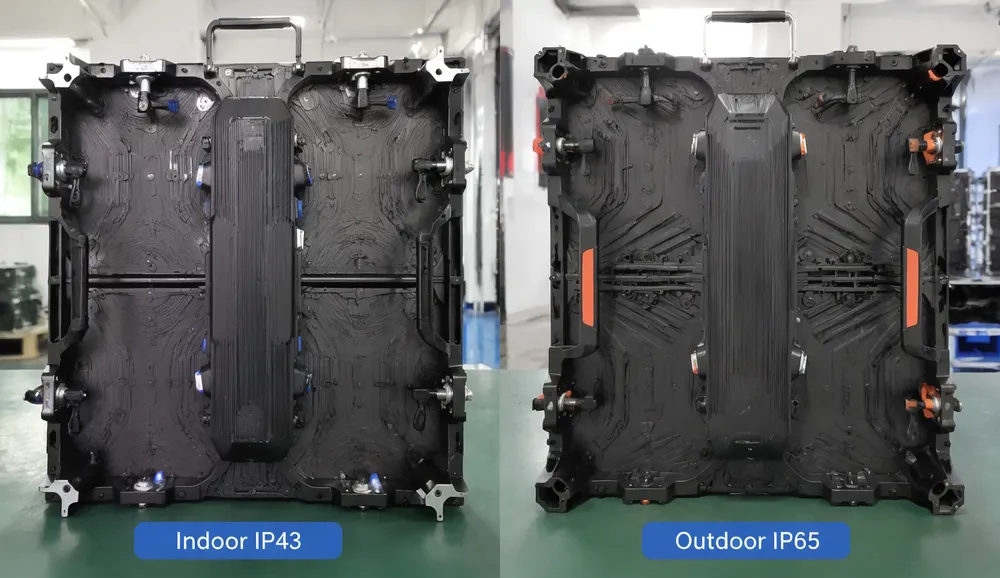
| IP Rating | IP43 (indoor) / IP65 (outdoor-rated models) |
| Control Protocol | DMX512, Art-Net, sACN |
| Power | 110-240V AC, auto-sensing |
| Viewing Angle | 140° horizontal / 140° vertical |
| Panel Weight | 5.8 – 9.2 kg per module (size-dependent) |
Concert Stage Lighting Background — Inventory Simplification
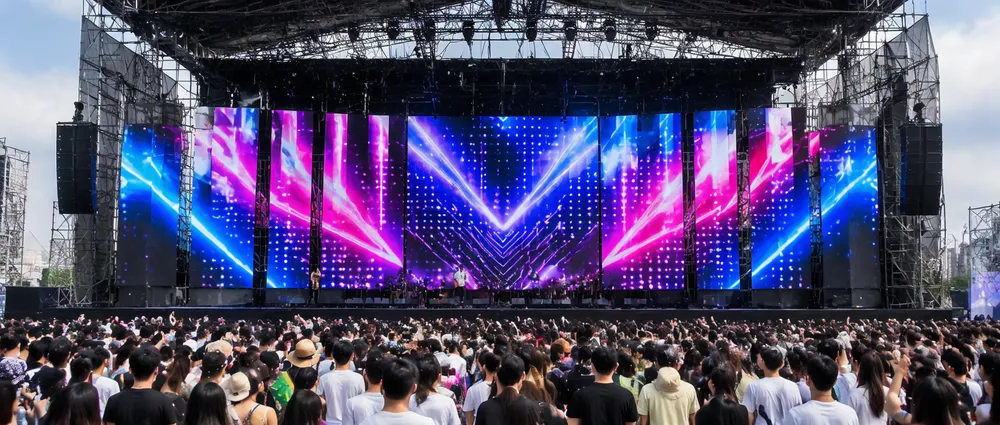
For your concert stage lighting background applications specifically, our outdoor-rated modules at IP65 with 5,500-nit brightness hold visibility under direct sunlight and survive rain exposure — you can stock one SKU that works both indoor arena tours and outdoor festival stages. That simplifies your rental inventory and reduces the number of product lines you need to warehouse, insure, and maintain.
How We Build Backdrop Panels — Production That Affects Your Margin
Manufacturing quality directly determines your warranty claim rate, your reorder frequency, and whether your rental clients bring panels back damaged after one show or run them for 3,000+ hours without issues.
LED Chip Mounting
Our automated SMT lines place LED chips at ±0.05mm accuracy. On a backdrop panel with thousands of pixels, placement drift creates visible brightness inconsistency — individual pixels that appear brighter or dimmer than their neighbors. Automated placement eliminates this.
Your rental clients see a uniform wash, not a panel with "hot spots."
Why we rejected manual mounting: In 2018 a batch of 500 panels showed 2.3% pixel variance under close viewing — unacceptable for concert stage lighting background applications where cameras are 10 meters away. Automated placement has been standard on all backdrop panel production since.
Die-Cast Aluminum Frames
Panel frames are die-cast in-house rather than welded from extruded profiles. Die-casting produces tighter dimensional tolerances on mating surfaces — your crew locks panels together without fighting alignment gaps during setup.
Commercial impact: Faster rigging means lower labor cost per show for your rental operation. Crews that can build a 6×4m wall in 20 minutes instead of 40 minutes free up budget and reduce overtime on festival changeovers.
Thermal Architecture
Each panel module runs a finned aluminum heatsink sized to the total LED thermal load at sustained full-white output. We validate junction temperatures stay below 85°C during our 48-hour aging test.
Why this matters commercially: Thermal throttling (automatic brightness reduction when panels overheat) is the number-one complaint rental companies hear from their end clients. Properly sized thermal management eliminates that failure mode from your service calls.
Conformal Coating on Driver PCBs
All control and power boards receive conformal coating before assembly into the panel frame. This is the difference between an IP65 rating that holds up on a rainy festival stage and one that fails after three humid deployments.
Your outdoor rental inventory stays operational season after season — no board corrosion, no intermittent driver failures mid-show.
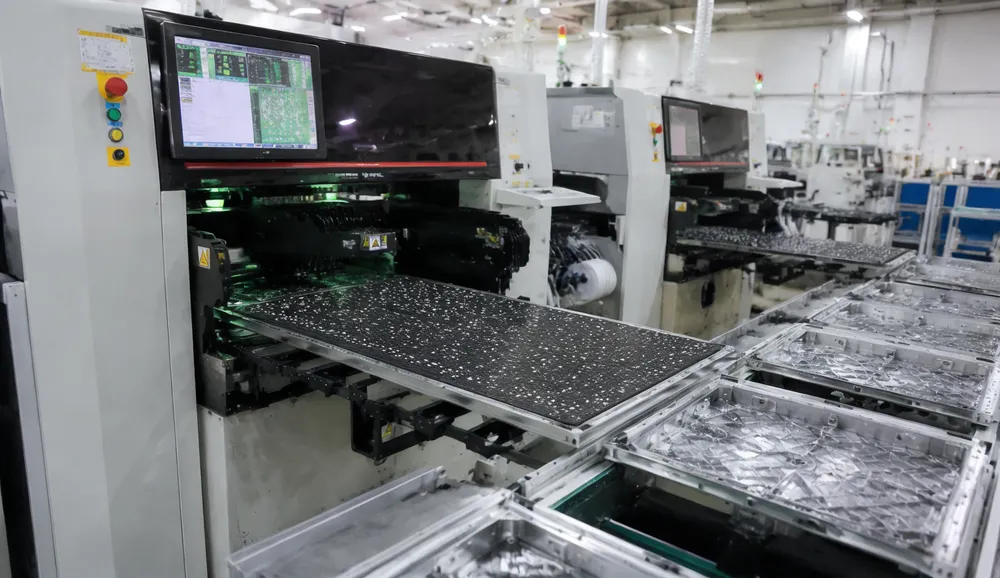
Concert Stage Lighting Background — Your Highest-Volume Market Segment
Concert touring and festival production is where stage lighting background panels generate the most revenue for distributors and rental houses. Here's how the commercial dynamics work for you.
Touring Inventory Model
A mid-size touring production carries 80–200 backdrop panel modules. Rental companies typically own 2–3 complete sets to cover overlapping tour schedules.
Reorders replace road-damaged modules and expand inventory for new clients.
Festival Season Demand
Outdoor music festivals drive seasonal ordering peaks (Q1–Q2 for Northern Hemisphere buyers). IP65-rated panels at 5,500 nits dominate this segment.
Stocking outdoor-rated modules positions you to capture festival rental contracts without scrambling for inventory when the season hits.
Corporate AV Crossover
The same backdrop panels used for concert touring increasingly show up in corporate events, product launches, and broadcast studios.
This crossover means your rental inventory utilization stays high year-round — concert season feeds into corporate event season without dead stock periods.
House of Worship Permanent Install
Churches and megachurch campuses install 40–120 panels as permanent stage backgrounds. This segment orders once, then reorders for campus expansions or upgrades on 5–7 year cycles.
Lower volume per order, but high-margin because installation projects bill labor separately.
Growth note: The worship segment has grown steadily for us — about 25% of our backdrop panel output now ships to AV integrators serving church projects. Worth building into your product line if you're targeting that vertical.
IP Rating and Lumen Selection — Matching Panels to Your Target Market
Choosing the wrong spec wastes your capital. Here's the decision logic:
Indoor-Only Inventory
Suitable for theaters, houses of worship, corporate ballrooms, broadcast studios. Lower cost per panel, lighter weight for easier rigging.
If 90% of your rental business is indoor venues, this spec covers you without paying the premium for outdoor sealing.
Outdoor-Capable Inventory
Required for festivals, outdoor concerts, architectural projection, and any venue without climate control. The higher brightness fights ambient sunlight; the IP65 sealing protects against rain, fog machines, and high-humidity environments.
Costs more per panel, weighs more, but commands higher rental rates.
Pixel Pitch Selection
Close Viewing Distance
Indoor theater, broadcast, corporate presentations where cameras are 3–5m away.
Highest cost per square meter, sharpest image.
Mid-Range Viewing
Concert stages where audience is 10–30m away.
Best price-to-visual-impact ratio for most rental applications.
Long-Distance Viewing
Outdoor festivals, building facades, stadium perimeter.
Lowest cost per square meter, maximum brightness per watt.
Recommended Starting Point
Most rental companies starting with stage lighting backgrounds begin with a 9mm or 12mm pitch at IP65 — it covers 70% of concert and event applications without requiring separate indoor and outdoor inventories. You can add finer-pitch indoor panels later when your corporate AV contracts justify the investment.
What Fails in This Product Category — and How We Prevent It
Stage lighting backdrop panels have specific failure modes that cost rental companies money. We engineer against each one:
Pixel Failure
Dead or Stuck LEDs
The problem: The most visible quality problem. A single dead pixel on a 4K backdrop is noticeable on camera.
Our prevention:
Incoming LED chip binning rejects batches with forward-voltage deviation over 3%, and 48-hour aging at full white output catches infant-mortality LED failures before panels ship.
Your field pixel failure rate stays below 0.01% after burn-in.
Connector & Latch Failure
Mechanical Degradation
The problem: Panels connect to each other mechanically and electrically dozens of times per tour. Cheap connectors degrade after 50–100 mate cycles.
Our prevention:
We use aviation-grade connectors rated for 5,000+ cycles and CNC-machined aluminum latches with hardened steel pins.
Your crew doesn't fight with stuck latches at 2 AM during load-in, and signal connections don't intermittently drop mid-show.
Water Ingress on "IP65" Panels
Seal Degradation
The problem: Some manufacturers claim IP65 but use silicone gaskets that compress permanently after thermal cycling. Six months of outdoor use and the seal fails.
Our prevention:
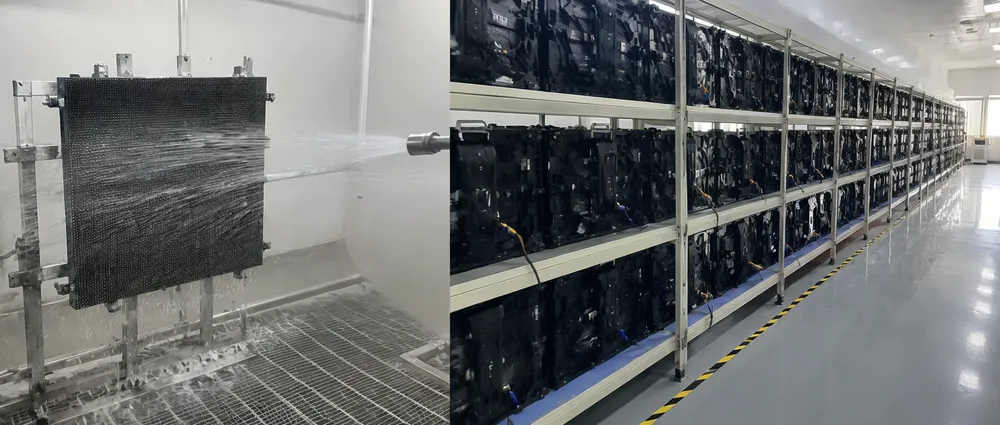
We use EPDM rubber gaskets with compression memory rated for -20°C to +60°C, and every panel undergoes a jet-spray test (not just a drip test) before leaving our facility.
Your outdoor panels survive their second festival season, not just their first.
Color Shift Across Panel Batches
Batch Inconsistency
The problem: If you order 200 panels today and 50 replacement panels in six months, color temperature mismatch between batches is immediately visible on stage.
Our prevention:
We bin LEDs from the same supplier lot for each production run, and we archive binning data so reorders can be matched to your original batch.
Your wall of panels looks uniform whether it's 200 originals or a patchwork of three different order dates.
"Color matching across batches is probably the single biggest complaint we hear from rental companies switching to us from other suppliers. It's a problem you don't notice until panels are rigged next to each other at a show — by then it's too late to fix."
OEM/ODM Capability on Backdrop Panel Systems
Your brand, your spec, our production floor. Here's what custom development looks like for stage lighting background panels:
Simple OEM
Existing panel, your brand
We apply your logo to the panel frame, flash your firmware splash screen, print your packaging and documentation. Panel specs remain standard.
- Sample in 7–10 days
- MOQ 30 units
This is how most distributors start — test market response before investing in custom tooling.
Modified OEM
Adjusted specs on existing platform
Custom pixel pitch, brightness level, panel dimensions, connector type, or control protocol on our existing panel architecture.
- Engineering review 3–5 days
- Sample production 15–20 days
- MOQ 50 units
No new tooling cost if the modification stays within our existing frame dimensions.
Full ODM
Ground-up development
Entirely new panel design to your brief — custom frame geometry, proprietary pixel layout, integrated mounting system, new control interface.
- Full development cycle 3–4 iterations
- Tooling investment required for custom die-cast frames
- MOQ typically 200+ units (negotiable based on tooling amortization)
Concept to production-ready sample across full development cycle.
In-House Engineering Scope
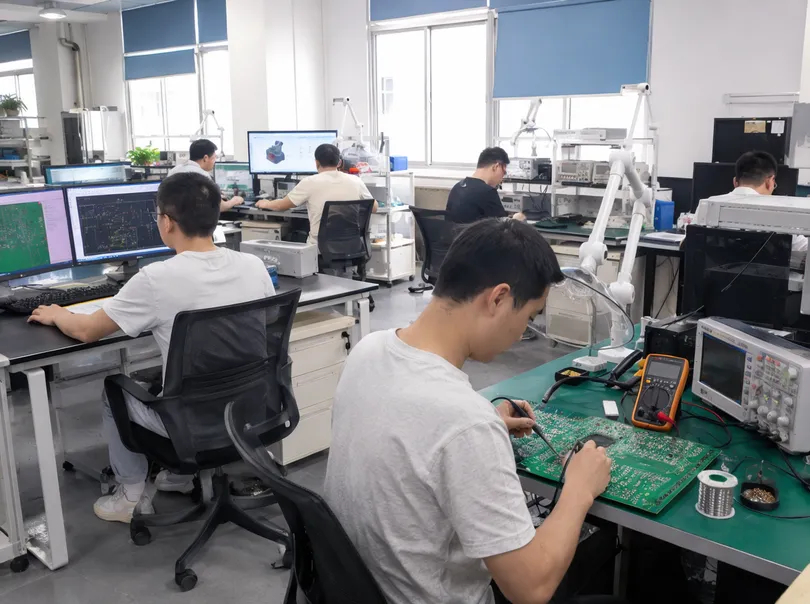
15 optical and electrical engineers handle the full development scope in-house. Your IP stays in one building — we don't outsource PCB layout or firmware development to third parties.
Shipping Backdrop Panels Without Damage — Container Loading and Packaging
Backdrop panels are simultaneously expensive and fragile — the LED face scratches easily, corner impacts crack pixels, and stacking pressure warps thin frames. Our packaging engineering addresses each risk.
Individual Panel Protection
- Each module ships in a molded EPE foam cradle with LED-face-down orientation (foam contacts the aluminum frame, not the pixel surface)
- Corner protectors absorb impact
- Inner carton is double-wall corrugated rated for 3x stacking
Master Carton Configuration
- 4 panels per master carton in vertical orientation
- Master carton weight stays under 45 kg for manual handling at your warehouse
- Strap reinforcement on all master cartons for forklift pallet handling
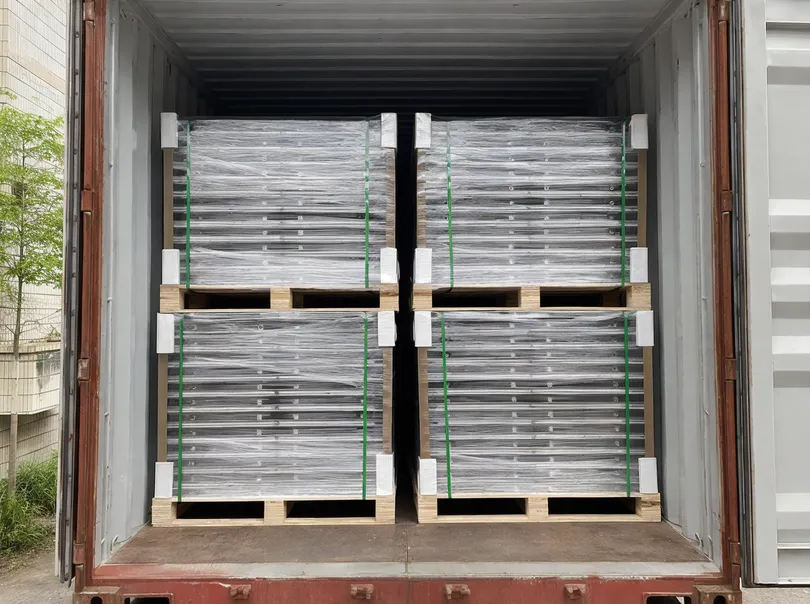
Container Loading Efficiency
| Container | Panel Modules (approx.) | Notes |
|---|---|---|
| 20' GP | 280–320 modules | Palletized, 2-tier stacking |
| 40' HQ | 600–680 modules | Palletized, 2-tier stacking, dunnage layer between tiers |
Breakage Rate
Across all shipments in the past 12 months
When breakage occurs, it's almost always port handling damage on non-palletized shipments — we strongly recommend full palletization for sea freight.
Air Freight for Urgent Replacements
If you're air-freighting urgent replacements for a tour, we can pack individual panels in ATA-style flight case foam inserts at a per-panel surcharge. Most buyers use this only for sample shipments and rush replacements, not production orders.
Your Landed Cost Calculation
At 600 panels per 40' HQ, the per-unit freight component is minimal. Palletized sea freight keeps your total landed cost 15–20% below what you'd pay sourcing through a trading company adding their own margin layer.
Compliance and Documentation for Your Import Market
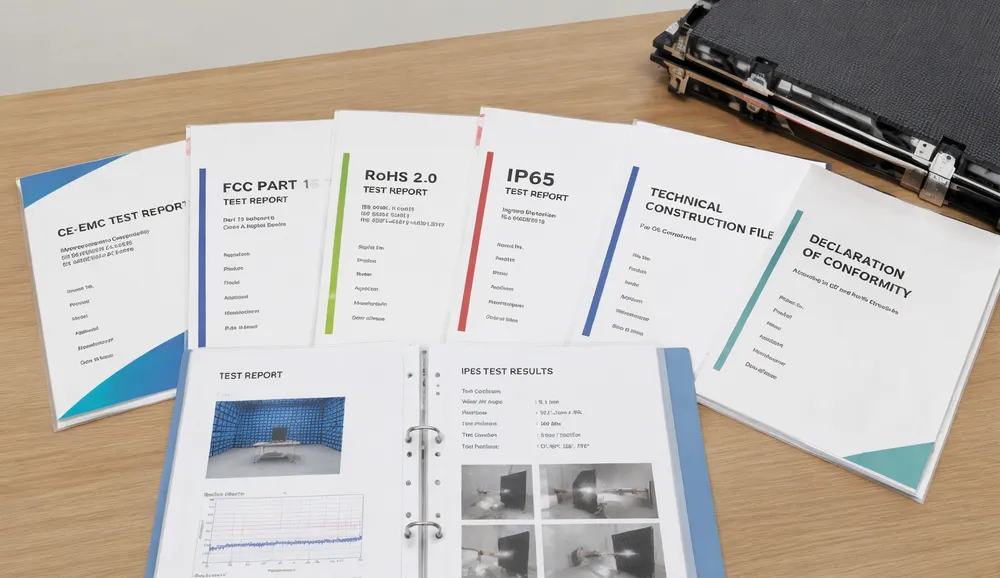
Every backdrop panel ships with documentation matching your destination market requirements. No post-production certification scramble — documentation ships with the goods.
CE + EMC Test Reports
Full compliance for EU import. Covers electromagnetic emissions (EN 55032) and immunity (EN 55035). Complete technical file ready for your EU importer of record.
FCC Part 15
Documentation package for US market entry. Class A digital device certification included with every shipment destined for North American distribution.
RoHS 2.0 Declaration
Lead-free solder, halogen-free PCB substrates, full restricted-substance compliance for EU and increasingly for Middle East markets.
IP65 Test Certification
Third-party verified ingress protection rating on outdoor models. Includes specific test parameters — water jet angle, duration, and pressure documented.
ISO 9001:2015
Quality management system certification covering our entire production process from incoming material inspection through final shipment.
UKCA (Post-Brexit UK)
For European buyers requiring UKCA marking, we provide the technical file and declaration of conformity for your UK importer of record to complete UKCA marking.
All Documentation Available Digitally
All test reports and certificates available in digital format for your customs broker. Documentation ships with the goods — no post-production certification scramble.
Frequently Asked Questions
What pixel pitch should I stock for concert stage lighting background rental?
9–12mm pitch covers approximately 70% of concert touring applications. At typical viewing distances of 10–30 meters, 9mm delivers sharp imagery without the cost premium of fine-pitch panels.
If your clients include broadcast productions with close-up camera work (3–5m from the backdrop), add a smaller inventory of 3.9–6mm panels for those specific contracts.
Start with 9mm as your workhorse — it's the fastest ROI path for rental inventory.
How do I prevent color mismatch when reordering backdrop panels six months later?
Color mismatch happens when LED chips from different production batches carry different color temperature bins. We archive the LED binning data from your original order and match subsequent orders to the same bin specification.
Provide your original order number when placing a reorder, and we pull the batch records. If the exact bin is unavailable (LED suppliers rotate stock), we'll inform you of the deviation before production so you can decide whether to accept or wait for a matching batch.
What IP rating do I actually need for outdoor concert backdrop panels?
IP65 minimum. IP65 means full protection against dust ingress and water jets from any direction — covers rain, fog machine output, and stage wash water from crew cleaning.
IP43 (indoor-rated) panels will survive light condensation but not direct rain exposure. If you're renting panels for outdoor festivals, anything below IP65 is a liability. One rainstorm kills panels and kills your client relationship.
The cost difference between IP43 and IP65 is typically 15–20% per panel — that premium pays for itself the first time your panels survive weather that would have destroyed indoor-rated units.
What's the minimum order for OEM-branded backdrop panels?
Your logo + branding on standard panel
Custom specs on existing platform
Tooling investment amortization
All OEM orders include your branded packaging, user manual, and firmware splash screen at no additional cost beyond the unit price.
Why do some LED backdrop panels lose brightness after 6 months of use?
Thermal management. LED chips degrade faster when junction temperatures run consistently above 90°C. Panels with undersized heatsinks or blocked airflow paths push LEDs beyond their rated thermal envelope during sustained full-output operation — exactly how concert backdrops run (full white for hours).
We size our heatsink geometry to maintain junction temperatures below 85°C at sustained 100% output, validated during 48-hour aging.
The result: our panels maintain >90% of original brightness at 30,000 hours — your rental inventory holds visual consistency across its commercial lifespan without requiring early replacement.
How many backdrop panel modules fit in a 40-foot container?
600–680 modules in a 40' High Cube container, palletized with two-tier stacking and dunnage separation between tiers. Exact quantity depends on panel dimensions and your palletization preference.
We provide a loading plan with your order confirmation showing exact pallet arrangement, weight distribution, and container utilization percentage.
For mixed shipments (backdrop panels plus other fixture types), we'll optimize the loading plan to maximize your container utilization.
Start With a Pilot Order or a Technical Conversation
If you're evaluating stage lighting background suppliers, two paths make sense depending on where you are in the process.
Already Have Specs
Send us your pixel pitch, panel size, quantity, and IP requirements. We'll quote within 48 hours with a full specification confirmation, lead time, and packaging plan.
Still Defining Your Product Line
Tell us your target market — touring rental, permanent install, corporate AV, or a mix — and your volume expectations. We'll recommend a panel configuration based on what's moving for our existing distributors in your region.
We can ship 2–4 sample panels for you to evaluate before committing to production quantity.