

Stage Lighting Design From Fixture Engineering to Venue-Ready Systems
We don't just sell fixtures — we engineer lighting systems matched to your venue type, throw distance, and power budget, then produce them under one roof.
manufacturing
electrical engineers
30+ countries
annual output
What Stage Lighting Design Actually Means When You're Buying Fixtures
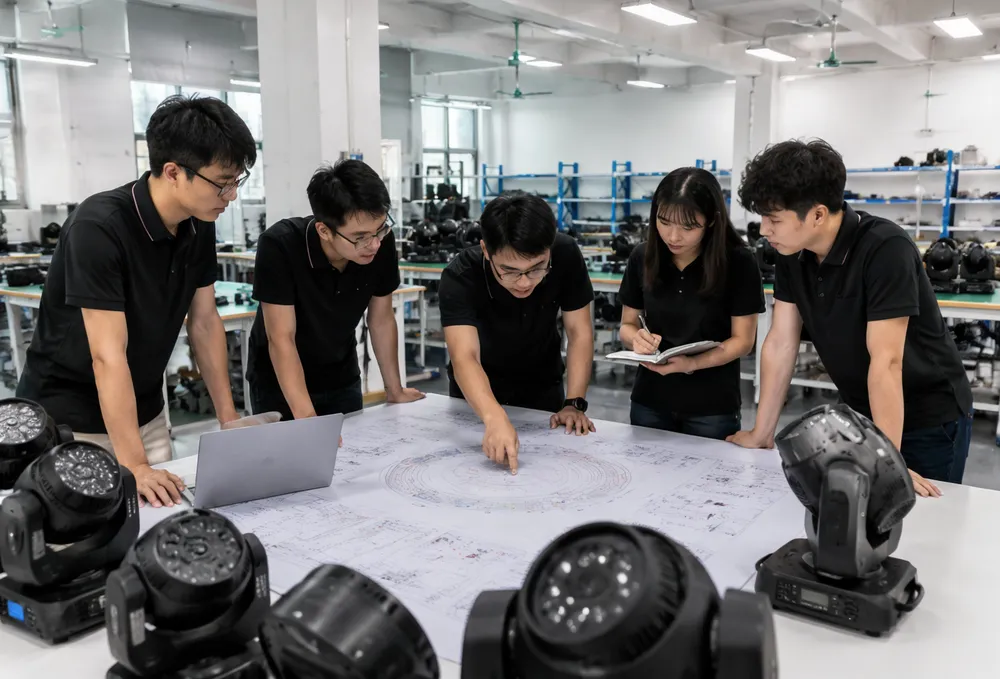
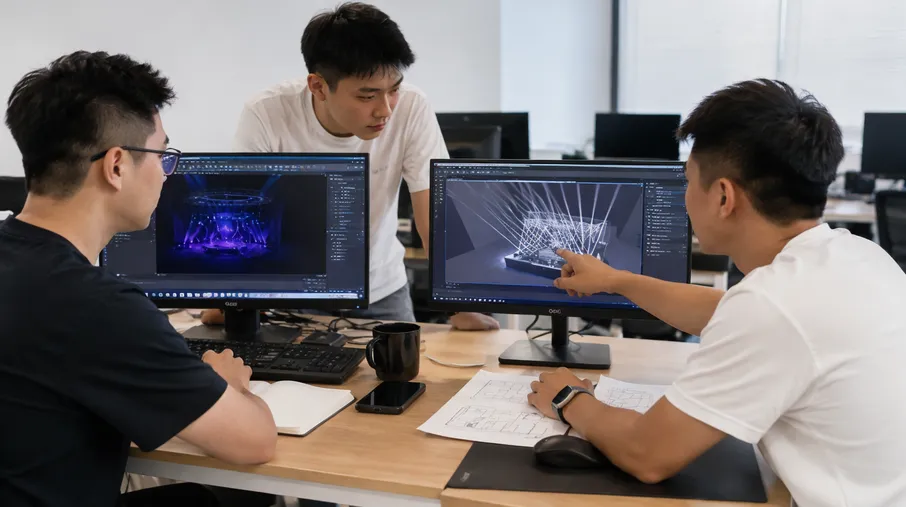
Most manufacturers hand you a catalog and wish you luck. We take a different approach: our 15-person engineering team works with your venue parameters — stage dimensions, ceiling height, throw distances, ambient light conditions, DMX universe count — and specs a fixture package that covers your coverage zones without overbuying wattage or underdelivering lumens.
This matters to you commercially because oversized fixtures waste your client's power budget and undersized ones generate callbacks. When we design a lighting layout around your venue type, the fixture selection is already validated for that application. Your installation crew hangs the fixtures, addresses the DMX channels, and the system performs as specified. No field surprises, no costly fixture swaps after delivery.
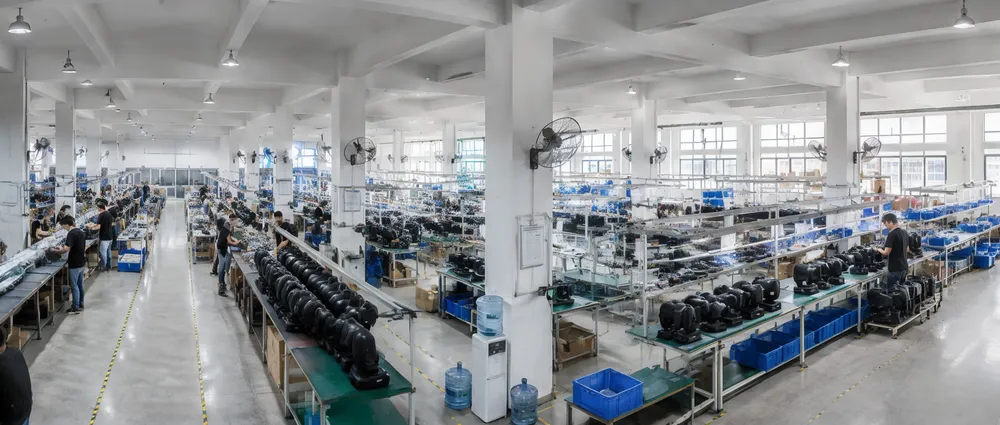
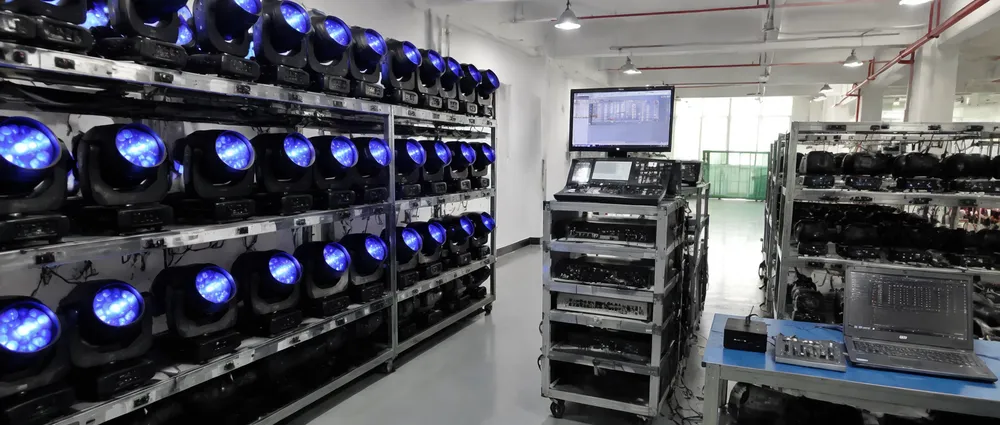
We've been manufacturing stage lighting since 2012 — moving heads, LED PARs, wash lights, beam effects, gobos, and DMX controllers. Our factory in Guangdong Province runs 6 production lines across 16,700 square meters with 150 people on staff. When we design a system for your project, we're specifying fixtures we actually produce and QC ourselves. Your design consultation and your production order live in the same building. (That's a shorter feedback loop than most integrators get when they're sourcing from three different factories through a trading company.)
Your Venue Parameters
- Stage dimensions
- Ceiling height
- Throw distances
- Ambient light conditions
- DMX universe count
Factory At a Glance
- Manufacturing since 2012
- 6 production lines
- 16,700 m² facility
- 150 production staff
Product Range
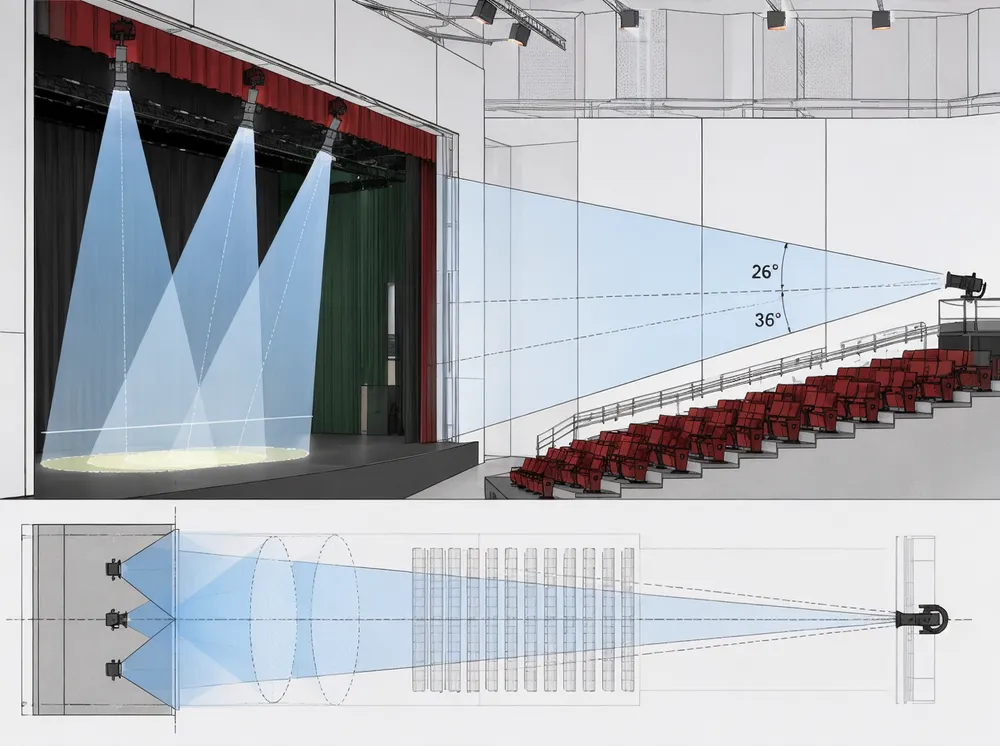
Theatre Stage Lighting Design — Coverage Maps for Proscenium and Thrust Configurations
Theatre lighting demands precision in beam angles, color temperature consistency, and silent operation. We design theatre stage lighting systems around the specific geometry of proscenium, thrust, and arena stages — because a 45° front-of-house angle that works on a proscenium arch is wrong for a thrust stage where the first three rows are below the performer.
Our engineering team specs fixture positions based on your seating rake angle, stage depth, and wing masking. For proscenium theatres in the 300–800 seat range — the bread-and-butter venue for most of our integration partners — we typically design systems using LED profile spots at FOH (26° or 36° beam, 3200K–5600K tunable white for drama), LED fresnels as top wash, and moving head spots for specials.
The LED profiles use our precision lens trains with ±0.5° beam consistency across a 500-unit production run, so every fixture on your FOH bar produces identical field coverage.
Silent Operation — Non-Negotiable in Theatre
Our convection-cooled LED profiles and fresnels run at under 20dB at 1 meter — no fan noise bleeding into lapel mics during a quiet scene. We engineered the heatsink geometry specifically for passive cooling at sustained outputs up to 200W LED. (That passive cooling decision added 300g of aluminum per fixture, but it eliminated every noise complaint from theatre clients. Trade-off we'd make again.)
Typical Fixture Mix — Proscenium Theatre, 300–800 Seats
LED Profile Spots
Front-of-house key lighting. 26° or 36° beam, tunable white 3200K–5600K. Precision lens train ensures identical coverage across the bar.
FOH PositionLED Fresnels
Top wash coverage. Convection-cooled for silent operation. Passive cooling at sustained 200W LED output with no fan noise.
Top WashMoving Head Spots
Specials and dynamic effects. Positioned for dramatic isolation and scene transitions. Validated for the theatre's throw distances.
SpecialsDistribution Opportunity — Theatre as High-Repeat Segment
For your distribution business, theatre represents a high-repeat segment: regional theatres refresh fixtures on 7–10 year cycles, drama schools spec new systems with each facility renovation, and community theatres are transitioning from halogen to LED in volume. Each venue needs 30–120 fixtures depending on stage size — solid mid-volume orders with clear reorder paths.
Church Stage Lighting Design Worship Environments on Volunteer-Friendly Control
Churches represent our fastest-growing design segment, and the requirements are distinct from theatrical or concert work. Worship lighting needs to handle rapid transitions between congregational singing (full warm wash), sermon (focused front light, minimal spill), and media-driven worship sets (dynamic color, movement, haze interaction) — all operated by volunteer tech teams with limited training.
We design church stage lighting systems that prioritize simplicity of operation without sacrificing visual impact. That means fixture selections biased toward wide-zoom LED wash lights (15°–60° zoom range covers both tight pulpit spots and full-stage washes from the same fixture position), pre-programmed scene presets accessible via simple DMX controllers or iPad-based wireless interfaces, and color temperatures matched to HD video capture (bi-color 3200K–6500K tunable, so skin tones render correctly on the livestream without post-correction).
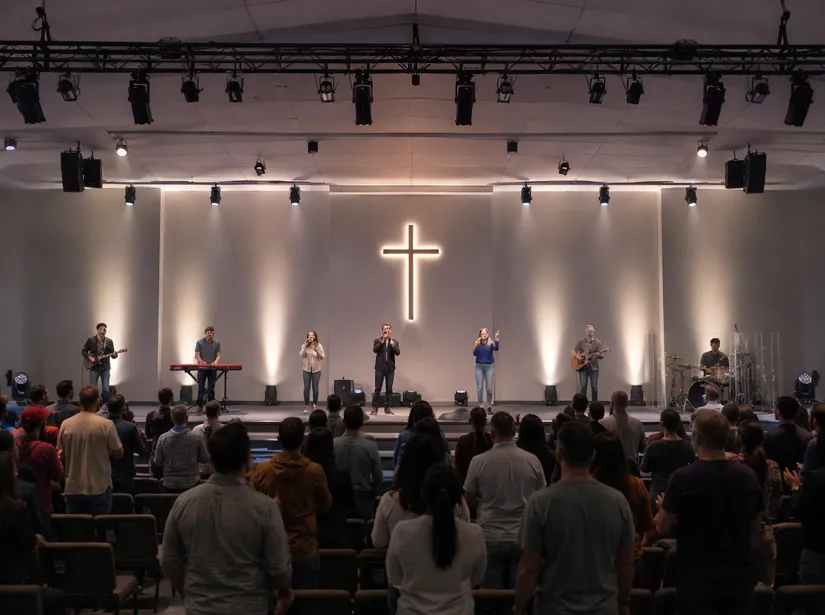
Three Worship Modes — One Rig, Volunteer-Operated
Congregational Singing
Full warm wash coverage across the entire sanctuary. Even illumination so every seat feels included in corporate worship.
Sermon Delivery
Focused front light on the pulpit with minimal spill. Draws visual attention to the speaker while reducing distraction.
Media-Driven Worship
Dynamic color, movement, and haze interaction for contemporary worship sets. Full creative expression controlled from pre-built scenes.
Procurement by Church Size — Fixture Quantity Ranges
| Venue Tier | Seating Capacity | Fixture Count | Typical Rig Composition |
|---|---|---|---|
| Small Worship Space | Under 200 seats | 12–24 fixtures | LED wash lights, basic DMX controller |
| Mid-Size Church | 200–800 seats | 30–60 fixtures | Wide-zoom washes, spots, iPad wireless interface |
| Large Modern Worship | 800+ seats | 80–150+ fixtures | Moving heads, pixel-mappable LED bars, full automation |
We handle all three tiers, and our 30-unit MOQ means you can serve the small-church market without overcommitting to inventory.
Phased Procurement — Why One Order Becomes Three
Congregations replace lighting in waves — sanctuary first, then fellowship hall, then youth spaces. One initial 30-fixture order often generates two follow-on orders within 18 months. Our DMX addressing and color calibration stays consistent across production batches, so phase-two fixtures match phase-one perfectly on the same stage.
LED Stage Lighting Design Thermal Management That Protects Your Long-Term Lumen Output
LED stage lighting design isn't about choosing LED fixtures — every manufacturer offers LED now. The design challenge is managing thermal load across a full rig so your fixtures maintain rated output after 10,000, 20,000, 30,000 hours in service. Poor thermal design means lumen depreciation hits 70% output (L70) far before the rated lifetime, and your client is calling about dim fixtures three years into what was supposed to be a decade-long installation.
We approach LED stage lighting design from the thermal engineering side first. Every fixture in our lineup has undergone junction temperature validation at sustained full output in 40°C ambient — which approximates the conditions inside a lighting grid with 30+ fixtures radiating heat in an enclosed ceiling void. Our heatsink designs use CNC-machined aluminum fins with surface area calculated per watt of LED thermal dissipation.
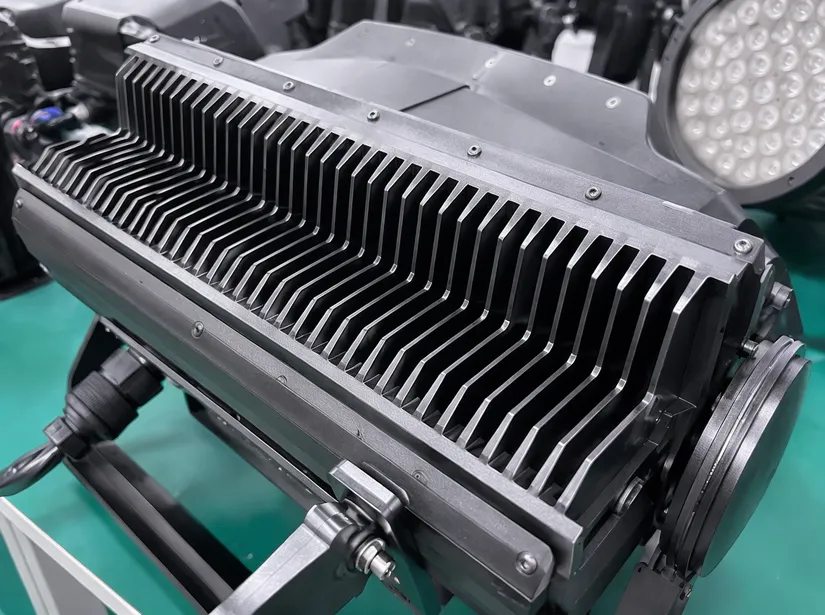
200W Wash Fixture — Heatsink Geometry
42
Fins
1.8mm
Fin Thickness
3.2mm
Air Gaps
3
Iterations to Sign-Off
Geometry tuned through three iterations of thermal simulation and physical measurement before production sign-off. Junction temperature validated at sustained full output in 40°C ambient conditions.
For your business, this translates directly: fixtures that hold rated lumen output throughout their deployment life mean zero mid-cycle replacements and zero "the lights got dim" complaints from end users. When we design an LED system for a specific venue, the thermal calculations account for fixture spacing, orientation, and expected ambient temperature in the installation environment — not just bench-test numbers from a climate-controlled lab.
LED Source Bin-Matching & Color Consistency
Emitter Sources
We spec LED sources from binned Cree, Osram, or Luminus emitters (depending on the fixture application) with documented CRI, CCT, and forward voltage tolerances.
Color Consistency Standard
Bin-matching across your production order ensures color consistency from fixture to fixture — no visible color shift across a row of wash lights hitting the same cyclorama.
Rejection threshold: We reject LED bins with more than 3-step MacAdam ellipse deviation. That's tighter than most manufacturers hold, but it's what the touring and install market expects.
Typical Manufacturer Approach
- •Bench-test numbers from climate-controlled lab
- •Single-fixture thermal validation
- •L70 hit before rated lifetime
- •Mid-cycle replacement costs
GDMonkey Thermal Design
- •Full-rig ambient validation at 40°C
- •Accounts for fixture spacing & orientation
- •Rated lumen output maintained through deployment life
- •Zero "the lights got dim" complaints
Venue Segments Where Your Stage Lighting Design Investment Pays Back
Stage lighting design isn't one market — it's five or six distinct buyer profiles, each with different fixture requirements, budget ranges, and reorder patterns. We help you match your inventory and design capability to the segments with the strongest margin and repeat potential.
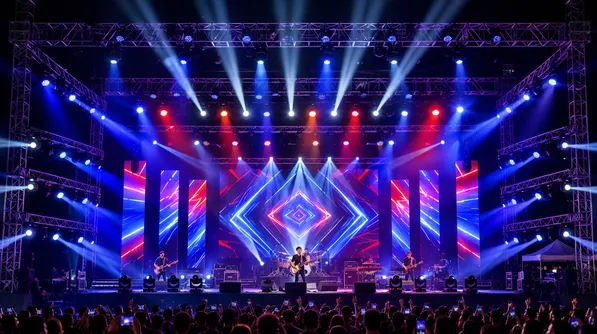
Concert and Touring
Concert stage lighting design demands high-output moving heads (beam and hybrid types), LED wash fixtures with fast zoom, and strobe/blinder arrays. Touring rental companies order in multiples of 8–24 per fixture type for rig symmetry.
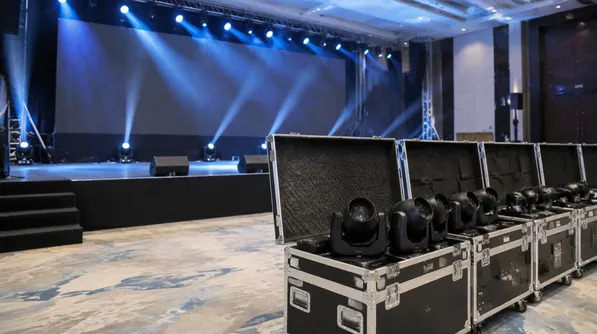
Events and Corporate
Corporate stages (product launches, award shows, conferences) need flexible, fast-setup lighting that travels well in road cases. Design priorities: lightweight fixtures, multi-function capability (spot/wash/beam in one head), and quiet operation for rooms with live microphones.
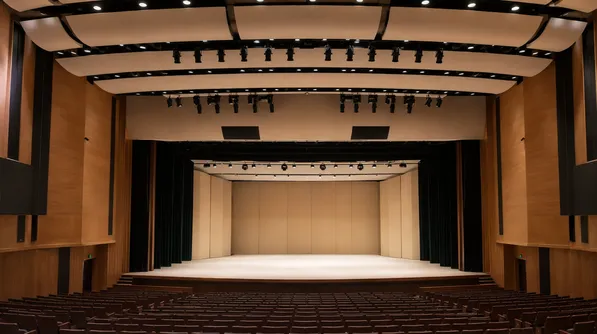
Auditoriums and Performing Arts Centers
Permanent installations with 10–15 year replacement cycles. Design focus: architectural integration, silent operation, precise beam control, high CRI for broadcast-quality video capture. Quantities range from 60–200+ fixtures per venue.
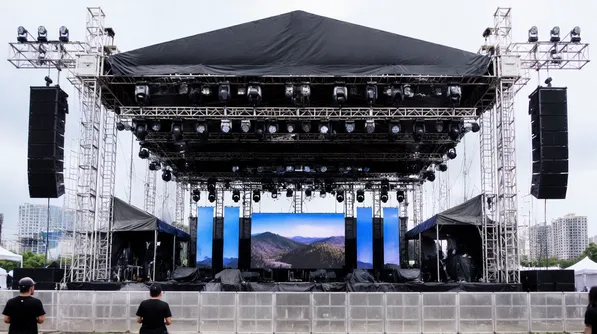
Outdoor Festivals and Temporary Structures
IP65/IP67-rated fixtures for rain, dust, and temperature extremes. Our outdoor-rated moving heads and wash lights carry IP65 certification with sealed optical chambers and marine-grade connector interfaces.
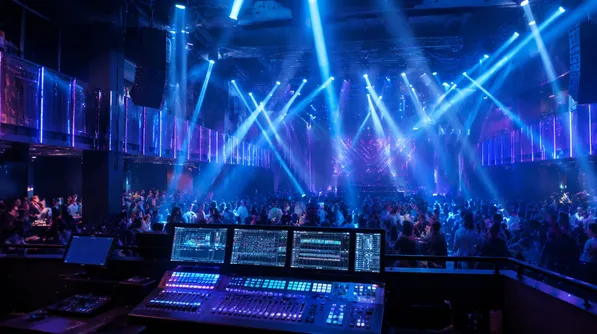
Nightclubs and Permanent Entertainment Venues
High-duty-cycle fixtures running 6–8 hours nightly, 5–7 nights per week. Thermal management and driver longevity dominate the design conversation.
Which Segment Fits Your Business?
Tell us your target market and we'll match the right fixture range to your buyers' expectations.
Discuss Your Target Market SegmentFrom Design Consultation to Production How the Process Works for Your Order
Here's the actual workflow when you engage our stage lighting design capability:
Venue Parameters In
You send us the venue type, stage dimensions, ceiling/rigging height, seating capacity, and intended use (fixed install vs. rental stock). CAD drawings help but aren't mandatory — we work from floor plans, photos, even hand sketches.
Fixture Selection and Layout
Our engineering team specs fixture types, quantities, and positions based on the coverage requirements. You receive a fixture list with model specs, a suggested rigging plot, and a DMX universe map.
We explain the reasoning behind each selection — throw distance dictates beam angle, stage depth determines how many zones of top light you need, ambient light conditions set minimum lumen requirements.
Quote and MOQ Confirmation
The fixture list becomes a production quote. OEM/ODM options (your branding, your firmware splash screen, custom color housings) are priced at this stage.
Sample Validation
For new configurations or custom specs, we produce 1–3 sample fixtures for your approval. You verify beam performance, build quality, color accuracy, and DMX functionality against the design spec.
Production and QC
Full order enters our 6 production lines. Every fixture passes our 48-hour aging test at full electrical load — this catches infant mortality failures (driver faults, LED thermal runaway, capacitor weakness) before shipment.
100% functional testing confirms DMX response, color calibration, mechanical operation, and optical output against the design specification.
Packaging and Export
Individual fixtures in molded foam inserts, master cartons rated for container stacking, palletization optimized for 20' or 40' container loading.
We provide packing lists, compliance documentation (CE, FCC, RoHS), and photometric test reports with each shipment.
Production Lead Times
Full Production Orders
20–35 days from order confirmation depending on quantity and fixture complexity
Standard Product Samples
3–7 days for samples from our existing range
The Engineering Behind Consistent Stage Lighting Design Across Large Orders
When you order 200 moving heads for a rental fleet or 80 wash lights for a permanent install, every fixture must perform identically. Fixture-to-fixture variation — in color output, beam angle, pan/tilt accuracy, or dimming curve — makes your programming team's job harder and makes your brand look inconsistent to end clients.
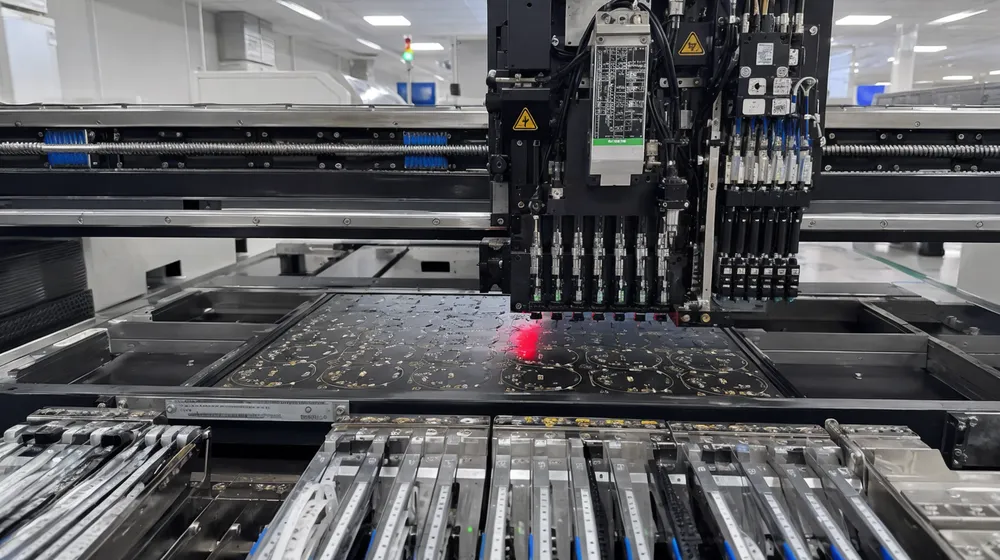
Automated SMT Placement — ±0.05mm Accuracy
Our automated SMT lines place LED chips at ±0.05mm accuracy. The LED array sits in the exact optical center of the reflector or lens train on every single unit. Manual mounting drifts — we measured it early on: ±0.3mm hand placement errors caused visible hotspot offset on tightly focused profiles. Automated placement eliminated it.
LED Bin Control for Color Consistency
We purchase emitters in matched bins from the same production lot for your entire order. Forward voltage, dominant wavelength, and luminous flux are held within tight tolerances so fixture #1 and fixture #200 produce the same white and the same saturated colors under DMX control.
If your order quantity exceeds a single LED production lot, we bridge-bin between adjacent lots and verify uniformity on our integrating sphere before releasing the batch.
Pan/Tilt Accuracy
±0.3° repeatability across the full 540°/270° range. We calibrate each unit's stepper motor assembly against optical position encoders during production.
Rental companies running 20+ moving heads in synchronized formations need that precision — one head drifting 2° is visible from the tenth row.
Firmware Consistency
Every unit ships with identical firmware versions, identical DMX mapping tables, and identical factory-calibrated color presets. When you program one fixture and clone the settings across 50 units, they match.
Precision Tolerance Summary
Shipping Stage Lighting Equipment — Container Loading and Breakage Prevention
Stage lighting fixtures are precision optical instruments packed into aluminum housings with moving mechanical parts. They don't ship like commodity goods. Our packaging engineering is designed around three priorities: zero breakage in transit, maximum container utilization, and your warehouse team's receiving efficiency.
Individual Fixture Protection
Each fixture sits in a custom-molded EPE foam insert within a corrugated carton. The foam cradles the fixture at contact points away from optical surfaces — no pressure on lenses, reflectors, or display panels.
Moving head units ship with pan/tilt locks engaged and yoke clamps secured to prevent mechanical stress during transit.
Container Loading Optimization
Our logistics team provides exact 20GP and 40HQ loading plans before shipment. We nest carton sizes to minimize dead space — our standard carton dimensions are designed on a module grid that tiles efficiently against container wall dimensions.
Palletization & Stacking
Master cartons are rated for 5-high stacking. Palletized shipments use corner protectors and stretch wrap with top-board reinforcement.
For mixed-fixture orders (wash + moving heads + controllers in one container), we sequence the loading plan so heavy items sit bottom-of-stack and fragile optical components ride on top.
Humidity & Condensation Control
The most common in-transit damage isn't impact — it's humidity causing condensation on cold optical surfaces during ocean freight. We include desiccant packs inside each carton and moisture indicator cards for your receiving QC to check.
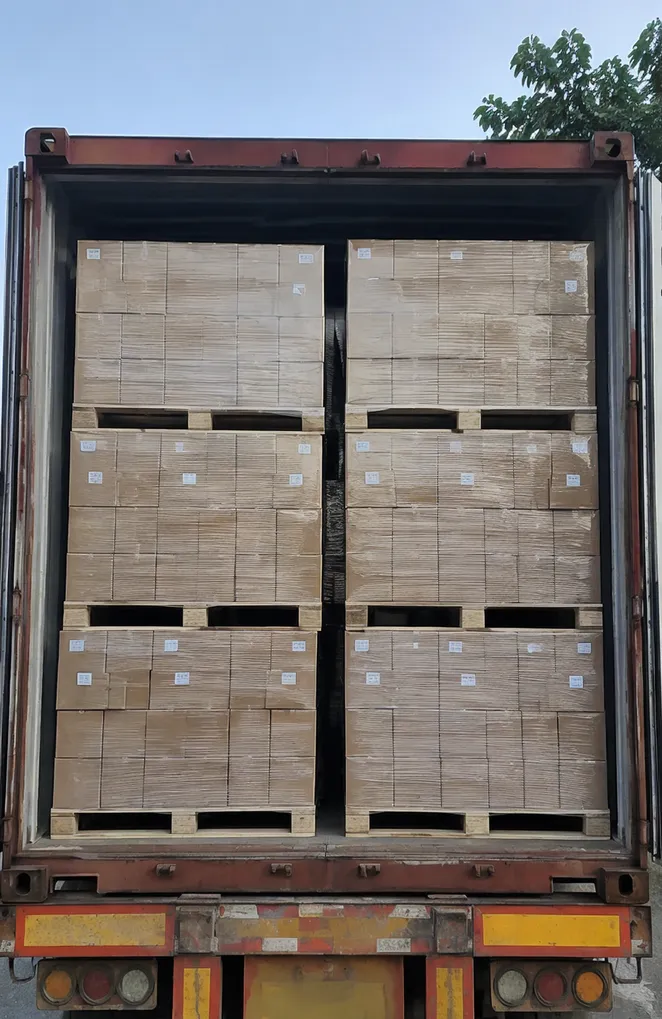
< 0.3%
Historical average across all export shipments
Container Capacity Reference
Approximate fixture counts per container (varies by head diameter and size class):
40HQ — PAR Fixtures
800–1,200
units
40HQ — Moving Heads
400–600
units
Stacking Rating
5-High
master cartons
Loading Plans
Pre-Shipment
20GP & 40HQ provided
Common Failures in Stage Lighting and How Our Design Process Prevents Them
We've been manufacturing stage lighting for over a decade. We know what breaks and why — because we've seen the returns, analyzed the failure modes, and re-engineered our fixtures specifically to eliminate them. When we design a lighting system for your venue, our fixture selections are informed by this failure data.
Rapid Lumen Depreciation
Thermal FailureThe problem: LED fixtures lose 30–40% output within 2–3 years. Root cause is almost always thermal — LED junction temperatures running chronically above the rated maximum because the heatsink is undersized or the fixture operates in a poorly ventilated environment.
Our prevention: Our design process calculates thermal load for the actual installation context (fixture density, ceiling void airflow, ambient temperature) and specs fixtures with sufficient thermal headroom. Our 48-hour aging test at full load validates that junction temperatures stay within spec under worst-case sustained operation.
Water Ingress on Outdoor-Rated Fixtures
Seal DegradationThe problem: An IP65 rating means nothing if the seals degrade after 18 months of UV exposure and thermal cycling. Foam or rubber gaskets lose elasticity, creating ingress paths.
Our prevention: We use silicone gaskets (not foam or rubber) on all IP-rated enclosures — silicone maintains elasticity across -30°C to +200°C and resists UV degradation. Our IP testing protocol includes 1,000-hour accelerated UV aging followed by re-test to verify the seal still meets IP65 ingress pressure.
Moving Head Motor Failure
Mechanical WearThe problem: Pan/tilt motors on moving heads run thousands of positioning cycles per show. Cheap motors with bronze bushings wear out within 12–18 months of touring use.
Our prevention: Our moving heads use stepper motors with precision ball bearings rated for 50,000+ hours of continuous operation. We also over-spec the motor torque by 40% relative to the head weight — so the motor never runs at peak load during normal operation. Our motor heritage from pre-2012 electromechanical products means we understand motor duty cycles from a different industry perspective than most lighting companies.
DMX Signal Dropout
Communication FailureThe problem: Intermittent DMX response causes random blackouts or stuck positions during live shows.
Our prevention: We test every fixture's DMX receiver across the full 250kHz baud rate tolerance range and verify response at the end of a 300-meter daisy chain (the practical maximum in large venue installations). Fixtures that show any decoding errors at 95% baud rate tolerance are rejected.
Frequently Asked Questions Stage Lighting Design
What IP rating do I need for outdoor stage lighting installations?
For temporary outdoor events (festivals, covered outdoor stages with partial exposure), IP54 is the minimum — it handles rain splash and airborne dust. For permanent outdoor installations or fully exposed rigs without weather cover, spec IP65 minimum.
We provide IP65 and IP67 rated fixtures with sealed optical chambers and watertight power/signal connectors. The critical difference: IP65 handles directed water jets (driving rain), while IP67 survives temporary submersion — relevant if your fixture positions are at ground level where standing water can pool after heavy rain.
How do I determine the right beam angle for my stage throw distance?
Calculate it from your mounting distance to stage center:
- 8–12 meters throw (typical for small-medium venues): a 25°–36° beam angle gives you 4–6 meter coverage zones from each fixture.
- 15–25 meters throw (large theatres, concert stages): you need narrower 15°–22° beams to maintain punch and definition at distance.
Our zoom fixtures (15°–60° range on wash lights, 8°–40° on spots) give you adaptability across mounting positions — one fixture model covers multiple throw distances, reducing your SKU count.
What causes color inconsistency between LED fixtures from the same order?
Three sources:
- LED bin variation — different emitter bins within one batch
- Driver current tolerance — fixtures running slightly different forward currents
- Thermal differences — fixtures at different positions reaching different operating temperatures
We control all three — matched bins per order, ±1% driver current regulation, and heatsink designs validated for consistent junction temperature regardless of mounting orientation.
If you're seeing color shift across a fixture fleet, the most common aftermarket cause is accumulated dust on LED arrays reducing blue output — specify fixtures with sealed optical chambers for dusty environments.
What's the minimum DMX universe count for a mid-size theatre or church?
A 300–600 seat venue with 40–80 fixtures typically needs 2–3 DMX universes (512 channels each).
- Moving heads consume 20–40 channels per fixture depending on feature set
- LED wash lights run 6–12 channels each
If your fixture count approaches 60+ with multiple moving heads, plan for ArtNet or sACN distribution (Ethernet-based) rather than relying solely on 5-pin DMX daisy chains — it's more reliable over longer cable runs and simplifies network topology in complex rigs.
What certifications should I require for stage lighting imports into North America and Europe?
For North America:
- FCC Part 15 (EMC compliance for electronic devices) — mandatory
- UL listing — not legally required but many venues and insurers demand it
For Europe:
- CE marking (covering the Low Voltage Directive and EMC Directive) — mandatory
- RoHS compliance — mandatory for placing products on the market
Our fixtures carry CE, FCC, and RoHS documentation. For IP-rated outdoor fixtures, we provide IP test reports from accredited labs.
If your market requires specific certifications beyond our standard set — ETL, cUL, or UKCA post-Brexit — ask us about project-specific certification programs. We've navigated these before.
What's the typical lead time for a custom stage lighting design order?
Standard fixtures from our existing range: 20–30 days production, 3–7 days for advance samples.
Custom OEM/ODM orders (your branding, modified specs, custom firmware): add 7–15 days for engineering validation and sample approval before production starts.
Total project timeline from design consultation to shipment:
- Standard configurations: 35–50 days
- Fully custom development: 45–65 days
Rush production is available on our most popular fixture types — discuss your deadline and we'll confirm feasibility.
Start Your Stage Lighting Design Project
Send us your venue parameters — stage dimensions, ceiling height, seating count, primary use case — and our engineering team will draft a fixture recommendation with quantities, positions, and a preliminary budget quote. If you have an existing lighting plot you want us to replicate or improve, send that too.
For Distributors: White-Label Design Support
For distributors building a stage lighting design service for your clients: we provide white-label design support. Your brand, your client relationship — our engineering team works in the background. Minimum engagement is one project; no annual commitment required to access design consultation.
Contact Our Engineering Team
Or submit a project brief through our RFQ form — include venue type, approximate fixture count, and target budget range. We'll respond with a preliminary fixture spec and quote within 48 hours.
Submit Project BriefHome / Stage Lighting Design