

DMX Stage Lighting Spotlight Native DMX-512 & RDM Support
16-bit dimming resolution, motorized focus and gobo selection, Art-Net ready options — manufactured on our own production lines with per-unit optical verification before shipment.
Built for system integrators who need every fixture addressable on a single control bus.
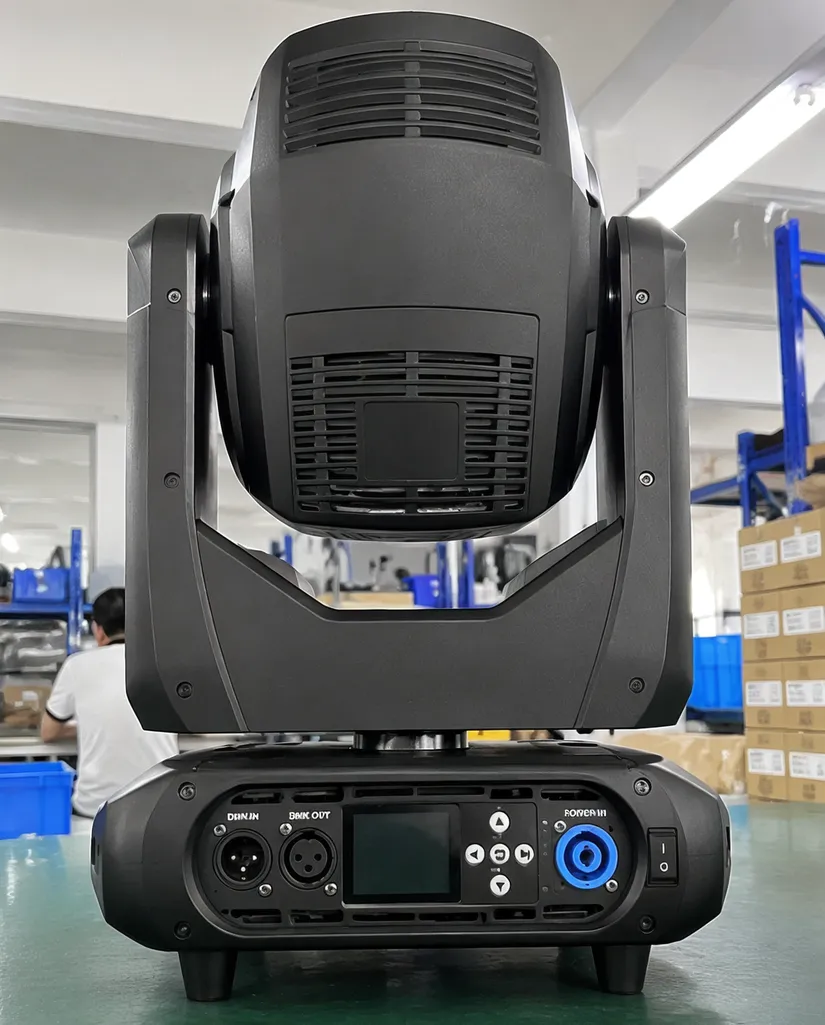
What This Fixture Is and Who It's Built For
Our DMX stage lighting spotlight is a focused-beam fixture with full DMX-512 protocol integration — addressable dimming, color mixing, motorized focus, and remote gobo selection, all accessible from your lighting console or network controller. This is the fixture you specify when your projects require every spotlight in the rig to respond to a centralized control system without standalone programming at each unit.
The differentiator from our other spotlights in the range: DMX control depth. Our theatre spotlights prioritize optical framing precision. Our moving head spotlights prioritize repositioning speed. This DMX spotlight prioritizes protocol compliance and integration reliability — it's designed to sit inside larger DMX ecosystems of 50–200+ fixtures and behave predictably on every channel, every power cycle, every time.
RDM (Remote Device Management) comes standard, so your install technician can query fixture status, adjust DMX addressing, and run sensor checks from the console without climbing to the fixture.
We build these for system integrators, AV contractors, and rental houses who stock DMX-controlled inventory for installation projects and touring rigs. If you're quoting a 40-fixture theatre install or building rental inventory that needs to interoperate with any console brand, this is the unit you're evaluating.
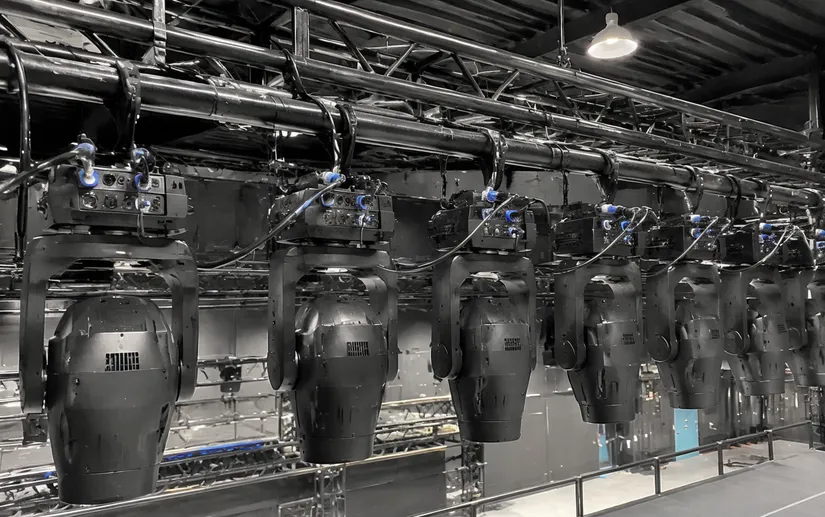
Built For
- System integrators managing 50–200+ fixture ecosystems
- AV contractors quoting multi-fixture theatre installs
- Rental houses building interoperable DMX inventory
- Touring rigs requiring any-console-brand compatibility
Theatre Spotlight
Prioritizes optical framing precision for fixed architectural positions.
Compare →DMX Spotlight
Prioritizes protocol compliance and integration reliability in large ecosystems.
DMX Protocol Implementation
The Engineering That Prevents Job-Site Callbacks
The Common Supplier Problem
The most common complaint we hear from integrators switching suppliers: "The fixture says DMX-512 on the spec sheet, but it drops frames under heavy traffic, resets to home position during RDM queries, or conflicts with other manufacturers' fixtures on the same universe." That's a firmware and receiver circuit problem — and it's where we put serious engineering effort on this product line.
DMX Receiver Architecture
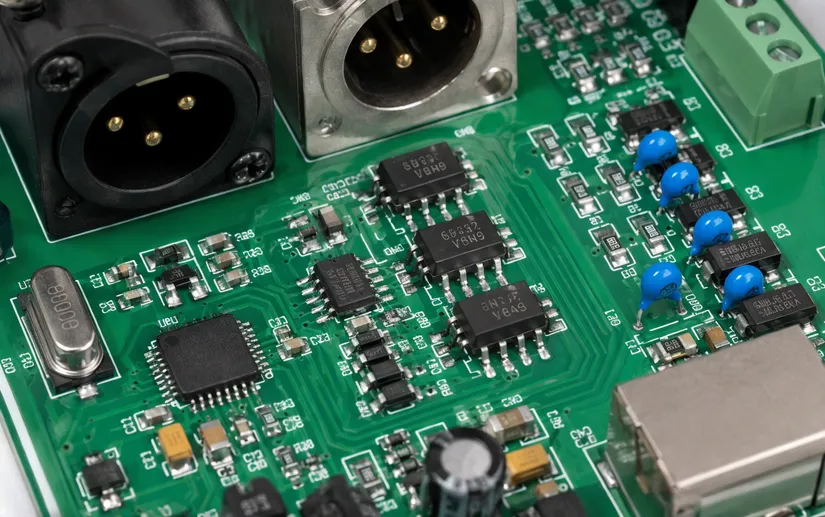
Our DMX receiver uses opto-isolated input with transient voltage suppression on both data pins. The optocoupler runs at 4 MHz switching speed — well above the 250 kbps DMX data rate — so signal integrity holds even on long daisy chains with 30+ fixtures downstream.
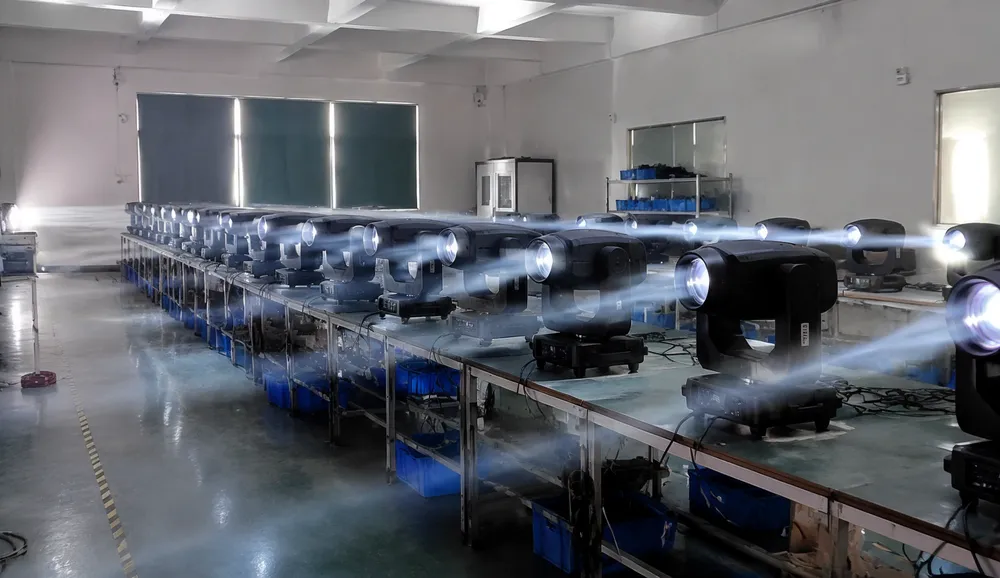
We test every unit on a 32-fixture chain at maximum universe load (512 channels fully active, 44 refreshes per second) during the 48-hour aging test. Fixtures that show any frame loss, addressing drift, or response latency above 22ms get flagged and reworked before packaging.
RDM Implementation — Full ANSI E1.20 Compliance
RDM implementation follows the ANSI E1.20 standard completely — not the partial implementations you sometimes see where IDENTIFY works but SENSOR_VALUE returns garbage. Our fixtures report lamp hours, internal temperature, firmware version, and error status through standard RDM PIDs.
For your maintenance teams, that means diagnosing a fixture from FOH rather than sending someone up a ladder with a multimeter. We added internal temperature reporting after a customer's rental fleet hit thermal throttle during a summer outdoor festival — they wanted to see which fixtures were approaching limits before the output visibly dropped.
Art-Net & sACN Network Capability
Art-Net and sACN capability is available on select models with RJ45 network input, allowing you to run multiple DMX universes over a single Ethernet backbone. For large installations with 100+ fixtures, this eliminates the daisy-chain distance limitations of traditional DMX cabling and simplifies your network architecture.
Protocol Specs at a Glance
- Input Isolation
- Opto-isolated + TVS
- Optocoupler Speed
- 4 MHz
- DMX Data Rate
- 250 kbps
- Aging Test Chain
- 32 fixtures
- Universe Load Test
- 512 ch / 44 Hz
- Max Response Latency
- < 22 ms
- RDM Standard
- ANSI E1.20 (full)
- Network Options
- Art-Net / sACN (RJ45)
RDM Reported Parameters
- Lamp hours (cumulative runtime)
- Internal temperature (real-time)
- Firmware version
- Error status & diagnostics
- Remote DMX address assignment
- IDENTIFY (fixture locator)
- SENSOR_VALUE (validated output)
48-Hour Aging Test — Every Unit, No Sampling
Every fixture runs on a 32-unit daisy chain at full universe load for 48 continuous hours. Any unit showing frame loss, addressing drift, or response latency above spec gets reworked — not shipped. This isn't batch sampling; it's per-unit verification that eliminates job-site callbacks for protocol failures.
Technical Specifications for This DMX Spotlight Range
| Parameter | Specification |
|---|---|
| LED Source | 150W / 200W / 300W COB or multi-chip array (model dependent) |
| Color Temperature | 3200K, 5600K (fixed white); RGBW or RGBAL mixing on color models |
| CRI | 90+ standard; 95+ available on warm white DMX models |
| Beam Angle | 8°–45° motorized zoom (profile models); fixed 15°, 26°, 36° options |
| DMX Channels | 8ch / 12ch / 16ch / 24ch (selectable personality) |
| DMX Protocol | DMX-512A, RDM (ANSI E1.20), Art-Net optional |
| Dimming | 0-100%, 16-bit resolution (two-channel fine/coarse), 4 selectable dimming curves |
| Strobe | 1–25 Hz, variable pulse width |
| Gobo | 1 rotating + 1 fixed gobo wheel (7+7 positions, interchangeable), motorized indexing |
| Color Wheel | 7 dichroic filters + open, split-color positioning, continuous scroll mode |
| Focus | Motorized, DMX-addressable, full travel in 0.8 seconds |
| Connectors | DMX: 5-pin XLR in/thru · Power: powerCON TRUE1 · Network: RJ45 (Art-Net models) |
| Housing | Die-cast aluminum, powder coat black (RAL 9004 standard) |
| IP Rating | IP20 (indoor standard); IP65 available for outdoor installation models |
| Weight | 12–22 kg depending on wattage and feature configuration |
| Power Input | 100–240V AC, 50/60Hz, PFC >0.95 |
| Cooling | Variable-speed forced air, PWM-controlled fans, automatic thermal management |
| Operating Temp | 0°C to +40°C (indoor); -20°C to +45°C (IP65 models) |
| Mounting | Omega clamp bracket, dual hanging points, safety wire attachment point |
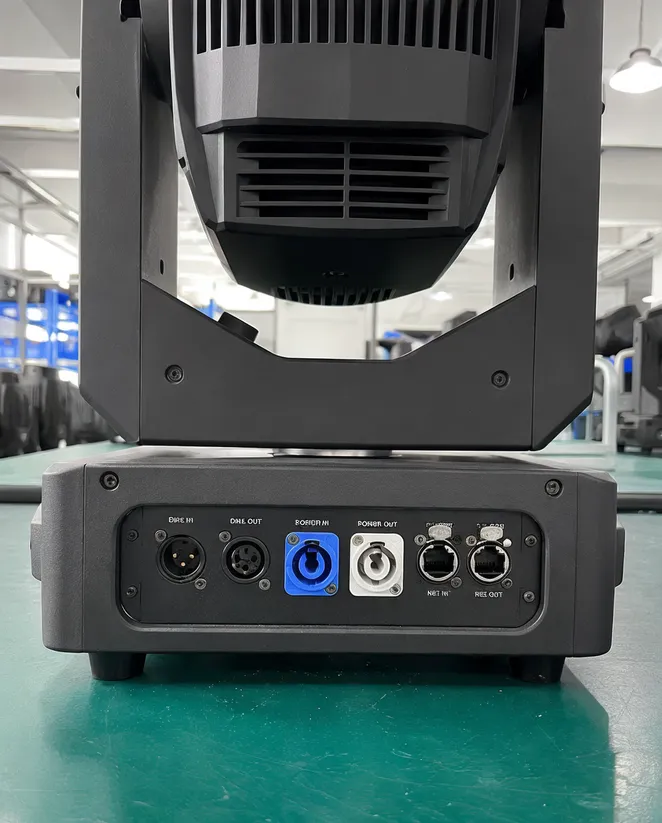
Specifications shown are standard values for this product range. Exact parameters vary by model configuration. Contact us for detailed product data sheets and photometric files (IES/LDT) for your specific project requirements.
Request Data Sheets & IES FilesQuick Reference
How We Build the DMX Receiver Circuit Differently
The Industry Default: Commodity Boards
Most stage lighting factories buy pre-built DMX decoder boards from electronics suppliers in Shenzhen — plug it in, flash generic firmware, done. The problem: those commodity boards are designed for general-purpose DMX decoding, not for the specific timing and protocol demands of a professional spotlight with motorized zoom, gobo indexing, and 16-bit dimming all operating simultaneously on the same refresh cycle.
Our Approach: In-House DMX Receiver PCB
We design our own DMX receiver PCB in-house. Our firmware allocates processing priority to time-critical channels (dimming and strobe respond within one DMX frame — 22ms worst case) while buffering mechanical movement commands (gobo indexing, zoom travel) on a scheduled execution queue.
The result: your dimming cues stay frame-accurate even while the fixture is executing a simultaneous gobo change and zoom transition. On commodity boards, the gobo motor command can introduce a 40–60ms stutter in dimming response. Audiences don't notice consciously, but your lighting programmer does — and so do broadcast cameras.
Separate Ground Planes: Eliminating Phantom Channels
The PCB itself uses separate ground planes for the DMX communication section and the motor driver section. Motor noise coupling into the DMX data line is the single most common cause of "phantom channel" behavior where a fixture randomly jumps to a wrong value.
We caught this pattern in 2018 when a customer's 60-fixture installation was showing intermittent color drift on the last 10 fixtures in the chain — the issue traced to ground noise propagating down the daisy chain from fixtures with poor internal isolation. Our redesigned PCB layout eliminated it completely.
Proper DMX Thru Termination
We also terminate the DMX thru connector properly with a 120Ω characteristic impedance match on the PCB trace — not just a through-wire from input to output. Small detail, but it matters when you're running 20+ fixtures on a single run.
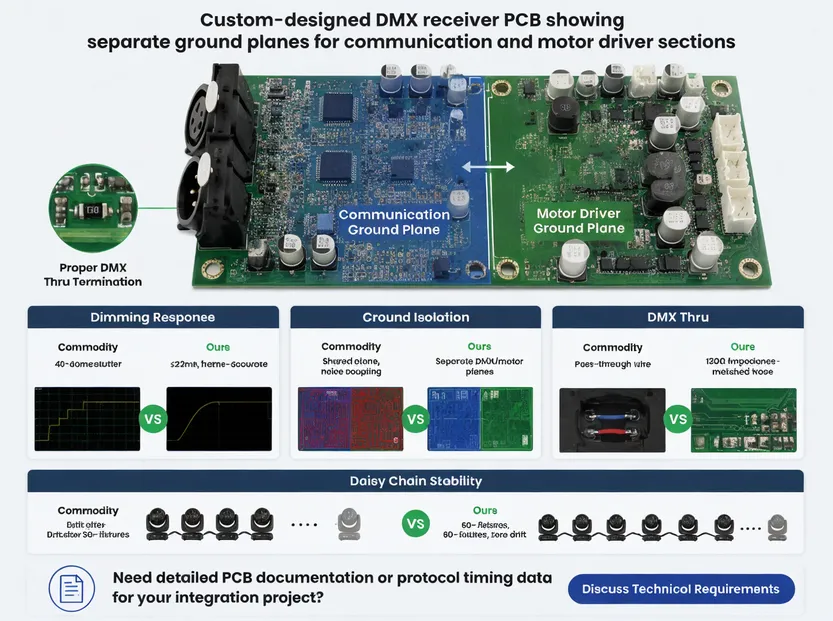
Commodity vs. Our DMX Board
Need detailed PCB documentation or protocol timing data for your integration project?
Discuss Technical RequirementsCommercial Segments Where DMX Spotlights Drive Your Revenue
Permanent Theatre and Auditorium Installations
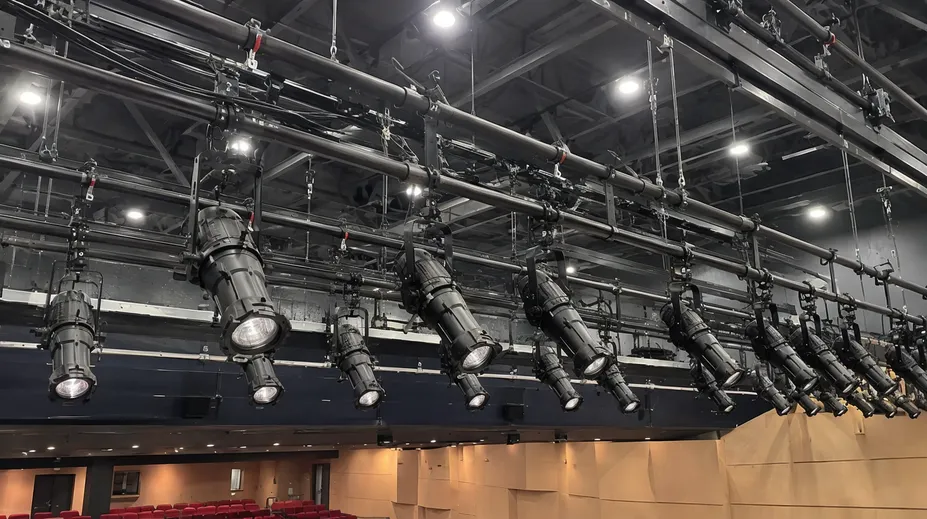
Drama houses, university performing arts centers, civic auditoriums, and multipurpose venues with fixed lighting infrastructure. These projects specify DMX spotlights in lots of 20–80 units per venue, with exact channel mapping defined in the lighting designer's plot.
Your value as the supplier: providing fixtures that match the spec precisely, ship with IES photometric files for the designer's pre-visualization software, and behave identically to the fixture they evaluated during the design phase.
Repeat business path: Venue adds a second performance space, or the next university in the system follows the same specification — theatre lighting directors talk to each other.
Event Rental and Production Company Inventory
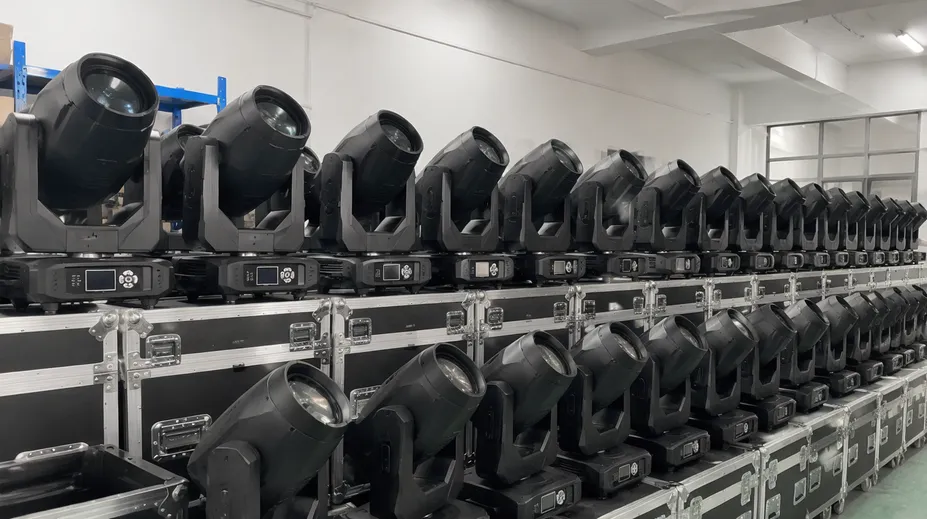
Rental houses stock DMX spotlights as fleet inventory — 40 to 200+ units that deploy across different events, pair with different consoles, and chain alongside other manufacturers' fixtures.
Your customers here care about three things:
- DMX interoperability — the fixture can't conflict with existing inventory
- Physical durability — survives 300+ truck loads per year
- Addressing predictability — fixture 47 behaves identically to fixture 1 after six months of rental cycles
We age-test addressing stability specifically because rental fixtures get power-cycled hundreds of times — the firmware retains DMX address through power loss without requiring reprogramming.
House of Worship AV Upgrades
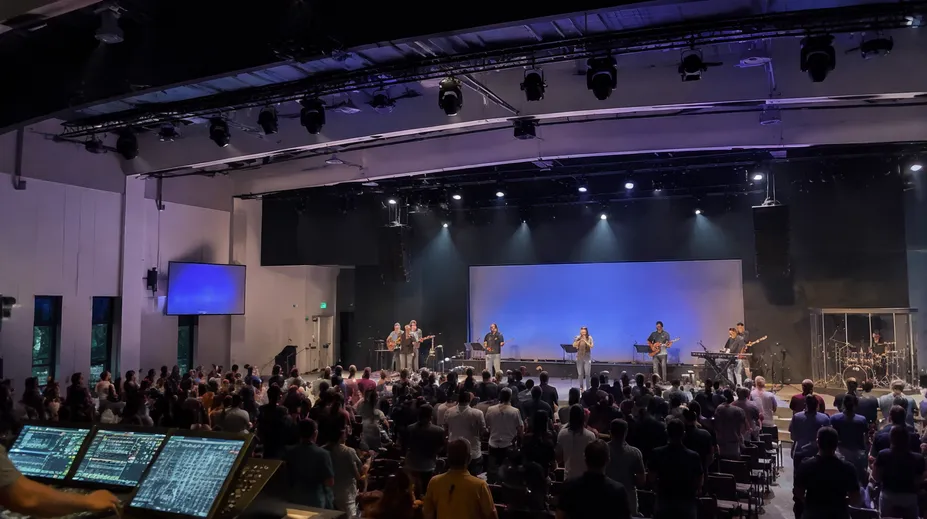
Churches and worship campuses transitioning from manual dimmer packs to DMX-controlled systems. This segment is growing — congregations invest in broadcast-quality lighting for livestreaming, and volunteer technical teams need systems that recall cues reliably without a professional programmer on staff.
Typical orders: 12–40 DMX spotlights per campus, often paired with a simple DMX controller or show-control software.
Referral engine: Megachurch networks share vendor lists across campuses — a successful installation at one location generates referrals to 5–10 sister churches.
Broadcast Studios and Corporate AV
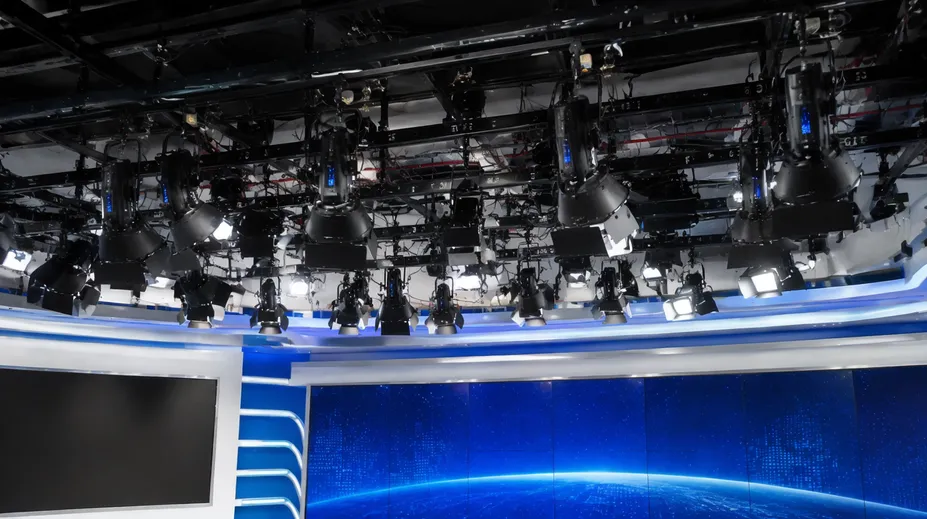
Television studios, corporate presentation rooms, and streaming facilities with permanent fixture grids controlled via automation systems. DMX spotlight requirements here center on flicker-free dimming at all camera frame rates, silent fan operation, and precise color rendering.
Smaller order quantities per project (8–24 units) but higher per-unit value and exacting specifications.
Margin protection: Compliance documentation — these projects require detailed EMC test reports, photometric data, and flicker measurements that commodity fixtures cannot provide.
We'll recommend the right configuration for your market
DMX Channel Configuration and Control Architecture
We offer selectable DMX personalities so you can match the fixture's channel footprint to your project's console capacity and programming complexity.
Basic Mode
For installations where programming simplicity matters more than granular control.
Channel Map
- Dimmer (16-bit, 2 channels)
- Color wheel
- Gobo wheel
- Focus
- Prism
- Strobe
Ideal For
Volunteer-operated church systems, small community theatres, corporate rooms where an AV technician runs preset looks.
Extended Mode
For professional installations where the lighting designer wants full parameter access in their cue stack.
Adds to Basic
- Gobo rotation
- Gobo fine positioning
- Color wheel fine
- Zoom
- Prism rotation
- Separate mechanical speed channels
Ideal For
Professional installations where the lighting designer wants full access to every fixture parameter in their cue stack.
Full Mode
For touring specifications and broadcast applications requiring per-fixture color calibration and system monitoring.
Adds to Extended
- Individual RGBW color mixing channels
- CTO adjustment
- Internal macros
- Diagnostic channels
Ideal For
Touring specifications and broadcast applications that require per-fixture color calibration and system monitoring.
Onboard Memory Through Power Cycles
All modes store to onboard memory through power cycles — your fixtures come back to the correct personality and address after a power event without needing re-configuration from the console.
Personality switching happens via the rear-panel LCD menu or remotely via RDM command.
Customization Options and Practical Limitations
What We Commonly Customize on DMX Spotlights
DMX Channel Layout
Custom personality maps for integration with proprietary show-control systems or specific console workflows.
Connector Configuration
3-pin XLR (legacy compatibility), 5-pin XLR (professional standard), or dual 3+5 pin options.
Network Protocol
Art-Net, sACN, or wireless DMX (W-DMX or CRMX module) added to standard DMX-512.
Beam Angle Range
Tuned for specific throw distances — we adjust the lens group spacing during assembly.
CCT Options
Fixed 3200K, 4200K, 5600K, or tunable CCT range to match existing fixture inventories.
Housing Color
Standard black (RAL 9004), white (RAL 9003) for architectural applications, or custom RAL on runs over 100 units.
Firmware Features
Custom DMX maps, user-defined preset libraries, specific power-on behavior, custom boot screen with your brand identity.
Gobo Sets
Custom gobo patterns cut to your specification (steel or glass), included in the initial order at no additional per-unit cost on orders over 50 units.
Practical Constraints
Custom DMX Personalities
Requires firmware development — allow 2–3 weeks for programming and verification. First run: 50-unit minimum. Reorders: 30-unit minimum.
Wireless DMX Modules
W-DMX or CRMX adds a separate receiver board and antenna housing — changes fixture weight by approximately 200g and requires a modified rear housing section. Available on all indoor models; not yet certified for IP65 housings.
Art-Net / sACN
Requires a dedicated network processor — not available on the 150W compact model due to housing space constraints. 200W and 300W models only.
Custom RAL Colors
100-unit minimum per color due to powder line changeover time. Lead time adds 5–7 days.
Need something not listed here? We've done custom integrations for Crestron control modules, proprietary wireless protocols, and even a serial RS-485 fallback mode for a broadcast client whose older studio infrastructure couldn't run DMX.
Discuss your custom DMX specification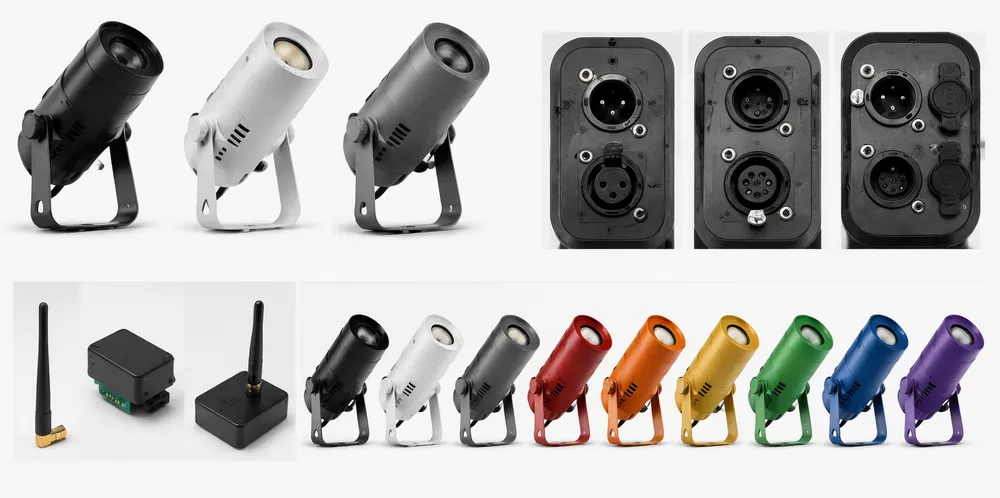
Quality Verification Specific to DMX Protocol Performance
Standard spotlight QC checks beam quality and thermal performance. For our DMX spotlights, we add a protocol-specific test sequence that addresses the failure modes unique to controlled fixtures.
DMX Address Retention Test
Each fixture is power-cycled 50 times during aging with DMX address set to a non-default value. Fixtures that revert to address 001 on any cycle get their EEPROM replaced and retested.
This sounds obvious, but we've seen incoming components from certain EEPROM suppliers with marginal write-endurance specs that fail after 30–40 power cycles. We switched suppliers in 2021 and haven't had a retention failure since.
Full-Universe Stress Test
32 fixtures chained together, all 512 DMX channels driven simultaneously with rapid value changes (full fade cycles at 44 fps). We monitor for frame drops, addressing conflicts, and latency deviation across 8 continuous hours.
Pass criteria: Any fixture showing response time variance greater than ±5ms gets pulled for firmware diagnostics.
RDM Interoperability Test
Verified against 4 major console manufacturers' RDM implementations — ETC, MA Lighting, ChamSys, and Avolites. Each fixture must respond correctly to:
- DEVICE_INFO
- SUPPORTED_PARAMETERS
- DMX_START_ADDRESS (get/set)
- IDENTIFY_DEVICE
- SENSOR_VALUE
Partial RDM implementation that works with one console but fails with another is the kind of problem that surfaces three months after installation when your client switches their console infrastructure.
EMC Pre-Compliance Scan
Every DMX spotlight model runs through our in-house EMC chamber to verify radiated emissions below the FCC/CE Class B limit. DMX fixtures generate more RF noise than standalone units because of the stepper motors, switching power supply, and high-frequency DMX data line — all operating simultaneously.
Why this matters: Fixtures that approach the margin get additional shielding before formal certification testing. Your venue installation won't interfere with wireless microphone frequencies in the 500–700 MHz band.
Certifications and Compliance for Your Target Import Market
CE (EMC + LVD)
European Market EntryElectromagnetic compatibility + low voltage safety. Documentation ships with goods, CE DoC included per fixture model.
FCC Part 15 Class B
US/Canada ClearanceRadiated and conducted emissions compliance. US/Canada customs clearance without holds — critical for DMX fixtures due to high-frequency data and motor noise.
RoHS
Hazardous SubstancesRestriction of hazardous substances. Mandatory for EU electronic product imports — full material declaration available.
ISO 9001:2015
Quality ManagementQuality management system certification. Pre-qualifies your supply chain for corporate and institutional buyer audits.
IP65 (Outdoor Models)
Ingress ProtectionDust and water ingress protection. Supports your warranty claims for outdoor installation projects — test reports available.
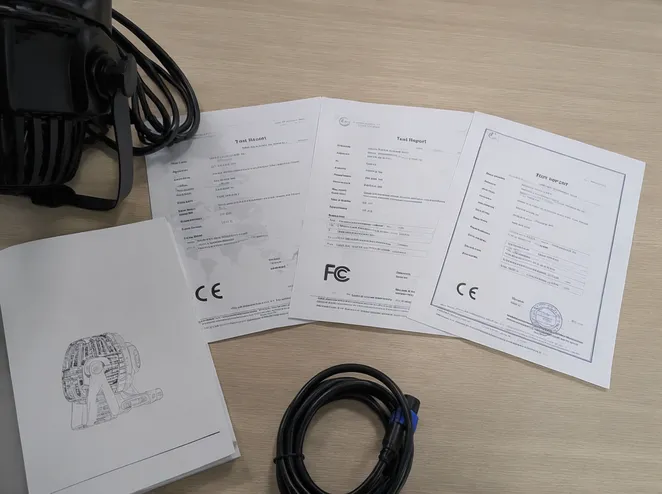
All certification test reports available in digital format — we include these proactively with shipment documentation.
Government & Institutional Projects
If you're bidding on a government or institutional project requiring specific third-party lab reports, confirm the requirement with us and we'll verify which existing reports cover your need or commission additional testing. Typical turnaround for supplementary testing: 2–3 weeks.
Photobiological Safety — EN 62471
Our DMX spotlights are designed to operate within the photobiological safety limits of EN 62471 (Risk Group 1 for most models at standard operating distances). If you're supplying fixtures for permanent architectural installations where EN 62471 classification is specified, we provide the relevant photobiological safety report with your shipment.
Packaging and Logistics for DMX Spotlight Shipments
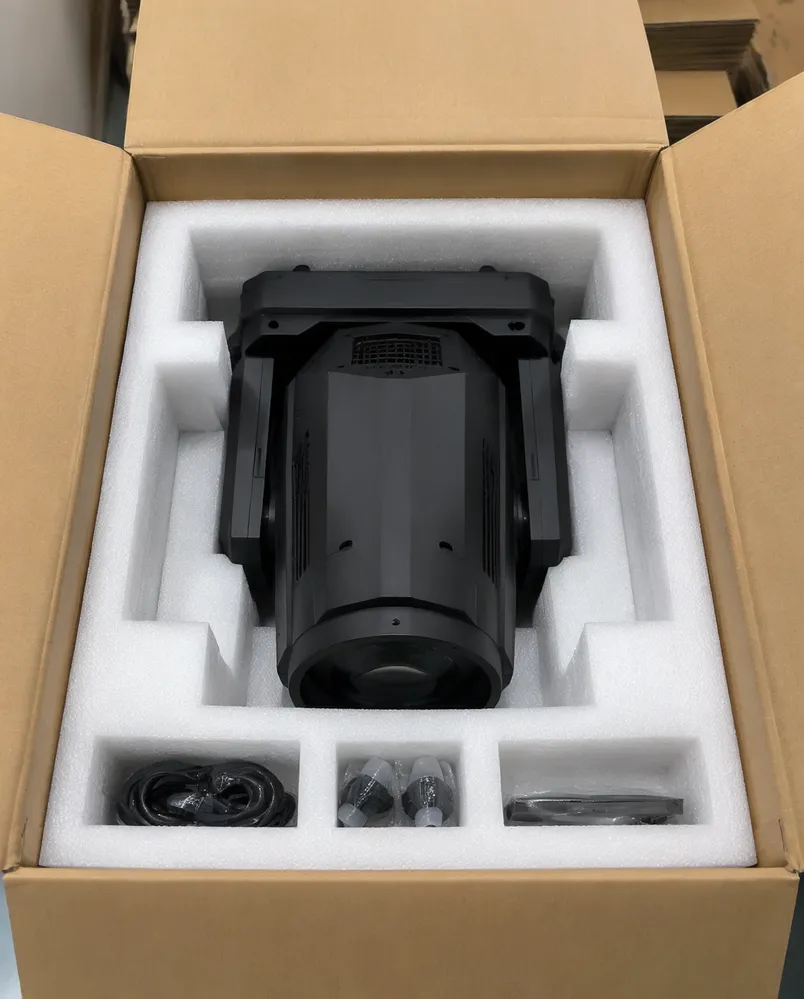
DMX spotlights include precision optics and motorized mechanisms — our packaging is engineered for export survival, not just presentation.
Individual Unit Packaging
Molded EPE Foam Cradle
Custom-cut to each model. Lens face sits in a recessed foam cavity with 25mm clearance to carton wall.
Transit Lock via Firmware
Motorized assemblies (gobo wheel, color wheel, zoom mechanism) are locked in transport position via firmware command before packaging — prevents bearing load during transit vibration.
Connector Protection
XLR connectors protected with silicone dust caps to prevent pin contamination.
Container Loading Reference (40HQ)
| Model | Units / Carton | Cartons / 40HQ | Units / Container |
|---|---|---|---|
| 150W Compact DMX Profile | 2 | 280 | 560 |
| 200W DMX Profile Spot | 1 | 220 | 220 |
| 300W DMX Zoom Spot | 1 | 180 | 180 |
Loading figures are conservative estimates — actual counts confirmed with packing list before each shipment. Mixed-model containers optimized for maximum utilization on request.
Documentation & Customs Support
Palletization to your specification
WMS-compatible barcode labels
Commercial invoice prepared to your import country's format
Packing list with model-level detail
Certificate of origin
CE Declaration of Conformity per model (EU imports)
EU importers: We include the CE Declaration of Conformity per model and the RoHS material declarations that customs may request — proactively included, no additional request needed.
Frequently Asked Questions About DMX Stage Lighting Spotlights
What causes DMX stage lighting spotlights to lose addressing after power cycles?
EEPROM write-endurance failure. The fixture stores its DMX start address in non-volatile memory (EEPROM). Cheap components rated for only 10,000 write cycles degrade with frequent power cycling — particularly on rental fixtures that get powered on/off 300+ times per year.
We use EEPROMs rated for 1,000,000 write cycles and verify retention through 50 power-cycle tests during QC.
If your current supplier's fixtures reset to address 001 after power loss, ask them about their EEPROM specification.
How many DMX stage lighting spotlights can I chain on a single universe?
DMX-512 supports up to 512 channels per universe — divide by the fixture's channel count for maximum units:
16-Channel Mode
32 fixtures per universe
8-Channel Basic Mode
64 fixtures per universe
For larger installations, specify fixtures with Art-Net or sACN capability and run multiple universes over Ethernet.
Physical daisy-chain limit is typically 32 fixtures before signal degradation on standard cable — our fixtures include a buffered DMX thru that regenerates the signal, so you can reliably exceed 32 units per physical chain without an external splitter.
What's the difference between DMX-512 and RDM on a stage lighting spotlight?
DMX-512 is one-way communication — the console sends data to fixtures, fixtures cannot talk back.
RDM (Remote Device Management, ANSI E1.20) adds bidirectional communication on the same cable. With RDM, your console can query each fixture for its DMX address, lamp hours, internal temperature, sensor status, and error codes — and remotely change settings without physically accessing the fixture.
For installed spotlights mounted at height on lighting bars or catwalks, RDM eliminates the need to send a technician up to check or reconfigure individual units.
All our DMX spotlights include full RDM as standard, not optional.
What DMX channel mode should I specify for volunteer-operated church systems?
Use 8-channel basic mode. It gives your operators dimmer control, color selection, gobo selection, and focus — everything needed for worship cue programming — without overwhelming volunteer technicians with 16 or 24 parameters per fixture.
Church lighting software like ProPresenter or EasyWorship interfaces cleanly with the reduced channel count.
You can always switch to 16-channel extended mode later via RDM if the church hires a professional programmer or upgrades their console.
How do I verify DMX interoperability before committing to a large order?
Request a 2-unit sample and test on your actual console platform. Verify:
- DMX response on all channels at minimum and maximum values
- RDM discovery and parameter query
- Addressing stability through 10 power cycles
- Daisy-chain behavior with your existing fixture inventory
Standard Range Samples
5–7 days
Custom Configuration Samples
10–12 days
Sample cost is credited against your production order.
If This DMX Spotlight Doesn't Match Your Application
Different spotlight types under the same category serve different primary requirements. Match the fixture to your job.
Moving Head Spotlights
Need pan/tilt repositioning with DMX control?
Full motorized movement with DMX-512 — better suited for touring rigs and event production where beam position changes during the show.
Theatre Spotlights
Prioritizing optical precision over control features?
Framing shutter accuracy, flat-field uniformity, and silent operation — for fixed-installation venues where the fixture never needs remote reconfiguration.
Warm White Spotlights
Working on broadcast or worship projects with strict CCT requirements?
Tunable CCT with CRI 95+ and flicker-free dimming optimized for camera environments.
DJ Spotlights
Building packages for mobile DJ operators?
Low weight, quick setup, and standalone sound-active modes over advanced DMX channel depth.
Start Your DMX Spotlight Evaluation
Most integrators and rental buyers evaluating DMX spotlights want to verify protocol behavior on their own console before committing to a fleet order. We ship 2-unit evaluation samples within 5–7 days.
Send us your project specification — venue type, throw distance, console platform, and required channel features — and we'll recommend the exact model configuration, provide IES photometric data for your pre-visualization software, and quote production pricing at your target volume.
Venue Type
Theater, house of worship, rental, etc.
Throw Distance
Mounting height to stage surface
Console Platform
grandMA, ETC Eos, ChamSys, etc.
Channel Features
Dimming, color, gobo, focus requirements
Contact: Teresa@gdmonkey.com
WhatsApp: +86-135 3966 9939
Explore More Stage Lighting Spotlights
Theatre Stage Lighting Spotlight
Precision optics for theatrical applications
Moving Head Stage Spotlight
Automated positioning with full DMX control
Warm White Stage Lighting Spotlight
High-CRI warm sources for natural skin tones
Stage Lighting Flood Lights
Wide-field wash fixtures for even coverage
DJ Spotlight Lights
Compact, high-impact spotlights for mobile rigs
All Stage Lighting Spotlights →
Browse the complete spotlight catalog