

Theatre Stage Lighting Spotlight Profile Fixtures for Permanent Installation
LED profile spotlights engineered for theatres, auditoriums, and concert halls — fixed-installation fixtures built to run 8-hour daily cycles for a decade.
Framing shutters, motorized zoom, gobo projection, and CRI 93+ output from a single optical platform. Your venue clients install them once and forget they're there.
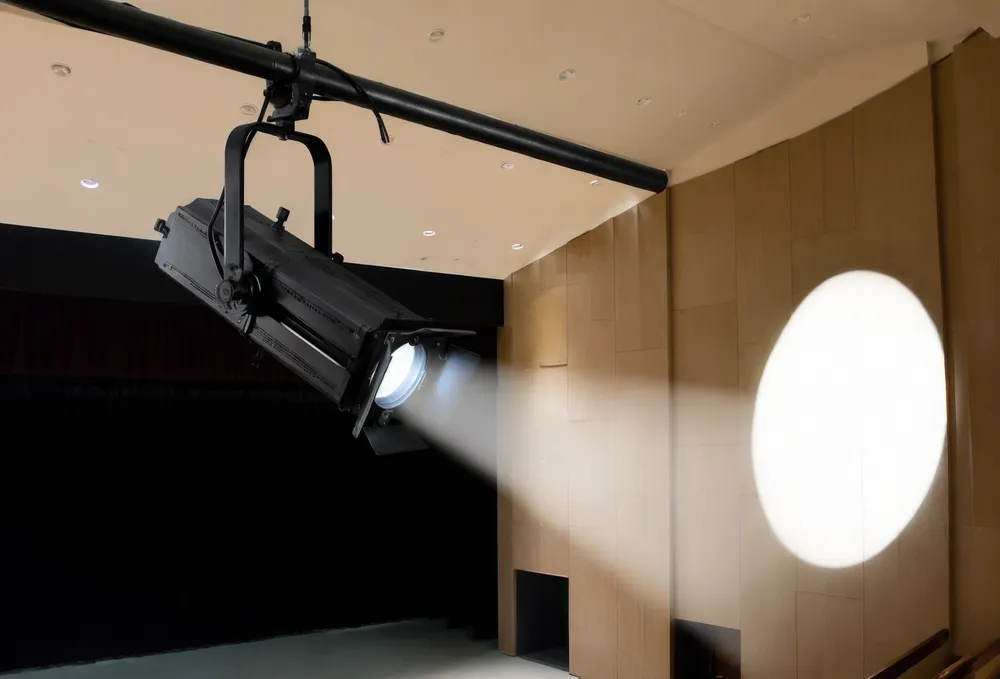
What This Fixture Is and Who It's For
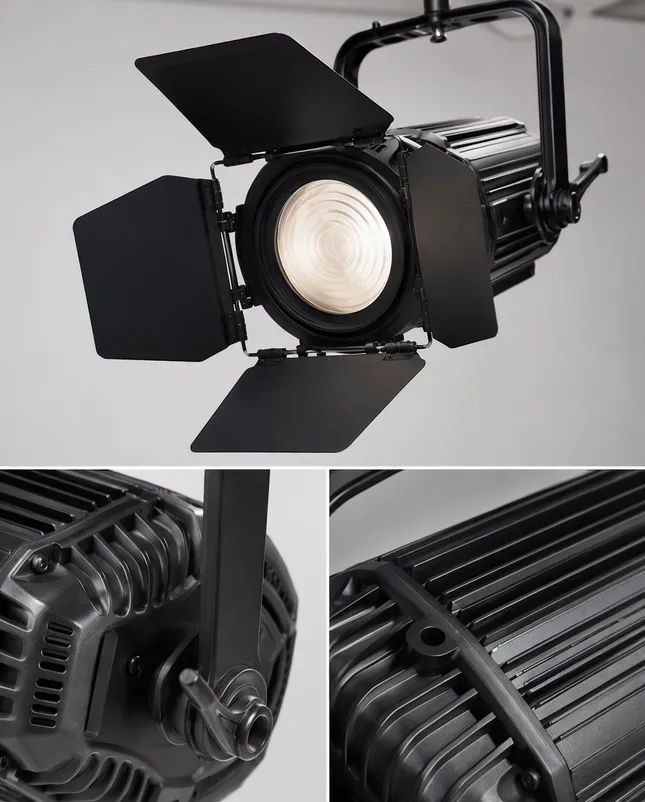
A theatre stage lighting spotlight is a fixed-position profile fixture — the workhorse that handles key lighting, specials, and gobo projection in any venue with a permanent lighting rig. Unlike moving head spotlights that prioritize repositioning speed, or Fresnel fixtures that produce soft washes, profile spots deliver hard-edge beams with precise boundary control through four-blade framing shutters, an adjustable iris, and interchangeable gobo slots.
We manufacture these specifically for the fixed-installation market: drama houses, university theatres, performing arts centers, concert halls, convention auditoriums, and houses of worship with permanent lighting bars. Your buyers bolt these to a pipe grid and run them daily for 5–10 years. That lifespan requirement drives every material and engineering decision we make on this fixture — from the heatsink mass to the shutter pivot bearings to the lens coating hardness.
If you're sourcing for rental fleets or touring rigs where repositioning matters, our moving head spotlight is built for that duty cycle. If your project needs soft-edge washes rather than hard-edge profiles, consider our stage flood lights. This page covers the fixed-focus and zoom profile spots designed to live permanently overhead.
Fixture Identity
-
Type Fixed-position LED profile spotlight
-
Key Controls 4-blade framing shutters, adjustable iris, interchangeable gobo slots
-
Design Life 5–10 years at 8-hour daily cycles
-
Target Venues Drama houses, university theatres, PACs, concert halls, convention auditoriums, houses of worship
Profile Spot vs. Other Fixture Types
| Attribute | Profile Spot (This Fixture) | Moving Head | Fresnel / Flood |
|---|---|---|---|
| Beam Edge | Hard-edge, shapeable | Hard or soft (varies) | Soft-edge wash |
| Framing Shutters | Yes — 4-blade | Some models | No |
| Gobo Projection | Yes — interchangeable slots | Yes | No |
| Repositioning | Fixed-mount, manual aim | Motorized pan/tilt | Fixed-mount |
| Primary Use | Key light, specials, patterns | Dynamic shows, touring | General wash, fill |
The Optical System That Defines Beam Quality
The difference between a theatre spotlight that impresses a lighting designer and one that gets specified out of the next project comes down to the optical train — not the LED wattage printed on the housing.
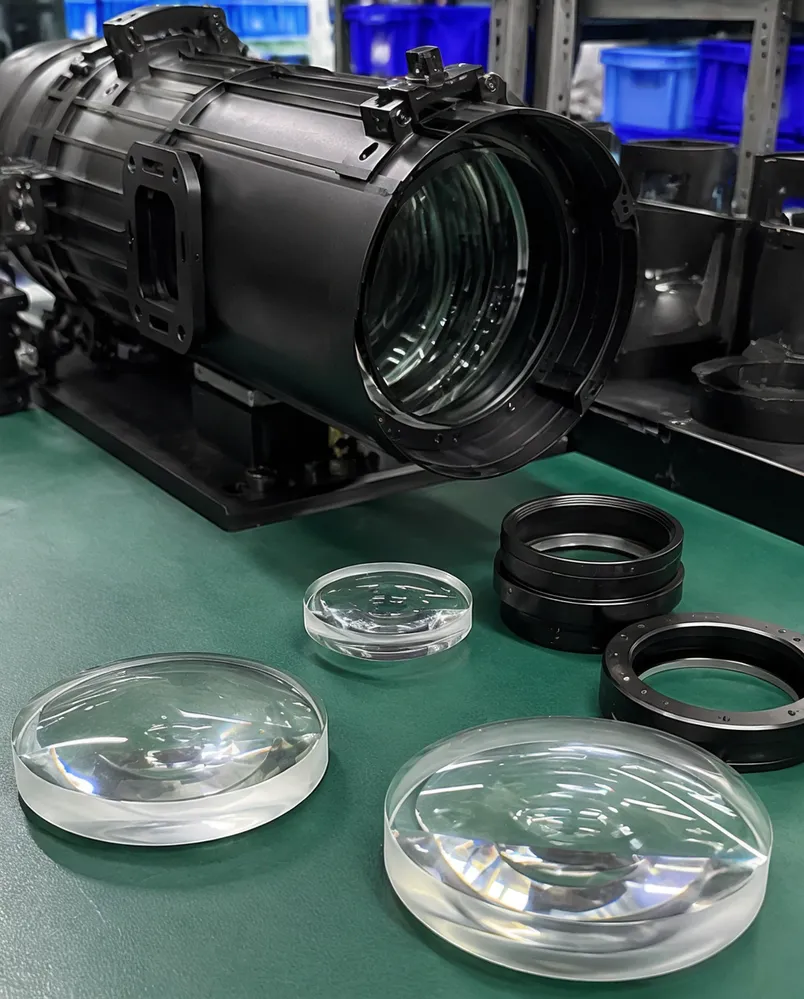
In-House Machined Borosilicate Lenses
We machine our condenser and objective lenses in-house from borosilicate glass rather than sourcing commodity molded optics. The lens-to-source spacing on our profile spots holds ±0.3mm tolerance, verified on every unit with our optical calibration rig after final assembly. That precision gives you a flat, even field across the entire beam aperture — no hotspots in the center, no muddy falloff at the edges.
When your client hangs 30 of these across a proscenium and opens them all to the same beam angle, they read as one uniform system from FOH.
Why Not Molded Acrylic?
We rejected molded acrylic lenses early in development — the thermal expansion coefficient shifted focus calibration after 2,000 hours of sustained use. Borosilicate costs more per unit but eliminated focus drift callbacks entirely.
Gobo Projection Precision
For gobo projection, axial alignment between the gate slot, condenser, and objective becomes critical. A gobo projected at 15–20 meters needs sharp edge definition across the entire image. We set gate-to-lens spacing with precision shim gauges during assembly rather than relying solely on housing casting tolerances. The result: your clients get crisp projected patterns at full throw distance, not soft-focus images that only look acceptable at close range.
LED Bin Consistency: 3-Step MacAdam Ellipse
The LED arrays are binned to 3-step MacAdam ellipse tolerance before entering our SMT line. A 40-unit order of warm white theatre spotlights will measure within ±100K of target CCT from the first unit to the last — consistency you can promise your venue clients without worrying about visible color variation across an installation.
Technical Specifications for Theatre Stage Lighting Spotlight Fixtures
| Parameter | Specification |
|---|---|
| LED Source | High-efficiency COB or multi-chip LED array, 150W / 200W / 300W options |
| Color Temperature | 3200K (tungsten match), 5600K (daylight), or tunable 2700K–6500K |
| CRI | 93+ standard; 96+ available on broadcast-grade models |
| Beam Angle | 15°–35° manual zoom (standard); 10°–45° motorized zoom (premium) |
| Field Angle | Flat-field distribution with <5% center-to-edge intensity variation |
| Dimming | 0–100% smooth, 16-bit resolution, 4 selectable dimming curves |
| DMX Channels | 3ch (basic) / 6ch (standard) / 11ch (extended with gobo + iris) |
| Control Protocols | DMX-512, RDM-ready, standalone manual mode |
| Framing Shutters | 4-blade, individually adjustable, full beam cutoff capable |
| Gobo Slots | 1 rotating + 1 fixed gobo wheel (standard); custom configurations available |
| Iris | Continuously adjustable mechanical iris |
| Housing | Die-cast aluminum body with black powder coat finish, CNC-machined heatsink |
| Lens | Borosilicate glass, multi-coated, anti-reflective front element |
| IP Rating | IP20 (standard indoor) |
| Weight | 8.5 kg (150W) / 12 kg (200W) / 16.5 kg (300W) typical |
| Noise Level | <25 dB(A) at 1 meter (fan speed auto-adjusts to thermal load) |
| Power Input | 100–240V AC, 50/60Hz universal |
| Operating Temperature | 0°C to +40°C |
| Typical L70 Lifespan | 50,000 hours at rated output |
| Mounting | Standard Ω-clamp compatible (48mm pipe), safety wire anchor point |
Specifications shown are standard values for our theatre spotlight range. Exact parameters vary by model and configuration. Contact us for detailed product datasheets with dimensional drawings and photometric files.
Need exact specs for your project?
We supply complete datasheets including dimensional drawings, photometric IES files, and spectral distribution data with every inquiry response.
Get a Quote With Exact SpecsHow We Build Theatre Spotlights Differently
The category page covers our optical engineering approach across the spotlight range. Here's what's specific to the theatre profile series and why it matters for your resale or project margins.
Silent Thermal Management
Theatre audiences sit in silence. A spotlight fan that's acceptable in a live concert venue becomes a liability in a 300-seat drama house.
We use oversized heatsink fins with a proprietary convex surface treatment that increases radiating surface area by 18% compared to flat fins of the same footprint. The axial fan runs at minimum speed for 85% of a typical theatre duty cycle (6–8 hours continuous, 150W–200W).
Our thermal modeling targets LED junction temperature below 80°C at full output before the fan ramps above its baseline — most competing fixtures hit thermal throttling or audible fan noise at the same sustained load.
We tested competitor units during development. Several hit 40+ dB(A) after 3 hours at full output. That gets your fixture spec'd out of the next theatre renovation.
Shutter Mechanism Longevity
Framing shutters on theatre profiles get adjusted during every tech rehearsal and show changeover. The pivot points take thousands of adjustment cycles per year.
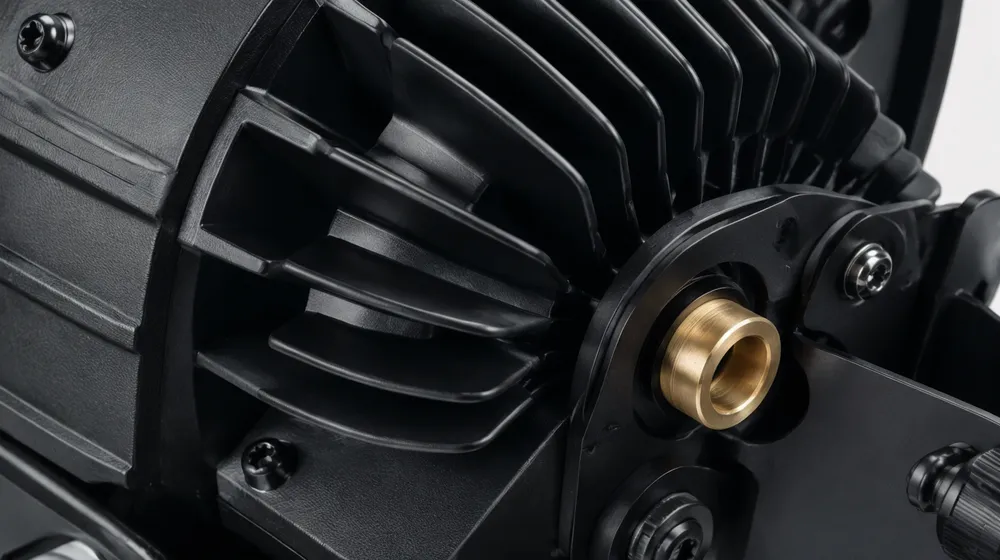
We use sintered bronze bushings on the shutter blade pivots rather than plain steel-on-steel contact. The feel stays smooth after 50,000+ adjustment cycles without developing the play or stiffness that forces a lighting tech to fight the blade into position.
We also heat-treat the shutter blades themselves — 0.8mm spring steel, black oxide coated for non-reflective finish, with a hardness that resists warping even when hit directly by the full beam at close focus.
Gobo Gate Precision
Our gobo gate uses a leaf-spring retention system that holds standard "B-size" and "M-size" gobos without slop or rattle.
The gate aperture is CNC-machined to ±0.05mm — tight enough that projected images stay registered without drift over thousands of hours of gobo rotation.
We supply each unit with two blank gobo holders so your client can have custom gobos cut to fit without guessing the aperture dimensions.
Why This Matters for Your Margins
Theatre fixture specs are written by consultants who've been burned by fan noise, warped shutters, and drifting gobos. The engineering details above aren't cosmetic — they're the difference between your fixture staying on the approved list for the next project or being spec'd out after one problematic installation.
Every component choice here targets the failure modes that generate warranty returns and damage reseller reputation in the theatre vertical specifically.
Commercial Markets for Theatre Stage Lighting Spotlight Inventory
Each market segment below represents a distinct purchasing pattern. Your margin, reorder cycle, and stocking strategy differ by segment — pick the ones that match your distribution channel.
Drama Houses and Performing Arts Centers
40–80 units per venue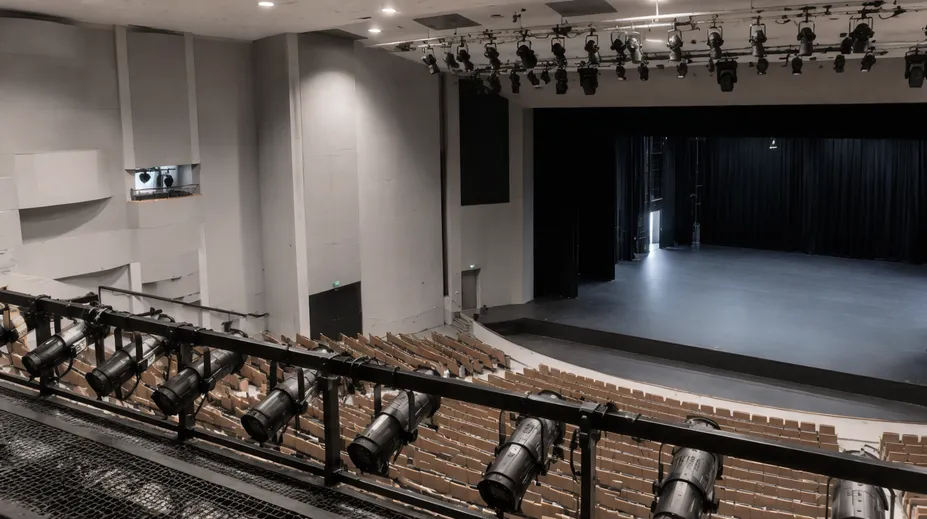
The core market for fixed-profile spotlights. A typical 500-seat theatre specifies 40–80 profile spots across FOH, overhead, and side positions. These are project purchases tied to new construction or renovation budgets, often specified by a lighting design consultant working from an equipment schedule.
Order values are substantial — but the sales cycle is long (6–12 months from specification to purchase order). Your competitive advantage here is offering a fixture that meets the lighting designer's photometric requirements at a landed cost significantly below European and American brands.
We provide IES photometric files and dimensional CAD models in formats your specifying clients can drop directly into their Vectorworks or WYSIWYG plots.
University and School Theatre Programs
12–30 units per auditorium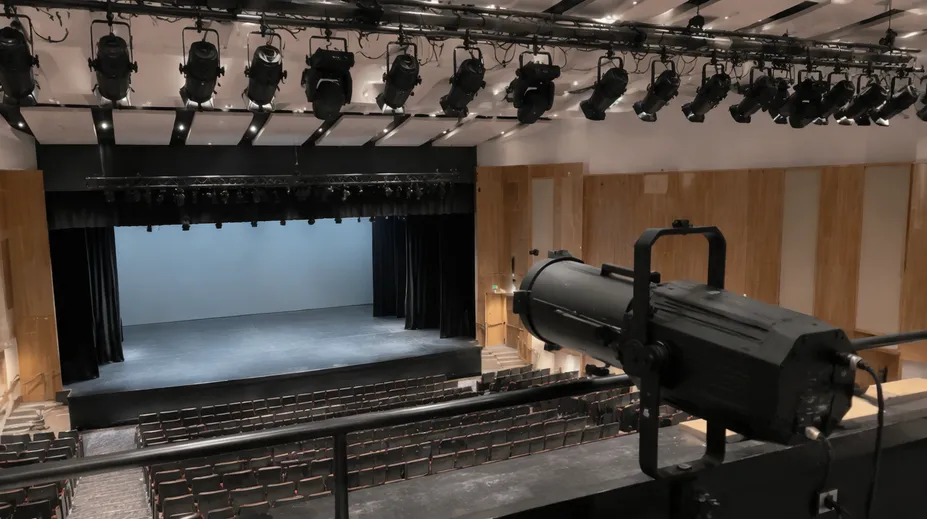
Education facilities purchase in smaller lots — 12–30 units per auditorium — but reorder consistently as programs expand or replace aging halogen fixtures with LED.
University purchasing departments respond to energy-savings arguments (LED retrofit cuts fixture power consumption by 60–70% versus conventional halogen profiles) and maintenance reduction (no lamp replacements for the fixture's useful life). This segment values silent operation for student performances and simple DMX control for student operators learning lighting.
Education has been our fastest-growing theatre segment over the past three years — schools that installed our 150W profiles in 2022 are now reordering the 200W version for their main stage while pushing the original units to rehearsal spaces.
Houses of Worship with Fixed Lighting Systems
8–60 units per facility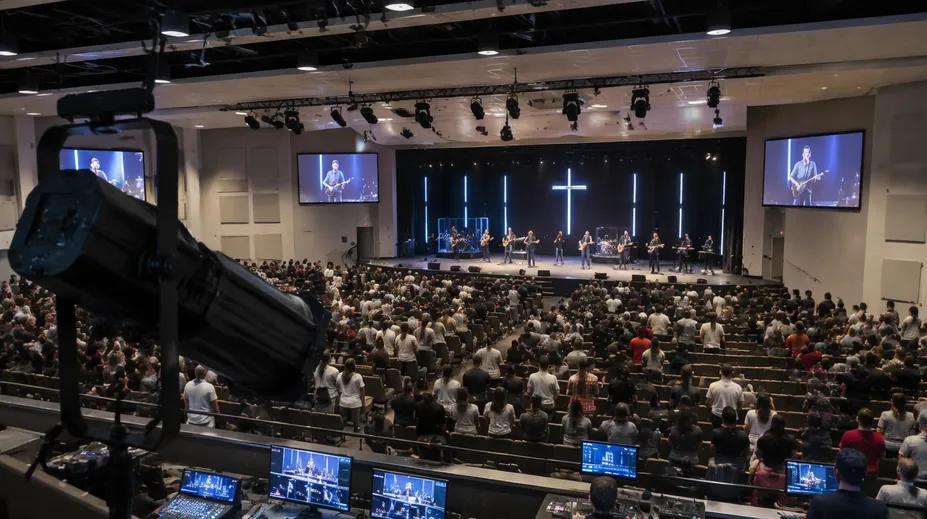
Churches, megachurches, and large worship facilities increasingly invest in theatrical-quality lighting for livestreamed services. They buy concert stage lighting spotlight fixtures with warm white output (3200K), high CRI for camera capture, and silent operation during sermons.
Order sizes range from 8–60 units depending on facility size. The buying pattern: a single project purchase followed by expansion orders as the congregation grows or adds satellite campuses. Volunteer-operated DMX systems mean your fixtures need reliable standalone mode fallbacks.
Our warm white spotlight covers broadcast-optimized CCT — but many worship buyers choose the theatre profile for its gobo capability (logo projection, atmospheric patterns during worship sets).
Concert Halls and Auditoriums
30–100+ units per venue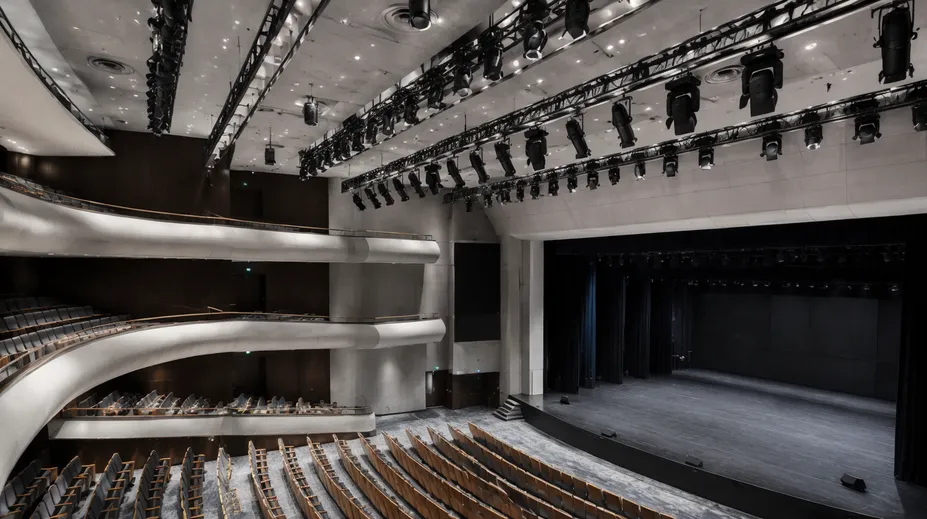
Multi-purpose venues that host both theatrical performances and live concerts need stage lighting spotlight fixtures that handle both applications. Profile spots serve as the architectural lighting layer — the fixtures that stay on the permanent rig regardless of what production loads in below.
Order quantities: 30–100+ for a major civic auditorium. These projects typically go through an integrator or systems contractor who specifies the entire lighting system.
Your value proposition: offering a fixture line that covers the full spotlight category (profiles, moving heads, floods) under one brand, one QC standard, one warranty program — simplifying the integrator's sourcing and post-install support.
Customization Scope for Theatre Spotlight Fixtures
We build theatre spotlights in defined model ranges, and customize within those platforms. Here's what you can specify and what stays fixed.
Freely Customizable
Standard MOQ of 30 units
- LED color temperature: 3200K, 4200K, 5600K fixed white, or tunable CCT
- CRI grade: 93+ standard or 96+ broadcast grade
- DMX channel mode selection and default address
- Housing color: standard black; custom RAL colors on orders above 100 units
- Logo placement: laser-engraved on housing or printed on lens ring
- Packaging: your brand packaging, product photography, and spec sheet included
- Boot screen: your brand logo on the DMX display at power-on
- Connector type: PowerCON (standard) or hardwire terminal; XLR 3-pin or 5-pin
Engineering Review
MOQ may vary
- Beam angle range modification (custom zoom lens sets)
- Non-standard gobo slot configurations (additional wheels, larger gate sizes)
- Wireless DMX integration (built-in CRMX or W-DMX receiver)
- Modified yoke or mounting hardware for non-standard rigging systems
- Custom dimming curve profiles for specific console compatibility
- Extended housing length for increased zoom ratio
Not Available for Modification
Fixed by design
- IP rating (IP20 fixed — for outdoor use, see our IP65 stage flood lights)
- Safety certifications apply to the standard design; major structural changes require re-certification (we handle this, but it adds 4–6 weeks to development)
Lead Time Summary
Custom branding on existing models
Ships within standard lead time: 15–20 days production after sample approval
Engineering modifications
Add 2–4 weeks for prototyping and approval cycles
How the 48-Hour Aging Test Protects Your Warranty Exposure
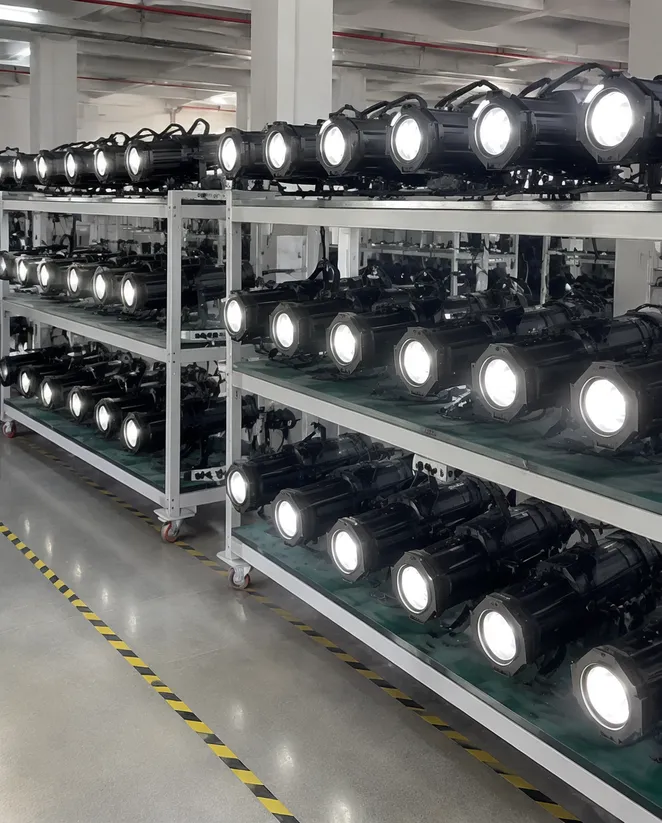
Every theatre spotlight leaves our facility after completing a 48-hour continuous burn-in at full rated output. This isn't a random quality sample — it's 100% inspection on every unit in your order.
What the Aging Test Catches
Early LED Failures
Semiconductor defects that pass bench testing but fail under sustained thermal load. These would otherwise appear 30–90 days after installation, triggering a warranty return. Our rejection rate at aging is about 0.8% — units that would have become your field failures.
Thermal Management Validation
Junction temperature is measured at hours 1, 12, 24, and 48. Any unit showing temperature rise beyond our engineering envelope gets pulled. A heatsink with a machining defect or improperly seated thermal pad reveals itself during sustained operation, not during a 5-minute bench test.
Fan Bearing Noise
Fan bearings that develop audible resonance under sustained rotation show up during the 48-hour run. For theatre fixtures with <25 dB(A) specifications, even marginal bearing noise is grounds for fan replacement before shipping.
Color Drift Under Thermal Stabilization
CCT is measured at cold start and again at hour 48 after full thermal equilibrium. Units showing drift beyond specification limits get flagged for LED module replacement.
The Commercial Value for Your Distribution Chain
Lower field failure rates mean fewer warranty claims flowing back through your distribution chain. We absorb the 0.8% rejection cost at the factory rather than passing defective units through the supply chain where every failure costs 10x more to resolve — return shipping, technician site visits, replacement logistics, and reputation damage with your end client.
0.8%
Factory Rejection Rate
48h
Continuous Burn-In
100%
Units Inspected
10×
Field Failure Cost vs Factory
Packaging and Container Loading for Theatre Spotlight Shipments
Theatre profile spots are optical instruments with calibrated internal assemblies. Our export packaging is designed to survive 30+ days of ocean freight and port handling without optical misalignment.
Individual Unit Protection
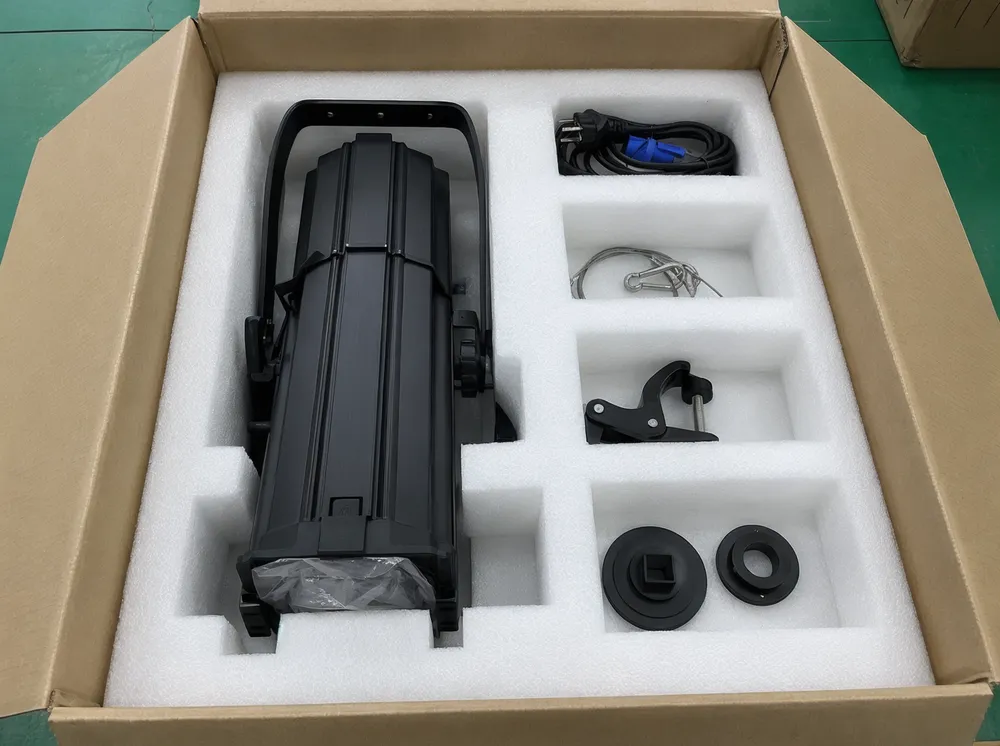
Each fixture sits in a custom-molded high-density EPE foam cradle with 30mm minimum clearance on all sides.
The lens face recesses into a dedicated cavity with PE film wrap to prevent surface marking on the coated glass.
Framing shutter blades are locked in their closed position with a foam insert during transit to prevent pivot loading from vibration.
Accessories (power cable, safety wire, C-clamp adaptor, gobo holders) nest in separate foam compartments.
Container Loading Reference (40HQ)
| Model | Units per Carton | Cartons per 40HQ | Units per Container |
|---|---|---|---|
| 150W Profile (compact) | 2 | 280 | 560 |
| 200W Profile (standard) | 1 | 240 | 240 |
| 300W Profile (large) | 1 | 180 | 180 |
Actual loading varies slightly by model dimensions. We provide exact loading plans and packing lists before each shipment.
0.3%
Our breakage rate on spotlight shipments over the past 12 months
1–2%
Industry typical breakage for optical stage fixtures via sea freight
30+
Days of ocean freight and port handling our packaging is designed to survive
Palletization, WMS barcode labels, and custom packing list formats available on request.
Compliance Documentation That Clears Your Import Path
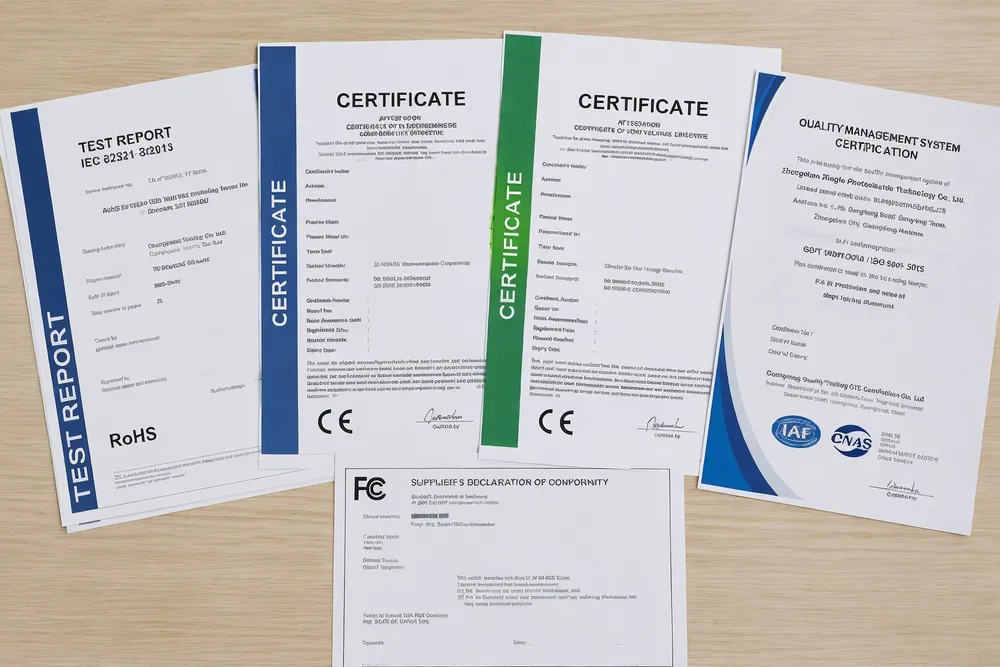
Certifications Included With Shipment
| Certification | Relevance to Theatre Spotlights |
|---|---|
| CE (EMC + LVD) | Mandatory for European venue installations; documentation included with shipment |
| FCC Part 15 | US import clearance for electronic lighting equipment; avoids customs holds |
| RoHS | Required for all electronic products entering the EU market |
| ISO 9001:2015 | Factory QMS certification — satisfies corporate and government procurement audit requirements |
Digital Documentation Package
All test reports, declarations of conformity, and technical files ship digitally with your order. If you're bidding on a government theatre project or institutional tender that requires specific third-party test reports (ETL, TÜV, or country-specific marks), let us know the requirements — we'll confirm which existing reports apply or quote additional testing.
Downstream Regulatory Risk Coverage
We design to IEC 60598-2-17 (luminaires for stage and television) requirements, so your installed fixtures comply with the performance safety standards that venue insurance underwriters reference during facility audits.
Government theatre procurement: In our experience, most government theatre procurement requires CE or FCC plus a valid ISO 9001 certificate from the manufacturer — all standard documentation we provide proactively.
Frequently Asked Questions About Theatre Stage Lighting Spotlights
What beam angle should I specify for a theatre spotlight at different throw distances?
For a 10–15 meter throw (typical FOH to downstage), a 26° fixed or 15°–35° zoom profile gives you a 4.5–9 meter diameter pool — enough to cover a solo performer to a small group scene. At 15–25 meter throws (FOH to upstage in larger houses), you need a narrower 15°–20° angle to maintain useful intensity.
For side-light positions at 5–8 meter throw, wider 36°–50° angles work for body washes.
We can supply mixed beam angle configurations within the same order — specify your venue's rigging plan and throw distances, and our engineering team will recommend the angle mix.
How does LED colour temperature choice affect the perceived warmth of stage lighting in theatre?
Conventional theatre lighting (halogen profiles) produces 3200K output that designers treat as baseline. Our 3200K LED theatre spotlights match this expected warmth for productions that rely on traditional lighting language.
The 5600K option works for productions wanting a cooler, daylight feel or venues that dual-use for corporate presentations.
Tunable CCT (2700K–6500K) costs more per unit but covers both applications — worth specifying if you supply multi-purpose venues that switch between theatrical and corporate events weekly.
Why do some LED profile spots develop a visible hotspot in the center of the beam?
Hotspots result from incorrect lens-to-source spacing in the optical train. If the condenser sits even 1mm outside its design position relative to the LED array, the beam develops uneven intensity — bright center, dim edges. This is a manufacturing tolerance problem, not an inherent LED limitation.
We verify lens positioning on every unit with an optical calibration rig after assembly, holding ±0.3mm. If you've experienced hotspot issues with a previous supplier, it likely means their housing casting tolerances aren't tight enough to position the optical elements correctly without individual unit calibration.
What is the typical lifespan of theatre stage lighting spotlight fixtures before replacement?
LED theatre spotlights should deliver 50,000 hours at L70 (maintaining 70% of initial output) before lumen depreciation reaches replacement threshold. At 8 hours daily use, 300 days per year, that's 20+ years of active service.
Mechanical components (shutters, iris, gobo rotation) are the more likely replacement triggers — properly built, they should last 10–15 years of daily use.
Specify fixtures with field-replaceable LED modules so your venue client can upgrade to newer LED technology in year 8–10 without replacing the entire housing and optic assembly.
What's the noise specification I should look for in theatre spotlight fixtures?
For drama and spoken-word performance venues, specify <25 dB(A) measured at 1 meter. For musical theatre and concert applications where ambient stage sound masks fan noise, <30 dB(A) is acceptable.
Be cautious with manufacturer noise claims — some specify noise at minimum fan speed rather than under sustained full-output conditions. Our <25 dB(A) spec is measured after 4 hours of continuous full-output operation when the thermal system has reached equilibrium — not at cold start when the fan hasn't ramped.
What's the minimum order for theatre spotlight fixtures with custom branding?
30 units per SKU for OEM branding on any existing theatre spotlight model. That includes your logo on the fixture housing, branded packaging, and your company name on all documentation.
For new optical configurations or modified zoom ranges, first-run minimums are typically 200 units to amortize engineering and tooling costs — dropping to 30 units on subsequent reorders.
Sample turnaround for branded units: 7–10 days from artwork approval.
If This Fixture Isn't Quite Right
Your sourcing decision depends on the application. Here's where sibling products in our spotlight range fit:
Moving Head Spotlight
Need repositioning capability? Handles touring rigs and rental fleets where fixtures need to pan/tilt between cues.
DMX Spotlight
Need full DMX system integration with color mixing? Expanded channel modes and RDM remote configuration for large integrated installations.
Warm White Spotlight
Need broadcast-optimized CCT with CRI 96+? Tuned specifically for camera work and livestream environments.
Stage Flood Lights
Need wide even coverage rather than focused beams? Cover cyclorama and wash positions where a profile spot's narrow beam doesn't apply.
DJ Spotlight
Sourcing for mobile DJs or small venues on budget? Prioritizes compact size and low weight over optical refinement.
All six spotlight types share the same core manufacturing standards, certification package, and OEM/ODM support — so you can mix fixture types within a single order without managing multiple supplier relationships.
Start Your Theatre Spotlight Inquiry
Most theatre spotlight buyers begin with 2–3 sample units to evaluate beam quality, shutter feel, and noise level in their own testing environment before committing to a production order. We ship samples from our standard range within 5–7 days.
Custom Project Support
If you have a specific project — a venue lighting schedule, a competitor fixture you want matched or improved, or a custom specification from a lighting designer — send it to us. Our optical engineering team will confirm which existing model fits, recommend modifications if needed, and return a detailed quotation with photometric data and dimensional drawings within 48 hours.