

Stage Lighting Spotlight Factory-Direct from GDMonkey
Professional stage lighting spotlights engineered and manufactured in our 16,700 m² facility in Guangdong, China. Six spotlight configurations — theatre profiles, moving heads, DMX-controlled, warm white, flood, and DJ spots — produced across 6 dedicated lines with 350,000-unit annual capacity. OEM/ODM from 30 units.
What We Manufacture and How It Gets to You
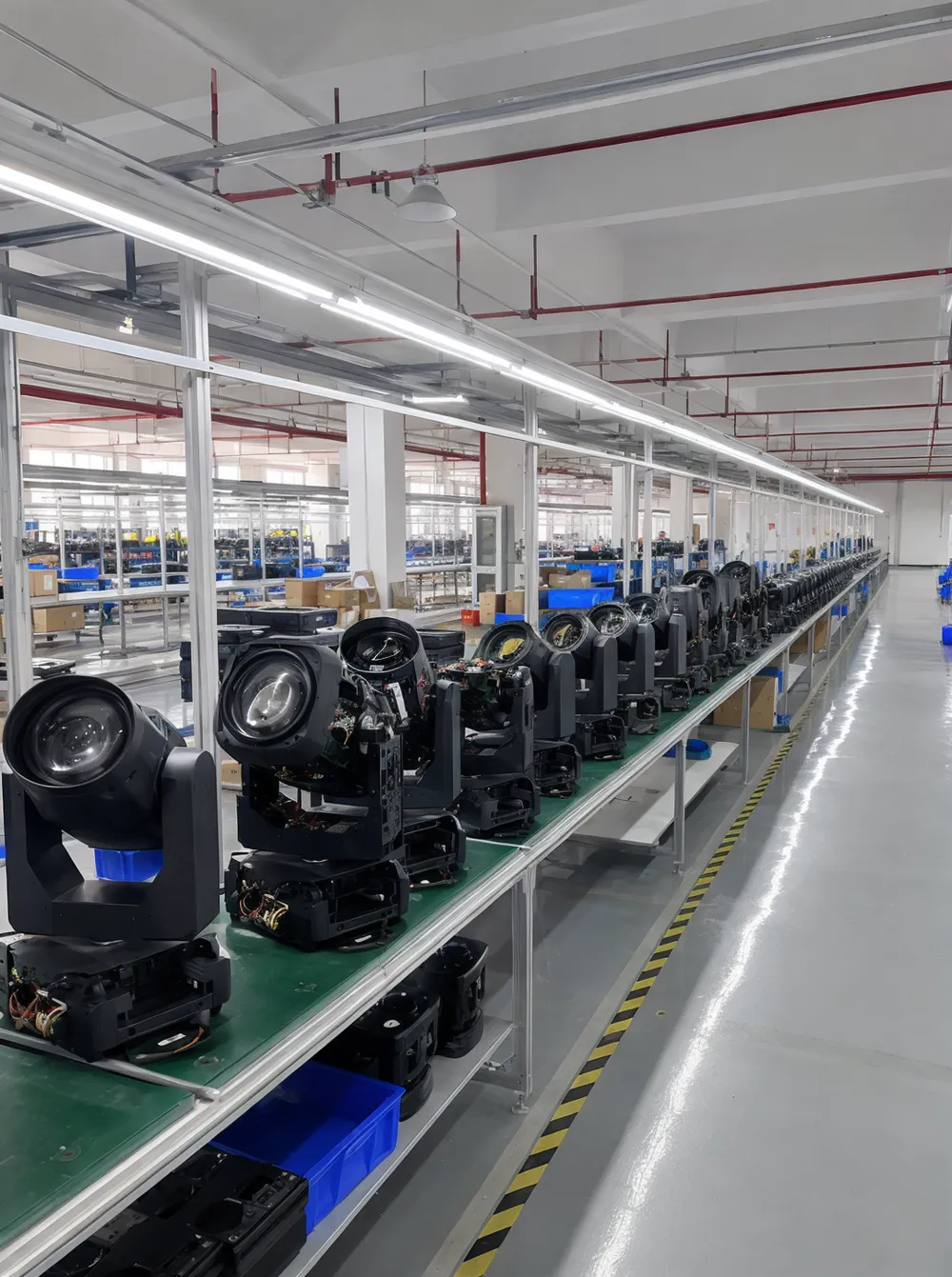
GDMonkey produces stage lighting spotlights — the focused-beam fixtures that handle key lighting, follow spots, gobo projection, and accent work on professional stages. We're the factory. Your purchase order goes to the same building where the aluminum gets machined, the LEDs get mounted, and the optics get aligned. No trading company sits between your inquiry and our production floor.
Our spotlight category covers the full application range: fixed-installation theatre profiles for drama houses and auditoriums, moving head spotlights for touring rigs and event rental inventory, DMX-controlled units for integration into larger lighting systems, warm white spotlights for broadcast and worship environments, stage flood lights for even wash coverage, and compact DJ spotlights for mobile entertainment packages. Six product lines under one category means you consolidate your spotlight sourcing with a single factory — one QC standard, one logistics coordinator, one engineering contact for custom requests.
We've been building focused-beam fixtures since 2014, when our first LED profile spot replaced a halogen unit for a Southeast Asian theatre chain. The optical challenge is different from wash lights — spotlights demand precise edge definition, uniform flat fields, and repeatable color temperature across production runs. That's where our 15-person engineering team and automated SMT lines earn their keep.
Engineering Note: Our early LED profiles had a hotspot problem until we redesigned the condenser lens geometry in 2016 — hard-won knowledge that's now baked into every fixture we produce.
Direct Supply Chain
No trading company intermediary. Your inquiry reaches the engineers who design and build the fixtures.
6 Product Lines, 1 Factory
Consolidate spotlight sourcing under one QC standard, one logistics coordinator, one engineering contact.
Optical Precision Since 2014
Edge definition, uniform flat fields, and repeatable color temperature across production runs — refined over a decade.
Spotlight Product Line Overview
Six spotlight configurations covering the full application range — from permanent theatre installs to mobile DJ rigs. Each line is purpose-engineered for its target deployment environment.
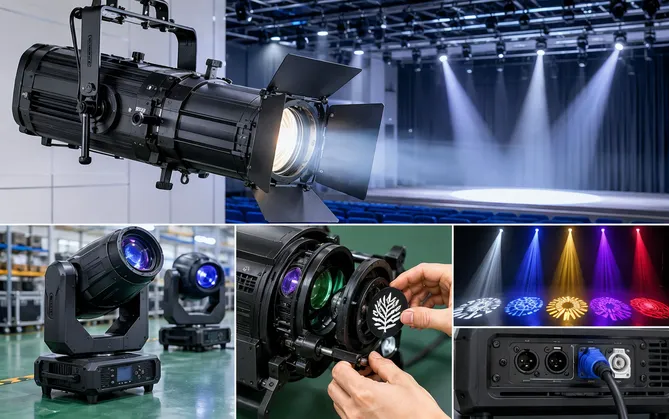
Theatre Stage Lighting Spotlight
Fixed-focus and zoom profile spots designed for permanent installation in theatres, auditoriums, and performing arts centers. Framing shutters, iris control, and gobo slots for precise beam shaping. Built to handle daily 8-hour run cycles without optical degradation or mechanical fatigue over 5–10 year service life.
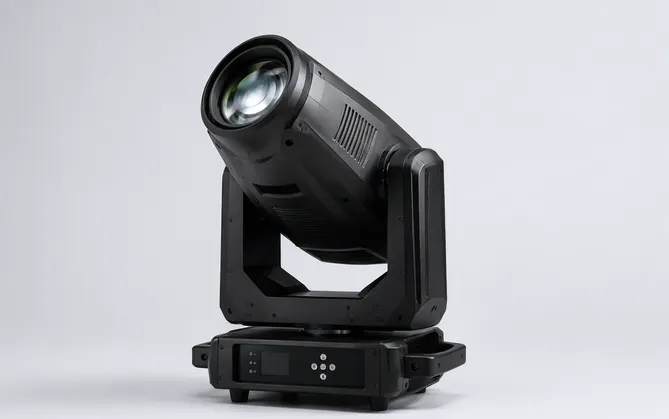
Moving Head Stage Lighting Spotlight
Pan/tilt spotlight heads with motorized focus, zoom, and gobo rotation. Built for touring companies, rental houses, and event production firms needing spotlight precision with repositioning speed. Steel-core stepper motors with planetary gear reduction — positioning accuracy holds after 50,000+ movement cycles.
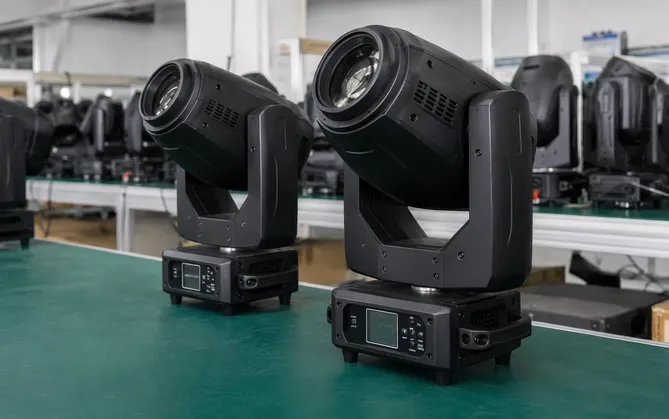
DMX Stage Lighting Spotlight
Full DMX-512 protocol integration — addressable dimming, color mixing, motorized focus, and remote gobo selection. Standard DMX and RDM-ready for remote diagnostics without sending a technician up a ladder. For system integrators and lighting designers who need every fixture on a single control bus.
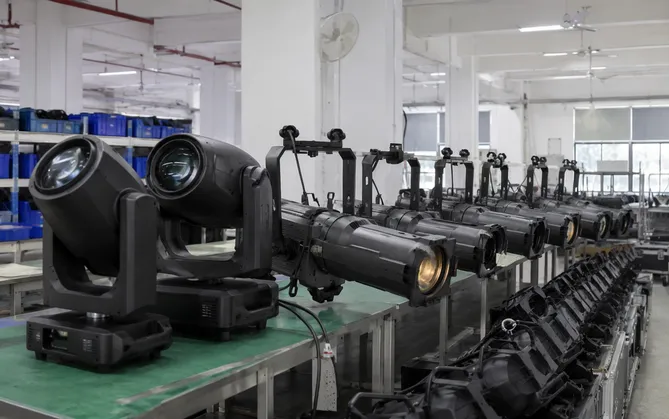
Warm White Stage Lighting Spotlight
Dedicated warm white and tunable CCT spotlights for broadcast studios, houses of worship, and corporate presentation spaces. CRI 95+ LED arrays with ±100K color consistency across your entire order batch — on-camera skin tones stay natural, mixed installations show no visible color shift between units.
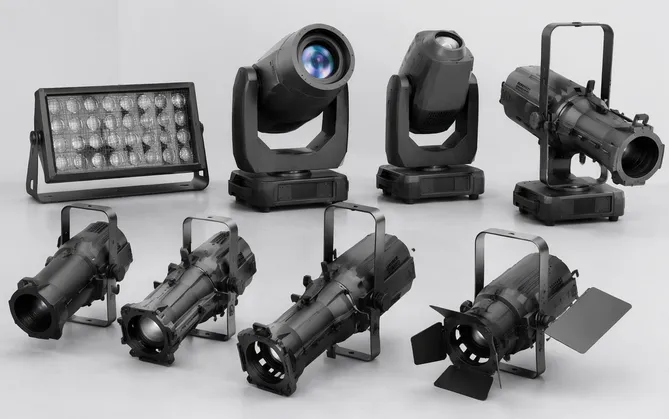
Stage Flood Lights
Wide-angle flood fixtures that complement spot positions — even field coverage for cyclorama work, stage washes, and architectural accent lighting. IP65-rated options for outdoor stages and permanent installations where weather exposure is a factor.
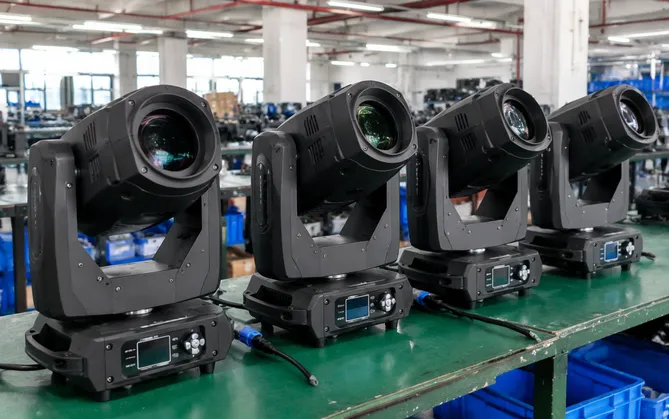
DJ Spotlight Lights
Compact, lightweight spot fixtures for mobile DJ rigs, small venues, and entertainment rental fleets. Pin spots, mini profiles, and narrow-beam effects sized for T-bar mounting and quick setup. Low weight and clamp compatibility prioritized over raw output — your mobile operators move them 200+ nights a year.
Need a spotlight configuration not listed here?
OEM/ODM development starts from 30 units. Our engineering team handles custom optics, housing, and control protocol requirements.
Technical Specification Ranges Across the Spotlight Category
These are category-level ranges covering the full spotlight line. Individual product pages carry exact specifications, photometric data, and dimensional drawings for quoting and specification writing.
Light Source & Output
Optics & Beam
Physical & Environmental
Individual product pages for theatre spotlights, moving head spotlights, and DMX spotlights carry exact specifications, photometric data (IES files where applicable), and dimensional drawings for quoting and specification writing.
Optical Engineering: Where Spotlight Quality Lives or Dies
A spotlight is an optical instrument. The LED source is maybe 20% of what determines beam quality — the other 80% is lens geometry, reflector profile, and mechanical precision in the optical train. This is where we invest engineering hours and production tolerance that you'd never see in a datasheet comparison.
In-House Optics Manufacturing
We machine our own condenser lenses and reflectors in-house rather than sourcing commodity optics. The lens-to-source distance on a profile spot needs to sit within ±0.3mm to maintain flat-field uniformity across the beam — if that tolerance drifts, you get hotspots in the center and muddy edges.
Our optical calibration rigs verify each unit after assembly. Most factories do sample checks on optical alignment. We measure every fixture. The 45 seconds it adds per unit prevents the callback where your client says "these 12 spots all look different from FOH."
Gobo Projection Precision
For gobo projection, optical precision matters even more. A gobo image projected at 15 meters needs sharp edge resolution — any axial misalignment between the gate, condenser, and objective lens shows up as soft focus or uneven illumination across the projected pattern.
We set gate-to-lens spacing with shim gauges rather than relying on housing casting tolerances alone. This delivers consistent edge sharpness across the full projection distance envelope.
LED Binning & Color Consistency
The LED arrays themselves are binned to ANSI/NEMA 3-step MacAdam ellipse standards before they enter our production line. Your 500-unit order of warm white profiles will read within ±100K of target CCT — unit 1 matches unit 500 under measurement, not just by eye.
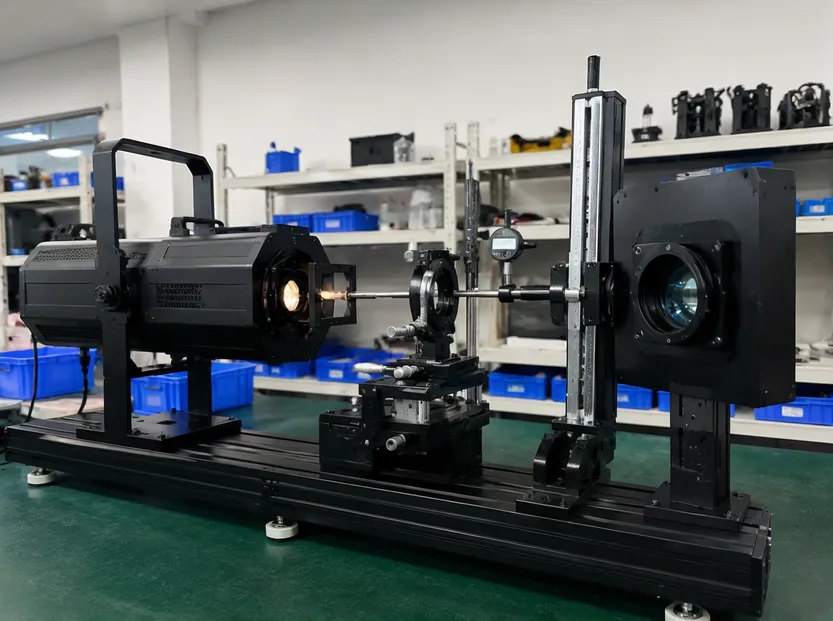
±0.3mm Tolerance
Lens-to-source distance calibrated on every unit for flat-field uniformity across the full beam angle.
100% Optical QC
Every fixture measured post-assembly, not sample-checked. Consistent output across your full order.
3-Step MacAdam Binning
ANSI/NEMA standard LED binning. ±100K CCT consistency — unit 1 matches unit 500 under measurement.
Shim-Gauge Gobo Alignment
Gate-to-lens spacing set with precision gauges for sharp gobo edge resolution at 15m+ throw distances.
Markets Your Spotlight Inventory Serves
Stage lighting spotlights sell into distinct commercial segments, each with different fixture requirements and purchasing patterns.
Theatre & Performing Arts
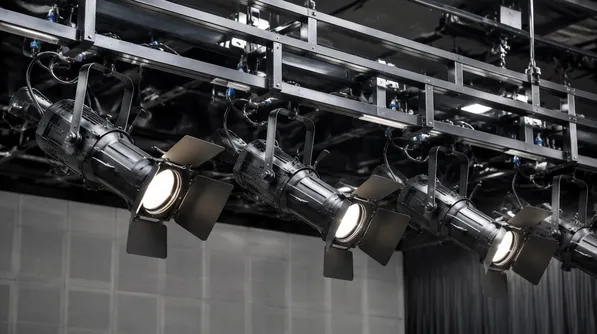
Drama houses, university theatre programs, community performance centers, and touring production companies. These buyers purchase in project lots of 20–80 units, typically specify zoom profiles with framing shutters, and prioritize silent operation and CRI above 90.
Repeat orders with facility renovations every 7–10 years.
Houses of Worship
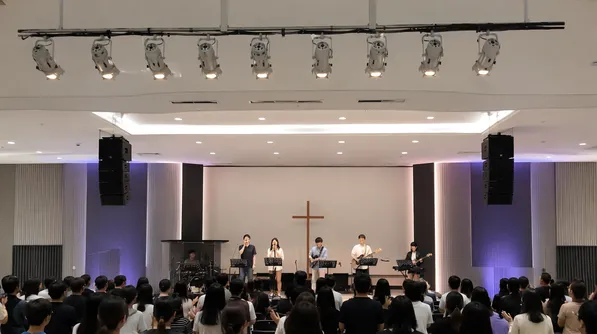
Churches, megachurches, mosques, and temples with live production needs. This segment has grown consistently — congregations invest in broadcast-quality lighting for livestreaming. They buy warm white spotlights with high CRI, value quiet fans, and increasingly specify DMX control for volunteer-operated systems.
Order sizes: 8 units (small churches) to 60+ (large worship campuses).
Event Rental & Production
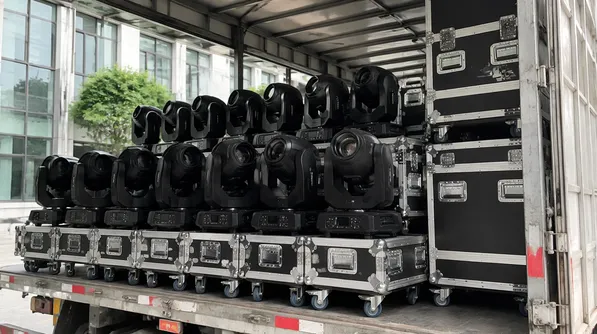
Rental houses and production companies that stock spotlights as inventory assets. Moving head spotlights dominate here — versatility and durability determine rental ROI. These buyers need fixtures that survive 300+ truck loads per year, clamp reliably, and address predictably on DMX.
Fleet batches of 40–200 units. Consistency across inventory is critical.
Broadcast & Corporate AV
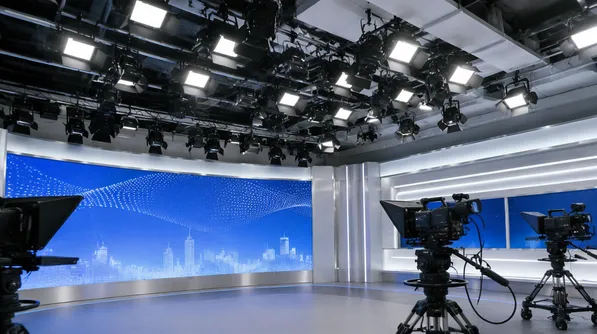
Television studios, corporate event spaces, conference venues. Tunable CCT and CRI 95+ are non-negotiable. Beam quality must be flicker-free at any camera frame rate. Strict specification compliance on every unit.
10–30 units per project. Higher per-unit value.
Mobile Entertainment & DJ
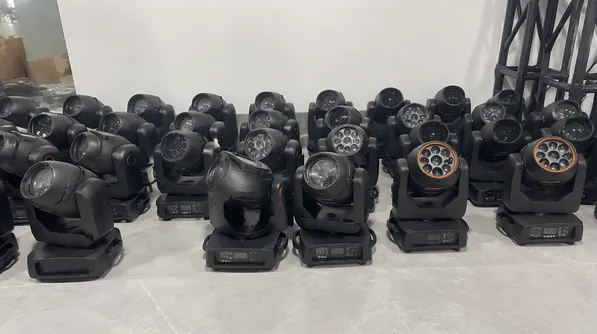
DJ operators, small venue owners, karaoke bars, event decorators. They buy compact, affordable spot fixtures in mixed configurations. Lower per-unit value but high volume and frequent reorders as rental fleets expand.
Mixed configurations. Fleet expansion drives repeat purchasing.
Product Match
Theatre Spotlights — zoom profiles for performing arts
Product Match
Moving Head Spotlights — rental fleet workhorses
Product Match
Warm White Spotlights — worship & broadcast CRI
How We Prevent the Failures That Create Warranty Returns
Stage spotlights run hot for extended hours under demanding conditions. The failure modes are predictable — and preventable at the manufacturing stage if you build the fixture correctly from the start.
Lumen Depreciation From Thermal Stress
The failure: An LED junction that runs consistently above 90°C will lose 30% of its output within 2,000 hours.
Our prevention: We design heatsink geometry specific to each fixture's wattage, not generic across the line. Our 200W profile spot uses a different fin spacing and surface area than our 100W unit, even though the housing looks similar externally.
Verification Standard
Junction temperatures verified below 85°C at maximum sustained output during the 48-hour aging test.
Color Drift Across Production Batches
The failure: When your client installs 40 spotlights and 6 of them read visibly warmer than the rest — that's an incoming LED bin control problem at the factory.
Our prevention: We reject LED reels with more than 3% CCT deviation from target before they enter the SMT line. Each production batch pulls from the same LED bin lot, and we record lot traceability so replacement units 18 months later match the original installation.
Bin Control
<3% CCT deviation threshold. Same-lot matching for replacement units up to 18 months post-installation.
Gobo Motor & Color Wheel Failure
The failure: Moving parts in spotlights are the first point of mechanical failure.
Our prevention: We use sealed bearings on all gobo and color wheel assemblies, with stepper motors rated for 100,000+ positioning cycles. Every moving head unit runs a 2,000-cycle accelerated test on the pan/tilt and gobo mechanisms during aging — units that develop resonance, gear noise, or positioning error at speed get pulled before packaging.
Aging Protocol
2,000-cycle accelerated test. Sealed bearings. Stepper motors rated 100K+ cycles.
DMX Communication Dropouts
The failure: Intermittent DMX response usually traces to poor connector termination or marginal optocoupler isolation on the receiver circuit.
Our prevention: We use branded Neutrik-compatible XLR connectors (not the unbranded pot-metal types that develop contact resistance after 50 insertions), and our DMX input circuits include transient suppression and proper line termination. Your lighting tech won't chase phantom addressing errors on our fixtures.
Connector Standard
Neutrik-compatible XLR. Transient suppression on DMX input. Proper line termination on receiver circuits.
EMC Pre-Compliance: Protecting Venue Integration
We run EMC pre-compliance testing in-house before sending fixtures for formal certification. A spotlight with poor EMC shielding will interfere with wireless microphone frequencies — a venue integration problem that comes back to you as the supplier, not to us. Our shielding approach eliminates this before the fixture leaves the factory.
OEM & ODM Spotlight Development
Order spotlights from our existing range with your branding, or develop a custom fixture from scratch. Both paths start at 30 units MOQ.
OEM
Your Brand, Our Fixture
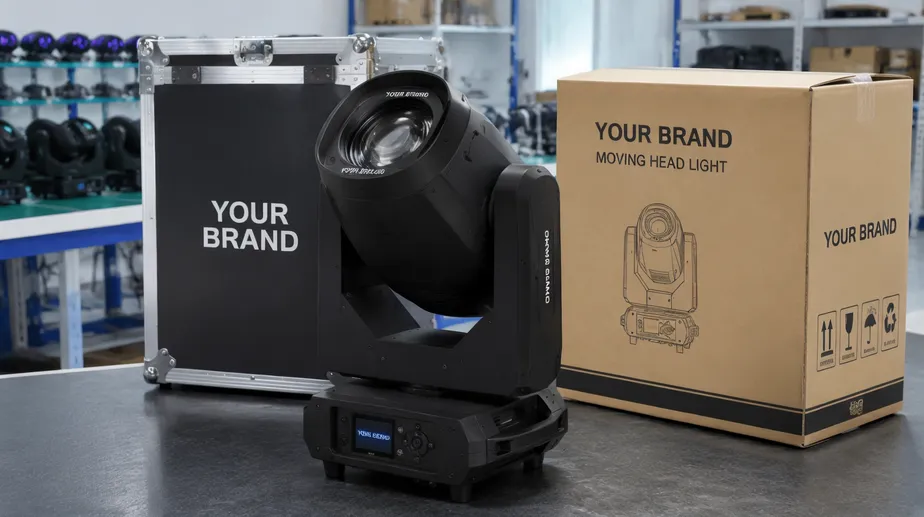
Take any spotlight in our production range, apply your logo on the housing and lens ring, print your packaging, flash your boot screen on the display, and ship under your brand identity.
Sample turnaround: 7–10 days
Product photography, technical drawings, and spec sheets formatted for your catalog — ready for your sales team to present without additional creative work.
ODM
Your Concept, Our Engineering
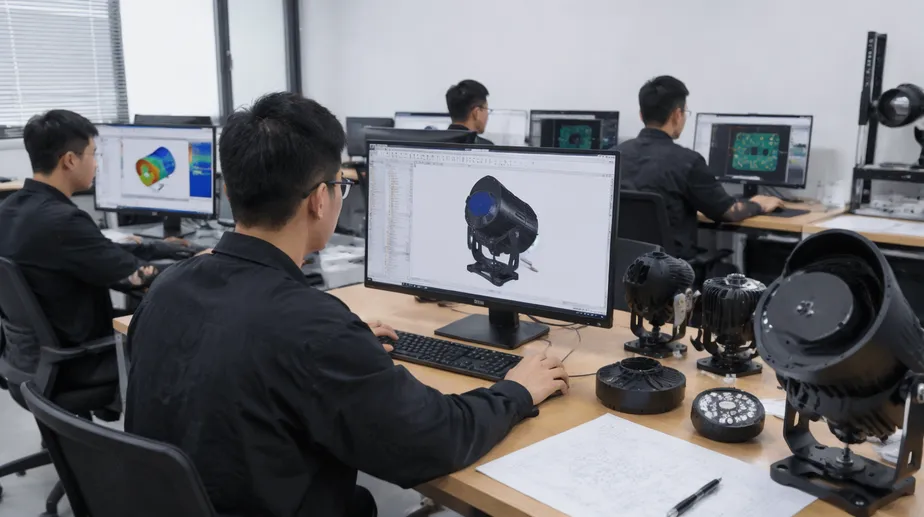
Bring us a beam specification, a housing concept, a competitor unit you want improved, or a project requirement document. Our 15-engineer team handles optical design, thermal simulation, PCB layout, firmware development, and mechanical tooling.
Typical development: 3–4 iteration cycles from concept to approved production sample
IP protection: Mold ownership stays with you. We sign NDAs covering your custom designs.
What Buyers Typically Customize on Spotlights
Beam Angle & Zoom Range
Tuned to specific throw distances
CCT Range & CRI Targets
For broadcast or theatrical specifications
Housing Color & Finish
Standard black or custom RAL colors on runs over 100 units
Control Protocol Additions
Art-Net, sACN, wireless DMX
Connector Type & Placement
powerCON, XLR 3-pin vs 5-pin, RJ45
Mounting Hardware & Yoke
Designed for specific rigging systems
Firmware Features
Custom preset scenes, wireless app control, RDMX integration
Minimum 30-unit order applies to custom branding. For new tooling (custom housing shapes), minimums depend on tooling amortization — typically 200–500 units for the first production run, dropping to 30 units on reorders once the tool exists.
Packaging, Loading, and Getting Spotlights to Your Warehouse Intact
Spotlights have fragile optical assemblies — lenses, reflectors, and calibrated mechanisms that don't forgive rough handling during ocean freight. Our packaging is engineered for export survival, not just shelf presentation.
Individual Unit Packaging
-
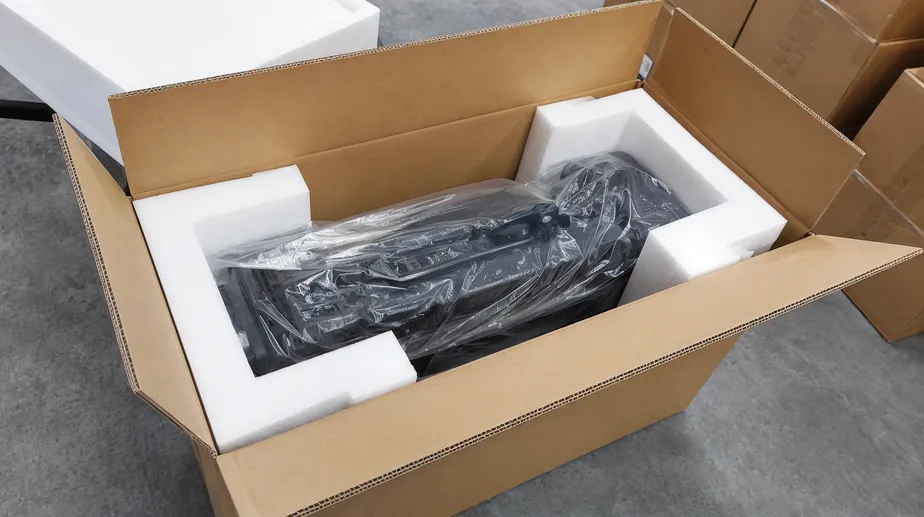
High-density molded EPE foam inserts custom-cut to each fixture model
-
Lens face sits in a recessed cavity with 25mm clearance to the carton wall
-
Optical elements never contact packaging material directly — a PE film wrap prevents surface marking on coated lenses
-
Accessories (power cable, safety wire, clamp adaptor) nest in separate compartments to prevent contact damage
Master Carton Specs
-
Double-wall corrugated board rated for overseas stacking (ECT 44+)
-
Each master carton holds 1–4 units depending on fixture size
-
Stacking strength tested to support 5-high container loading without compression on the bottom layer
Container Loading Reference (40HQ)
| Fixture Type | Units / Carton | Cartons / 40HQ | Units / Container |
|---|---|---|---|
| DJ Pin Spots (compact) | 4 | 320 | 1,280 |
| Theatre Profile 200W | 1 | 240 | 240 |
| Moving Head Spotlight | 1 | 180 | 180 |
| Stage Flood Light | 2 | 260 | 520 |
These are conservative loading numbers — actual counts vary slightly by model dimensions. We provide exact loading plans with packing list confirmation before each shipment.
Palletization & WMS Integration
Palletization available on request for buyers whose warehouses receive on dock-level with forklift. Standard export pallet dimensions (1200×1000mm) with stretch wrap and corner protectors.
Carton barcode labels, pallet ID labels, and packing lists formatted to your WMS import template — tell us your format and we match it.
0.3%
Breakage Rate (Last 12 Months)
Measured as units with any shipping damage claim. For reference, the typical industry rate on optical stage fixtures runs 1–2% for sea freight. Our packaging engineering is why.
Certifications and Compliance Documentation Ready for Import
ISO 9001:2015
Quality ManagementCoverage: Quality management system
Buyer audit pre-qualification; required by most corporate procurement policies.
CE (EMC + LVD)
European MarketCoverage: Electromagnetic compatibility + electrical safety
Mandatory for European market entry; documentation ships with goods.
FCC Part 15
US MarketCoverage: Radiated and conducted emissions
Required for US import; eliminates customs holds on electronic lighting equipment.
RoHS
Hazardous SubstancesCoverage: Restricted hazardous substances
EU directive compliance; required for all electronic products entering the European market.
IP65 / IP67
Outdoor ModelsCoverage: Ingress protection (applicable outdoor models)
Verified dust and water resistance; supports outdoor installation warranties.
Documentation Ships Proactively
All certification documentation — test reports, declaration of conformity, technical files — is available in digital format for your import paperwork. We provide these proactively with shipment documents rather than waiting for you to request them.
If you're bidding on a government or institutional project that requires specific third-party test reports, let us know the requirements and we'll confirm which existing reports apply or commission additional testing as needed.
Frequently Asked Questions About Stage Lighting Spotlights
What IP rating do I need for outdoor stage lighting spotlights?
For temporary outdoor events — festival stages, outdoor concerts, touring shows with tented stages — IP54 is workable if fixtures are mounted under roof cover. For permanent outdoor installation or any position exposed directly to rain, specify IP65 minimum.
Our IP65 spotlights use silicone gasket seals on all housing joints and potted driver assemblies. IP67 is available for ground-level flood positions where standing water contact is possible.
Don't over-spec IP rating for indoor-only use — IP65 housings add weight and cost that provide zero benefit inside a theatre.
Why do LED spotlights lose brightness after 6-12 months of use?
Lumen depreciation on LED spotlights is almost always thermal management failure — the LED junction runs too hot because the heatsink is undersized for the fixture's actual duty cycle.
A spotlight rated for "150W" but running LED junction temperatures above 95°C will lose 20-30% output within 3,000 hours. Ask your supplier for junction temperature data at full rated load, sustained for 6+ hours.
Our aging test catches this — fixtures that show thermal throttling or abnormal depreciation during the 48-hour burn-in get rejected before shipping.
How do I choose between a profile spot and a Fresnel spotlight for theatre?
Profile spots give you a hard-edge beam with framing shutters and gobo projection capability — use them for key lighting, specials, and any position where you need defined light boundaries.
Fresnel spots produce a soft-edge wash with adjustable beam width — use them for general area coverage and blending.
For a typical theatre renovation, your lighting designer's plot will specify the mix. If you're stocking for rental, profile spots rent more frequently because they're more versatile — start with a 70/30 profile-to-Fresnel ratio and adjust based on demand.
What DMX channel count should I spec for stage lighting spotlights?
Basic dimming-only spotlights run 1-3 DMX channels. Full-featured moving head spotlights with color mixing, gobo selection, zoom, and effects need 16-24 channels.
For system design, count your total channel requirement against your DMX universe capacity (512 channels per universe). If you're running 30+ moving head spotlights, you'll need multiple universes — specify Art-Net or sACN capability on the fixtures to simplify network distribution.
Our DMX spotlights all support RDM for remote configuration, which saves your install tech significant time during initial addressing.
What's the minimum order quantity for custom-branded stage lighting spotlights?
30 units per SKU for OEM branding on any existing spotlight model in our range. That covers your logo on the fixture, custom packaging, and your brand name on documentation.
For ODM projects requiring new tooling (custom housing design, new optical system), first production runs typically start at 200-500 units to amortize tooling costs. After the tool exists, reorders drop back to 30-unit minimums.
We can ship branded samples within 7-10 days for your sales team to evaluate before committing to a production order.
How do I prevent color inconsistency when ordering large batches of spotlights?
Color inconsistency across a production batch is an LED binning control problem. Ask your manufacturer what bin tolerance they accept on incoming LED reels — anything wider than 3-step MacAdam ellipse will show visible variation to the eye.
We reject LED lots exceeding 3% CCT deviation from target before production starts, and each order pulls from a single bin lot.
For replacement orders months later, we maintain bin lot traceability so units shipped in Q4 match the Q1 installation. Specify this requirement explicitly with any supplier — not all factories control it at this level.
Start a Conversation About Your Spotlight Requirements
Most buyers in this category begin with 2–3 sample units to evaluate build quality, beam performance, and DMX response before placing a production order. We ship samples within 3–7 days from our standard range.
Custom Requirement? Send Us Your Specification
If you have a custom requirement — specific CCT, beam angle, housing modification, or branding — send us your specification or even a photo of what you're currently sourcing. Our engineering team will confirm feasibility, propose modifications if needed, and return a quotation with technical drawings within 48 hours.
Teresa@gdmonkey.com
+86-135 3966 9939
Sample Lead Time
3–7 Days