

LED DJ Tube Lights Linear Pixel Fixtures for Rental & Distribution
Individually addressable pixel segments — manufactured in extruded aluminum housing with battery-powered and wired configurations for every deployment scenario your buyers face.
Full DMX512 and wireless control, 50,000-hour rated LED life, and thermal management designed into the housing profile itself. OEM branding from 30 units.
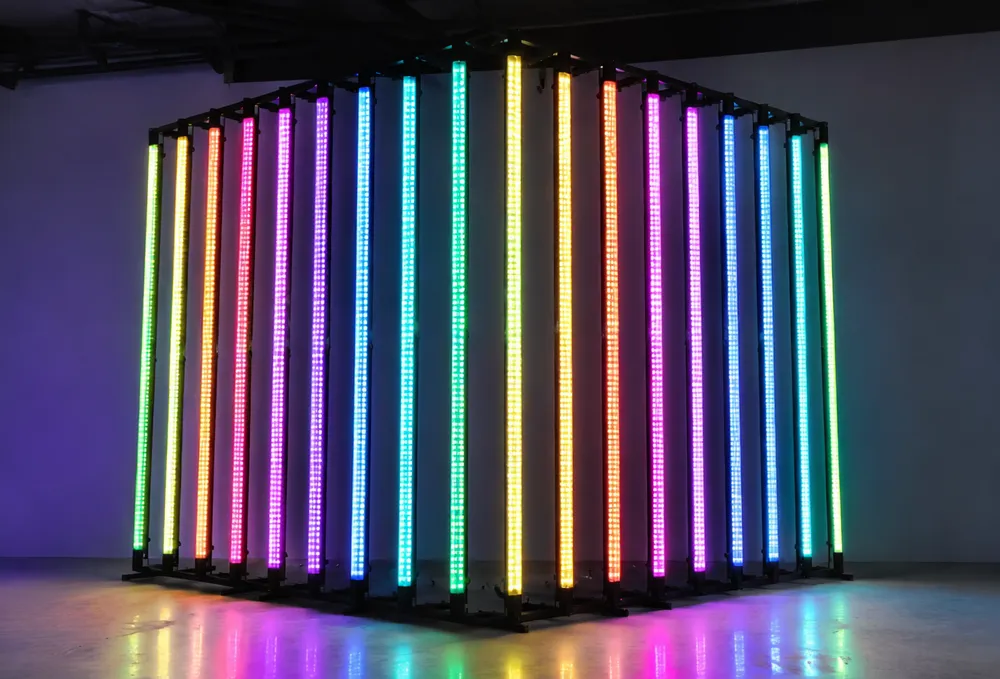
What LED DJ Tube Lights Are — and Where They Fit in Your Product Line
LED DJ tube lights are linear fixtures — typically 0.5m to 1.5m in length — with individually controllable LED pixel segments running the full tube length. They produce chase effects, color gradients, rainbow sweeps, and static color washes that par cans physically cannot replicate because par cans are point sources. Tubes are line sources, and that geometry difference is the product's commercial identity.
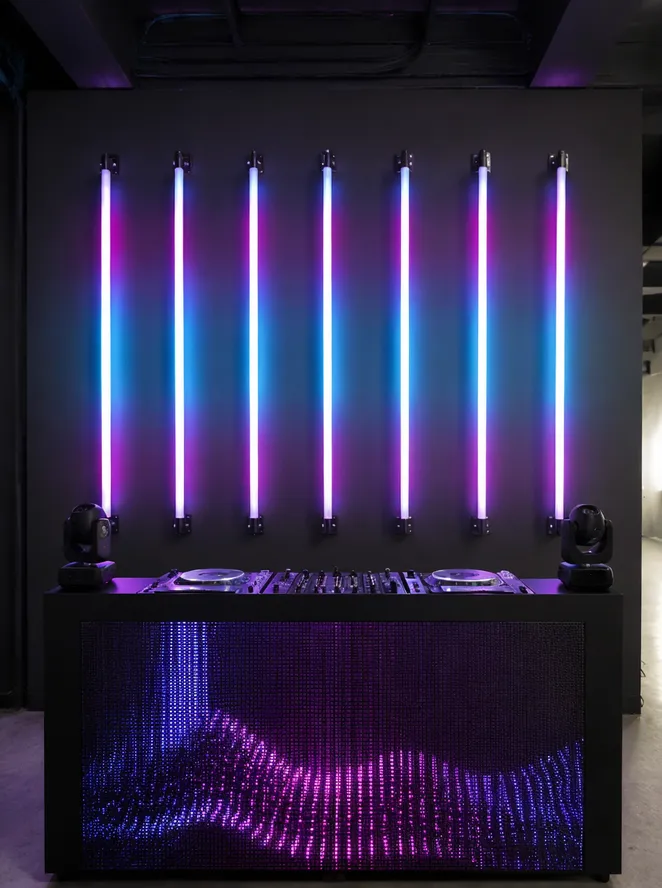
In your catalog, these sit between par lights (your workhorse wash/uplighting product) and pixel bars (your high-segment-count matrix/spectacle product). The tube's selling proposition to your downstream buyers is visual impact per dollar — a DJ mounting eight tubes vertically behind a booth creates a light wall effect that would otherwise require a full pixel panel setup at three times the cost. Rental companies stock them because one fixture format covers DJ booth framing, architectural ceiling accents, and kinetic installations hanging from truss.
We build these in our Pingyuan County facility on the same extruded-aluminum production line that handles our pixel bars. The extrusion serves double duty: it's the structural housing and the primary heat dissipation path. There's no separate heatsink bolted inside — the tube body IS the thermal management system, which keeps the cross-section slim enough for aesthetic mounting while still managing junction temperatures across multi-hour continuous operation.
Par Lights
Point source. Wash/uplighting workhorse. Below tubes in visual spectacle per fixture.
Lower catalog tierTube Lights
Line source. Pixel-addressable. Visual impact per dollar sweet spot for DJs and rental companies.
This productPixel Bars
High-segment-count matrix. Full spectacle product. Above tubes in cost and complexity.
Higher catalog tierTechnical Specifications — What You're Quoting Against
Specifications shown are industry-standard values for this product type. Actual specifications may vary by model configuration.
| Parameter | Standard Specification |
|---|---|
| Length Options | 0.5m, 1.0m, 1.5m (custom lengths available on ODM orders) |
| LED Source | SMD5050 RGB or RGBW, 16 pixels/meter standard density |
| Total Fixture Wattage | 15W (0.5m) 30W (1.0m) 45W (1.5m) |
| Pixel Segments | 8 (0.5m) / 16 (1.0m) / 24 (1.5m) individually addressable |
| Color System | RGB, RGBW, RGBWA available per model |
| Beam Angle | 120° wide wash (frosted diffuser standard) |
| DMX Channels | 3 / 4 / 27 / 48 / 72 channels depending on control mode |
| Control Protocols | DMX512, master/slave, sound-active, auto-run, wireless DMX (optional 2.4GHz module) |
| Housing Material | 6063 extruded aluminum with anodized finish, polycarbonate end caps |
| Diffuser | Frosted polycarbonate, snap-fit (field-replaceable) |
| IP Rating | IP20 (indoor standard), IP65 available for outdoor-rated models |
| Operating Voltage | AC 100–240V 50/60Hz (wired) / DC 12V internal lithium battery (battery model) |
| Battery Life | 8–12 hours at full output (depending on color and brightness setting) |
| Weight | 0.8kg (0.5m) / 1.4kg (1.0m) / 2.1kg (1.5m) |
| Operating Temperature | -20°C to +45°C |
| LED Lifespan | 50,000 hours rated (L70 standard) |
| Certifications | CE, FCC, RoHS; IP65 test report on outdoor-rated variants |
Half-Meter
- Wattage15W
- Pixels8 segments
- Weight0.8 kg
One-Meter
- Wattage30W
- Pixels16 segments
- Weight1.4 kg
Meter-Five
- Wattage45W
- Pixels24 segments
- Weight2.1 kg
Specifications may vary by model configuration.
The Battery-Powered Variant — Your Highest-Margin SKU in This Category
The battery-powered LED DJ tube light is where your margin lives. Wired tubes are a known commodity — every lighting manufacturer builds them, and your buyers shop them on price. Battery tubes add a genuine functional advantage (no power cable, no venue power-drop requirement) that justifies a 40-60% retail price premium over wired equivalents, and your downstream customers pay it willingly because the alternative is running 50 meters of extension cord to a ceiling-mount position.
LiFePO4 Battery Chemistry
Switched from LiPo in 2021
We pack a 12V lithium-iron-phosphate (LiFePO4) battery cell inside the aluminum extrusion, rated for 500+ charge cycles before capacity degrades to 80%.
The chemistry choice matters — we switched from standard lithium-polymer to LiFePO4 after seeing puffing issues on LiPo cells that sat in hot transport containers during summer shipping to Middle Eastern markets.
Key Advantages
- • Handles 60°C storage temperature without degradation
- • No thermal runaway risk — shipments clear customs without triggering lithium battery hazmat flags in most markets
- • Tradeoff: slightly heavier per watt-hour than LiPo (~200g per tube). Worth it for the shelf life and safety profile
Runtime Performance
Full event day without midway recharging
90% of event rental clients use the 50% brightness mode with color cycling — more than enough for a full event day without midway recharging.
Magnetic Pogo-Pin Charging
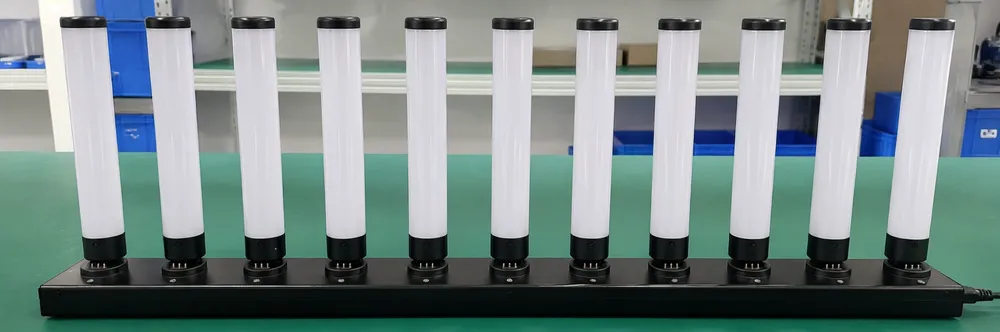
Charging is via magnetic pogo-pin connection on the end cap — no exposed charging port to seal against water ingress on outdoor-rated models. Clean connection, zero port degradation over time.
10-Unit Charging Rack
We supply a 10-unit charging rack as an accessory — your rental clients charge their entire tube inventory overnight in one rack unit rather than hunting for individual chargers.
Pixel Control Architecture — What Your Technical Buyers Will Ask About
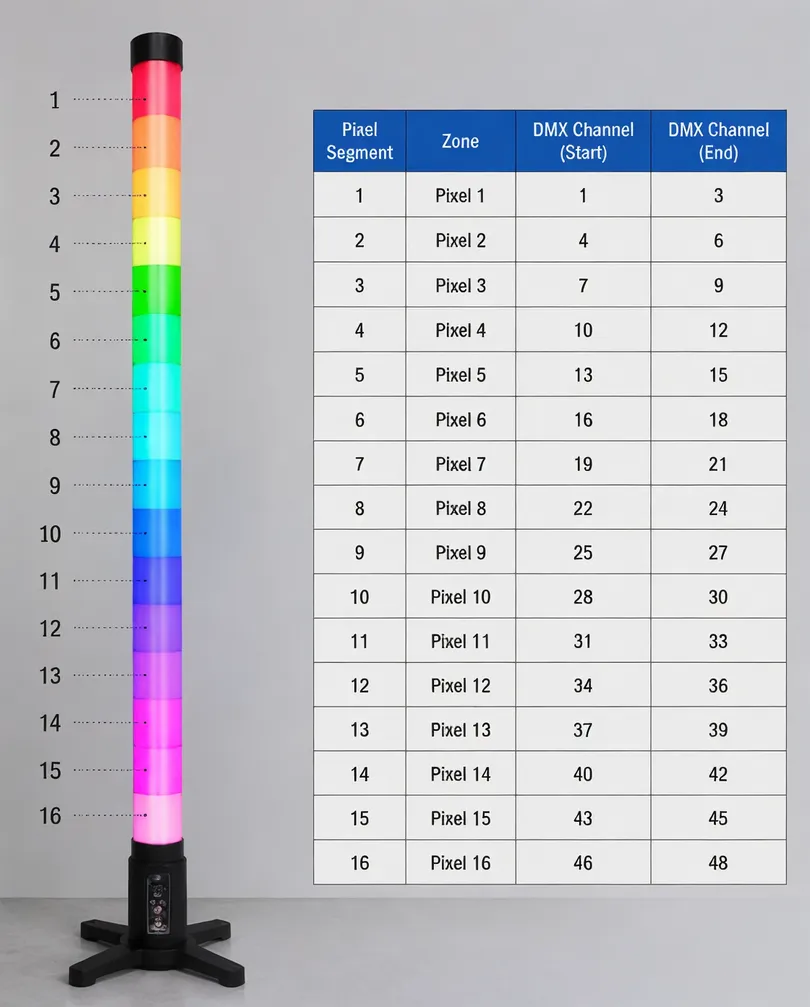
Each tube divides into individually addressable pixel segments — 16 segments on the 1.0m model, each containing a cluster of RGB or RGBW SMD5050 LEDs. Every segment responds to its own DMX channel group, so a single 1.0m tube occupies up to 48 DMX channels in full-pixel RGBW mode (16 segments × 4 channels per segment).
ArtNet Node (Wired Models)
Built-in ArtNet node option on wired models. The tube receives ArtNet packets directly over Cat5 input — no external DMX converter box needed.
This matters for large-scale installations where your client is mapping 50-100 tubes as a pixel matrix: each tube is a network endpoint, addressable by universe and channel directly from the media server.
Standard DMX512
3-pin or 5-pin XLR daisy-chain for simpler setups. We support multiple DMX personalities per fixture for flexible deployment across skill levels.
Multiple DMX Personalities
Your end users choose complexity level based on their controller capability — from single-channel macro triggering to full 48-channel pixel mapping.
DMX Mode Breakdown
| Mode | Channels Used | Description | Ideal For |
|---|---|---|---|
| 3-Channel | 3 CH | Full-tube RGB control — entire tube as one color zone | Basic controllers, simple wash effects |
| Segment Mode | 48 CH | Per-pixel control — 16 segments × 3 or 4 channels each | Media servers, pixel mapping, ArtNet/sACN installs |
| Macro Mode | 1 CH | Pre-programmed chase/gradient patterns triggered by single-channel selection | Mobile DJs, sound-active operation |
Engineering Insight from Support Data
About 40% of mobile DJs buying tube lights never use full pixel mode. They use the macro patterns in sound-active mode.
So we invest engineering time in making those built-in patterns look good out of the box — it reduces the "this is too complicated" return rate from your entry-level DJ buyers. Fewer returns mean better sell-through for your distribution.
Engineering Detail
Thermal Design in a Slim Profile — Why Output Stays Consistent at Hour Eight
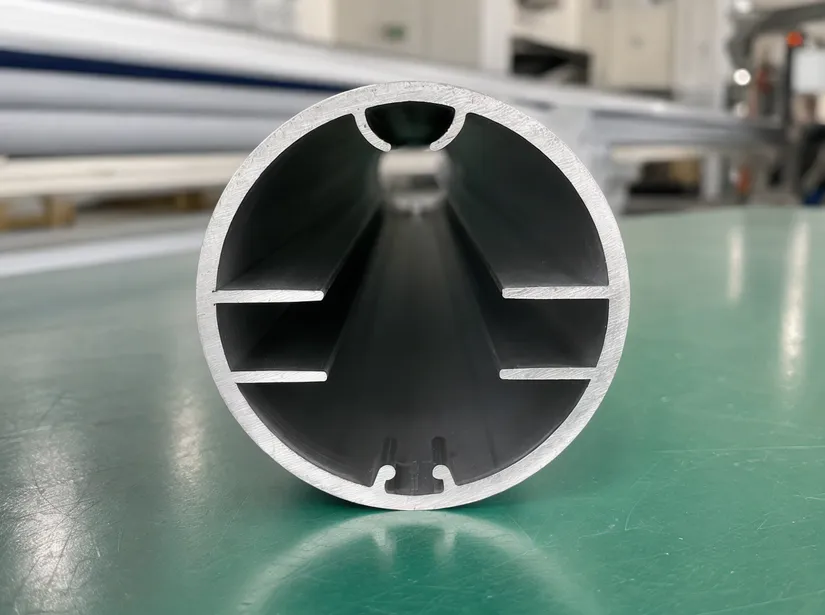
The challenge with tube fixtures is that the form factor is slim — you can't bolt a massive heatsink onto a 40mm-diameter tube without ruining the aesthetic that makes tubes desirable in the first place. So the housing IS the heatsink.
We use 6063-T5 aluminum extrusion with a custom die profile that includes internal fin geometry invisible from the outside. The extrusion wall thickness runs 1.8mm with four internal cooling fins running the full tube length, creating convective channels inside the profile. LED PCB boards mount directly to the flat interior surface of the extrusion via thermally conductive adhesive — no air gap between LED and aluminum.
At 30W continuous (1.0m model, full white output), our thermocouple measurements during 48-hour aging show the LED junction temperature stabilizes at 72°C within 45 minutes and holds there. That's well below the 85°C threshold where SMD5050 LEDs begin measurable lumen depreciation. Your rental clients get the same brightness at hour eight that they saw at minute one.
The 48-hour aging test catches the rare thermal failure mode: a tube where the thermal adhesive bond has a void (air bubble between PCB and aluminum). That tube will show a hot spot — one pixel segment running 15-20°C hotter than its neighbors. Our QC cameras flag these during aging, and those units get pulled and reworked. You never see them.
Thermal Performance Summary
Distribution Planning
Where LED DJ Tube Lights Generate Revenue — Market Segments for Your Distribution
Mobile DJ and Entertainment Rental
The highest-velocity segment.
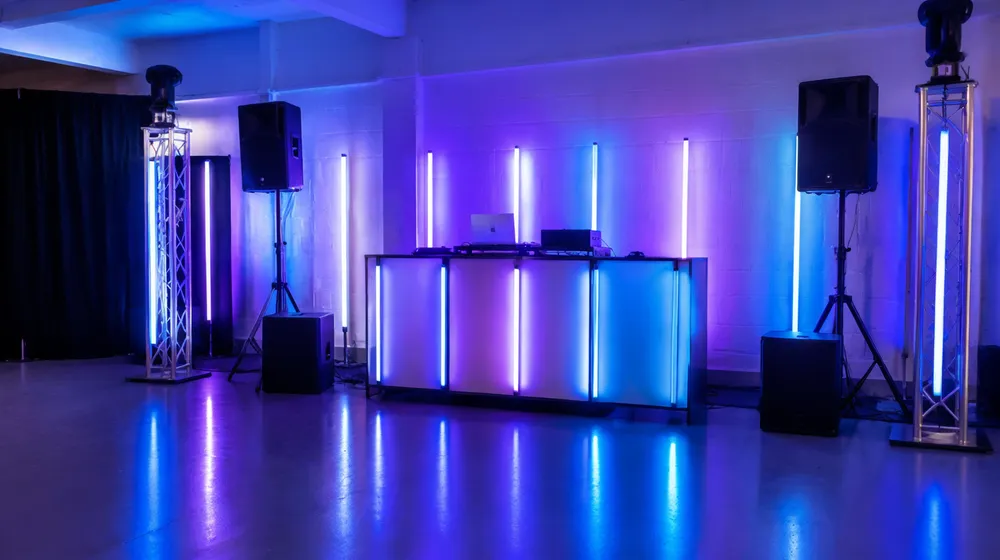
Mobile DJs buy tubes in sets of 4, 8, or 16 for booth framing and backdrop effects. Rental houses stock 50-200+ units for inventory because tubes get requested by name for weddings, corporate galas, and festival stages.
Nightclub and Bar Installation
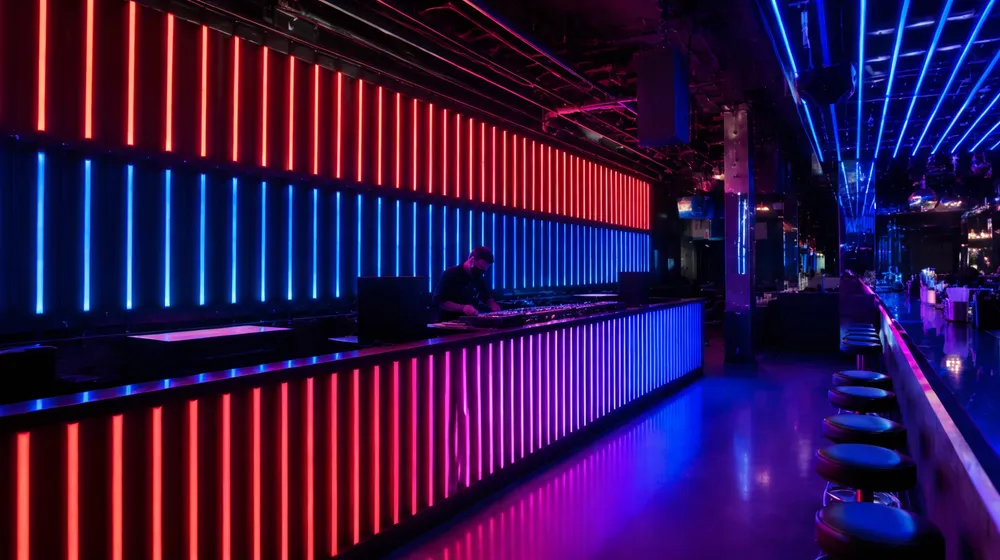
Fixed-install segment — tubes behind DJ booths, along bar counters, or in ceiling grids.
Typical project: 20-60 tubes per venue, specified by the lighting designer or AV integrator. These orders come through contractors, not retail — your value to the integrator is offering a matched product family with consistent DMX behavior. The wired IP20 model is the standard spec here.
Architectural and Event Production
Kinetic installations and media server integration.
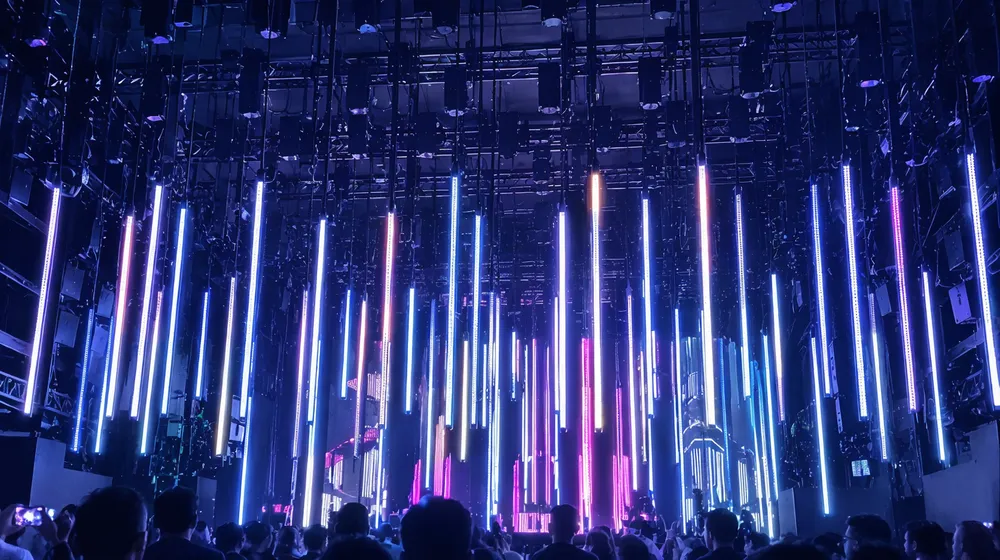
Production companies use tubes for kinetic installations — motorized winch systems that raise/lower tubes during performances, creating vertical light curtain effects. This segment demands the ArtNet-enabled wired model for media server integration.
Houses of Worship
Budget-conscious but repeatable across multi-campus denominations.
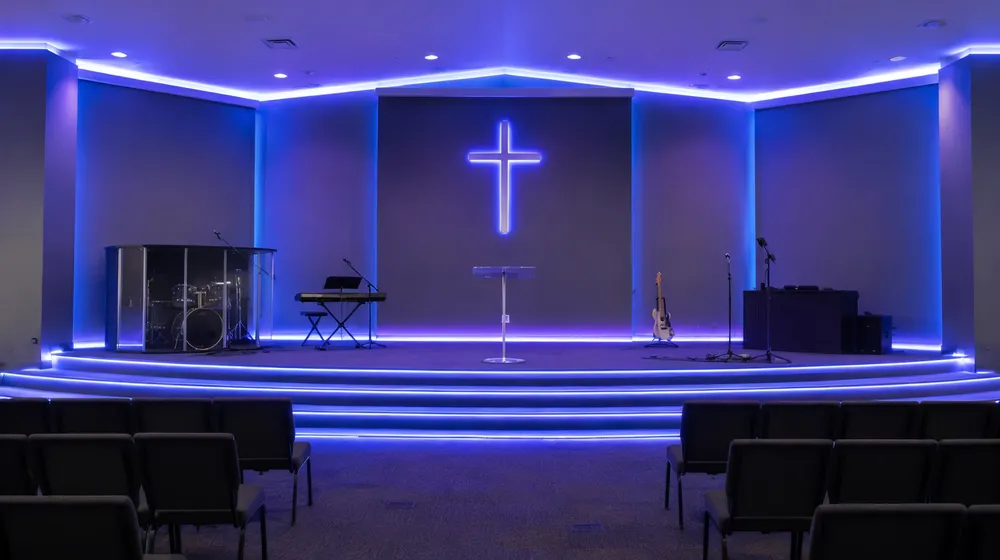
Churches adopting dynamic lighting install tubes along stage edges, behind pulpits, and in ceiling coves. Multi-campus denominations duplicate the lighting spec across 3-10 locations. The battery variant works particularly well here because many sanctuaries lack convenient power drops at architectural mounting positions.
Customization Scope — What You Can Spec on Your Branded Tube
OEM Branding
Existing tube platform, your identity
- Logo laser-engraved on aluminum end cap
- Custom packaging (box art, manual, warranty card in your brand)
- Firmware boot animation with your logo on RGB display
- Custom DMX mode labels on rear sticker
- Modified default color temperature or startup state
30 units
ODM Modifications
Engineering changes to the tube
- Custom tube lengths (we've produced 0.3m, 0.75m, 2.0m for specific projects)
- Modified pixel density (up to 30 pixels/meter for tighter resolution on short-throw viewing distances)
- Alternative LED chip brands (Cree, Luminus, Nichia — affects CRI and color gamut)
- Custom diffuser opacity (clear for visible-pixel dot effect, heavy frost for smooth wash)
- Custom housing color (standard: black or white anodized; custom RAL on 100+ units)
- Integrated wireless DMX module (CRMX-compatible or proprietary 2.4GHz)
- Modified battery capacity for extended runtime on battery models
- Custom IP rating upgrades (IP65 → IP67 for ground-level outdoor installations)
30 units (tooling cost applies for new extrusion profiles or custom lengths requiring new diffuser molds)
Development Timeline
7–10 days
OEM variants sample
20–30 days
ODM with spec changes sample
+15–20 days
New extrusion tooling (added to ODM lead)
We quote tooling cost and amortization schedule upfront — no surprise charges after approval.
If you're launching a branded tube line and want to differentiate visually from what's already on the market, the easiest high-impact change is diffuser opacity and end-cap shape. Both are low-tooling-cost modifications that create a distinctly different look on the shelf without touching the LED engine or electronics.
Manufacturing Process — What Makes These Tubes Consistent Across a 2,000-Unit Batch
The parent category page covers our general LED chip sourcing and QC infrastructure. Here's what's specific to tube light production:
Extrusion & Anodizing
We run our own extrusion die for the tube housing profile. Each production run starts with 6063 billets from qualified aluminum suppliers — we dual-source to avoid single-supplier disruptions.
After extrusion, tubes go through a Type II anodizing process (15–20μm oxide layer) that provides both corrosion resistance and the matte finish. We check anodize thickness with an eddy current gauge every 50 units during the run.
PCB Strip Assembly
LED strips are populated on flexible PCB using our automated SMT line (±0.05mm placement accuracy). After SMT, each strip runs through AOI (automated optical inspection) for solder joint verification.
Strips are then tested for pixel-by-pixel color uniformity — any strip showing visible color deviation between adjacent segments gets pulled before it enters a tube.
Final Assembly Sequence
Battery models add cell installation and BMS (battery management system) wiring between the strip bond and end cap steps.
48-Hour Aging Test
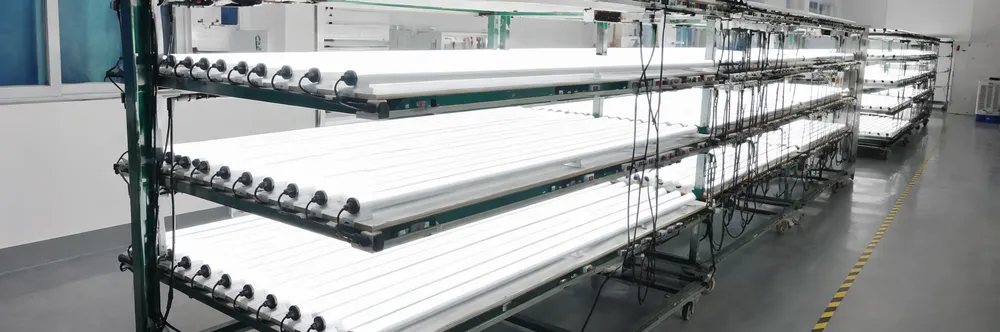
Every assembled tube runs at full white output for 48 hours on our aging racks. We monitor for:
The Bottom Line on Batch Consistency
When you order 500 LED DJ tube lights, unit #1 and unit #500 produce identical color output, respond identically to DMX commands, and share the same thermal performance profile. That's what batch consistency actually means at the production level.
Packaging and Shipping — Container Loading for Linear Fixtures
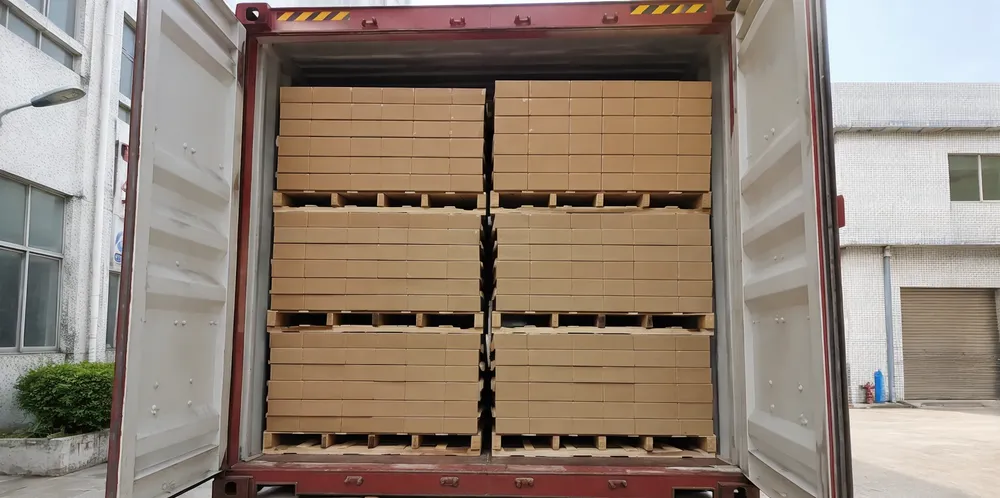
Linear fixtures have a specific packing challenge: the length-to-width ratio means you can't stack them the same way you'd stack compact par lights. Here's how we handle it:
| Model | Unit Box Dimensions (cm) | Units per Master Carton | Master Cartons per 20GP | Master Cartons per 40HQ |
|---|---|---|---|---|
| 0.5m Tube | 58 × 8 × 8 | 4 | 320 (1,280 units) | 660 (2,640 units) |
| 1.0m Tube | 108 × 12 × 12 | 2 | 160 (320 units) | 340 (680 units) |
| 1.5m Tube | 158 × 14 × 14 | 2 | 100 (200 units) | 220 (440 units) |
Molded EPE Foam Inserts
Each tube ships in a molded EPE foam insert inside a corrugated individual box. Master cartons are double-wall, rated for 4-high stacking.
Loading Diagram Included
The 1.0m and 1.5m models use lengthwise loading in the container. Our logistics team provides a loading diagram with every order confirmation so your receiving warehouse knows the exact pallet configuration.
Mixed-Product Consolidation
For mixed-product orders (tubes + par lights + pixel bars in one container), we calculate optimal loading and consolidate everything into a single shipment. This is standard practice — most distributors don't order tubes alone.
Battery Model Shipping Compliance
Battery models ship with UN38.3 test documentation for lithium battery compliance. The LiFePO4 chemistry classifies as non-dangerous goods under most shipping regulations, but we include all required documentation and battery labels on outer cartons to prevent port holds.
Frequently Asked Questions — LED DJ Tube Lights Sourcing
What's the actual runtime difference between battery-powered LED DJ tube lights at full output versus typical event use?
Full white at 100% brightness: 8 hours on the 1.0m model. Typical event usage (color cycling at 60-70% brightness, which is how 90% of rental deployments actually look): 10-12 hours. We rate conservatively — most buyers report exceeding our stated runtime by 1-2 hours under real-world conditions. The LiFePO4 cells maintain capacity well through the first 300 charge cycles with minimal degradation.
Do I need IP65-rated LED DJ tube lights for outdoor events, or is IP20 sufficient under a tent?
Under a canopy or tent with overhead protection: IP20 handles it — you're only dealing with humidity, not direct water contact. For festivals where rain can blow in sideways, or rooftop bars with no overhead cover, specify IP65.
The price difference between IP20 and IP65 is the sealed end caps and gasketed cable entry — about 15% premium on unit cost.
Our recommendation: if your rental fleet serves both indoor and outdoor events, stock IP65 across the board. The premium is less than the cost of one water-damage replacement.
How do I maintain color consistency when reordering LED DJ tube lights 6 months after my initial purchase?
We tie LED chip bin records to your order history. On reorders, we priority-source matching bins from our chip supplier. If the original bin is unavailable (suppliers rotate bins over time), we notify you before production with the closest alternative and expected ΔE value.
For critical fleet-matching applications, we recommend ordering 10% overage on your first run as replacement stock. We hold bin information for 24 months per customer order in our system.
Can LED DJ tube lights be used as architectural fixture replacements in permanent installations?
Yes — the wired IP65 model is designed for continuous-duty permanent mounting. Rated for 50,000 hours (L70), which translates to 11+ years at 12 hours/day operation.
For architectural projects, we recommend the RGBW variant for white-capable output when the venue needs both dynamic color effects and functional white wash from the same fixture.
Custom color temperatures (2700K, 3000K, 4000K warm white) available on ODM orders for hospitality applications where warm ambient is the primary mode.
What's the maximum daisy-chain length for DMX control on tube fixtures?
Standard DMX512 spec allows 32 devices on a single data line before signal degradation. Our tubes conform to this — we've validated clean DMX response through 32-unit chains during production testing.
For larger installations (50-100+ tubes), use DMX splitters/boosters at every 32-unit interval, or specify the ArtNet-enabled model where each tube is a direct network endpoint and chain length becomes irrelevant.
What certifications do the battery-powered models carry for international shipping?
Battery models carry CE, FCC, and RoHS for the fixture itself, plus UN38.3 transport certification for the lithium battery cells. The LiFePO4 chemistry avoids the stricter shipping classifications that apply to lithium cobalt or NMC cells.
We provide MSDS (Material Safety Data Sheet), UN38.3 test summary, and battery label artwork for outer carton marking. Most freight forwarders accept these without additional documentation requirements.
Related Products Under the LED DJ Lights Range
If LED DJ tube lights don't quite match your project requirements, these sibling products may fit:
LED DJ Par Lights
Point-source wash fixtures for uplighting and stage color. Higher single-unit lumen output than tubes, but no linear form factor or pixel-chase capability. Your volume workhorse.
LED DJ Pixel Bar
Higher pixel density and wider fixtures for matrix arrays and text scrolling. If your buyer needs more segments per meter than tubes offer, or plans to tile fixtures into a video-mapped wall, pixel bars are the step up.
LED DJ Spotlight
Focused-beam fixtures (8°–15°) for accent and pin-spot applications. Completely different use case from tubes — complementary rather than competitive in your catalog.
LED DJ Stage Lights
Full-size professional fixtures for touring and permanent installation. Higher wattage and heavier-duty construction than tubes — different price tier and buyer segment.
Mini LED DJ Lights
Compact effect lights at entry-level pricing. If your buyer needs affordable party-pack fixtures rather than architectural-quality tubes, this is the product line.
Browse Full Range
View the complete LED DJ Lights category
Start Your LED DJ Tube Light Order
Send us your target quantities, preferred tube length, and whether you need battery or wired models. If you're building a branded product line, include your logo files and any packaging preferences — our engineering team will send back a branded sample proposal within 48 hours.
Recommended Starting Order
Most new buyers start with a 30-unit mixed sample order (some wired, some battery, multiple lengths) to test sell-through across their customer base before committing to production volume.