

LED DJ Lights Factory-Direct from GDMonkey
Six product lines covering every DJ lighting format your catalog needs, with OEM branding from 30 units and full DMX/sound-active control options across the range.
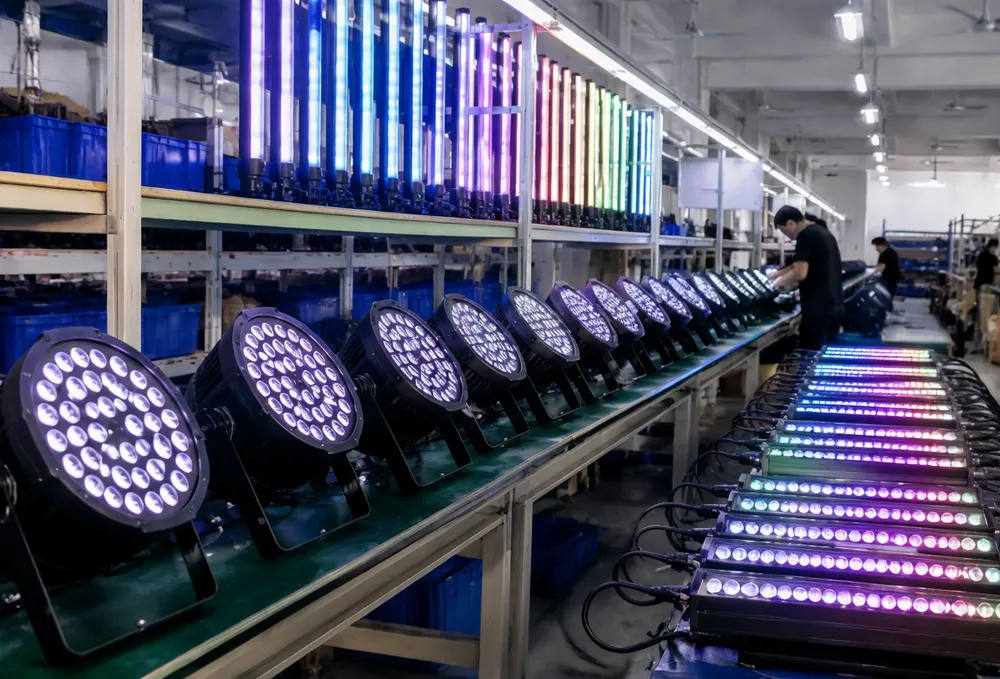
LED DJ lights engineered and manufactured in our 16,700 m² facility — par cans, tube lights, pixel bars, spotlights, and mini effects, all under one production roof.
What This Category Covers — and Why We Grouped It This Way
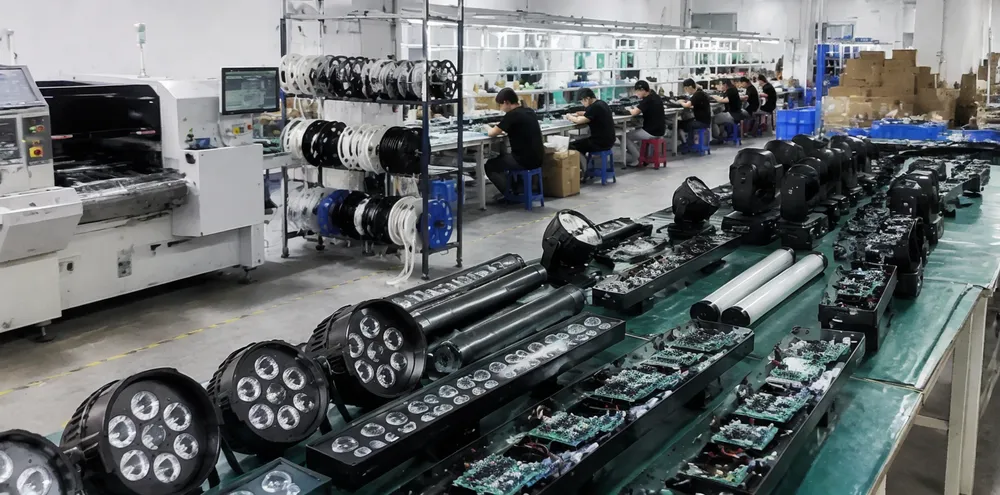
GDMonkey's LED DJ lights line spans six fixture formats designed for mobile DJs, entertainment rental companies, nightclub installations, and event production deployments. We manufacture all of them in the same facility, on shared SMT and assembly lines, which means your mixed orders — say, 200 par lights, 100 tube lights, and 50 pixel bars — ship as a single consolidated batch rather than sourced from three different sub-suppliers.
We've been building LED DJ fixtures since 2014, when the market was shifting from halogen par cans to compact LED alternatives. Our early motor-and-optics background (we started in electromechanical entertainment devices in 2012) gave us a head start on combining LED arrays with reliable mechanical effects — rotating gobos, motorized color wheels, and sound-reactive pattern engines that still work at hour 8,000. That crossover between LED efficiency and mechanical effect is what defines this product line.
For your purchasing, the consolidation matters: one supplier qualification, one set of compliance documentation, one logistics relationship. And because we control the LED driver designs, the firmware, and the aluminum housings across all six formats, cross-compatibility is intentional — your customers get the same DMX addressing protocol, the same power connector standard, and the same control app across the range.
Consolidation Benefits
-
Single Supplier Qualification
One audit covers all six formats
-
Unified Compliance Docs
One documentation set for imports
-
Consolidated Shipping
Mixed SKUs in a single batch shipment
-
Cross-Compatible Ecosystem
Same DMX protocol, connectors, and control app
Product Line Overview
Six LED DJ light formats, each filling a different slot in your product catalog and addressing different rental or resale segments.
LED DJ Par Lights
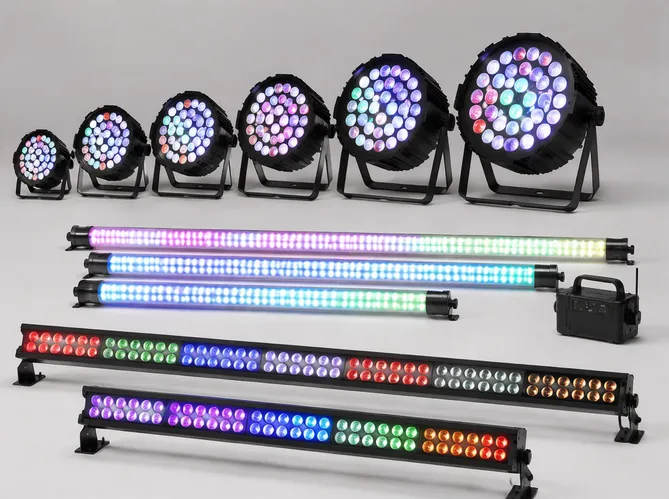
The workhorse of any DJ lighting package — compact LED par cans for uplighting, stage wash, and color effects. RGBW and RGBA configurations available, with wattages ranging from 54W to 200W per fixture. Optimized for stacking efficiency in transport cases and fast DMX patching.
LED DJ Tube Lights
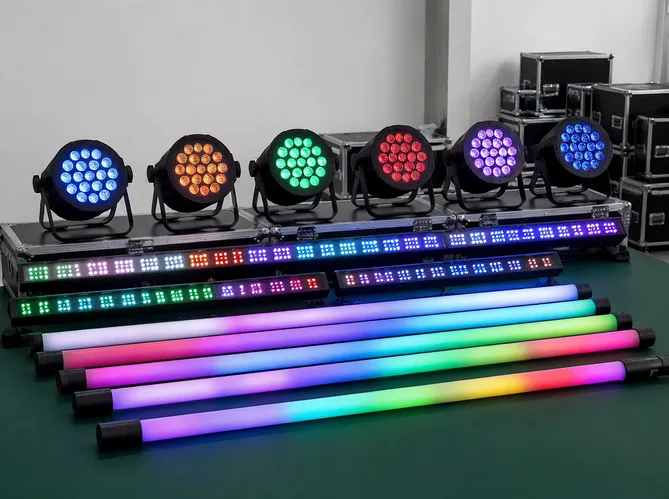
Linear LED tube fixtures for architectural accent, DJ booth framing, and kinetic ceiling installations. Individual pixel control across the tube length creates chase and gradient effects. Battery-powered and wired versions available for venues without power drops at ceiling points.
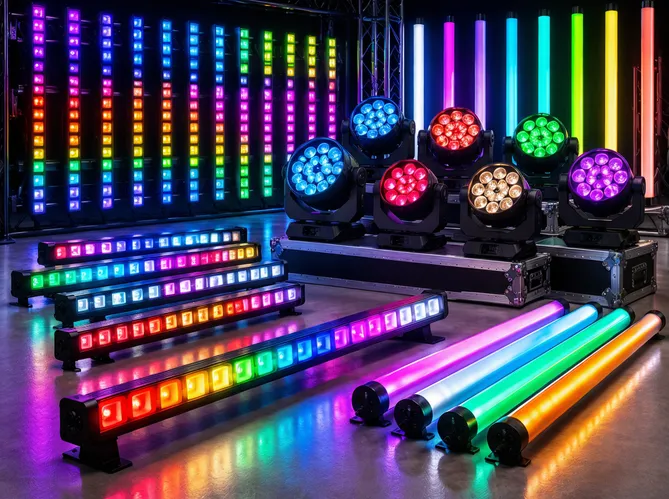
LED DJ Pixel Bar
Multi-segment pixel bars with individually addressable LED clusters. Matrix arrays, chase patterns, text scrolling — fixtures that make a DJ rig look like a production show without moving heads. Available in 0.5m and 1m lengths with ArtNet and sACN support for media server integration.
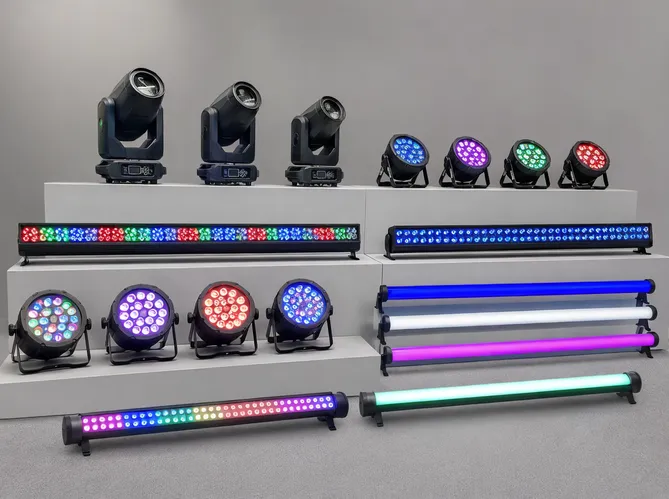
LED DJ Spotlight
Focused-beam LED spots for follow-spot applications, pin-spot accent lighting, and gobo projection. Tighter beam angles (8°–15°) and higher lumen concentration than par cans. Used for cake spotting at weddings and stage pin-spotting at corporate events — consistent year-round demand segments.
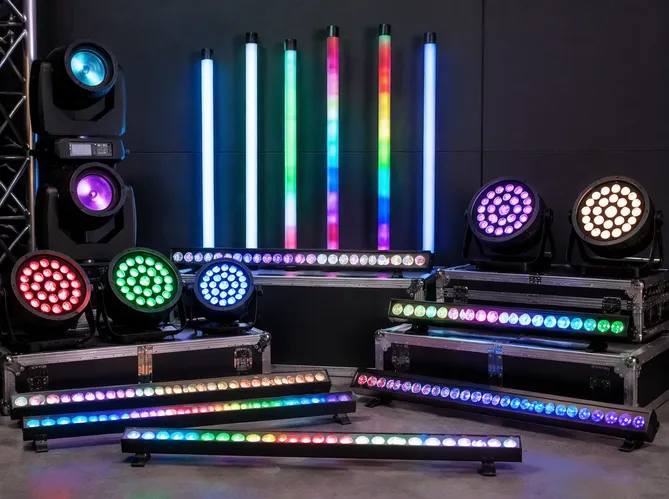
LED DJ Stage Lights
Full-size LED stage fixtures designed for permanent installation and touring rigs — higher wattage, heavier-duty housing, professional-grade DMX implementation. A different price tier targeting production companies and venue installations rather than mobile DJ kits.
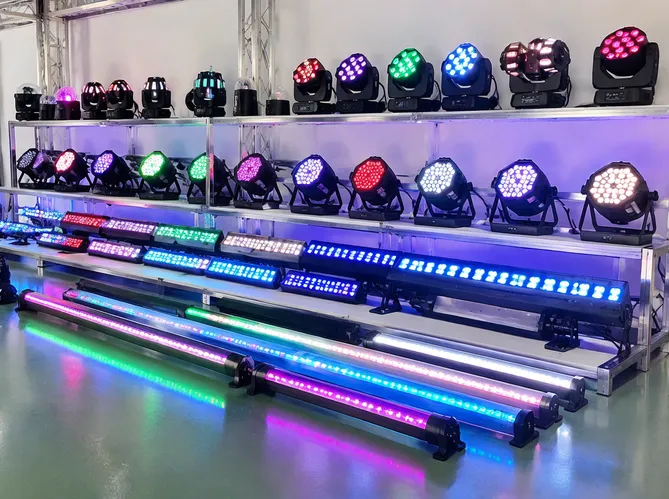
Mini LED DJ Lights
Compact, lightweight LED effect lights — derby effects, moonflowers, retro-styled rotating projectors. The entry-level price point that drives volume. Mobile DJs buy these 4–8 at a time for party packs. Form factor under 2kg per unit keeps shipping costs low and retail packaging manageable.
Need a mixed-format order?
Combine any of the six product lines into a single consolidated shipment. OEM branding available from 30 units per SKU.
Specification Ranges Across the LED DJ Lights Line
Your buyers source from this category across a wide technical spread. Here's what we manufacture across all six product types — this tells you whether our spec envelope matches your market requirements before we get into model-specific conversations.
LED Source
3W–15W individual LEDs; CREE, Epistar, and Luminus chips depending on model tier
Color Systems
RGBW, RGBA, RGBWAL (6-color), single white (warm/cool/daylight)
Beam Angles
8° (spots) to 45° (wash pars), with interchangeable lens options on select models
Total Fixture Wattage
18W (mini effects) to 280W (full stage fixtures)
DMX Channels
1–24 channels per fixture, model-dependent
Control Protocols
DMX512, sound-active, master/slave, auto-run, wireless DMX (optional), ArtNet/sACN (pixel bars)
| Parameter | Range Across Category |
|---|---|
| IP Rating | IP20 (indoor standard), IP54 (splash-proof for outdoor DJ gigs), IP65 (permanent outdoor install) |
| Housing Material | Die-cast aluminum (heatsink-integrated), ABS+PC (compact effects), extruded aluminum (tube lights) |
| Operating Voltage | AC 100-240V, 50/60Hz universal input standard; DC 12V/24V battery variants available |
| Weight Range | 0.8kg (mini effects) to 12kg (full-size stage fixtures) |
| Certifications | CE, FCC, RoHS across all models; IP65/IP67 testing on outdoor-rated fixtures |
If you need a spec that isn't in this table — specific CRI values, extended color temperature ranges, or custom beam angle lenses — our optical engineering team can quote modifications. Most lens and LED array changes don't require new tooling.
LED Chip Sourcing and Optical Consistency — What Holds Your Batch Together
LED DJ lights live or die on color consistency across units. A DJ buys six par cans and expects them to produce identical color when all set to the same DMX value. If unit #3 looks greener than unit #1, that's a warranty return — and it's caused by LED binning variance, not by random failure.
01 Incoming Material Control
We manage this at the incoming material level. LED chips are purchased in pre-binned lots with a stated color tolerance window (typically ±50K CCT and ±0.003 Duv for white LEDs, or within 2 SDCM for color LEDs). When chips arrive at our IQC station, we sample-test forward voltage and dominant wavelength against the supplier's bin certificate. Lots that drift outside our acceptance window get rejected back — we won't mount them just because they're "close enough."
02 Zero-Compromise Binning Policy
We've turned away shipments from chip suppliers who tried to push wider-bin lots during component shortages. Short-term pain, but your batch uniformity is non-negotiable.
03 SMT Precision and Optical Alignment
On the SMT line, automated pick-and-place mounts LEDs at ±0.05mm positional accuracy. This matters for optical alignment — a misplaced LED chip means the beam pattern shifts, creating uneven light distribution that's visible on a white wall from 3 meters away. After mounting, every PCB assembly runs through automated optical inspection (AOI) before it moves to lens alignment.
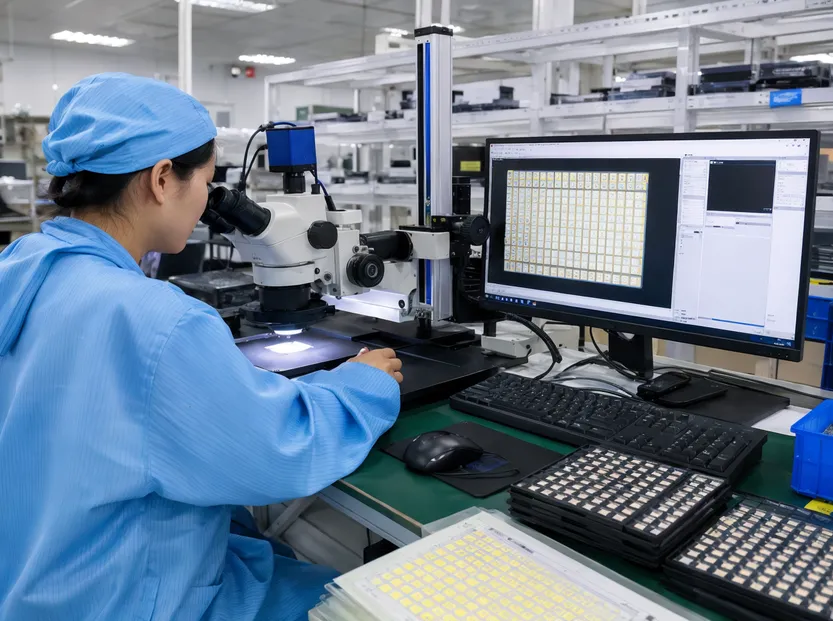
Key Tolerance Specs
The Result for Your Business
When you ship 200 identical LED DJ par lights to a rental company, any fixture in that batch is interchangeable with any other. No visual mismatch, no customer calls asking why their units don't look the same. That's where your zero-RMA target starts — at the chip bin, not at final inspection.
DMX Implementation and Firmware — Your After-Sales Cost Reducer
Stage lighting that misbehaves on DMX is the fastest way to generate support tickets for your distribution business. A fixture that doesn't respond to channel assignments, flickers during fade transitions, or drops its DMX address on power cycle creates downstream service costs that erase your margin on the sale.
We write all DMX decoder firmware in-house — 15 engineers, including three dedicated to control protocol development. Every fixture runs through a DMX torture test during production: 10,000 consecutive channel changes at maximum refresh rate, power-cycle recovery validation (fixture must return to its last-set DMX address within 1 second of power restoration), and cross-fixture synchronization accuracy testing across 32-unit chains.
Firmware updates are field-flashable via USB on all current-generation fixtures, so if your end customers need a feature change (additional DMX modes, custom default startup states, sound-sensitivity adjustment), it's a USB stick operation — not a return-to-factory event.
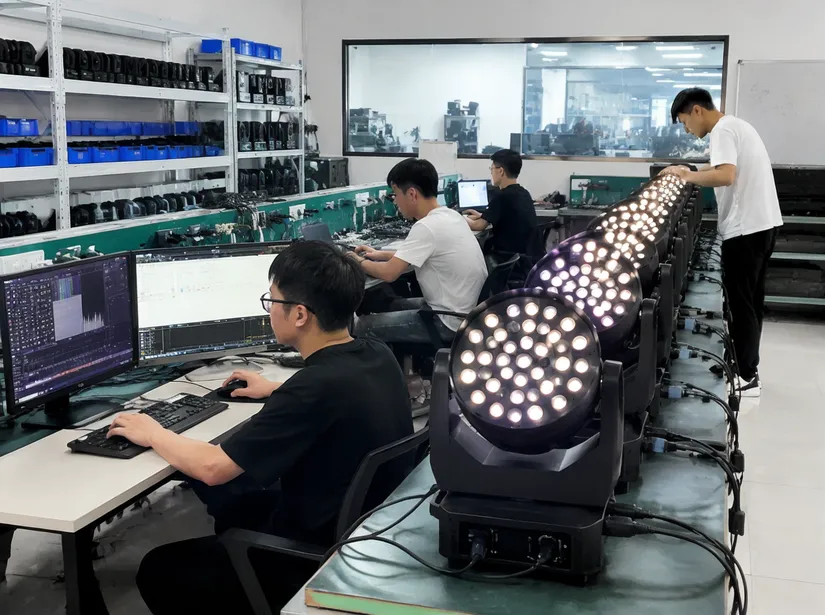
Production DMX Validation Protocol
Channel Change Stress
10,000 consecutive channel changes at maximum refresh rate
Max Refresh RatePower-Cycle Recovery
Fixture returns to last-set DMX address within 1 second of power restoration
< 1 SecondChain Synchronization
Cross-fixture synchronization accuracy validated across 32-unit daisy chains
32-Unit ChainsWireless DMX — Pre-Installed Option
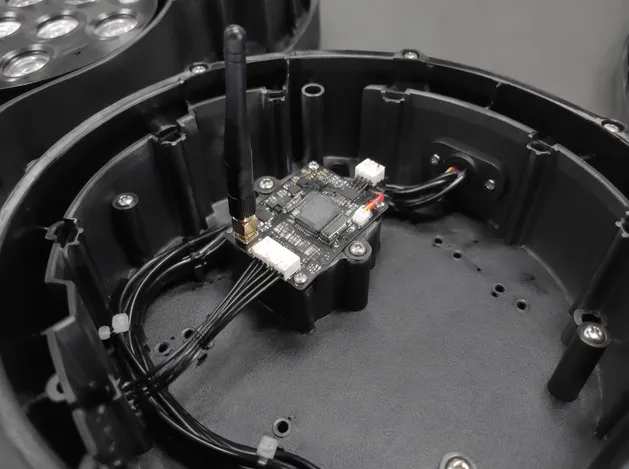
We support wireless DMX modules (plug-in or factory-installed) across the LED DJ lights range, using standard CRMX-compatible or proprietary 2.4GHz protocols. For your event rental clients who need cable-free setups, this is a pre-installed option that eliminates their post-delivery upgrade cost.
Thermal Engineering — Why Our Fixtures Don't Dim After Two Hours
LED DJ lights degrade when they run hot. The physics is straightforward: junction temperature rises, lumen output drops, and color shifts toward blue. A fixture rated at 3,000 lumens that's running at 95°C junction temperature after 90 minutes will be outputting 2,400 lumens by the end of the gig — and your customer notices.
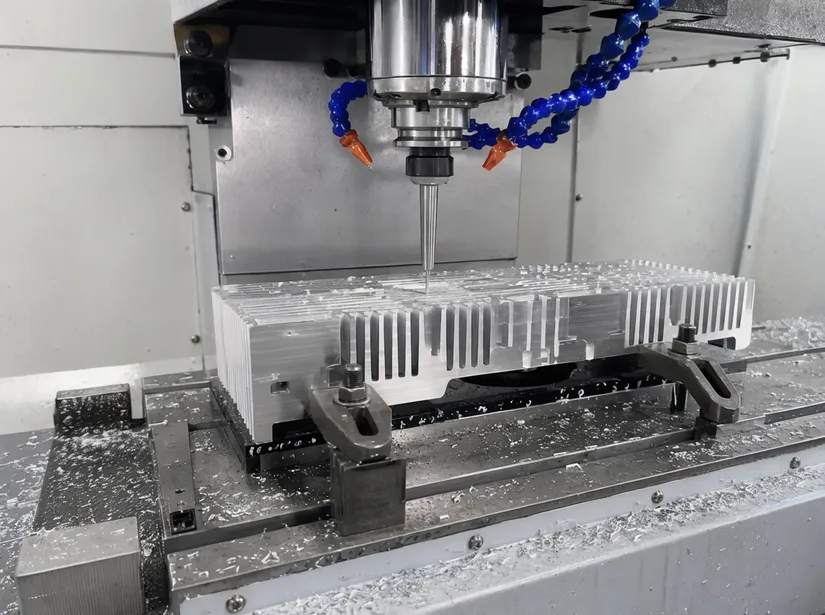
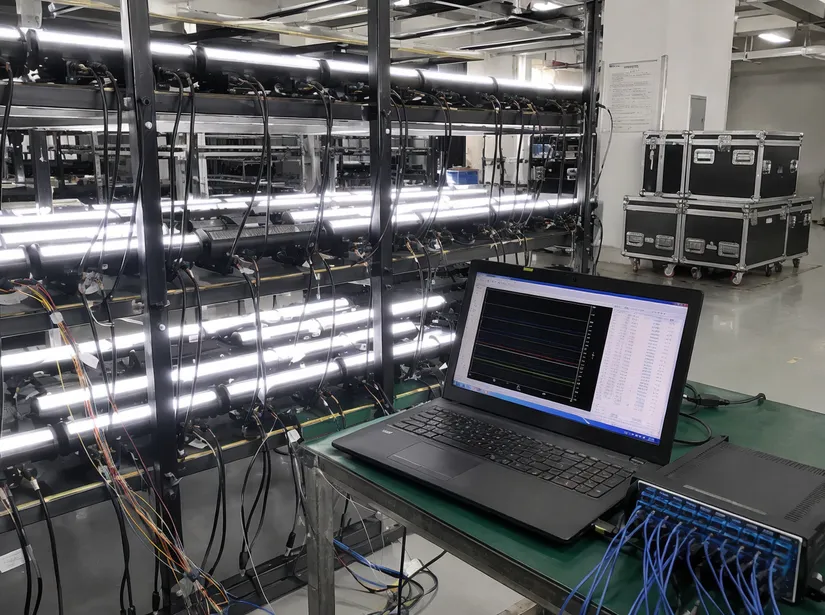
We machine our own heatsink profiles in-house rather than buying off-the-shelf aluminum extrusions. Each fixture model has a heatsink geometry designed for its specific LED array wattage and duty cycle. Our thermal engineering team validates designs using both simulation and physical measurement — thermocouple arrays on the LED PCB during 48-hour aging tests confirm that junction temperatures stay within operating limits under sustained full-output conditions.
The Thermal Throttling Problem
A fixture rated at 3,000 lumens running at 95°C junction temperature after 90 minutes outputs only 2,400 lumens by the end of the event — a 20% output loss your rental clients will notice and attribute to your product quality. Color shifts toward blue compound the issue for DJ environments where warm washes are programmed.
Heatsink Architecture by Product Line
Par Lights
Radial fin heatsinks integrated directly into the die-cast housing — no separate heatsink bolted onto a flat chassis. The entire rear body of the fixture IS the heatsink.
View Par Light rangeTube Lights & Pixel Bars
Extruded aluminum profile serves as both structural housing and linear heat spreader along the full length of the LED strip — dual-function material with no thermal dead zones.
48-Hour Aging Test — Catching Failures Before Shipping
The 48-hour aging test specifically catches thermal throttling failures. If a fixture's driver starts reducing output to protect overheating LEDs during the test, that unit gets pulled, diagnosed, and reworked before it ever reaches packing.
Your rental clients need fixtures that deliver rated output at hour six, not just at minute one. Our validation ensures that every unit shipped maintains its specified lumen output under sustained full-power duty cycles representative of real event conditions.
OEM/ODM Capability for LED DJ Lights — Your Brand, Our Production
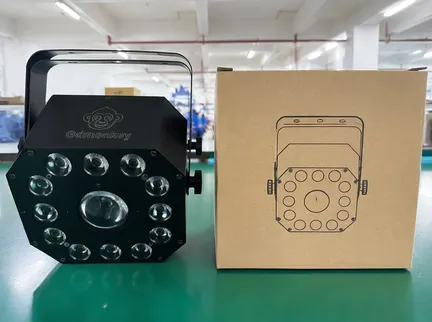
Most buyers in this category aren't selling generic unbranded fixtures. You need your logo on the unit, your packaging, your firmware splash screen, and possibly custom color temperatures or beam angle configurations that differentiate your SKU from whatever else is on the market.
We support OEM/ODM starting from 30 units. Here's what that range covers:
OEM
Your brand on our existing designs
- Logo laser-engraved or silk-screened on housing
- Custom packaging with your brand design (box art, user manual, warranty card)
- Firmware boot screen with your logo
- Custom DMX mode labeling on rear panel
- Private-labeled compliance documentation (CE, FCC reports with your brand as importer)
ODM
Custom development
- Modified LED array configurations (different chip count, wattage, color system)
- Custom beam angles via lens tooling
- Modified housing color (standard powder coat palette or custom RAL match on 100+ units)
- Custom control features (specific DMX channel mapping, proprietary wireless protocol integration)
- Modified form factor within existing structural platform
ODM Full Development
25–35 Days
Concept review to approved sample (depending on new tooling requirement)
Platform Modification
10–15 Days
Spec modifications on existing platform — samples ship faster
New-Mold Tooling
+20–25 Days
Full new-mold development when your concept requires it — disclosed upfront
Low-Risk Market Testing
The 30-unit MOQ means you can test a new branded SKU in your market without warehouse risk. Order 30, validate sell-through, then scale to production quantities with confirmed demand.
Discuss Your OEM/ODM ProjectWhere LED DJ Lights Sell — Market Segments Worth Your Catalog Space
This isn't about where DJs use these fixtures. It's about where you, as a distributor or reseller, find repeatable revenue with LED DJ lighting products.
Mobile DJ Supply and Rental Houses
Largest Volume Segment
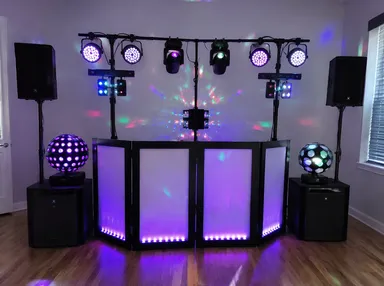
Mobile DJs refresh gear every 2–3 years and typically buy 4–12 fixtures per upgrade cycle. Rental companies buy 20–50+ units of each model for fleet standardization.
The key purchase driver is reliability (fixture must work every weekend without fail) and visual variety (customers want different-looking rigs for different events).
Your product line breadth directly determines your share of each DJ's wallet.
Nightclub and Bar Installations
Higher Per-Unit Value · 5–7 Year Replacement Cycles
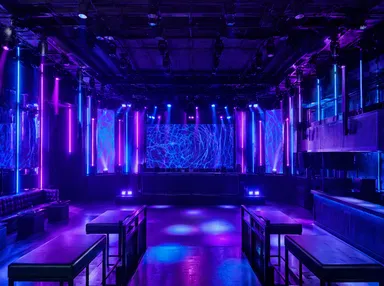
Fixed-install segment with higher per-unit value and longer replacement cycles (5–7 years). Clubs typically spec 30–100 fixtures per venue, installed by integration contractors.
Your value here is offering a matched product family (pars, tubes, pixel bars) with consistent DMX protocol — the integrator wants one DMX universe to control the entire room, not three different manufacturers' competing firmware.
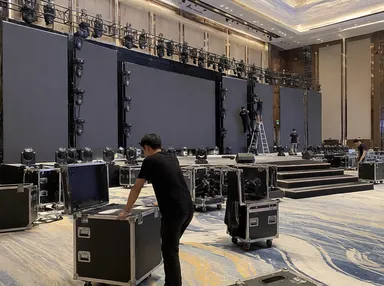
Event Production Companies
50–200+ Units · Pro-Grade Durability Required
The mid-ground between rental and fixed install. These buyers purchase 50–200+ units for inventory and deploy them across corporate events, product launches, and festivals.
They need fixtures that survive truck transport, fast rigging, and 12-hour continuous duty cycles. Your offering must be pro-grade durability at a price point below touring-level fixtures.
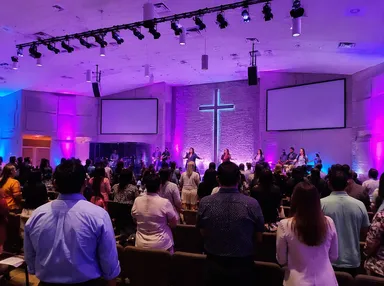
Houses of Worship
20–60 Fixtures Per Sanctuary · Recurring Multi-Campus Orders
Growing segment — churches upgrading from legacy halogen to LED for energy savings and dynamic color control during services. Typical orders range 20–60 fixtures per sanctuary.
Budget-conscious but recurring (multi-campus churches repeat-order for new locations). LED DJ par lights and tube lights are the primary products here.
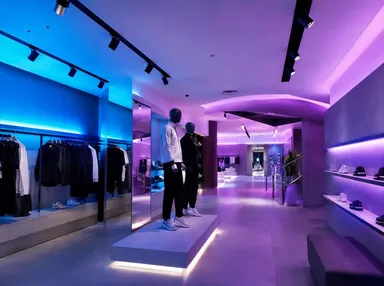
Retail and Hospitality Experiential Lighting
8–20 Fixtures Per Project · Consistent Project Flow
Restaurants, retail flagships, and brand activation spaces increasingly use dynamic LED lighting for ambiance. Smaller quantities per project (8–20 fixtures) but consistent project flow for distributors serving the commercial interior design market.
What Fails in LED DJ Lights — and the Manufacturing Decisions That Prevent It
After 12 years of building these fixtures and handling warranty data, we know exactly what breaks and why. More importantly, we've engineered specific prevention measures into our production process. This matters for your business because every field failure becomes your support cost and your brand reputation damage.
Rapid Lumen Depreciation
The "dim after six months" problem
Root Cause: Inadequate thermal management — LED junctions running above rated temperature continuously.
Our Prevention
- Dedicated heatsink geometry per model (not generic extrusions)
- Thermal validation during 48-hour aging
- Junction temperature monitoring on production samples
<5% lumen loss at L70,000 hours under rated operating conditions.
DMX Communication Failures
Signal drops & address resets
Root Cause: Poor signal isolation on the PCB or inadequate ESD protection on the DMX input stage.
Our Prevention
- Optically isolated DMX input on all fixtures (not just resistor-based termination)
- TVS diode protection on data lines
- 10,000-cycle DMX stress test during production validation
Fixtures hold their address through power cycles and survive daisy-chain noise of 20+ unit strings.
Water Ingress on "Outdoor-Rated" Fixtures
IP rating failures after first rain
Root Cause: Fixtures labeled IP65 that fail because the lens seal wasn't properly compressed or the cable gland wasn't torqued.
Our Prevention
- IP65 jet spray + IP67 submersion testing during product qualification
- Random sampling during production runs
- Every O-ring seat inspected for debris or damage before lens assembly
Color Inconsistency Across Batches
Mismatched reorders
Root Cause: Manufacturers mix LED chip bins between production runs. Your customer buys 20 more par lights six months later and they don't match the first 20.
Our Prevention
- Binning records maintained per production lot
- Tied to your customer order history
- Priority-source matching bins for repeat orders
Note: We can't guarantee a perfect match across 18 months due to LED supplier bin availability, but we flag the risk before production if bin matching isn't achievable.
Power Supply Failures
#1 failure point in budget DJ lights
Root Cause: Cheap LED drivers — capacitors blow, MOSFETs overheat, and the driver dies at month 8.
Our Prevention
- Drivers sourced from qualified manufacturers with rated MTBF above 30,000 hours
- Full 48-hour aging test at worst-case input voltage (highest rated voltage + 10%)
- Thermal load testing catches infant mortality here — not at your customer's gig
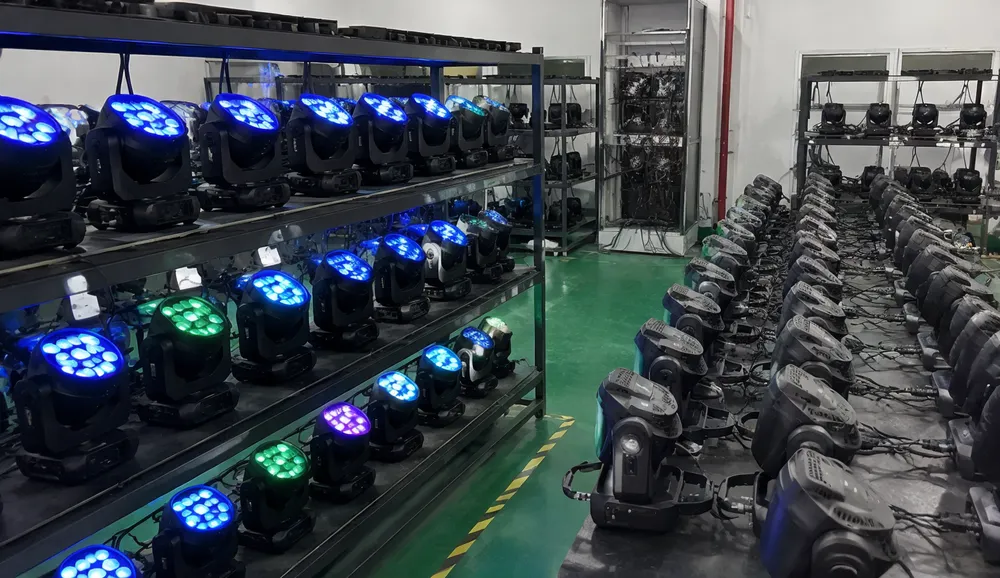
Every fixture passes 48-hour burn-in, DMX stress cycling, and thermal validation before it ships. The failures that plague budget suppliers get caught here — not in your customer's venue.
Packaging and Container Loading — Your Landed Cost Starts Here
LED DJ fixtures ship in individual color boxes with molded foam inserts — the foam geometry is custom-cut per model to eliminate movement during transit. Master cartons are double-wall corrugated, rated for 5-high stacking in container loading.
Transit Protection
All packaging passes ISTA 3A transport simulation testing — drop test, vibration test, and compression test — before we approve a new model's packaging design. We haven't had a breakage claim in the last 3,500+ containers shipped.
Packaging Options
- Individual retail packaging or neutral plain boxes available
- Shelf-ready packaging with barcodes, multilingual feature callouts, and your brand identity for Amazon/retail e-commerce
- Private-label packaging adds 5–7 days to production lead time for first orders
- Reorders use your approved artwork on file
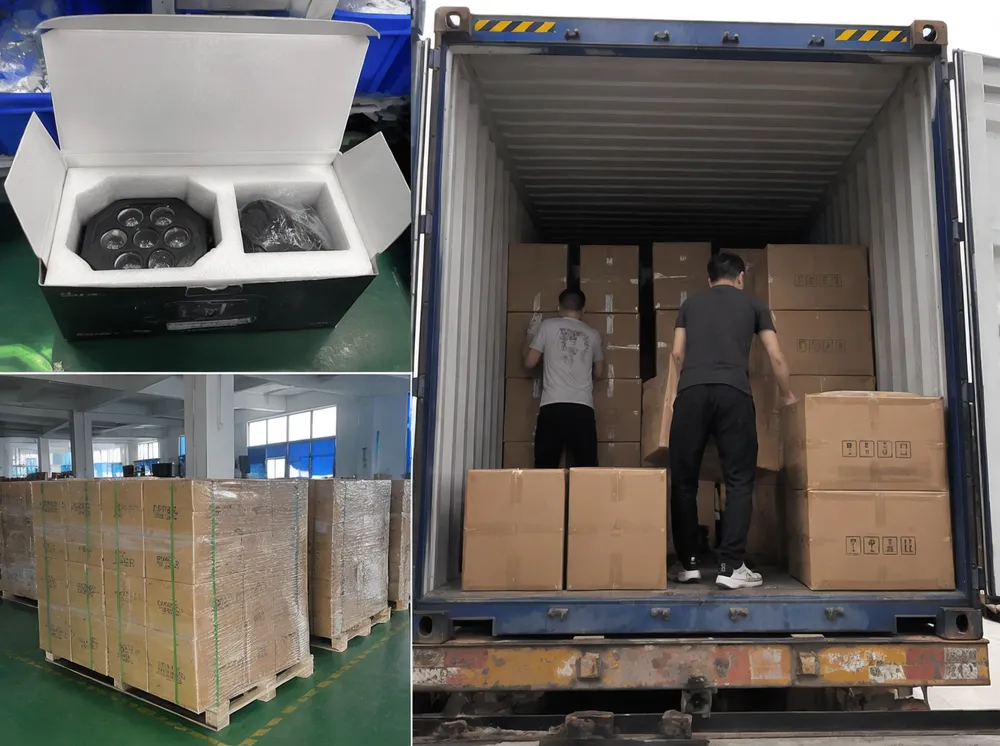
Container Loading — Most Popular Fixture Types
Standard packaging dimensions. For mixed-product containers or custom loading plans, our logistics team calculates optimized configurations per shipment.
| Fixture Type | Unit Box Dims (cm) | Units / Master Carton | 20GP Container | 40HQ Container |
|---|---|---|---|---|
| LED DJ Par Light (compact) | 28 × 28 × 32 | 4 | 280 cartons (1,120 units) | 580 cartons (2,320 units) |
| LED DJ Tube Light (1m) | 108 × 12 × 12 | 2 | 160 cartons (320 units) | 340 cartons (680 units) |
| LED DJ Pixel Bar (1m) | 110 × 16 × 14 | 2 | 140 cartons (280 units) | 300 cartons (600 units) |
| Mini LED DJ Light | 22 × 22 × 24 | 6 | 360 cartons (2,160 units) | 740 cartons (4,440 units) |
Mixed-Product Containers
If you need to optimize for a specific container size or mix with other product lines in one shipment, our logistics team will calculate a custom loading plan. Mixed-product containers are normal for us — we handle these configurations regularly and can maximize your container utilization across fixture types.
Certifications and Compliance — Pre-Qualified for Your Import Market
Every LED DJ light we produce carries CE, FCC, and RoHS documentation. IP65 and IP67 test reports are available for applicable outdoor-rated models. This is the compliance baseline that keeps your shipments moving through customs in North America and Europe without delays or additional testing requirements.
CE (EU)
- EN 60598-1 — Luminaire safety
- EN 55015 — EMC emissions
- EN 62471 — Photobiological safety
FCC (US)
- Part 15 Class B — Verified emissions limits
- Residential/commercial environment rated
RoHS
- Full material declarations available
- Lead-free soldering process across all production
IP Testing
- Third-party lab reports for IP65/IP67 rated models
- Lab reports available upon request
ISO 9001:2015
- Factory quality management system certified
- Audit report available for your supplier qualification process
Additional Markets
- ETL/UL for North America
- SAA for Australia
- Country-specific marks on request
Need a Certification We Don't List?
If your market requires additional certifications (ETL/UL for North America, SAA for Australia, or country-specific marks), we've partnered with testing labs to expedite the process. In most cases, our fixtures are already designed to meet the underlying safety standards — the certification is documentation, not redesign. We'll confirm feasibility and timeline before you commit to an order.
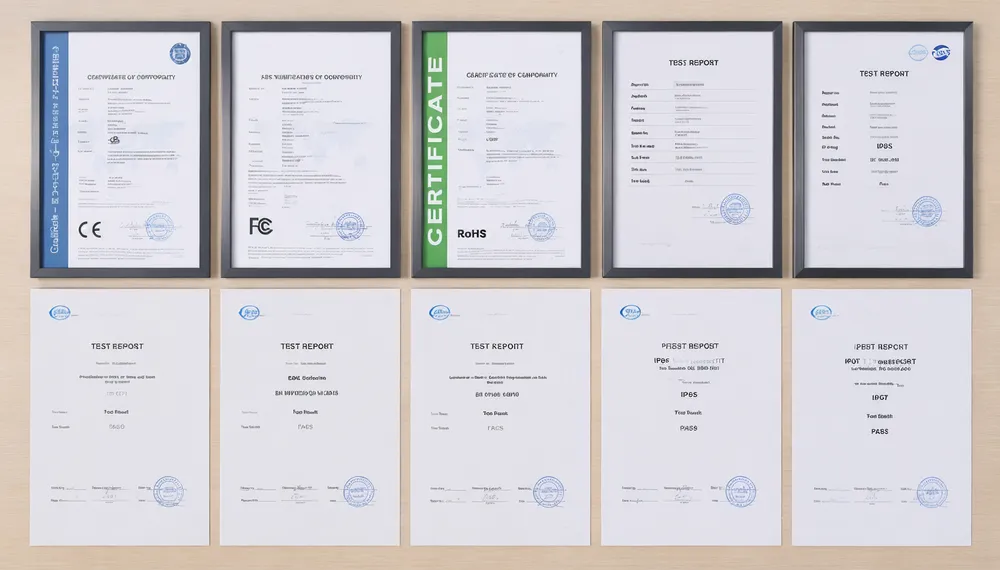
Frequently Asked Questions — LED DJ Lights Sourcing
What IP rating do I need for outdoor DJ events versus permanent outdoor installation?
For temporary outdoor gigs (DJ performing under a canopy or at a festival stage with overhead coverage), IP54 handles incidental rain and splash exposure.
For permanent outdoor mounting with no overhead protection — building facades, rooftop bars, outdoor amphitheaters — specify IP65 minimum, and IP67 if the fixture mounts at ground level where pooling water is possible.
We produce both ratings; the difference is gasket material and cable entry sealing, not a fundamentally different fixture.
Why do some LED DJ lights lose brightness after 6-12 months of regular use?
Three causes, in order of frequency:
- Thermal throttling from undersized heatsinks — the driver reduces current to protect overheating LEDs
- Capacitor degradation in the LED driver — cheap electrolytics dry out under heat
- LED phosphor degradation from sustained high junction temperatures
Our prevention:
- Oversized heatsinks validated by 48-hour thermal testing
- Name-brand driver components with 30,000+ hour MTBF
- Junction temperature monitoring during production qualification
- Designed for less than 5% lumen loss at rated hours
How do I ensure color consistency when reordering LED DJ fixtures months later?
We maintain LED chip binning records linked to your order history. When you place a repeat order, we priority-source matching bins from our chip suppliers.
If an exact bin match isn't available (bin availability shifts over time), we notify you before production with the closest available alternative and expected visual difference.
For critical color-matching applications, we recommend ordering 10-15% overage on initial orders as replacement stock.
What's the minimum order for custom-branded LED DJ lights?
30 units per model. That includes your logo on the housing, custom packaging with your brand artwork, and firmware splash screen with your logo.
Full ODM modifications (custom LED arrays, modified beam angles, new housing colors) also start at 30 units, though tooling costs may apply for significant mechanical changes.
Sample lead times: OEM branded product ships in 10-15 days. ODM modifications requiring engineering validation ship in 25-35 days.
Can your LED DJ par lights and pixel bars work on the same DMX universe without compatibility issues?
Yes — all fixtures in our LED DJ lights range use standard DMX512 protocol with consistent implementation. You can daisy-chain par lights, tube lights, and pixel bars on a single DMX universe (up to 512 channels).
They all respond to standard DMX controllers, and we can customize the channel mode layout on OEM orders if you need specific channel assignments to match your customers' preferred console configurations.
What's the actual difference between your LED DJ stage lights and LED DJ par lights?
Wattage, housing robustness, and deployment intent. The distinction matters for your distribution margin profile:
Par Lights
- Power: 18W–120W
- Housing: Compact, lightweight, quick-mount
- Target: Mobile DJs and rental fleets
- Margin: Higher volume, margin-through-velocity
Stage Lights
- Power: 150W–280W
- Housing: Heavy die-cast aluminum, pro hanging brackets
- Target: Production companies and fixed venues
- Margin: Lower volume, higher per-unit margin
Stage lights feature thermal management designed for 12+ hour continuous operation. Par lights are affordable enough to buy in quantity for fleet deployment.
Start Your LED DJ Lights Order
Send us your target product mix, quantity per model, and any branding requirements. Our sales team will respond within 24 hours with pricing, lead time, and sample availability.
If you're building a new product line from scratch, tell us your target market and price positioning — we'll recommend a starter SKU mix based on what's selling through our existing distribution partners in your region.