

Professional DJ Laser Lights Built for Nightly Rental Abuse
Galvanometer-scanned professional DJ laser lights engineered for clubs, touring rigs, and rental fleets that run 6+ hours nightly.
200–500 mW output, DMX-512 addressable, 48-hour burn-in on every unit. Your anchor SKU for buyers who punish equipment and expect it to keep performing.
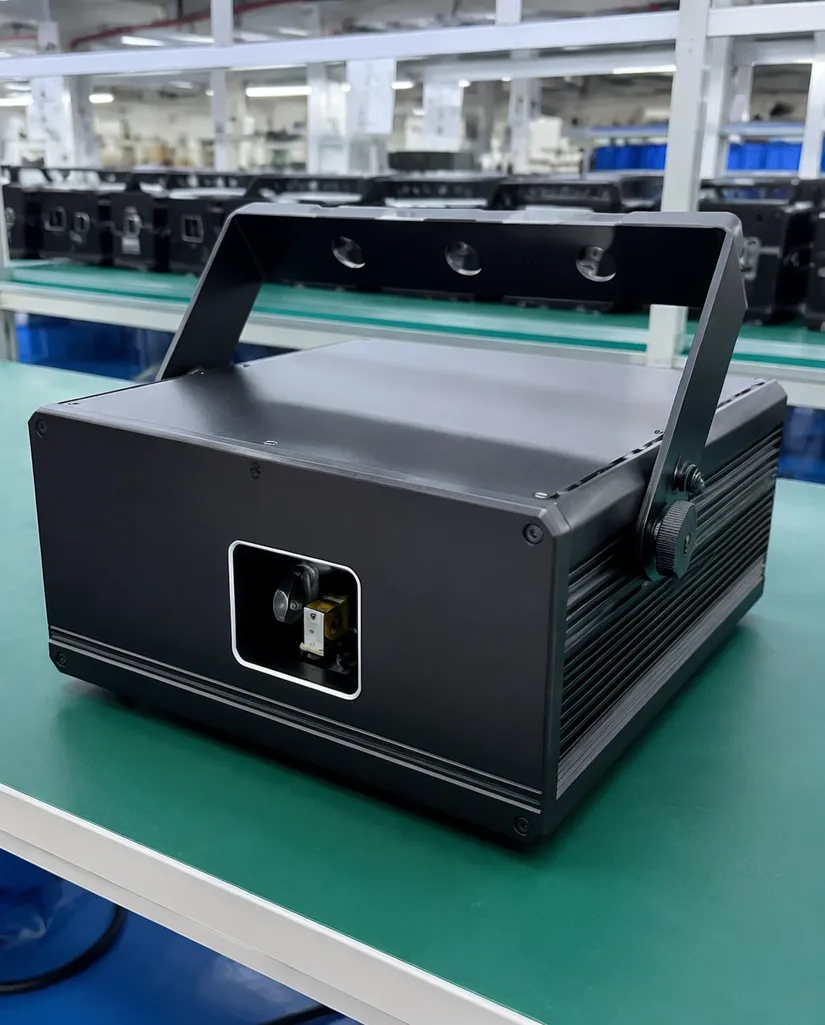
What This Product Is and Who Profits from It
Professional DJ laser lights sit at the top of our DJ laser range — multi-pattern galvo-scanned laser systems designed for nightly duty in clubs, wedding venues, and touring setups. The distinction from our disco or mini laser lines isn't just output power. It's the build architecture: heavier aluminum housings with oversized heatsinks, galvanometer mirror drives instead of steppers, binned laser diodes with tighter output tolerance, and full DMX-512 control with individual channel addressing.
Your commercial position with this product: professional DJ lasers command premium retail and rental margins because buyers perceive the difference immediately — faster scanning, sharper patterns, brighter beams, and units that still hit full spec after 12 months of weekly deployment. That perception gap between a professional-grade laser and an entry-level unit is where your markup lives. And because the manufacturing cost difference is moderate (better diode binning and galvo mechanisms, not exotic materials), the margin expansion on your side is real.
This is the SKU you stock when your customers are rental houses, mobile DJ operations, and club installers — people who buy based on reliability history and total cost of ownership, not box price.
Galvo Mirror Drives
Galvanometer scanning instead of steppers delivers faster pattern changes and sharper beam definition under continuous operation.
Binned Laser Diodes
Tighter output tolerance from diode binning means consistent brightness across every unit in your fleet — no unit-to-unit variation on stage.
Margin Architecture
Manufacturing cost difference is moderate — better components, not exotic materials — so your margin expansion from perceived value is real and sustainable.
Rental Houses
Buy on reliability history and total cost of ownership — units must hit full spec after 12 months of weekly deployment.
Mobile DJ Operations
Need road-tough builds that survive transport and deliver consistent shows regardless of venue conditions.
Club Installers
Permanent installs running 6+ hours nightly where a failure means a service call and lost client trust.
Technical Specifications for Your Comparison Sheet
Specifications shown are standard values across our professional DJ laser range. Exact configurations may vary by model variant — contact us with your target power class and wavelength combination for a detailed datasheet.
| Parameter | Specification |
|---|---|
| Laser Power Output | 200 mW 300 mW 500 mW (model variants) |
| Wavelength Options | 532nm green, 650nm red, 450nm blue, RGB combined |
| Scanning System | Galvanometer-driven, 15–25 KPPS |
| Pattern Count | 128+ programmable patterns (model dependent) |
| Control Modes | DMX-512, Auto, Sound-Active, Master/Slave |
| DMX Channels | 8 / 12 CH (model dependent) |
| Beam Divergence | < 1.2 mrad (collimated) |
| Housing Material | Extruded aluminum, black anodized, CNC-machined heatsink |
| Operating Temperature | 0°C to 40°C |
| Input Voltage | AC 100–240V, 50/60Hz universal |
| Laser Safety Class | Class 3B (200–300 mW) / Class 4 (500 mW) |
| IP Rating | IP20 (standard indoor) |
| Unit Weight | 3.2–5.8 kg (depending on output configuration) |
| Certifications | CE FCC RoHS |
ILDA Compatibility
If you need ILDA input for show-programming software compatibility, our RGB 500 mW variant includes DB-25 ILDA connector as standard. The single-color models can add ILDA as a custom configuration — 30-unit minimum.
The Galvo Scanning Advantage — Why It Determines Your Return Rate
The single biggest technical differentiator in professional DJ laser lights is the scanning mechanism. We use galvanometer mirror drives — electromagnetic actuators oscillating lightweight mirrors at 15,000 to 25,000 points per second. Our entry-level lines (mini, disco) use stepper motors at 5–12 KPPS. The difference isn't subtle in performance.
Galvo scanning at 20+ KPPS produces smooth, flicker-free pattern edges visible at 15-meter throw distances. Text projection becomes legible. Animated sequences flow rather than stutter. Complex geometric patterns hold their geometry across the full scan angle without visible stepping artifacts. For your end users — working DJs, club installers, rental techs — this is the visual quality standard they expect from a professional fixture. Below this threshold, patterns look cheap, and cheap-looking effects generate returns and negative reviews that damage your brand.
Entry-Level (Stepper)
5–12 KPPS · visible stepping artifacts · pattern geometry breaks at distance · suited for mini/disco product lines
Professional (Galvo)
15,000–25,000 KPPS · flicker-free edges at 15 m · legible text projection · smooth animation sequences
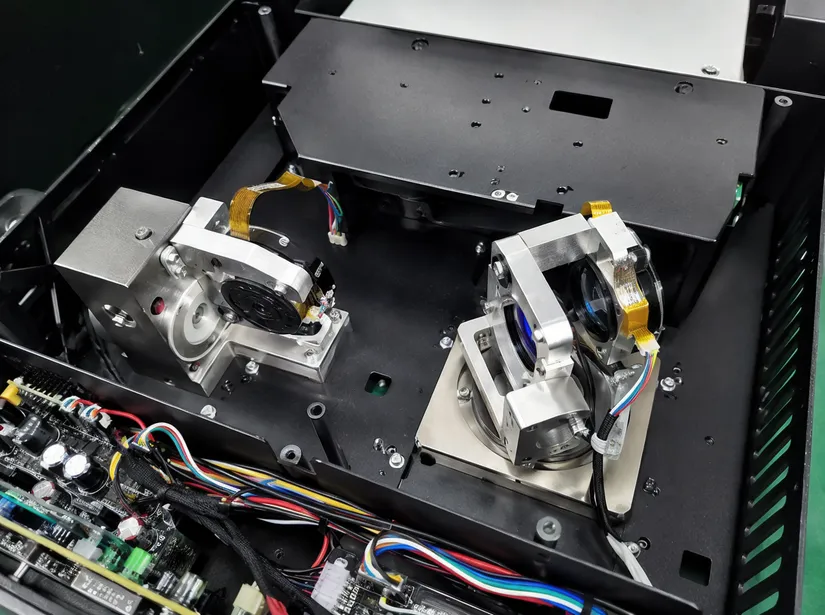
Unit-Level Calibration
Pattern geometry tolerance: ±0.5° across the full scan field. Every unit verified against a test grid at 3-meter distance.
Fleet Consistency — From Sourcing to Calibration
We source galvo sets from qualified scanning mechanism suppliers, then calibrate each unit against a test grid at 3-meter distance. Pattern geometry tolerance is ±0.5° across the full scan field. When a rental house orders 20 units for a fleet refresh, every unit projects identical pattern sizing and positioning — no unit-to-unit variation when running multiple fixtures on the same stage.
We started verifying galvo calibration at the unit level in 2018 after a Middle Eastern distributor reported visible pattern offset differences between units in a 50-piece batch. That calibration step added 4 minutes per unit to our production time, but eliminated the consistency complaints entirely.
Fewer "not as expected" returns from end users
Visual impact holds over years of continuous use
Healthier margins and reorder business instead of warranty negotiations
Thermal Architecture That Protects Your Warranty Pipeline
Laser diodes degrade permanently when junction temperatures exceed rated limits. Cheap laser lights cut corners on thermal management — thin housings, no thermal interface material, undersized heatsinks — and the result is output power dropping 20–40% within 6–12 months of regular use. Your end users don't complain about watts. They complain that "the beams used to be bright and now they're not." Then they stop buying from you.
Overspec'd Heatsink Architecture
The housing is extruded aluminum with CNC-machined heatsink fins sized 40% beyond the minimum thermal requirement for each power variant. The 500 mW RGB model, for example, runs a heatsink thermal mass calculated for 700 mW continuous dissipation — that headroom keeps the diode junction temperature below 40°C when the fixture operates at full output in a 30°C ambient venue environment.
Standard practice in our industry is designing to exact thermal load. We overspec because the math changes when a fixture sits in a truss pod with three other heat-generating units and zero airflow.
Controlled Thermal Interface
Diode mounting uses measured thermal compound application at 0.15mm layer thickness — verified during assembly, not estimated. We switched from thermal pads to direct compound application in 2020 after measuring a 4–6°C junction temperature spread across a production batch using pads. Compound with controlled application eliminated the variance.
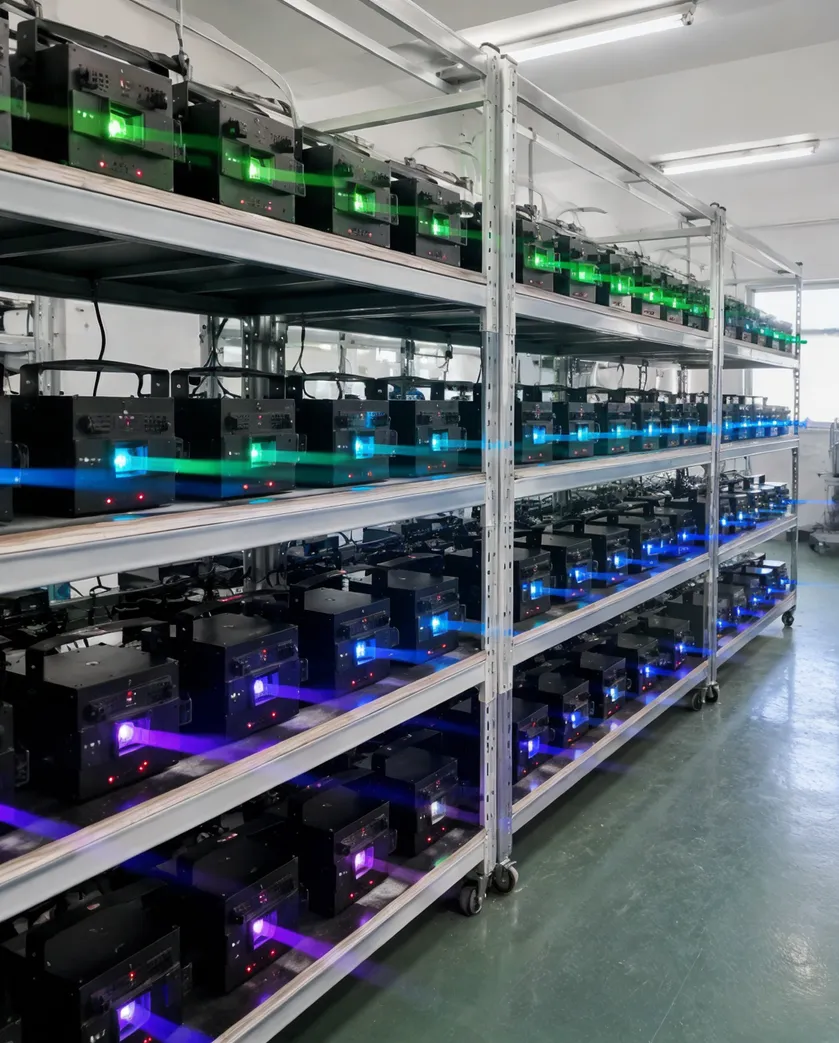
48-Hour Full-Output Aging Test
Every unit. No exceptions. Not sample testing.
The 48-hour aging test catches the thermal failures that would otherwise appear 3–6 months into deployment. Every professional DJ laser runs at full output for 48 continuous hours. Output power measured at hour 0, hour 24, and hour 48 — any unit dropping more than 3% gets pulled.
Hour 0
Baseline
Full output measured
Hour 24
Check
Mid-point reading
Hour 48
<3% drop
Pass threshold
Your Outcome
Stable output power across years of continuous use
Warranty return rates that stay near zero
End users who reorder the same model because it still performs
Diode junction stays below 40°C at full output in 30°C ambient
Market Segments Where Professional DJ Lasers Generate Repeat Orders
Each segment below represents a revenue stream for your distribution or rental business — not a lifestyle description.
Mobile DJ and Touring Operations
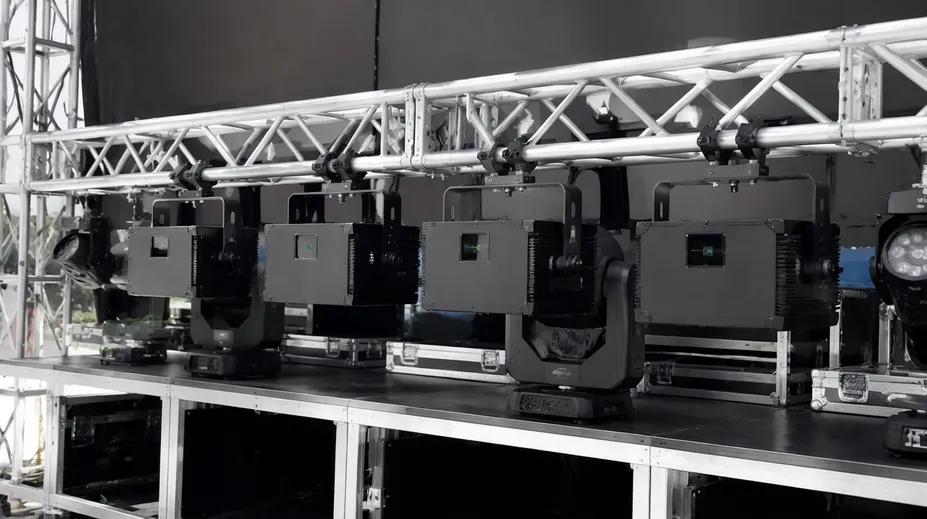
Working DJs upgrading from LED effects to professional laser fixtures. Typical purchase: 2–4 units per rig, replacement cycle every 18–24 months.
They buy on reputation and reliability because a dead laser mid-set means a lost client. Once a DJ finds a unit that survives their schedule, they reorder the same SKU and recommend it to their network.
Key insight: Professional laser lights are the SKU that builds word-of-mouth loyalty in this segment.
Event Rental Fleet Expansion
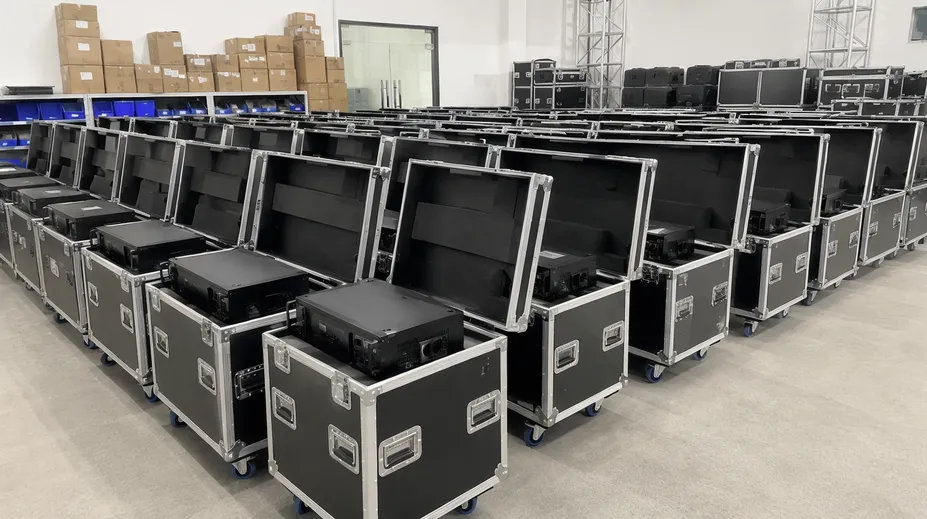
Rental companies stocking 20–100+ laser units across their inventory. They deploy for weddings, corporate events, festivals, and tours.
Purchase triggers: Fleet refresh cycles, expanding into new event categories, replacing unreliable units from previous suppliers.
They care about DMX patching speed across large fixture counts, transit durability, and visual consistency across all units in a multi-laser setup. Our calibrated galvo output means their tech crew doesn't spend pre-show time adjusting individual fixtures.
Volume potential: 20–100+ units per order with recurring fleet refresh.
Nightclub and Venue Installation
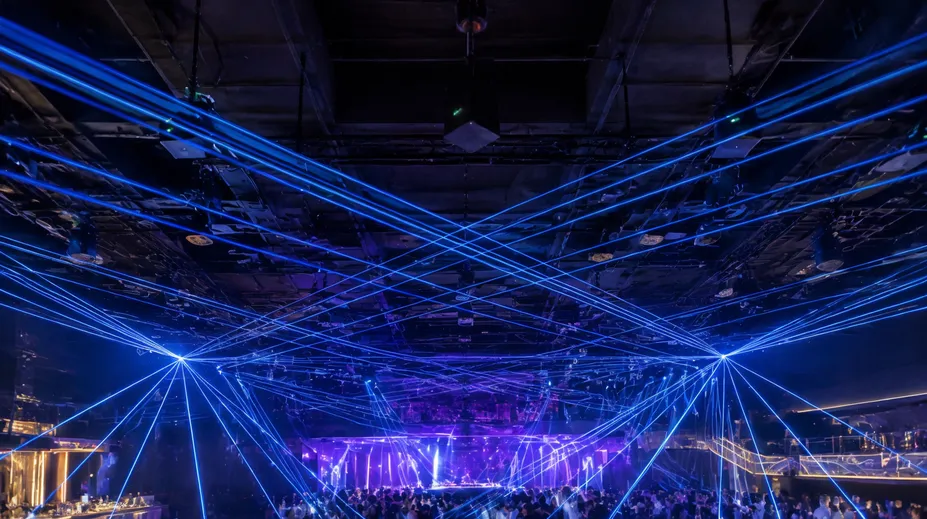
Fixed installations ordering 10–30 units per venue buildout. Club owners and their AV contractors buy for the ceiling and don't want to service them for years.
Thermal performance and long diode life matter more here than portability. DMX addressability lets the lighting programmer integrate lasers into the venue's overall show programming.
Reorder trigger: Project-quantity orders with strong reorder potential when the venue chain expands.
Regional Distribution Catalog
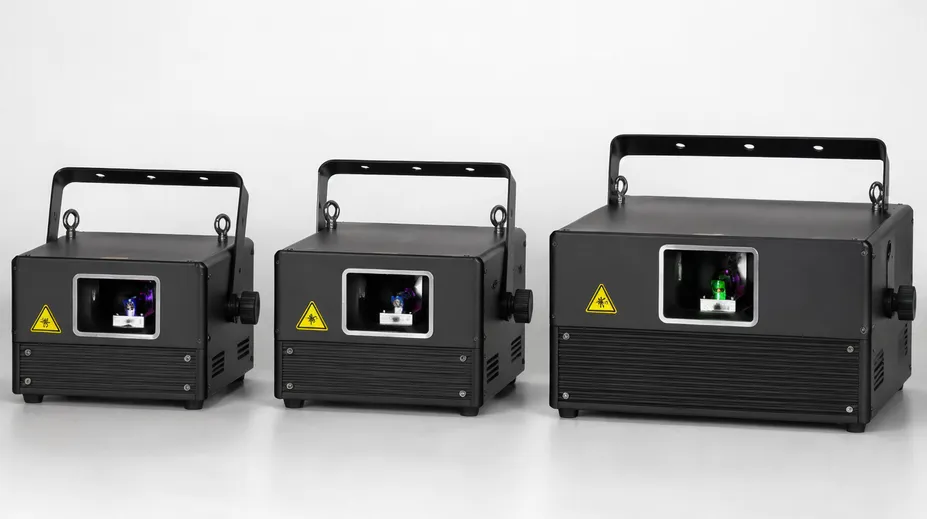
Distributors building a professional lighting range for their dealer network. Professional DJ lasers serve as the "serious" tier in a laser lineup, positioned above disco/mini products.
They anchor your catalog's credibility with dealers who serve professional users. Stocking 2–3 power variants (200 mW, 300 mW, 500 mW) covers the full buyer spectrum from small-venue DJs to large-format rental.
Catalog strategy: Three power tiers cover the full dealer-buyer spectrum.
DMX Integration and Show Control Compatibility
DMX-512 Protocol Specification
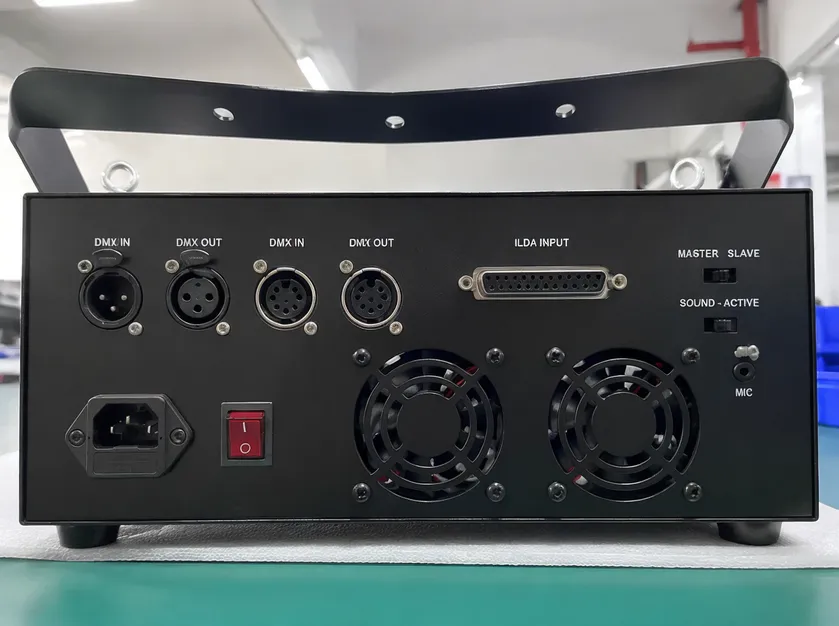
Professional DJ laser lights in this line operate on 8 or 12 DMX channels depending on model configuration. Standard DMX-512 protocol via 3-pin or 5-pin XLR connector (both options available on order).
Channel Mapping Covers:
Drop-In Rig Compatibility
For buyers deploying into environments with existing lighting infrastructure, DMX addressing and patching follows the same conventions as moving heads and LED fixtures in a standard rig. Your end users don't need specialized laser control knowledge — any tech running a DMX console can integrate these units into a show alongside wash lights, movers, and strobes.
Master/Slave Mode — Console-Free Sync
Master/Slave mode links multiple units for synchronized operation without a console — useful for rental deployments where the end user doesn't carry DMX infrastructure.
Two XLR cables and power, and 8 units run the same show synchronized to audio input.
ILDA DB-25 Input
On the 500 mW RGB variant, ILDA DB-25 input enables direct connection to laser show software:
- Pangolin
- Phoenix
- LaserOS
This matters for your buyers serving concert production and immersive event markets where pre-programmed pattern sets aren't sufficient.
Distributor Demo Tip
The sound-active mode responds to a built-in microphone with adjustable sensitivity threshold. It's not the primary selling mode, but it's what your visiting customers see when you plug in a unit for a quick demo without pulling out a console.
OEM Customization on Professional DJ Laser Lights
Most buyers start with standard configurations and move to branded or custom variants on reorder. Here's what we configure at the professional laser tier:
Branding
30-unit MOQ- Your logo laser-etched on the housing
- Your brand on the packaging and user manual
- Your firmware splash screen on power-up
- 3–5 days added to lead time versus stock
- Packaging printed to your template — retail-ready for distribution channels, plain-box for rental companies
Optical Customization
- Custom scan pattern sets programmed to your specifications — venue-specific effects, branded patterns, seasonal content
- Optical engineers work from concept sketches or reference videos
- 15–20 business days from approved concept to production sample
- Galvo programming platform supports up to 256 stored patterns per unit
Power & Wavelength Variants
30-unit MOQ- 400 mW green-only for markets where RGB is regulated differently (e.g., Australia)
- 150 mW dual-color for market segments where Class 3R compliance matters
- Diode arrays configured to your specific market requirements
Housing Modifications
20–30 days tooling- Custom bracket patterns for specific truss or ceiling mounting systems
- Reduced-depth housings for flush installations
- Custom anodizing colors for brand identity
- Tooling modification 20–30 days for first samples
Typical Partner Evolution Path
The path is natural. Start where it makes sense for your current volume.
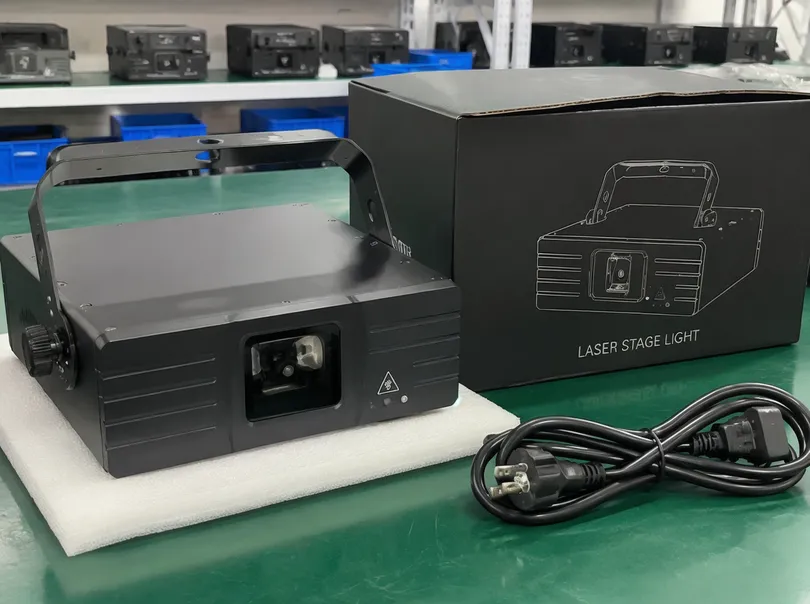
Packaging, Container Loading, and Transit Protection
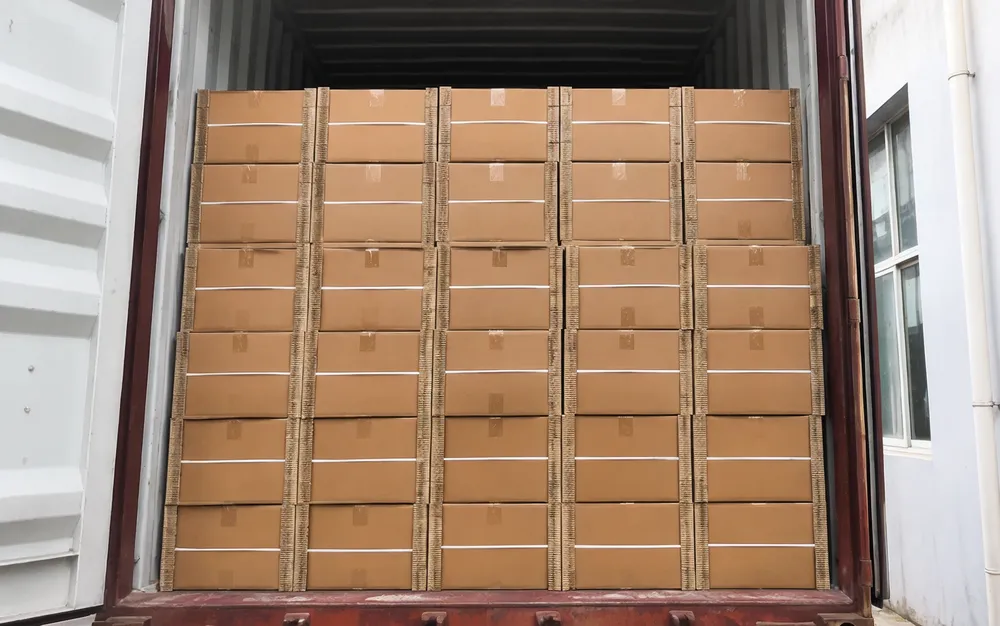
Professional DJ laser lights ship at approximately 1,200 units per 20GP container and 2,600 units per 40HQ — efficient enough for volume orders while maintaining the packaging protection that optical components demand.
~1,200
Units / 20GP
~2,600
Units / 40HQ
<0.3%
Galvo Misalignment Rate
<5 min
Field Recalibration
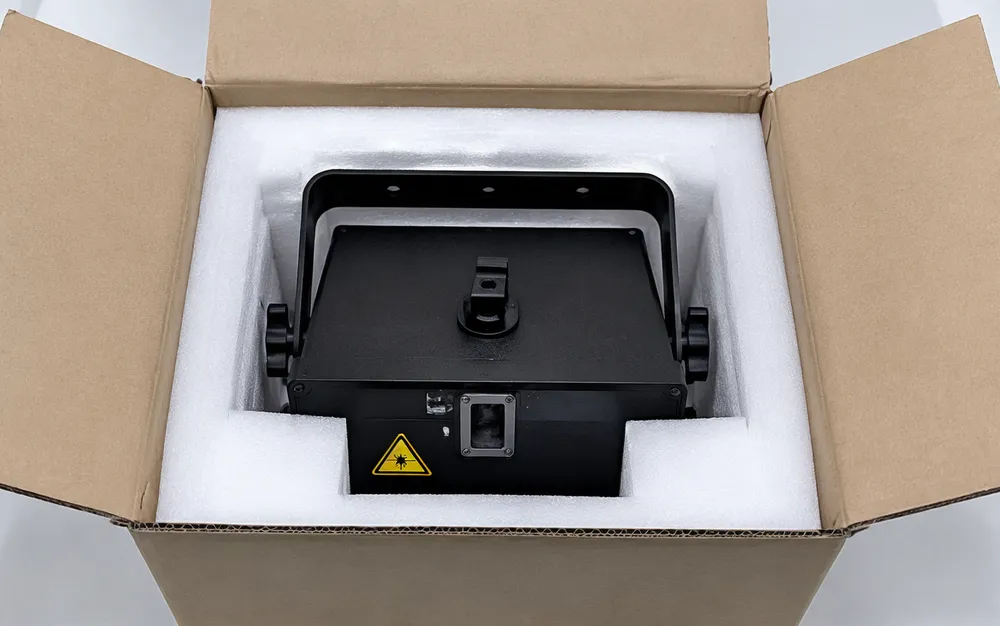
Standard Packaging
- Individual unit in molded EPE foam insert with galvo locking mechanism engaged (prevents mirror oscillation during transit)
- Unit placed in printed color box
- Master carton holds 8–12 units depending on model size
- Corrugated corner protection and anti-crush stacking design
Optical Protection Specifics
The galvanometer assembly is the most vibration-sensitive component in any DJ laser. Our packaging addresses this directly:
- Fixture oriented with optics facing inward — aluminum housing mass serves as primary shock buffer
- Dual-density EPE foam: soft outer for impact absorption, firm inner for position lock
- Immobilizes unit against both axis-of-travel shock and cross-axis vibration
- Tested against ISTA 2A transit simulation before approving any packaging revision
Galvo misalignment on arrival runs below 0.3% across our shipping history. If a unit does arrive with offset patterns, the included alignment tool and reference card enable field recalibration in under 5 minutes — no factory return required.
Documentation Per Unit
- CE/FCC Declaration of Conformity
- RoHS certificate
- DMX channel map
- User manual (English standard, other languages on request)
- Master carton labels with your SKU numbers, barcodes, and receiving format — provide your template and we match it
Lead Time
DJ Laser Light Price Factors What Drives Your Landed Cost
We don't publish fixed DJ laser light prices because B2B pricing depends on volume, configuration, and destination — but we can explain what moves the number so you can plan your margins.
Output Power — Primary Cost Driver
The jump from 200 mW to 500 mW isn't linear — higher-power laser diodes cost disproportionately more because yield rates from the diode fab drop at higher bins.
Expect roughly 35–50% price increase between the 200 mW and 500 mW tier, depending on wavelength.
Galvo Quality Tiers
Standard galvo sets (15 KPPS rated) versus high-speed sets (20–25 KPPS rated). Higher-speed galvos enable smoother pattern rendering and text capability, but add to unit cost.
Clubs with basic pattern effects: standard galvos serve well. Animation-quality scanning or text projection: spec the high-speed variant.
RGB Versus Single-Color
RGB combined (red + green + blue diodes with dichroic combining optics) costs more than single-color green or red/green dual. The optical assembly is more complex — three diode mounts, combining mirrors, and alignment for beam convergence.
Highest retail margins: RGB models carry the highest margins because end-user perceived value jumps significantly with full-color capability.
Volume Breaks
Pricing tightens meaningfully at 100, 300, and 500-unit thresholds. At container-load quantities, your per-unit landed cost drops enough to compete with regional distributors buying from trading companies.
Factory-direct advantage: you're buying the same quality at factory-direct pricing — except without the trading-company markup.
Get Your Detailed Quotation
Send your target model, quantity, and port — we'll return a detailed quotation within 24 hours with FOB pricing, packaging weight/dims for freight calculation, and lead time confirmation.
Frequently Asked Questions Professional DJ Laser Lights
How long do galvo-scanned DJ laser lights actually last in rental use?
With proper thermal management, galvo-based professional DJ lasers deliver 10,000–15,000 hours of diode life at rated output. For a rental unit running 6 hours per event, 4 events per week, that's roughly 8–12 years before meaningful output degradation.
The galvo mechanism itself typically outlasts the diode — electromagnetic mirror drives have no contact wear surfaces. In practice, units get retired for cosmetic damage or technology upgrades before the laser system fails.
Our 48-hour aging test removes units with early-failure diodes before they reach your inventory, which eliminates the first-year failures that destroy end-user confidence.
What's the real difference between a 200 mW and 500 mW professional DJ laser for my buyers?
Visible beam range and venue coverage. A 200 mW unit produces clear beams in light haze at distances up to 8–10 meters — suitable for bars, small clubs, and mobile DJ setups in rooms under 150 m².
A 500 mW unit cuts through at 20+ meters and fills large clubs, wedding halls, and festival stages.
For your product mix:
- • 200 mW models sell to mobile DJs and small venue buyers (high volume, moderate price)
- • 500 mW models sell to rental companies and large venue installers (lower volume, significantly higher margin per unit)
Most distributors stock both tiers.
What FDA/CDRH requirements apply to professional DJ laser lights sold in the US?
All laser products sold in the US require compliance with 21 CFR 1040 (FDA/CDRH laser product performance standard). This includes proper laser classification labeling, safety features (emission indicator, key switch on Class 4 units, beam attenuator), and manufacturer reporting.
We file the required product reports and accession numbers for US-bound professional laser models as part of our compliance process.
Your import documentation includes the FDA-required label format and variance documentation where applicable — so your US customs clearance doesn't stall on laser regulatory questions.
Can professional DJ laser lights be used outdoors?
Standard professional DJ laser models are rated IP20 (indoor use). For outdoor deployments — festivals, architectural projections, outdoor events — we offer IP54-rated configurations with sealed housing and protected optics.
Note that outdoor laser use in many jurisdictions requires additional regulatory approvals (FAA notification in the US for outdoor laser installations, variance applications in some EU markets). The product handles the environment; the regulatory requirements depend on your destination market.
Contact us if outdoor-rated models are relevant to your catalog — we'll spec the appropriate IP-rated variant.
How do I decide between professional DJ lasers and RGB laser projectors for my catalog?
Both are galvo-based, DMX-controlled, and built for professional use. The distinction: professional DJ lasers focus on beam effects and mid-air patterns (narrow beam divergence, visible in haze), while RGB laser projectors emphasize surface projection (wider scan angles, logo/text capability, wall-washing with color).
If your buyers use lasers as aerial effects in nightclubs and concert rigs, professional DJ lasers are the primary SKU. If they project onto surfaces or need custom graphic content, RGB laser projectors serve that requirement better.
Many distributors stock both — they sell into different use cases with minimal cannibalization.
If This Product Doesn't Match — Sibling Products Worth Considering
Your buyers have different needs across different segments. Our DJ laser range covers seven product lines:
Disco DJ Laser Lights
Need music-reactive auto-run units for KTV and entertainment venues?
Sound-active operation, no console required, lower price point for volume installs.
View productRGB Laser Projector DJ Lights
Need full-color surface projection and logo capability?
Wider scan angle, ILDA standard, text/graphic projection.
View productMini DJ Laser Lights
Need compact, low-cost units for e-commerce or entry-level retail?
Impulse-buy price point, high volume, attractive packaging.
View productDJ Laser Bar Lights
Need multi-head coverage in a single fixture for fast rigging?
One unit covers what three individual lasers would.
View productGreen Laser DJ Lights
Selling into markets with strict laser power regulations?
Maximum visibility per milliwatt at 532nm, strong in safety-conscious markets.
View productLED Laser DJ Lights
Need hybrid laser + LED effects in one housing?
Reduces fixture count and cabling for mobile setups.
View productNext Step: Sample or Quote in 24 Hours
If you're evaluating professional DJ laser lights for a distribution catalog, rental fleet, or project installation — the fastest path is specific. Tell us:
Your Project Brief
-
1
Target power class and wavelength (or describe the venue/application)
-
2
Quantity range you're considering
-
3
Whether you need OEM branding or custom configurations
-
4
Destination port for freight estimation
Our Response Includes
- FOB pricing with volume tier breakpoints
- Lead time and production schedule
- Packaging specifications and container loading plan
- Compliance documentation list
Direct Contact
First-time buyers: we recommend starting with a 2–3 unit sample order to evaluate beam quality, build, and galvo performance before committing to volume. Samples ship within 5–7 days of payment confirmation.